How Much Does 3D Print Filament Cost?
A plain guide to what sets the cost of 3D print filament, from material and spool size to the print itself, and how to plan around it.

On this page
A spool of filament can feel like a small purchase until the prints stack up, and how much does 3D print filament cost comes down to the material on the spool, the size of the spool and how much plastic each print actually uses. Standard filaments for everyday prints sit at the lower end of the range, while specialty materials made for strength, heat or flexible parts cost more for the same amount of plastic. The sections below walk through each factor in plain terms, so a maker can look at a listing and judge whether the spool fits the job before buying.
As an Amazon Associate I earn from qualifying purchases. LaserEngraveHQ earns a commission from purchases made through these links, at no extra cost to you. Read our affiliate disclosure.
This guide gives no price figures, because filament prices shift with material, brand and seller, and any figure would go stale fast. Use the factors below to compare listings on equal terms, and check the current listing before buying.
How much does 3D print filament cost for one project
The cost of one print is the cost of the filament it uses, plus the filament that goes to supports, brims and any print that fails partway. A small part uses a short length of filament, while a large part can use most of a spool. Infill matters too: a part printed solid uses far more filament than the same part printed with a light inner structure, so the slicer settings change the cost of the same model. Before buying a spool, look at the size of the parts you plan to print and how often you print, because a spool that lasts a casual maker a long while can run out fast in a busy shop.
Material type sets the range
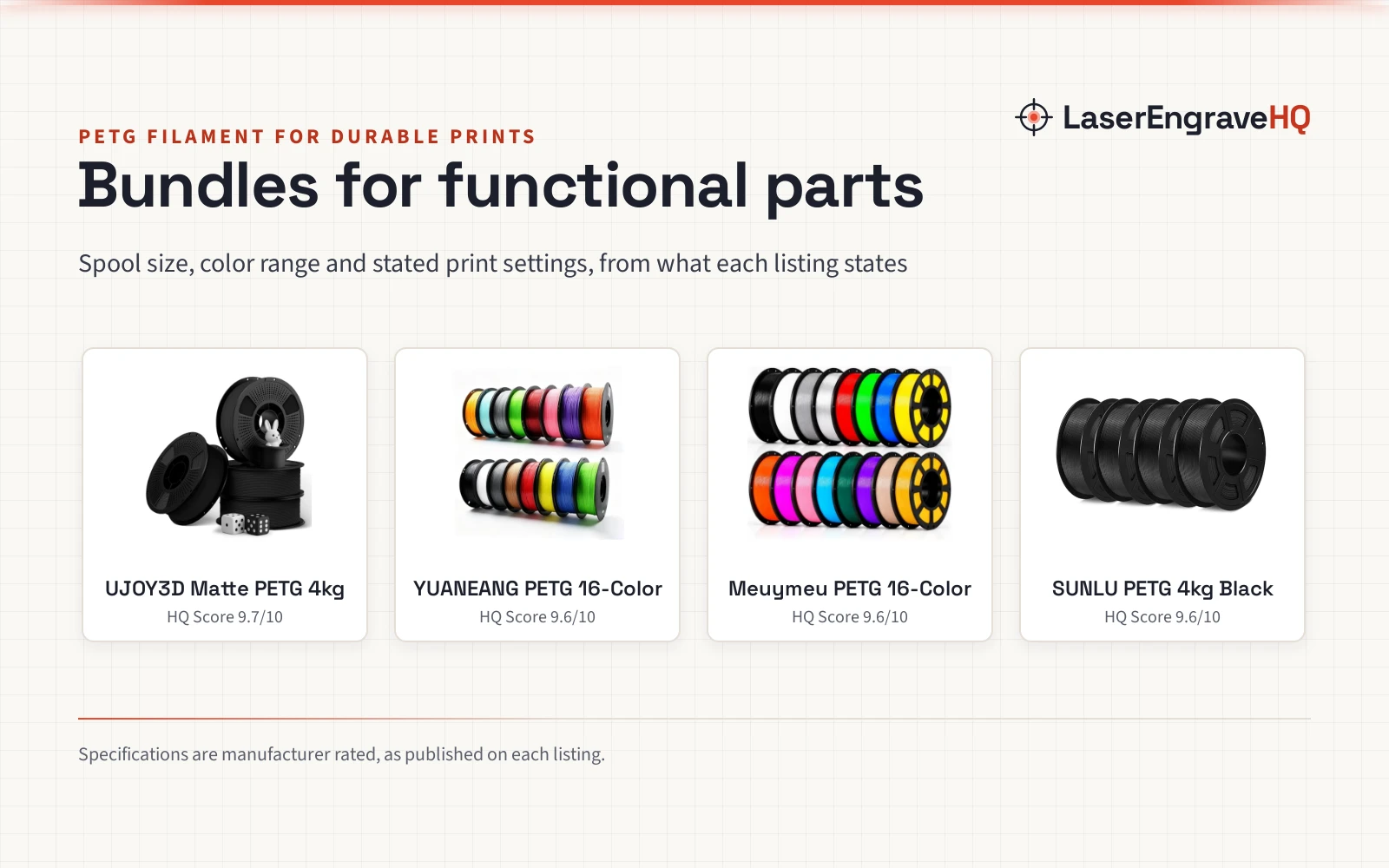
PLA is the usual starting point for everyday prints, and it sits at the lower end of the range for most makers. PETG costs a little more and brings tougher parts that handle outdoor use and warmer conditions, which makes it a common step up from PLA. ABS sits in a similar range to PETG and suits parts that need heat resistance, though it needs an enclosed printer and ventilation for its fumes and warping. Our types of PETG filament guide compares the PETG options side by side.
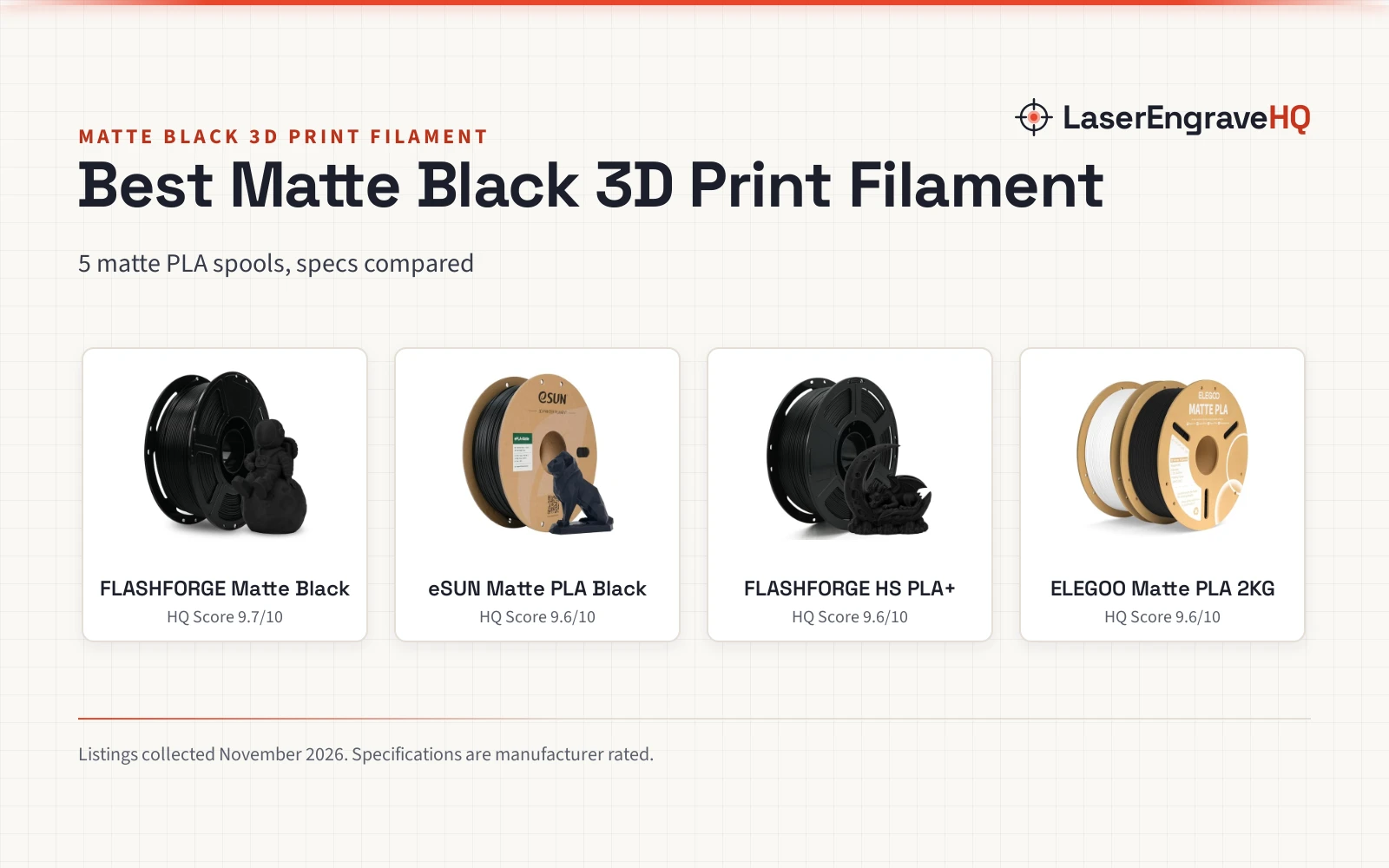
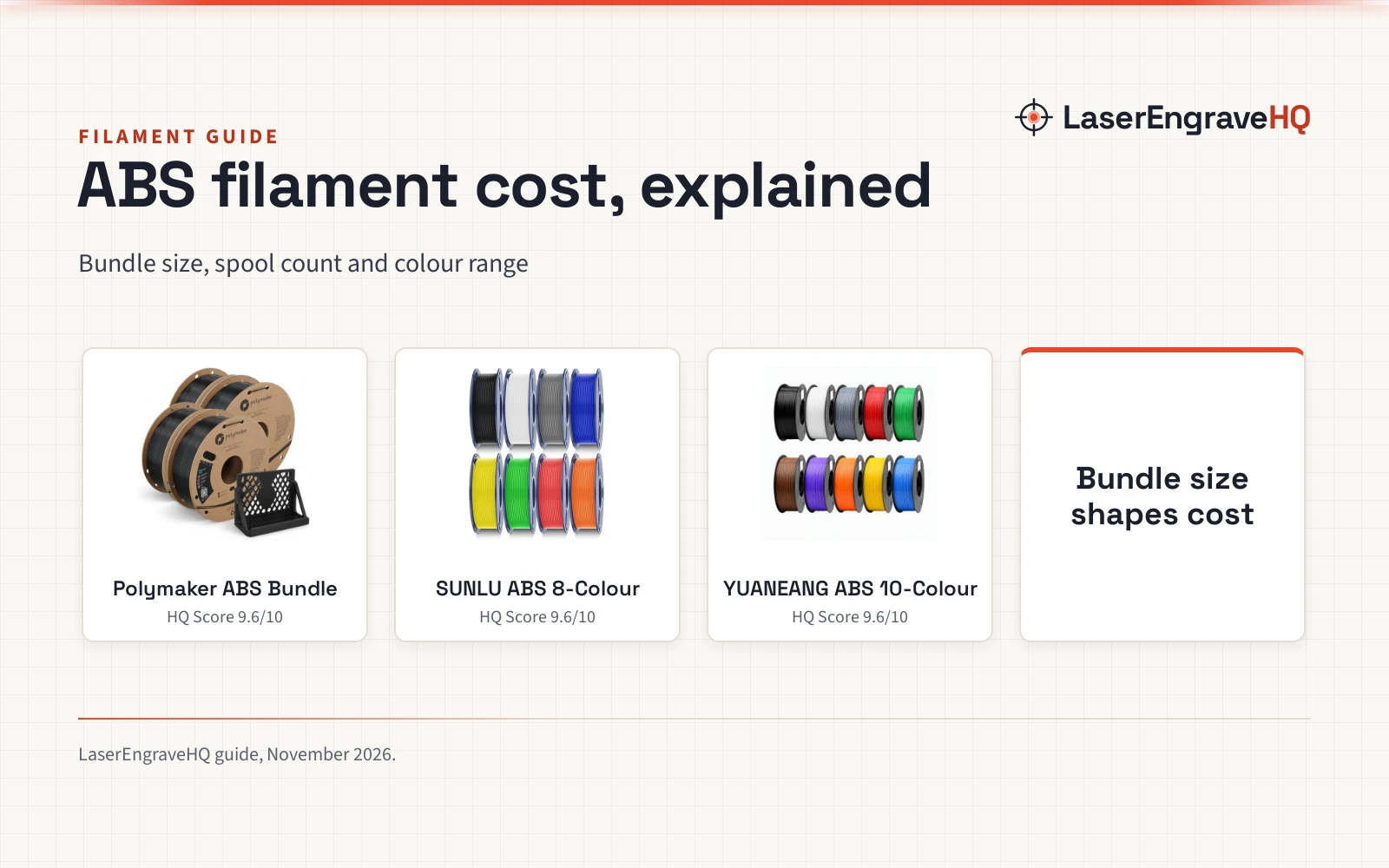
Materials made for a special job cost more. Nylon and polycarbonate suit strong parts that take load or heat, and flexible TPU suits parts that need to bend, such as gaskets and phone cases. Filaments filled with carbon fiber, wood or metal cost more still, and they can wear a standard nozzle faster, so the extra cost is not only the spool. Color and finish shift the price as well: plain colors tend to sit lower, while silk, matte or color-changing finishes add to the cost. The toughest filament guide compares PETG, nylon and more for strength, and the ABS filament cost guide looks at what to expect per spool. The PLA color chart shows the colors on offer.
Spool size and what you actually use
Filament sells by the spool, and spools hold different amounts, so compare listings by how much filament each spool holds rather than by the spool alone. A larger spool holds more filament and usually works out lower per length, but only if you print enough to use it before it picks up moisture. A smaller spool suits a maker who prints now and then or wants to try a new color without committing to a full spool. Check the filament diameter too, since a printer takes one size and the wrong size will not feed: our filament thickness guide explains which size to buy. Keep track of what is left on a spool, because a print that runs out of filament midway usually fails, and failed prints are the quickest way to waste filament.
What else adds to the cost of a print
The spool is the main cost, but it is not the only one. Supports and brims use filament that never becomes part of the model, and a print that fails near the end wastes the filament already laid down. A worn nozzle or a dirty bed can cause failures, so keeping the printer in good shape protects the filament budget: our maintenance kit guide lists what to include. Damp filament prints poorly and can snap or bubble, so storage matters as well: a dry box or a sealed bag with desiccant keeps a spool usable for longer, and our filament dryer guide weighs whether a dryer is worth it. Power, nozzles and build surfaces add small costs over time, but for most makers the filament itself is the cost to watch.
How to plan a filament budget
Start from the parts you print most. Pick the material that fits those parts, then buy the spool size that matches how often you print. Keep a spare spool of the everyday material on hand so a long print never stalls for want of filament, and keep specialty spools small, since they see less use. When comparing listings, check material, spool size and filament diameter together, because a low price on a small spool of the wrong size is no saving at all. A stand that holds the printer and stores spools can keep filament close at hand: see our best 3D printer stand with filament storage picks. For PETG on a Bambu A1, our best PETG filament for Bambu A1 guide compares options. The 3D printer hub gathers the rest of our printer guides.
How much does 3D print filament cost: the short version
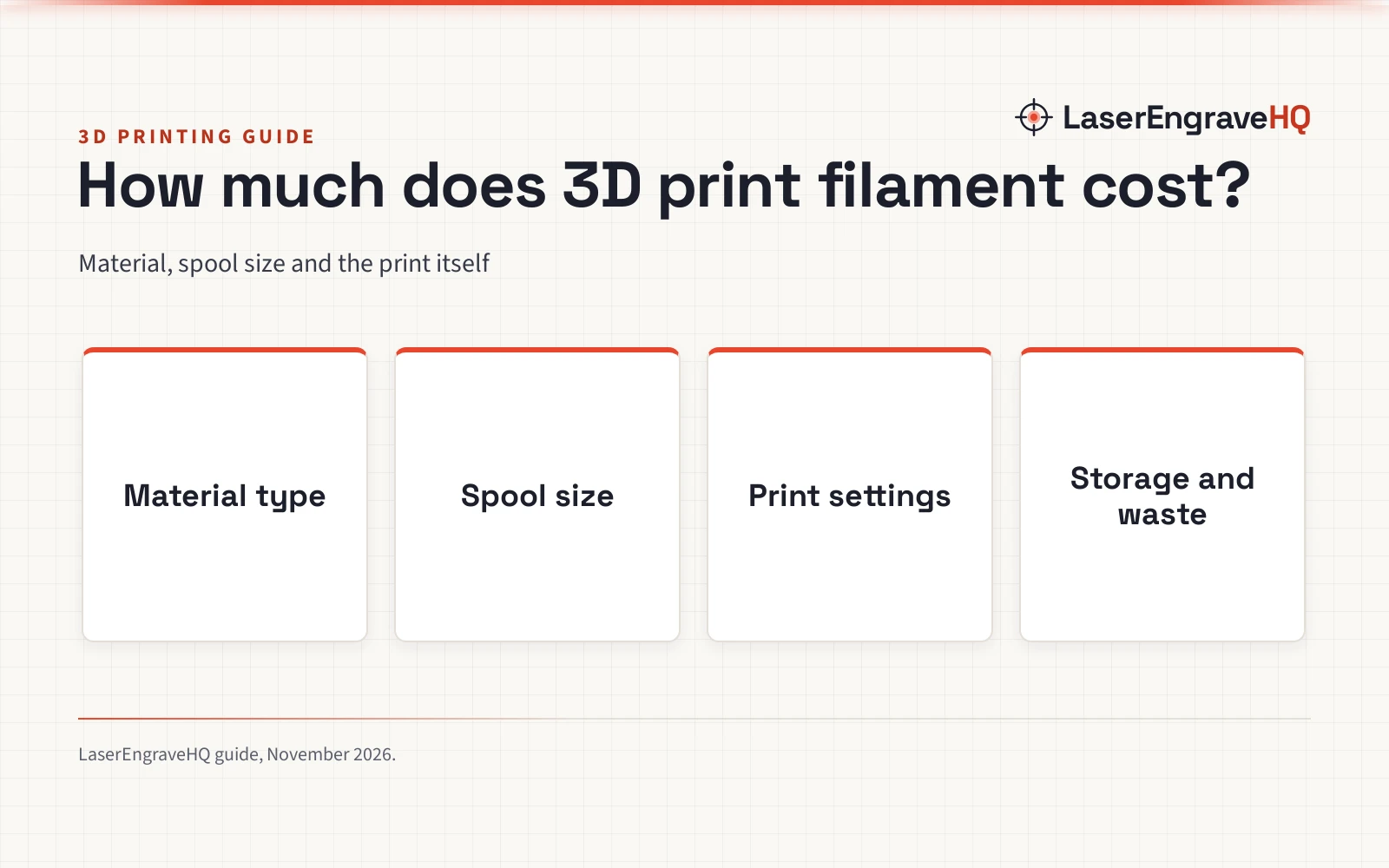
- Material sets the range: standard PLA and PETG sit lower, while nylon, flexible and filled filaments cost more.
- Spool size sets how much you get: compare by the amount of filament, not by the spool alone.
- The print itself sets the use: size, infill and supports decide how much filament each model needs.
- Storage and failed prints add waste: keep filament dry and keep the printer in good shape.
FAQ: lasers and CNC
How much does 3D print filament cost per spool?
It varies with material, spool size and brand, so no figure fits every spool. Standard PLA and PETG sit at the lower end, while nylon, flexible TPU and filled filaments cost more for the same amount. Check the material and the spool size on the listing before comparing spools side by side.
What makes one filament cost more than another?
Material is the main factor, then additives such as carbon fiber, wood or metal fill, and then brand, color and finish. Specialty filaments cost more because they serve a narrower job, such as parts that bend, take heat or carry load. A plain spool of a standard material is the baseline to compare against.
Does filament type change how much a print costs?
Yes. The material sets the cost of each length of filament, and the model sets how much length the print needs. A large part with solid infill uses far more filament than a small part with light infill, so the same material can cost very different amounts across prints. Supports and brims add to the use as well.
How can you use less filament on a print?
Use light infill where the part does not need full strength, cut supports where the shape allows, and print the part at the size you need rather than larger. Orient the model so it needs fewer supports, and check the slicer preview for the amount of filament before starting. A trial print at small scale can catch a bad setting before it wastes a full spool.
Does filament go bad if it sits out?
Filament left out in damp air can absorb moisture, which leads to rough surfaces, weak layers and snapped filament. PLA is the usual case makers ask about: our guide to leaving PLA filament out covers dry storage. A dryer can bring damp filament back to usable shape; see our filament dryer guide.
Related: the 3D printer hub, how to 3D print for beginners and how thick 3D printer filament is. Also see our 3D printer first layer problems and fixes. Also see our how to remove filament from a 3D printer.