60w vs 80w Diode Laser: Which One Should You Buy?
A guide to the 60w vs 80w diode laser question, built from 2 60W listings: cut depth, speed, safety class, warranty and what an…

Diode laser engravers are the most common way into laser work. They engrave wood, leather, slate, coated tumblers and anodized aluminum, and cut thin wood and dark acrylic. Watch for listings that quote electrical input instead of optical output.
Bare metal points to a fiber laser, clear acrylic to CO2, wood and leather on a budget to a diode, and thick stock or 3D carving to a CNC router. The Machine Finder narrows it down in five questions, and the material guide shows what each type can cut.
A guide to the 60w vs 80w diode laser question, built from 2 60W listings: cut depth, speed, safety class, warranty and what an…
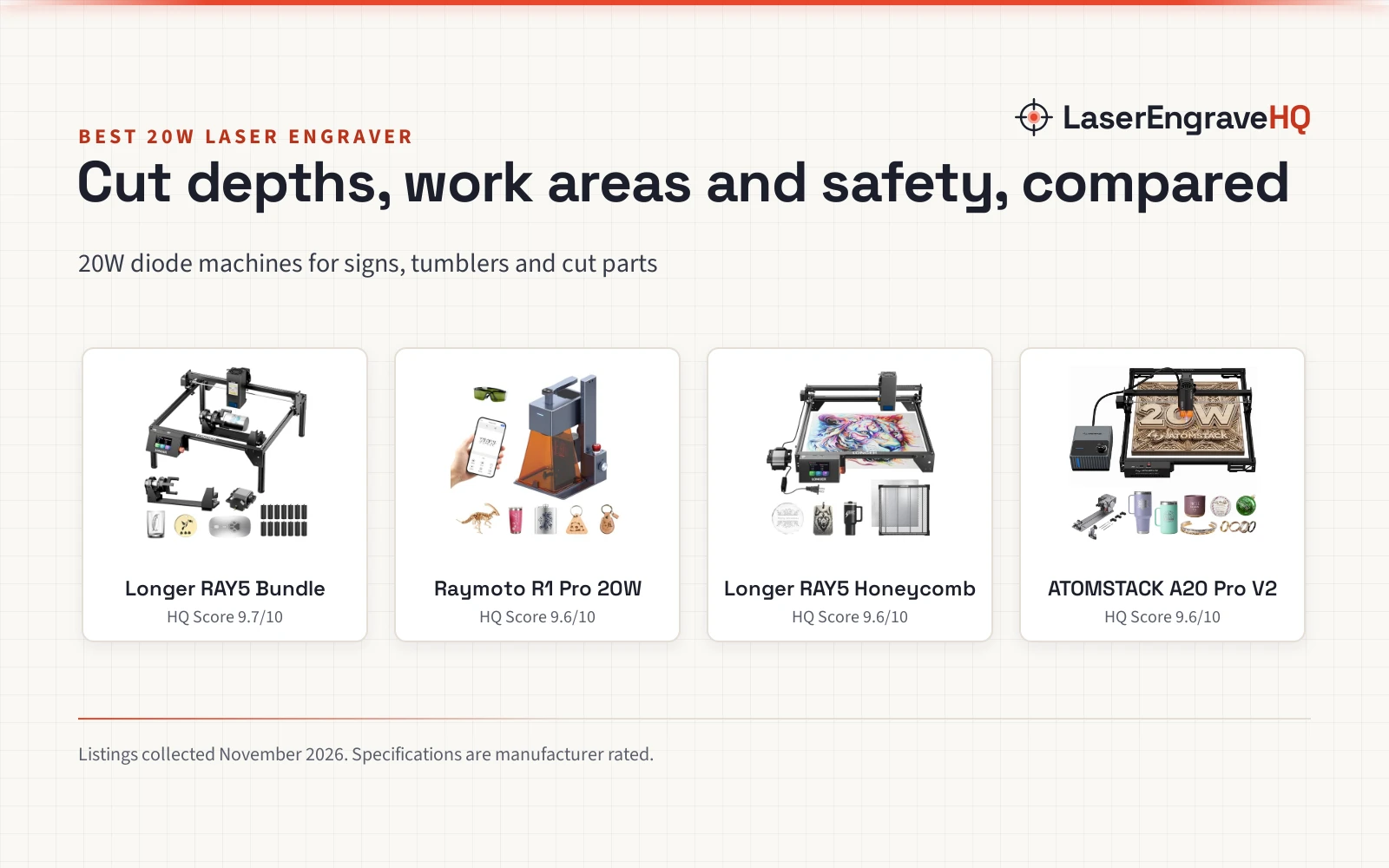
20W diode laser engravers compared by stated cut depth, work area, speed, rotary support and safety, from a portable galvo to a large gantry…
A 10W diode laser engraves and cuts thin stock; a 30W cuts faster and deeper, so choose by the materials and thicknesses you plan…
A practical guide to the 5W vs 10W diode laser choice: how to read optical and input power, rated speed and cut depth on…
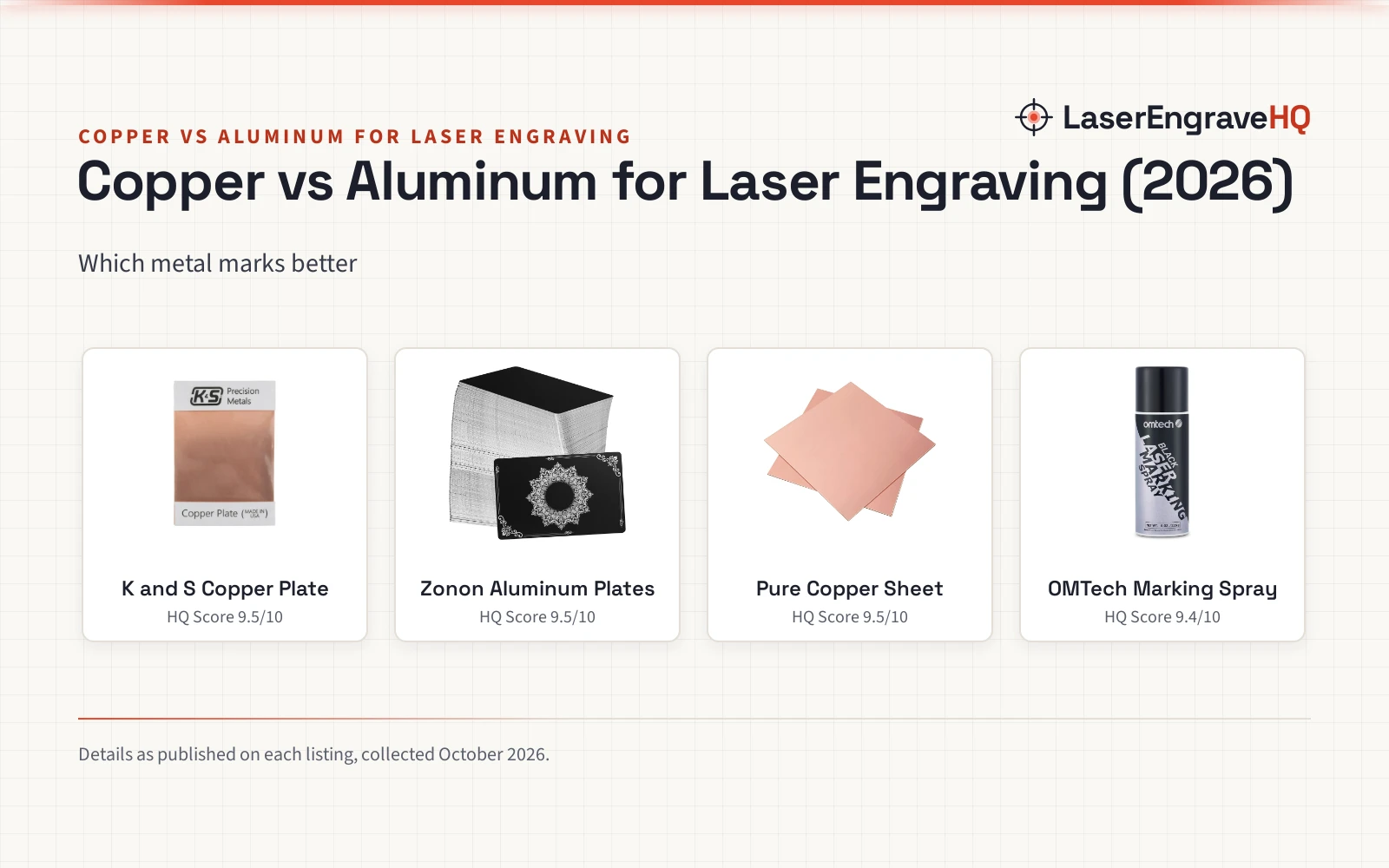
Copper vs aluminum for laser engraving: which metal marks better. Two copper and two aluminum products compared.
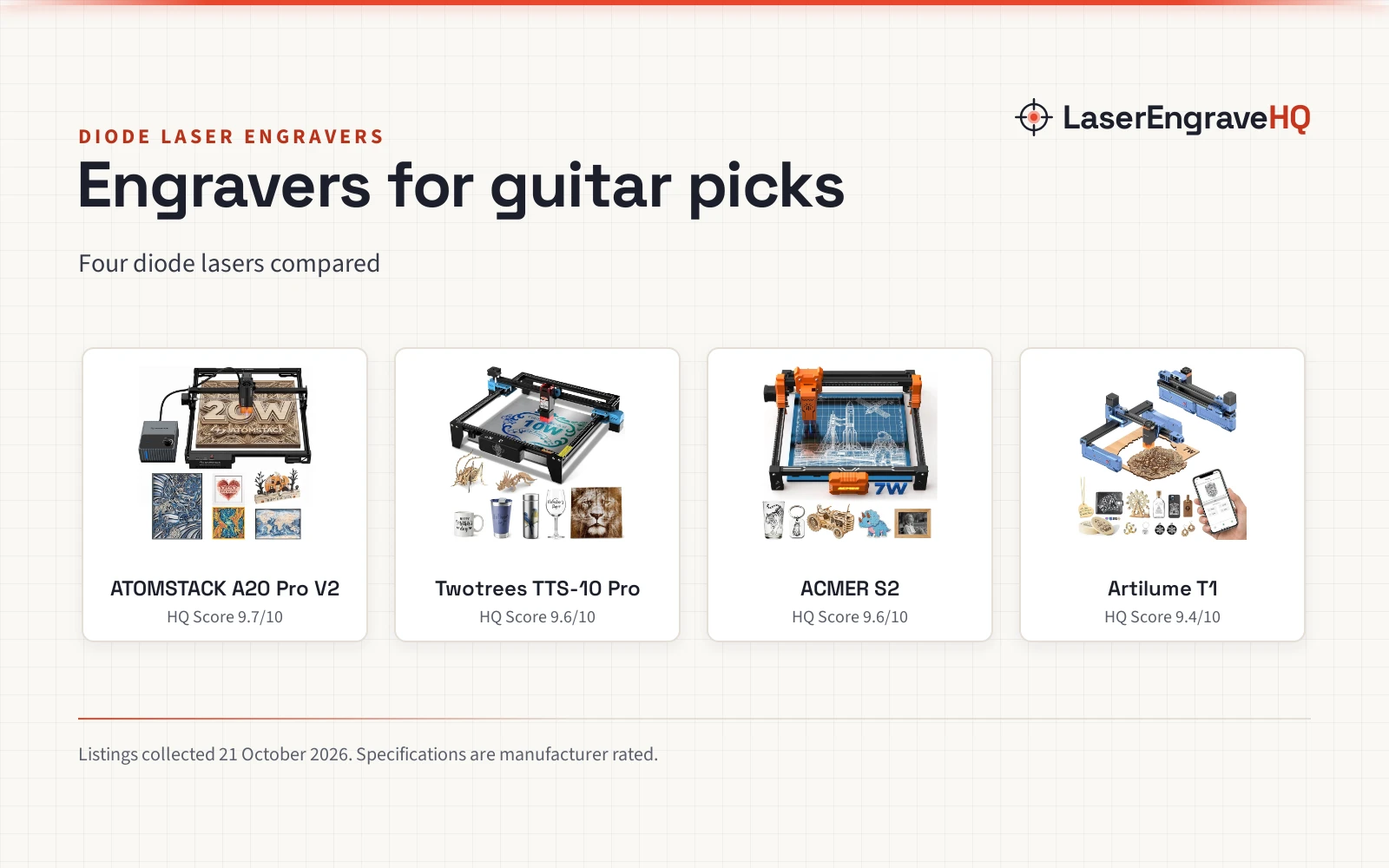
Four diode laser engravers compared by optical power, spot size, work area and safety for guitar picks.
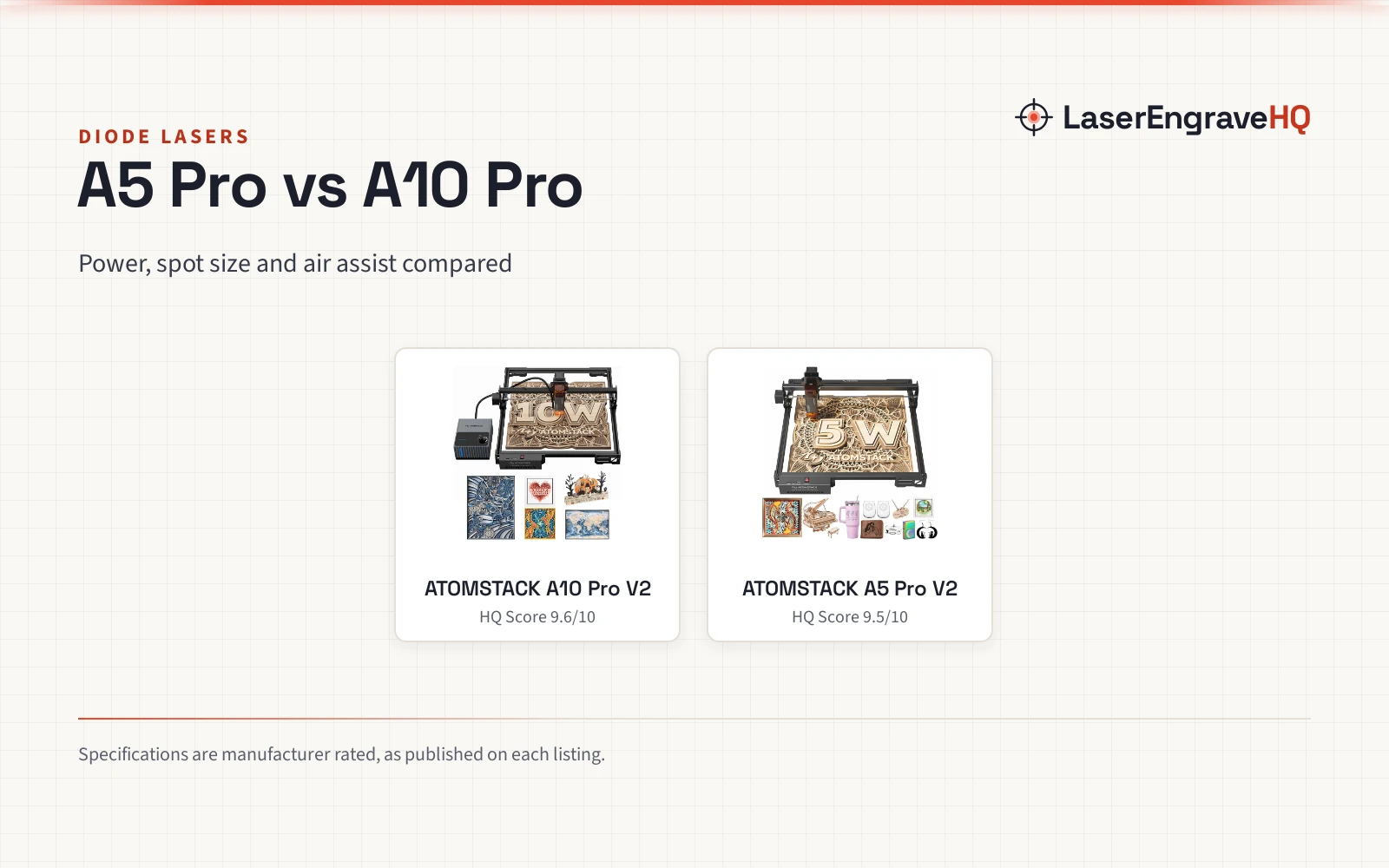
The ATOMSTACK A5 Pro V2 and A10 Pro V2 compared: 5W versus 10W, spot size, air assist, work area and warranty, with a verdict…
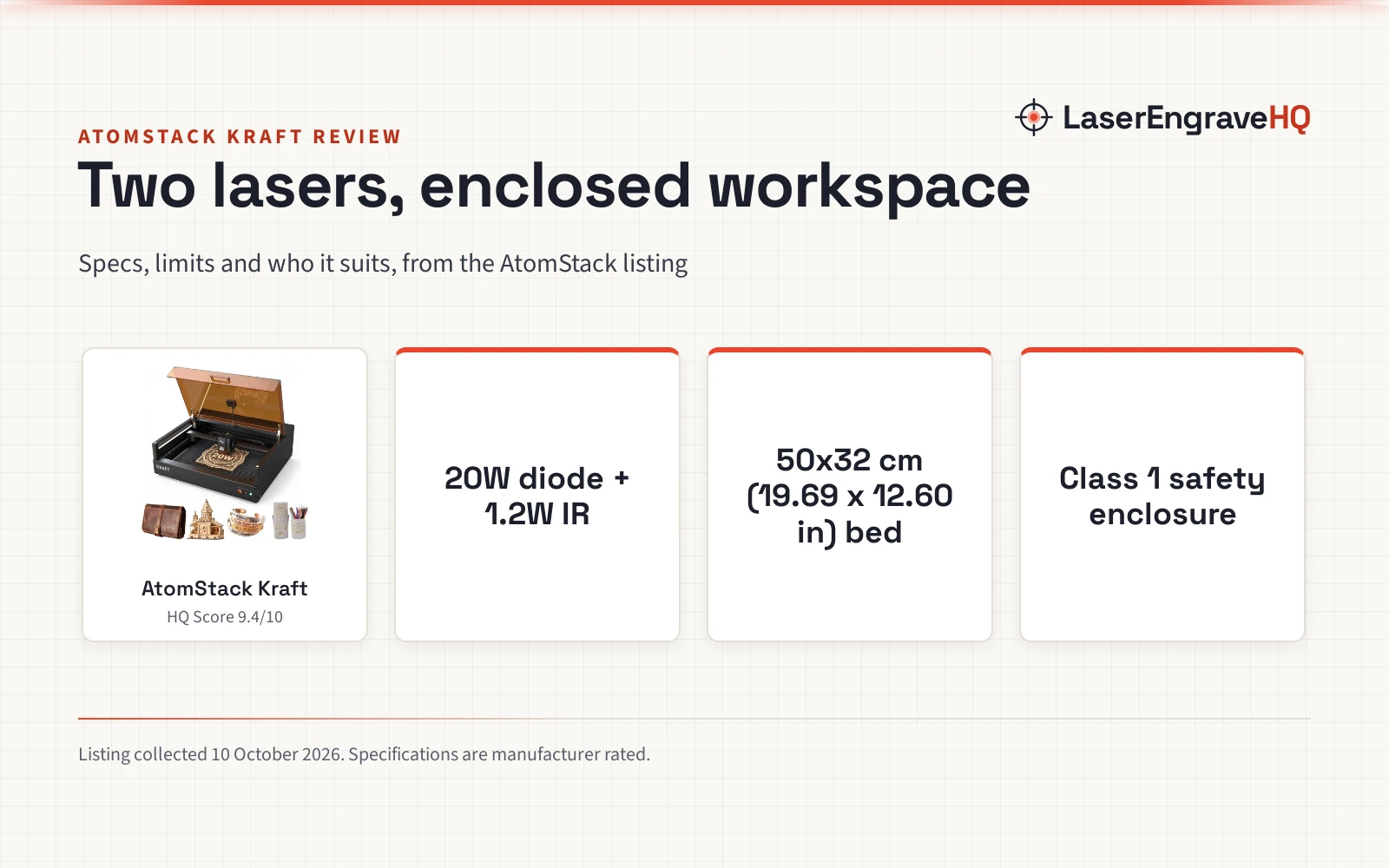
A research-based look at the AtomStack Kraft, a 20W diode and 1.2W IR enclosed dual laser: what the specs mean, how the features work,…
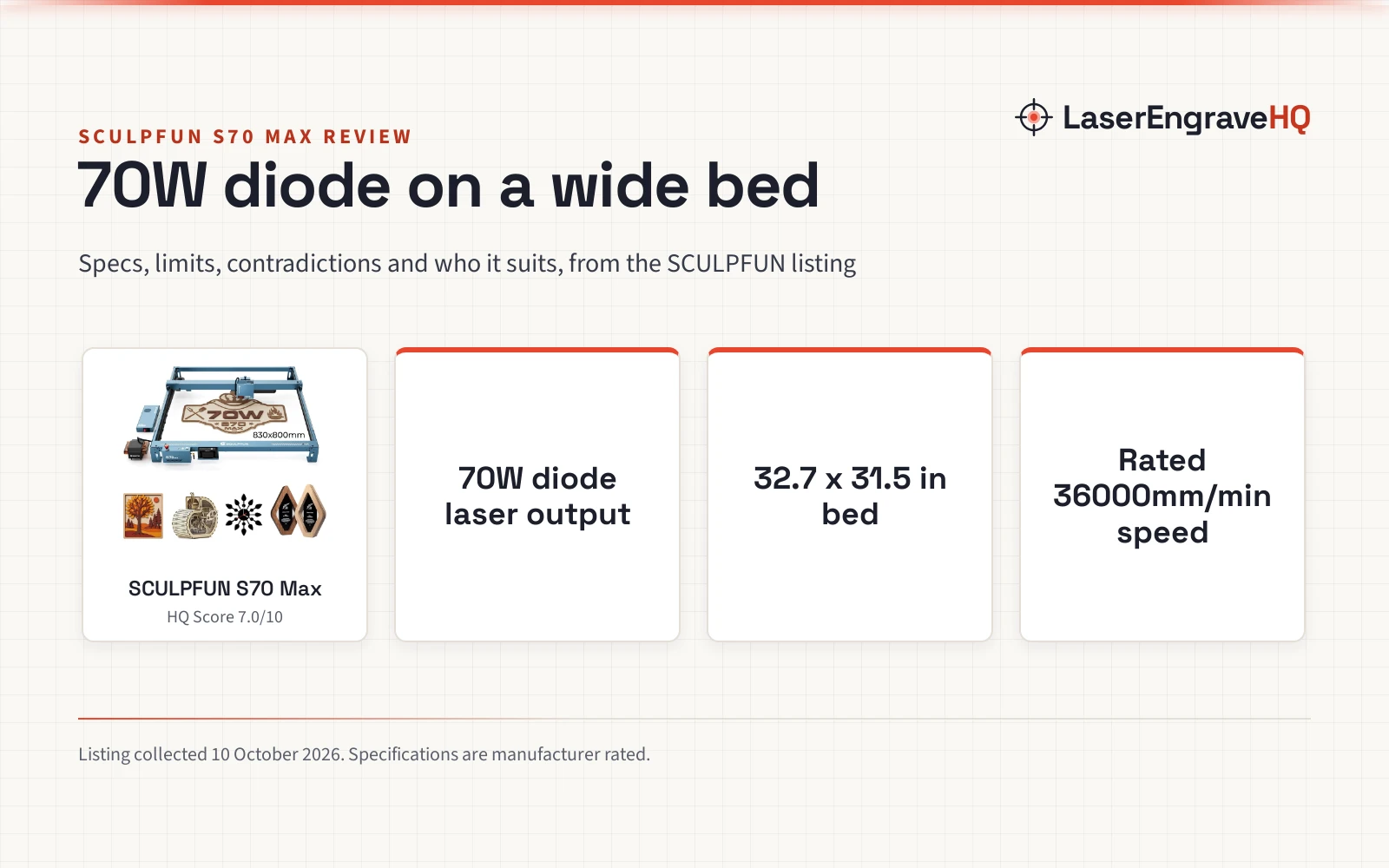
A research-based look at the SCULPFUN S70 Max, a 70W diode laser with a 32.7 x 31.5 in bed: what the specs mean, listing…
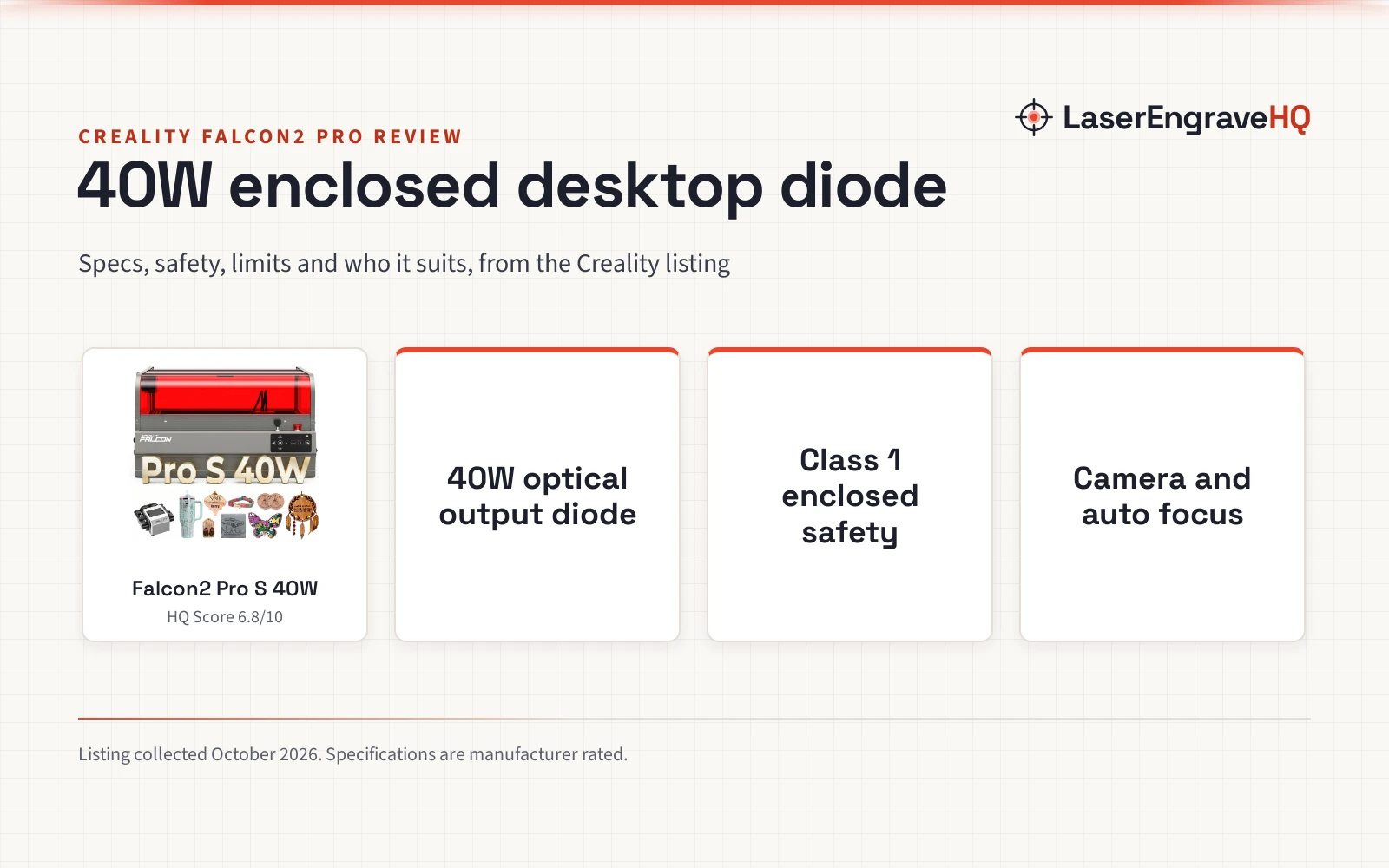
A research-based look at the Creality Falcon2 Pro S, a 40W enclosed desktop diode laser: what the specs mean, who it suits, and who…
Diode lasers are the usual first machine, and listings lean on big numbers. These checks separate a machine that fits your project from one that merely advertises a large wattage. Throughout, power figures are as the listing states them.