Fiber Laser vs Cnc Mill for Brass: Which One Should You Buy?
A plain guide to choosing between a fiber laser and a CNC mill for brass work, with end mills ranked for brass cutting and…

Fiber lasers mark and deep engrave bare stainless steel, brass, aluminum and other metals in seconds. They are the tool for jewelry, knives, tools and metal tumblers, but not for wood or clear materials.
Bare metal points to a fiber laser, clear acrylic to CO2, wood and leather on a budget to a diode, and thick stock or 3D carving to a CNC router. The Machine Finder narrows it down in five questions, and the material guide shows what each type can cut.
A plain guide to choosing between a fiber laser and a CNC mill for brass work, with end mills ranked for brass cutting and…
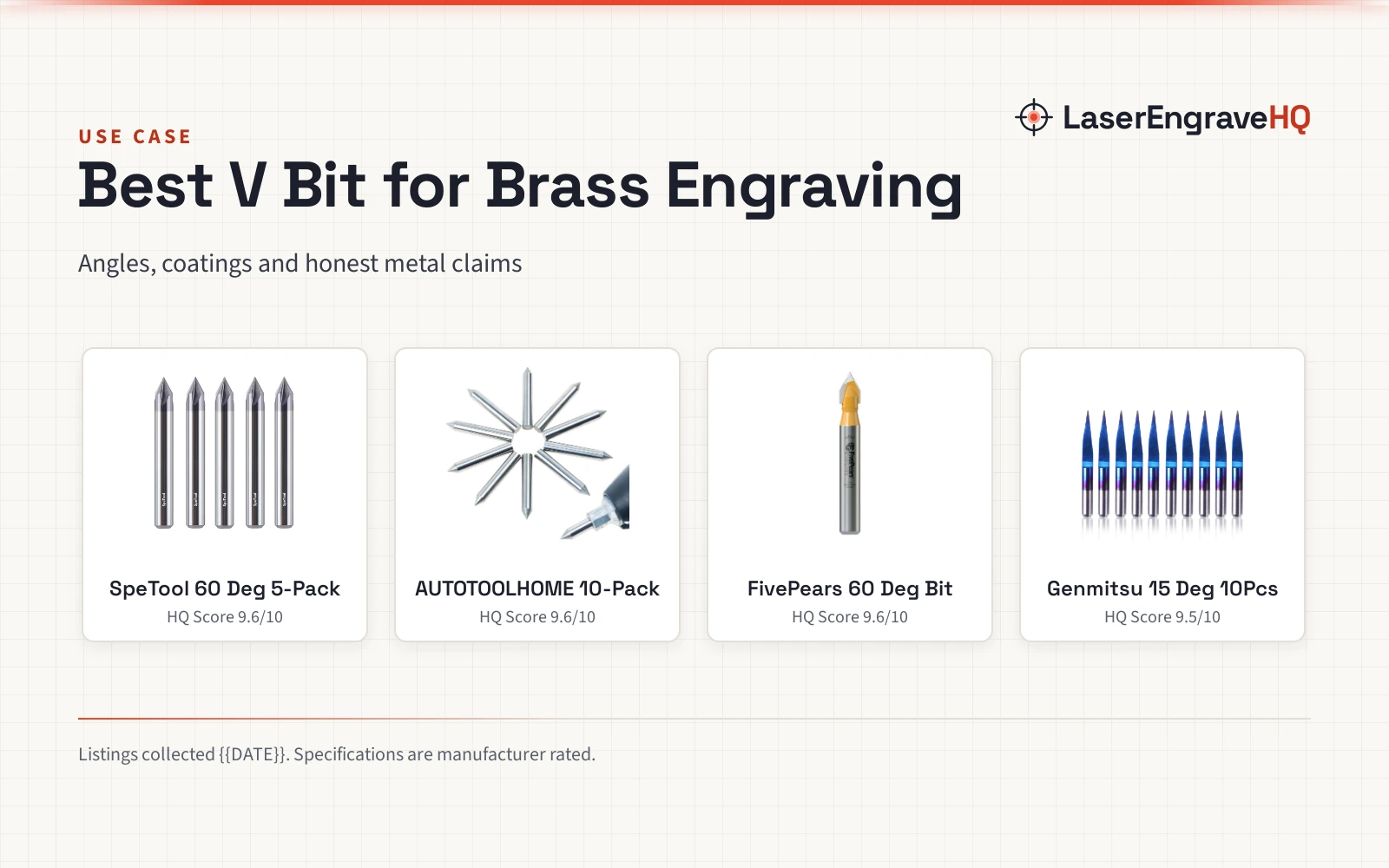
Best v bit for brass engraving: five bits compared on angle, coating and metal suitability, with only two listings claiming metal.
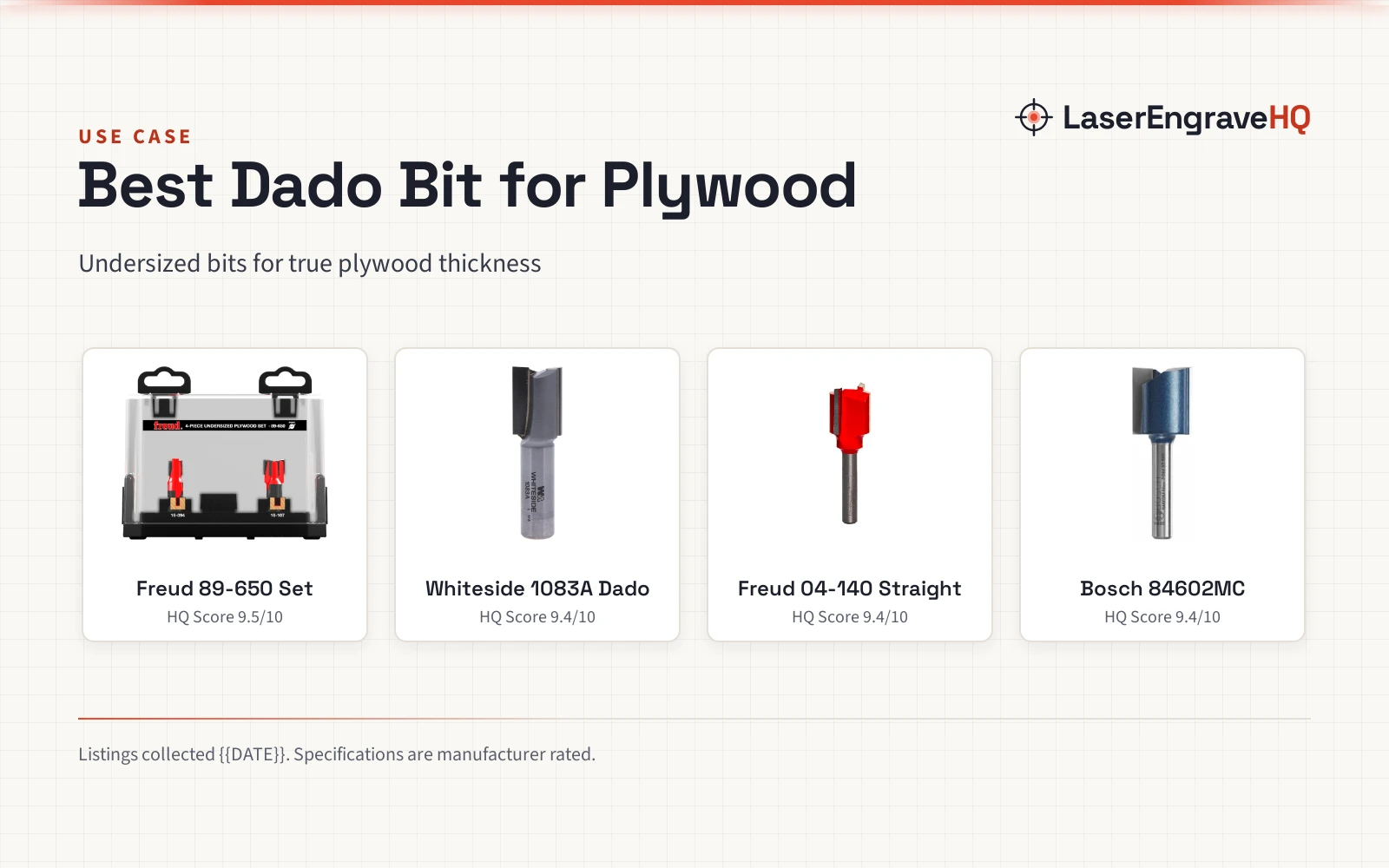
Best dado bit for plywood: five router bits compared on diameter, shank and undersized fit, with the 4-bit plywood set ranked first.
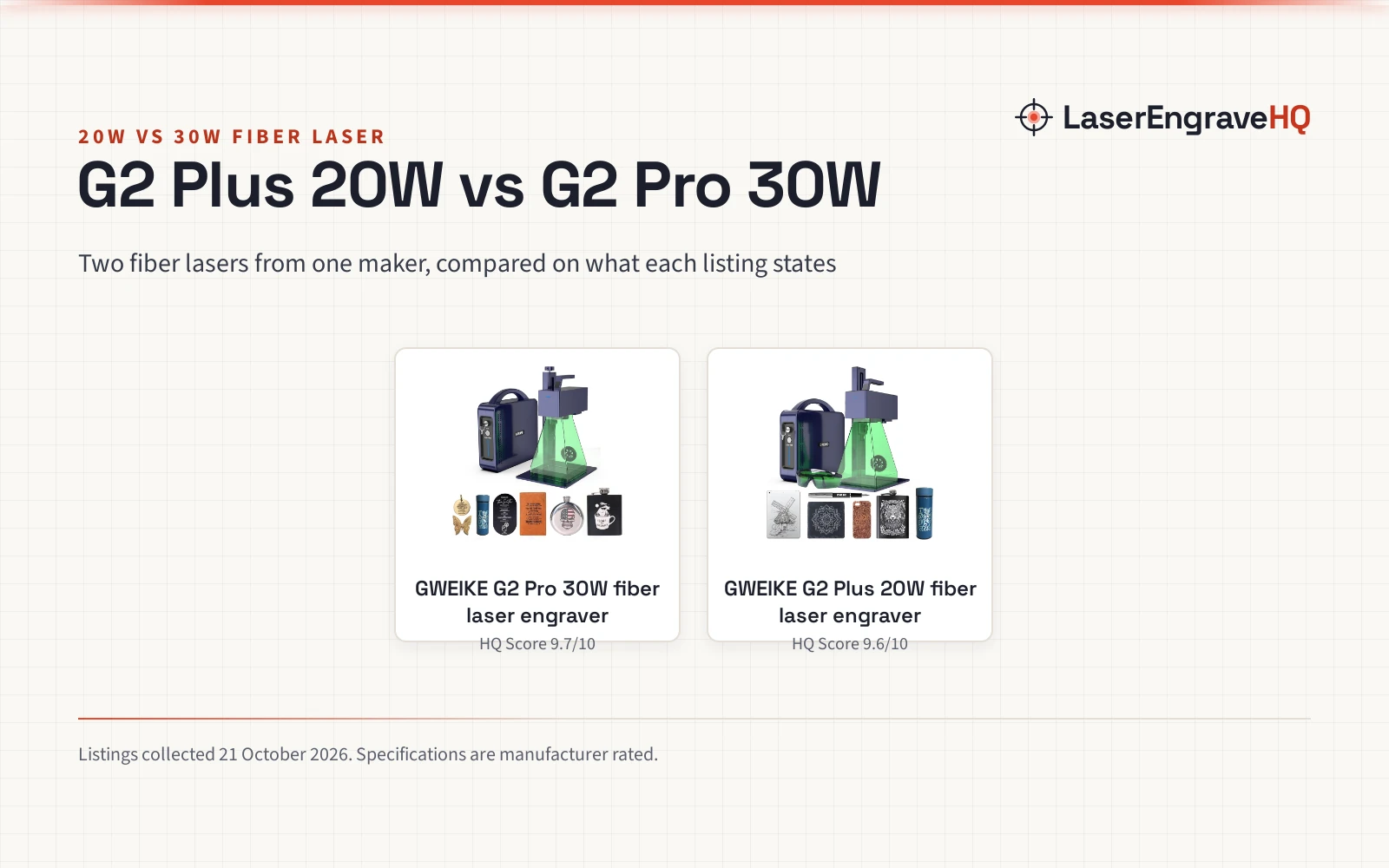
The 30W adds 3D embossing and 90+ color engraving; the 20W keeps a larger 150 by 150 mm work area. Both hit 15000 mm/s.
A practical guide comparing 50W and 100W fiber lasers for metal marking, deep engraving and cutting so you can choose the right power level…
A practical comparison of 30W and 50W fiber lasers: understand marking speed, deep engraving depth, cycle times and which power level suits your metal…
A practical guide to how long a fiber laser lasts, examining stated laser source service life, galvo scanner wear, optics cleaning, and workshop maintenance.
A step-by-step workshop guide to fiber laser engraving settings for brass: adjust speed, power, frequency, hatch spacing, and focal height for clean surface marks…
A detailed comparison of UV and fiber lasers covering wavelength differences, cold marking versus thermal engraving, material limits and workshop setup.
Understand how galvo scanning heads differ from MOPA laser sources, how pulse duration tuning affects metal marking, and how to pick the right workshop…
Fiber lasers mark bare metals, not wood or clear plastics, so the question here is how deep and how large. Use the checks below to match a source to your parts. Fiber sources behave very differently from diode and CO2 units, and their figures are easy to misread.