Is a Filament Dryer Worth It?
A practical guide to whether a filament dryer is worth it: what wet filament does, how dryers work, and when sealed storage is enough.

On this page
Is a filament dryer worth it? For most makers who print with filament that has sat open in damp air, yes: wet filament is a common cause of stringing, popping sounds, rough surfaces and weak layer bonds, and a dryer is the straightforward fix. This guide explains what wet filament does, how a dryer works, when it pays off and when sealed storage is enough.
As an Amazon Associate I earn from qualifying purchases. LaserEngraveHQ earns a commission from purchases made through these links, at no extra cost to you. Read our affiliate disclosure.
No verified drying figures from makers were available for this guide, so it gives no drying temperatures or times. Treat any drying figure you see online as a starting point, and check it against the filament maker guidance for the material you print.
What wet filament does to a print
Filament absorbs moisture from the air, and damp filament behaves badly in the hot end. Water in the filament turns to steam as it prints, which shows up as popping sounds, stringing between parts, a rough or bubbly surface, and layers that bond weakly and snap apart. PLA can pick up enough moisture to print poorly after sitting open in a damp room, while nylon and TPU soak up moisture faster and show the same faults sooner. PETG sits between them: it tolerates damp air longer than nylon, but still prints cleaner dry.
The signs are easy to spot when you know what to look for. Listen for hissing or popping from the nozzle, look for fine strings across gaps, and check whether the surface looks pitted or foamy. PLA that has gone brittle and snaps when bent has also likely taken on moisture. When prints that used to come out clean start failing without any change to the model or the slicer settings, damp filament is a likely cause.
How a filament dryer works
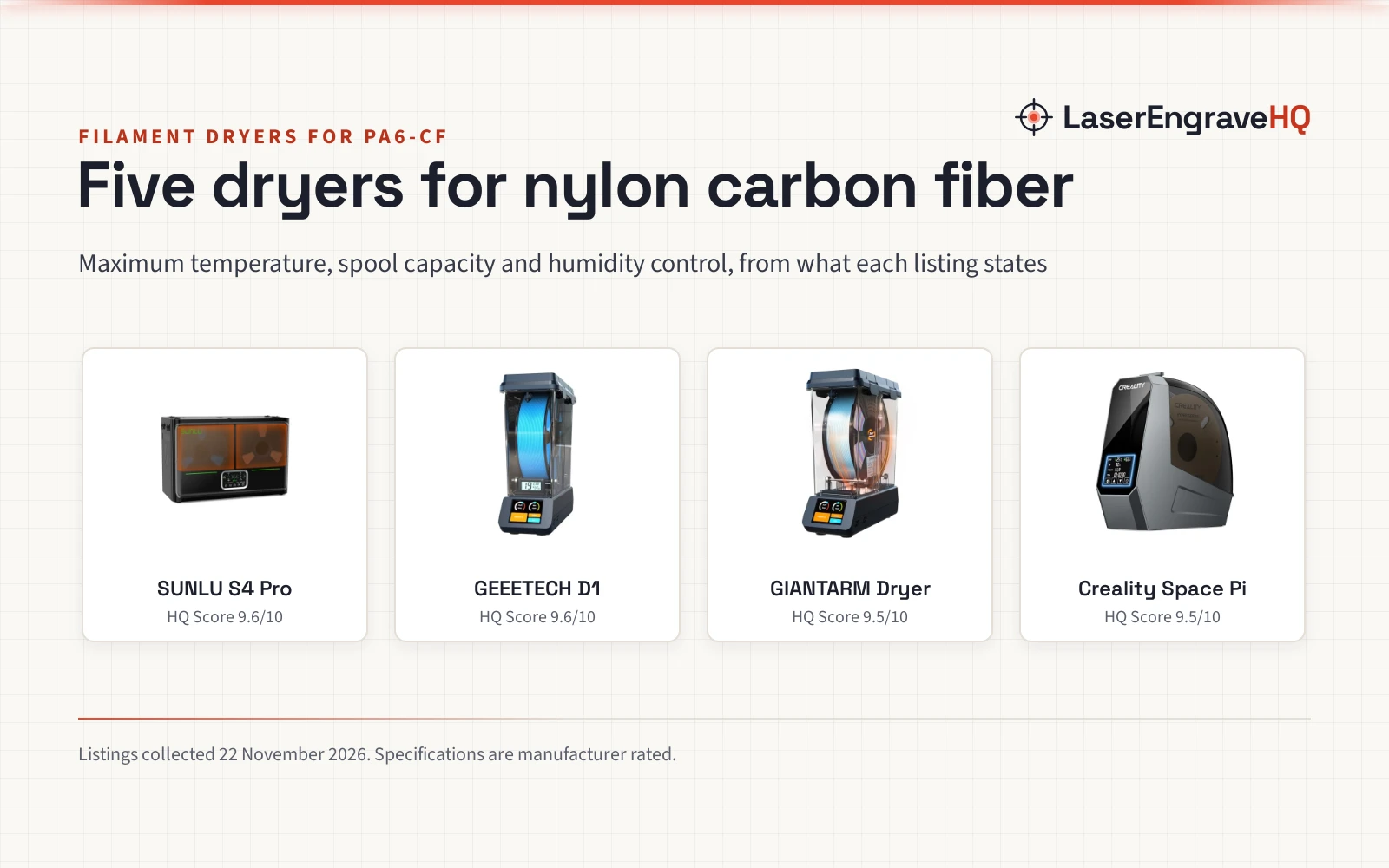
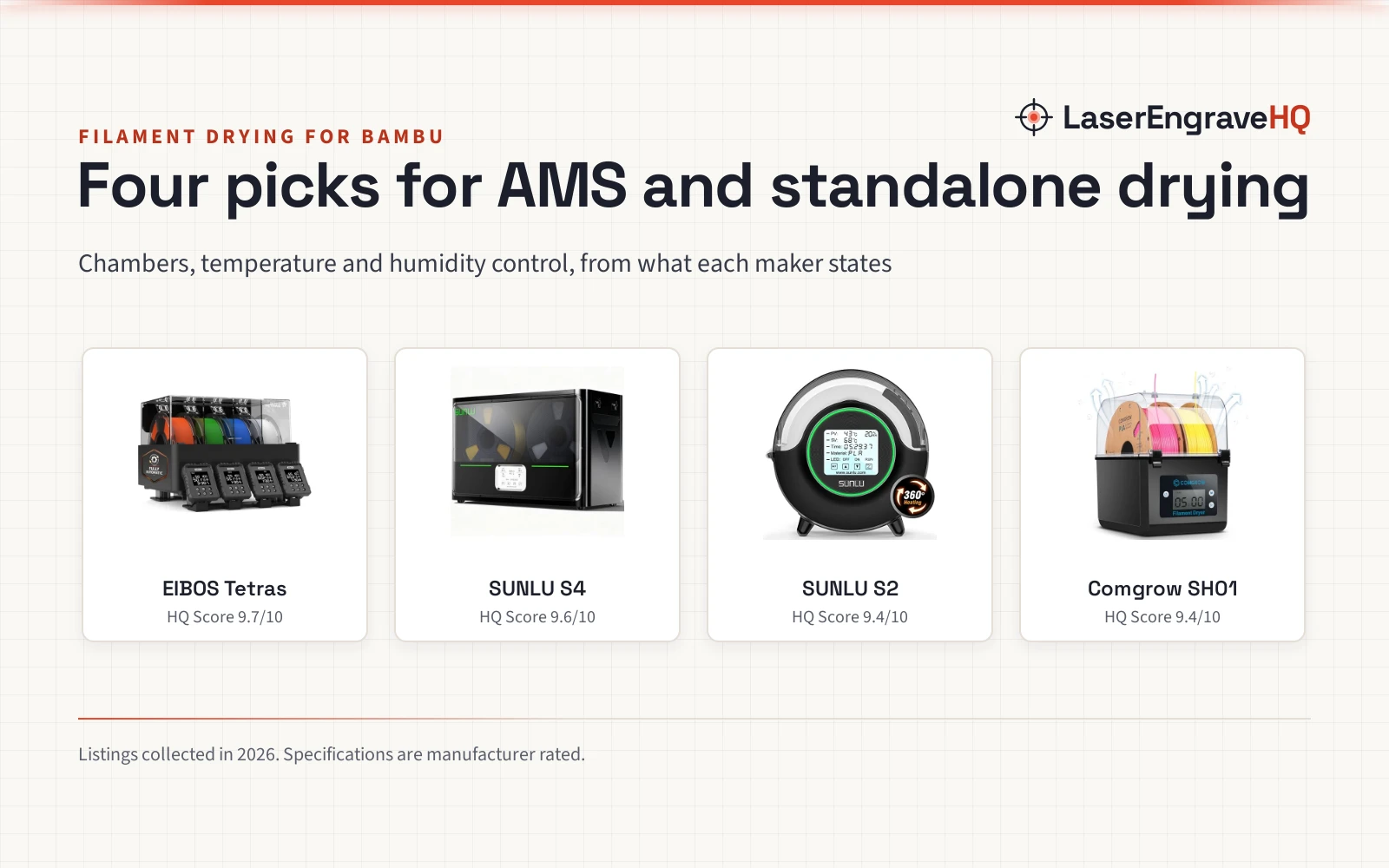
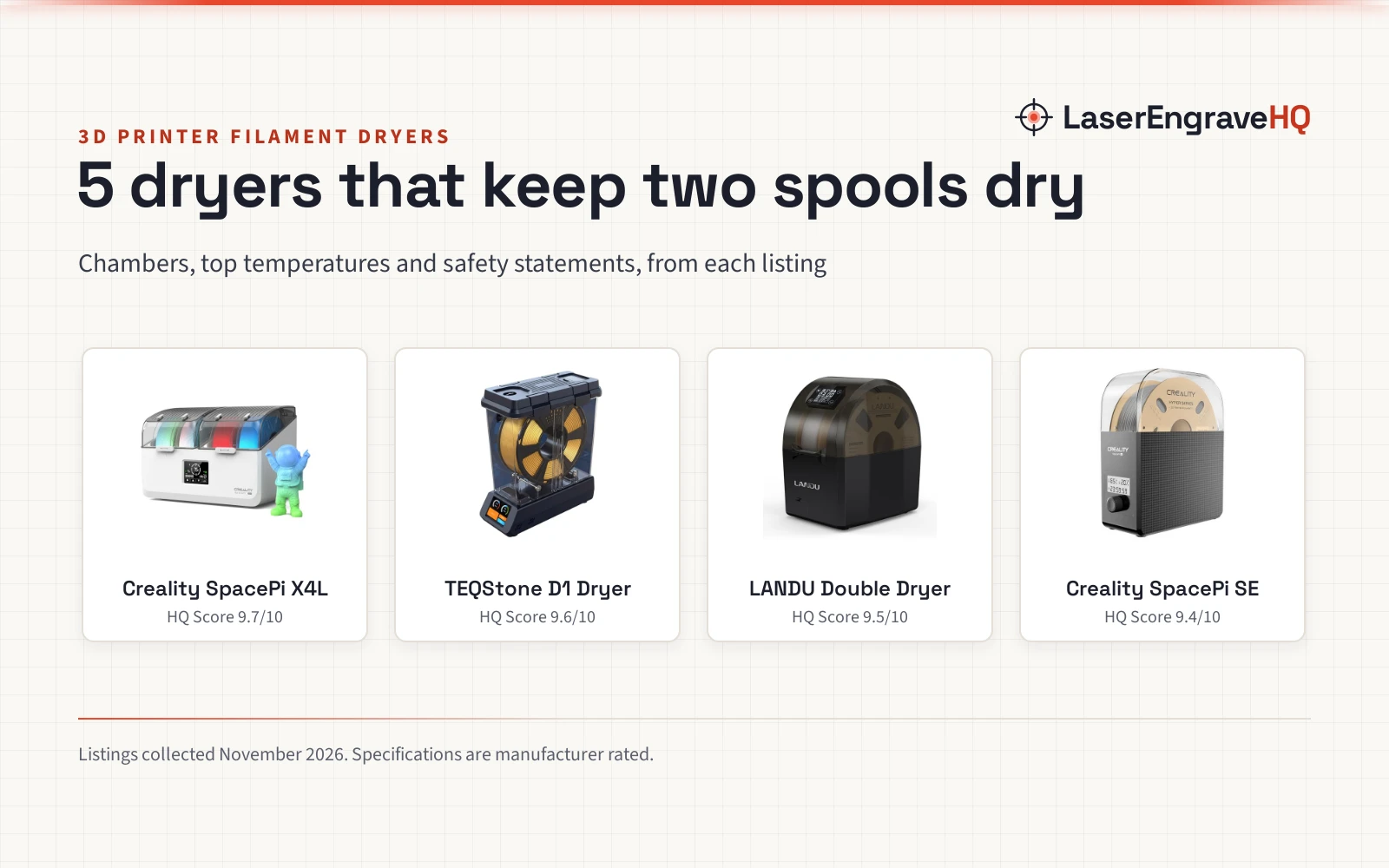
A filament dryer is a heated box that holds a spool and drives moisture out with gentle, steady heat and airflow. The spool sits inside while the dryer warms the air around it, and the moisture leaves the filament and vents out of the box. Many dryers let the filament feed straight from the box to the printer while drying, so the filament stays dry on its way to the hot end. Some dryers also hold desiccant packs inside the box to help keep the air dry.
Most dryers have a temperature control and a display, so you can set the heat to suit the material and watch the drying run. Check that the dryer fits the spools you print with, that it feeds filament without tangling, and that the lid seals well enough to hold the dry air in. A dryer does not fix a worn nozzle or a bad model, so rule those out before blaming the filament.
When a dryer is worth it
A dryer pays off when damp filament keeps ruining prints. Makers in humid rooms, makers who print nylon or TPU, and makers who run long prints from open spools see the clearest gain: the dryer keeps the filament dry through the whole print instead of letting it soak up moisture mid-job. It also pays off when you sell prints, since clean surfaces and strong layers are what customers see and feel.
A dryer is also worth it when a spool has already gone damp. Drying a damp spool can bring it back to clean prints instead of writing the spool off, which matters for pricey materials. If you print most days with filament that lives out in the open, a dryer earns its place on the bench.
When you can skip it
You can skip a dryer when your filament stays dry already. Makers in dry rooms who keep spools in airtight bins with desiccant, and who print PLA from sealed storage, often see no damp-filament faults at all. Occasional printing also lowers the case for a dryer: a spool that goes back into a sealed bin after each session has little time to soak up moisture.
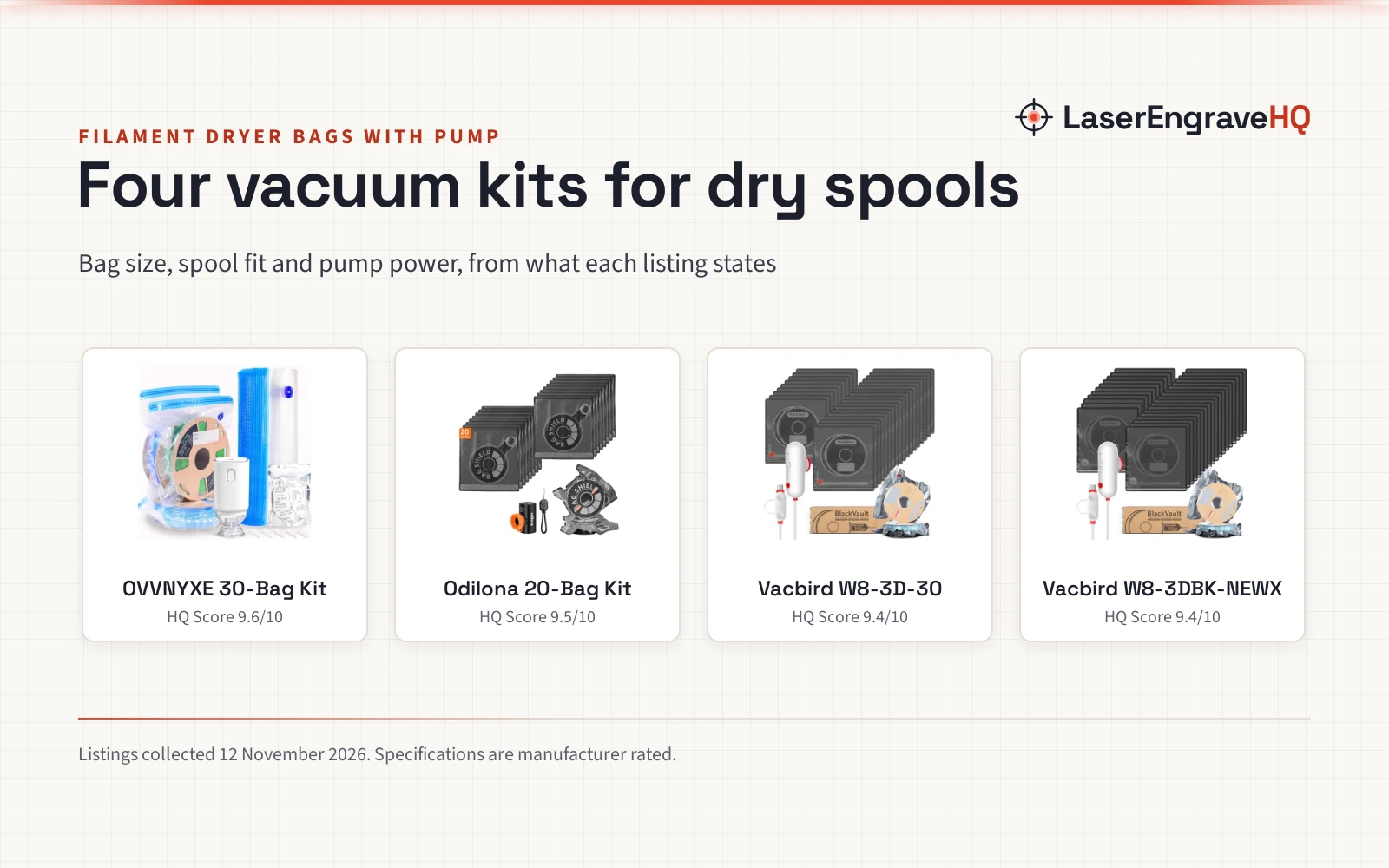
Storage is the lower-cost answer when the room is dry and the printing is light. Airtight bins, vacuum bags and desiccant packs keep filament dry between prints, and a dryer adds little when the filament never gets damp at all. Put the money toward filament or a spare nozzle instead, and revisit the dryer if the room or the printing load changes.
How to store filament without a dryer
Good storage is the baseline whether you own a dryer or not. Keep spools in airtight bins or vacuum bags with desiccant packs, and keep the bins out of damp rooms and away from open windows. Label the bins by material so you can find the right spool without opening every lid, and reseal the bin after each session. For a closer look at keeping PLA dry, see the guide to leaving PLA filament out.
Desiccant packs lose their pull over time, so swap them when they change color or feel damp. A bin that seals well matters more than a fancy bin: if the lid does not close tight, damp air gets in regardless of what is inside. Check the seal now and then, and keep the bins off cold floors where condensation forms.
Common mistakes to avoid
- Drying filament in a household oven, which runs hot and uneven and can melt the spool.
- Leaving spools open in a damp room between prints, then blaming the printer for the result.
- Buying a dryer that does not fit the spools you print with.
- Ignoring the signs of wet filament and chasing slicer settings instead.
- Storing filament in a bin with a lid that does not seal.
Is a filament dryer worth it: the short version
- Wet filament causes stringing, popping, rough surfaces and weak layers.
- A dryer warms a spool with gentle heat and airflow, and can feed filament while drying.
- It pays off in damp rooms, for nylon and TPU, for long prints, and when you sell prints.
- Skip it when sealed storage keeps your filament dry already.
- Store filament in airtight bins with desiccant either way.
Start with storage, watch for the signs of wet filament, and add a dryer when damp filament keeps costing you prints.
FAQ: lasers and CNC
Does PLA need a filament dryer?
PLA absorbs moisture slowly, so sealed storage is often enough. A dryer helps when PLA prints show stringing, popping or rough surfaces after sitting open in damp air.
Can I dry filament in an oven?
A household oven is a poor dryer: it runs hot and uneven and can melt the spool. A dedicated dryer holds steady, gentle heat and is built to hold a spool.
How do I know my filament is wet?
Listen for popping at the nozzle, look for stringing and rough or pitted surfaces, and bend PLA filament: damp PLA often snaps instead of flexing.
Does a dryer work while printing?
Many dryers feed filament straight from the box to the printer while drying, so the filament stays dry on its way to the hot end. Check the model for a feed-through port.
Do I need a dryer for PETG or nylon?
Nylon soaks up moisture fast and benefits most from a dryer, while PETG tolerates damp air longer but still prints cleaner dry. PLA is the most forgiving of the group.
How should I store filament after drying?
Put the spool straight into an airtight bin or vacuum bag with desiccant packs, and reseal the bin after each session. For more on storage, see the best 3D printer stand with filament storage guide.
Related: the 3D printer hub, how to 3D print for beginners and types of PETG filament. Also see the toughest 3D printer filament. Also see the best 3D printer for smooth finish.