Exhaust Fan Standard Size: Dimensions and Sizing Chart
Fan sizes are named by duct diameter, so this guide explains how to match an exhaust fan to a laser enclosure.

The parts that make a laser work better: air assist pumps, rotary attachments for tumblers, enclosures, honeycomb beds, risers and exhaust fans. Each guide says which machines an accessory fits.
Bare metal points to a fiber laser, clear acrylic to CO2, wood and leather on a budget to a diode, and thick stock or 3D carving to a CNC router. The Machine Finder narrows it down in five questions, and the material guide shows what each type can cut.
Fan sizes are named by duct diameter, so this guide explains how to match an exhaust fan to a laser enclosure.
Water chiller maintenance for a CO2 laser tube: check the water level, watch the temperature, keep the lines and filters clean, and change the…
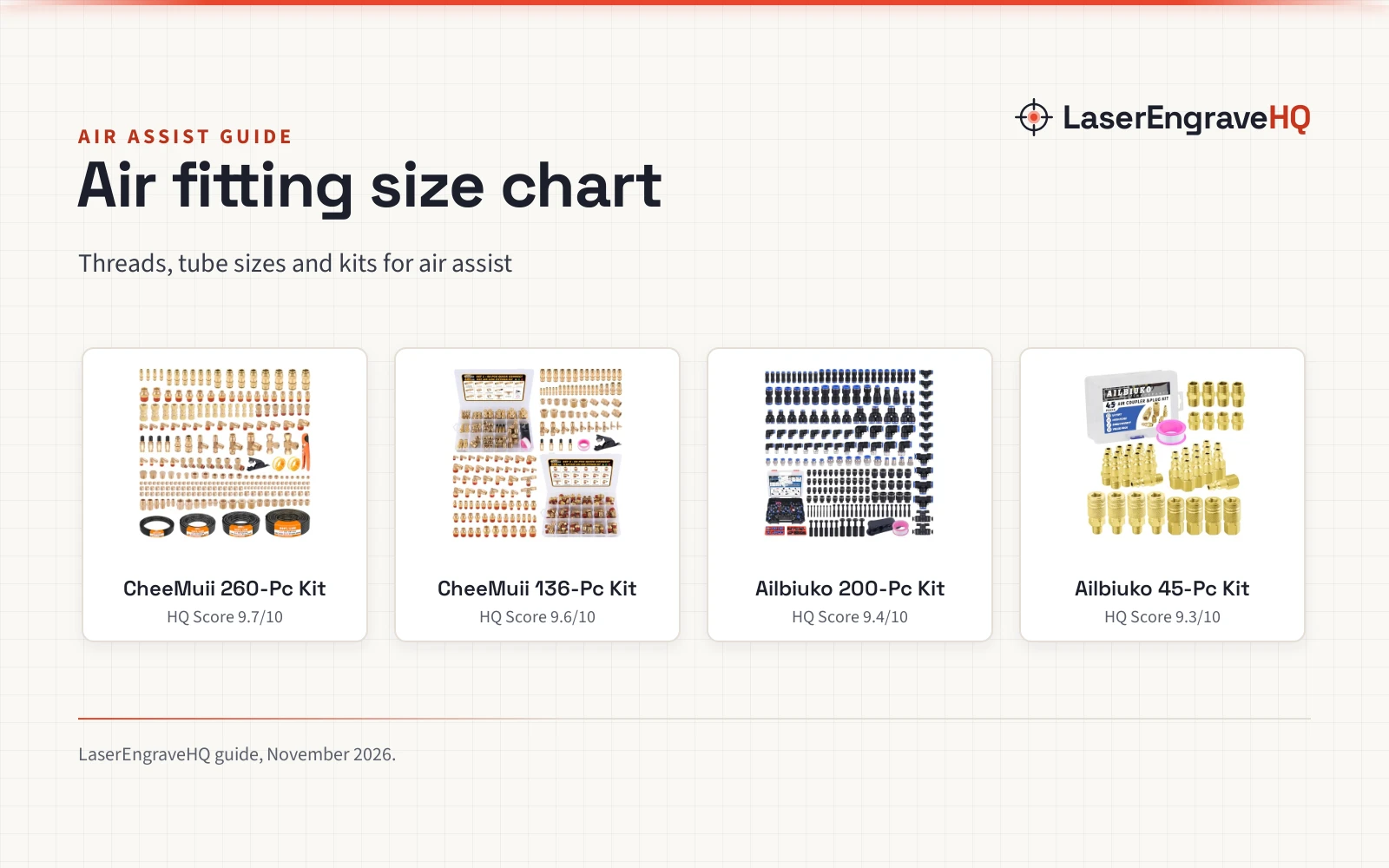
An air fitting size chart matches NPT threads to ports and push-to-connect fittings to tube sizes, so the right fitting can seal.
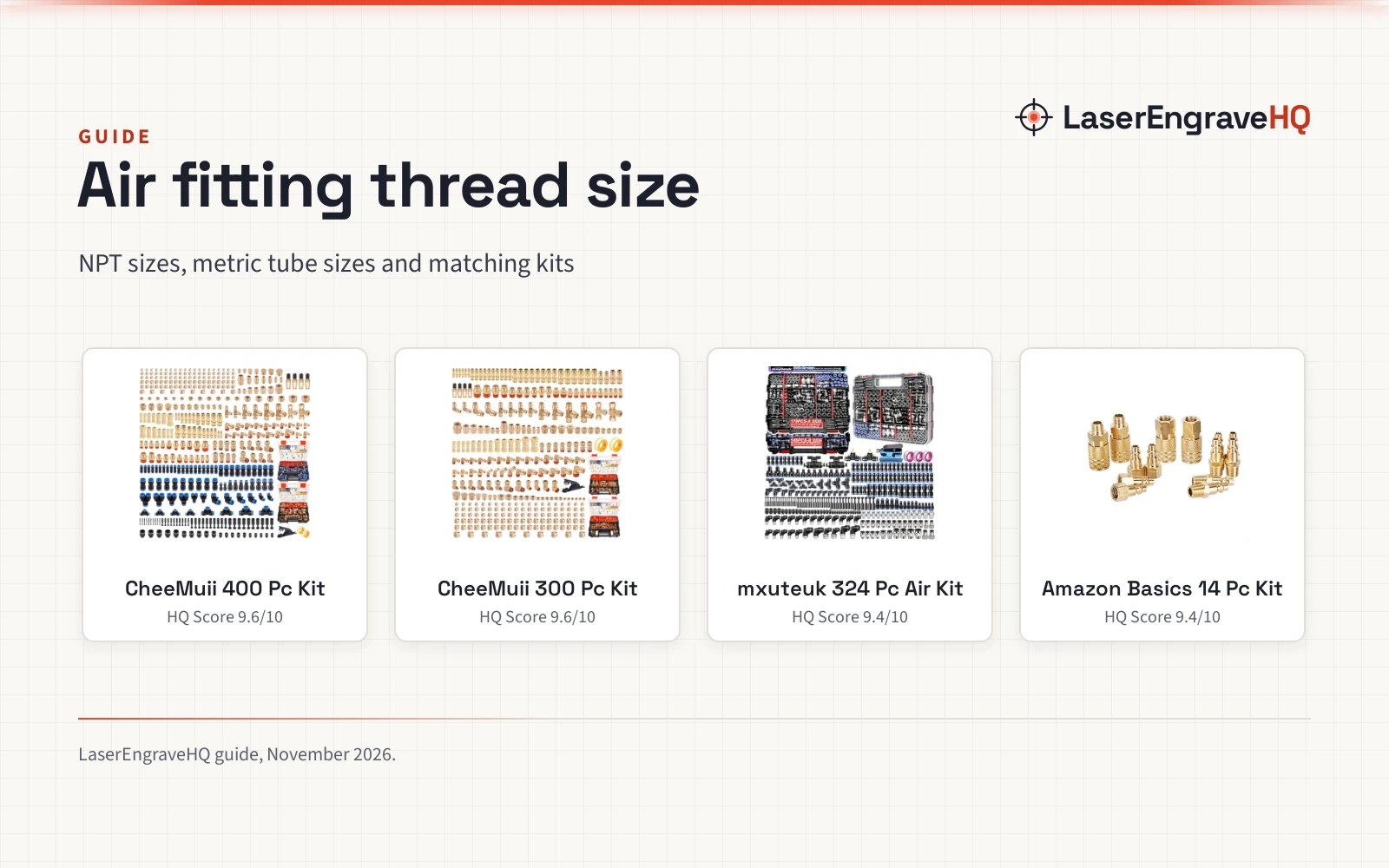
Match the thread size on the fitting to the port on the compressor or tool, using the NPT and metric sizes the kits in…
There is no single standard chiller temperature: compressor chillers publish a settable range and control precision, and this guide shows how to choose a…
Keep spare lenses, protective windows, nozzles, fans and modules on hand so a worn part never stalls an engraving job.
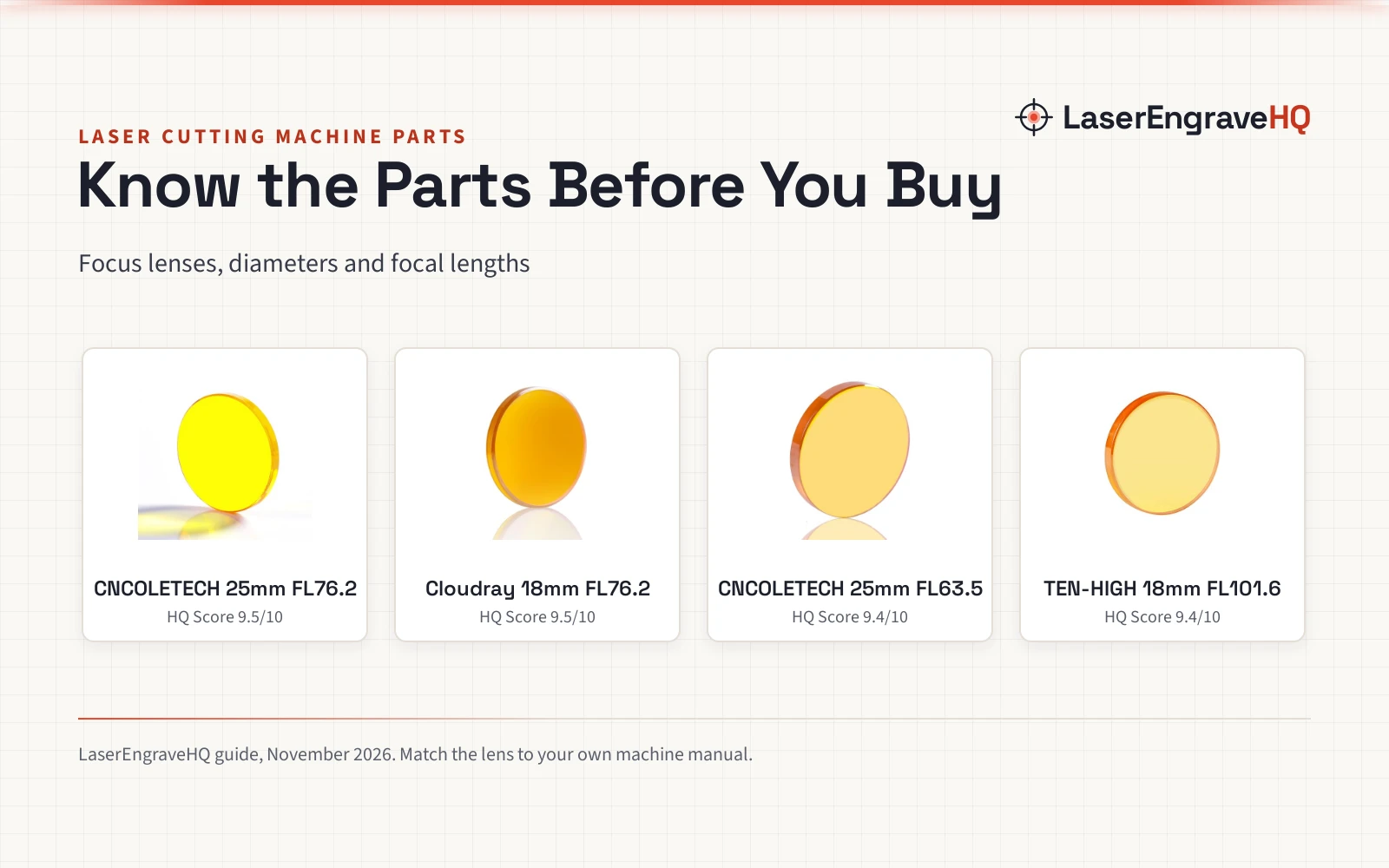
Laser cutting machine parts explained: the focus lens, mirrors and bed of a CO2 machine, and the lenses that fit them, with the diameters…
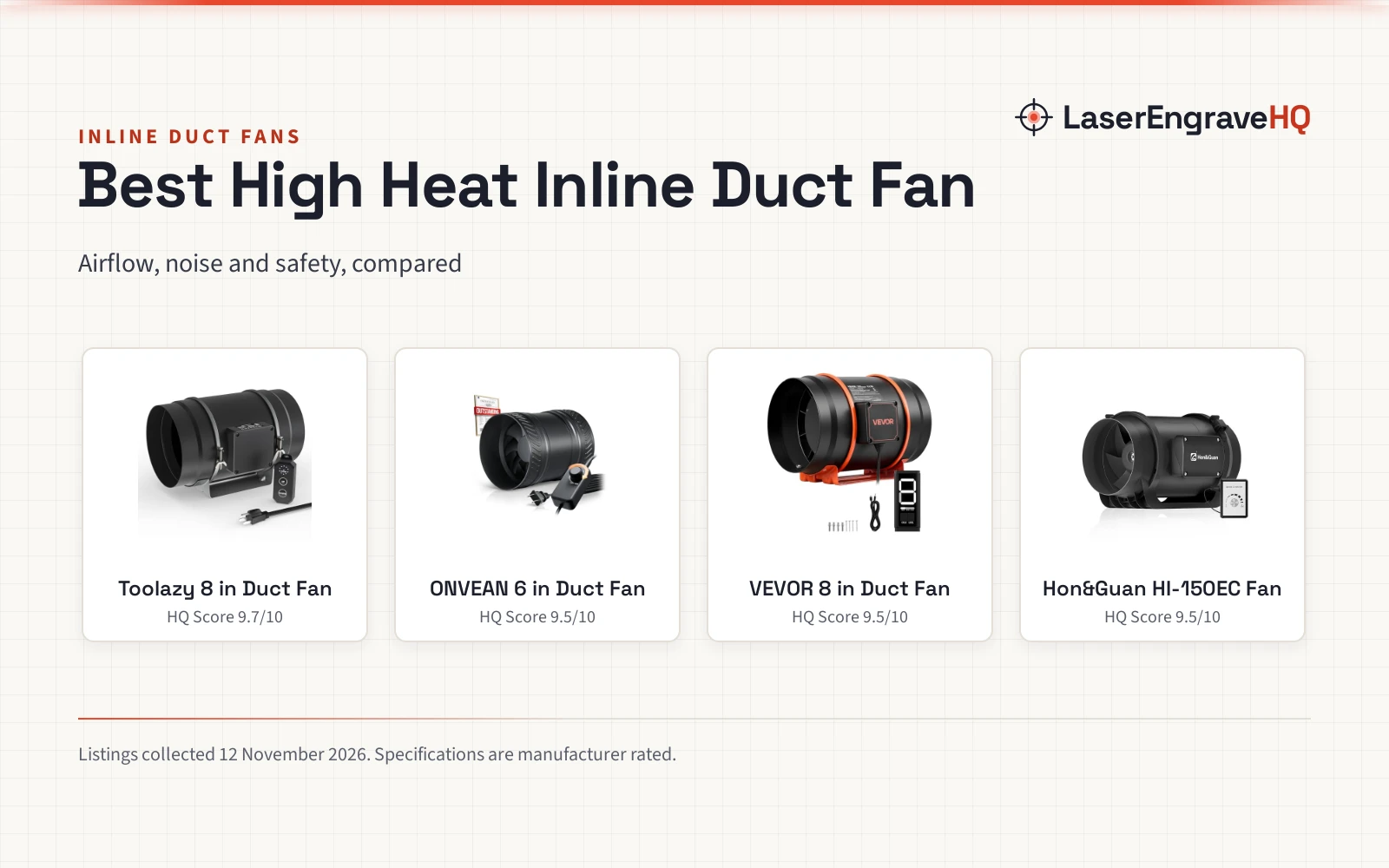
5 inline duct fans from 90 to 831 CFM compared by airflow, noise, power and safety statements for laser engraving areas.
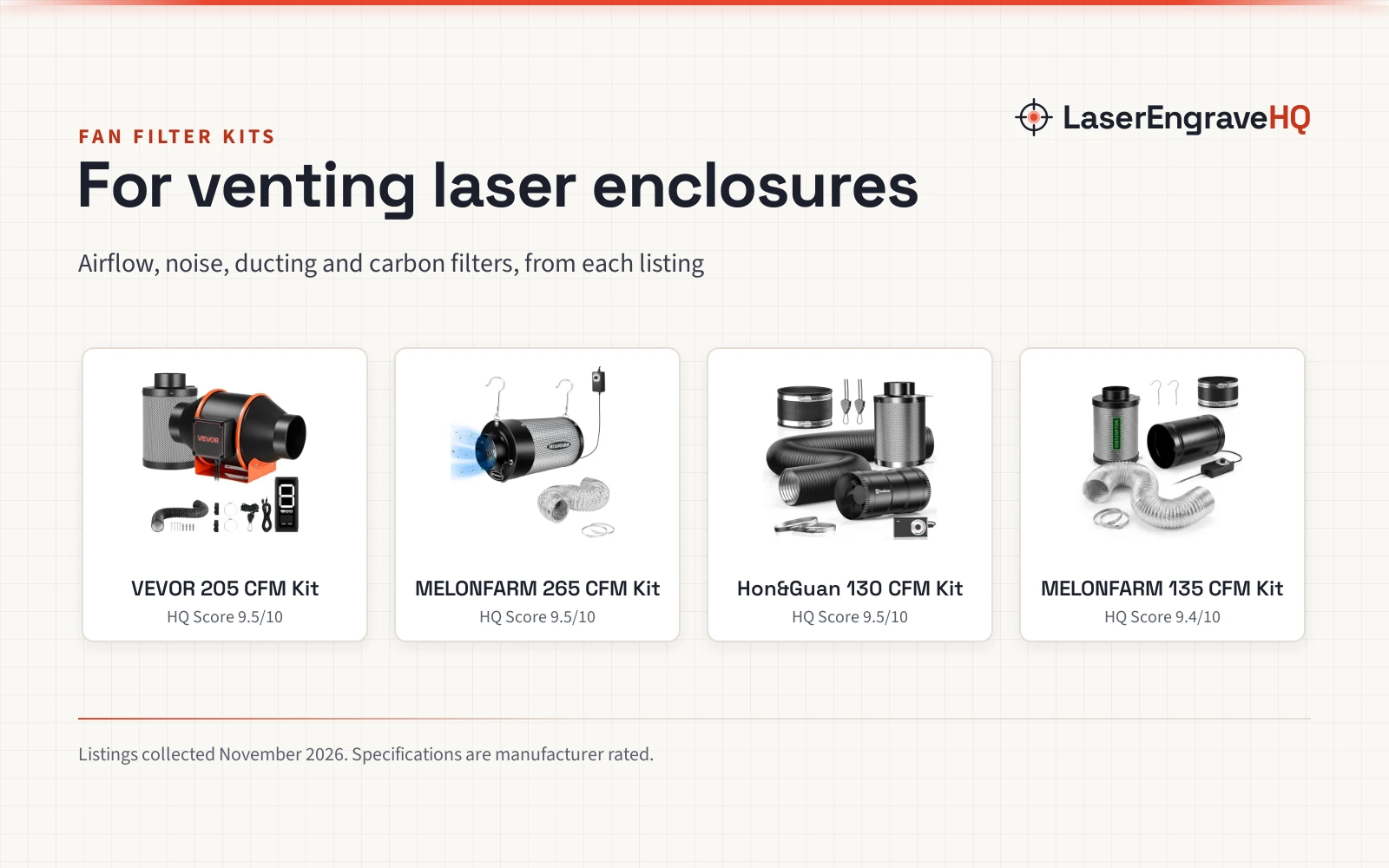
5 fan and carbon filter kits for venting laser and 3D printer enclosures, compared by stated airflow, noise, ducting, controller and safety statements.
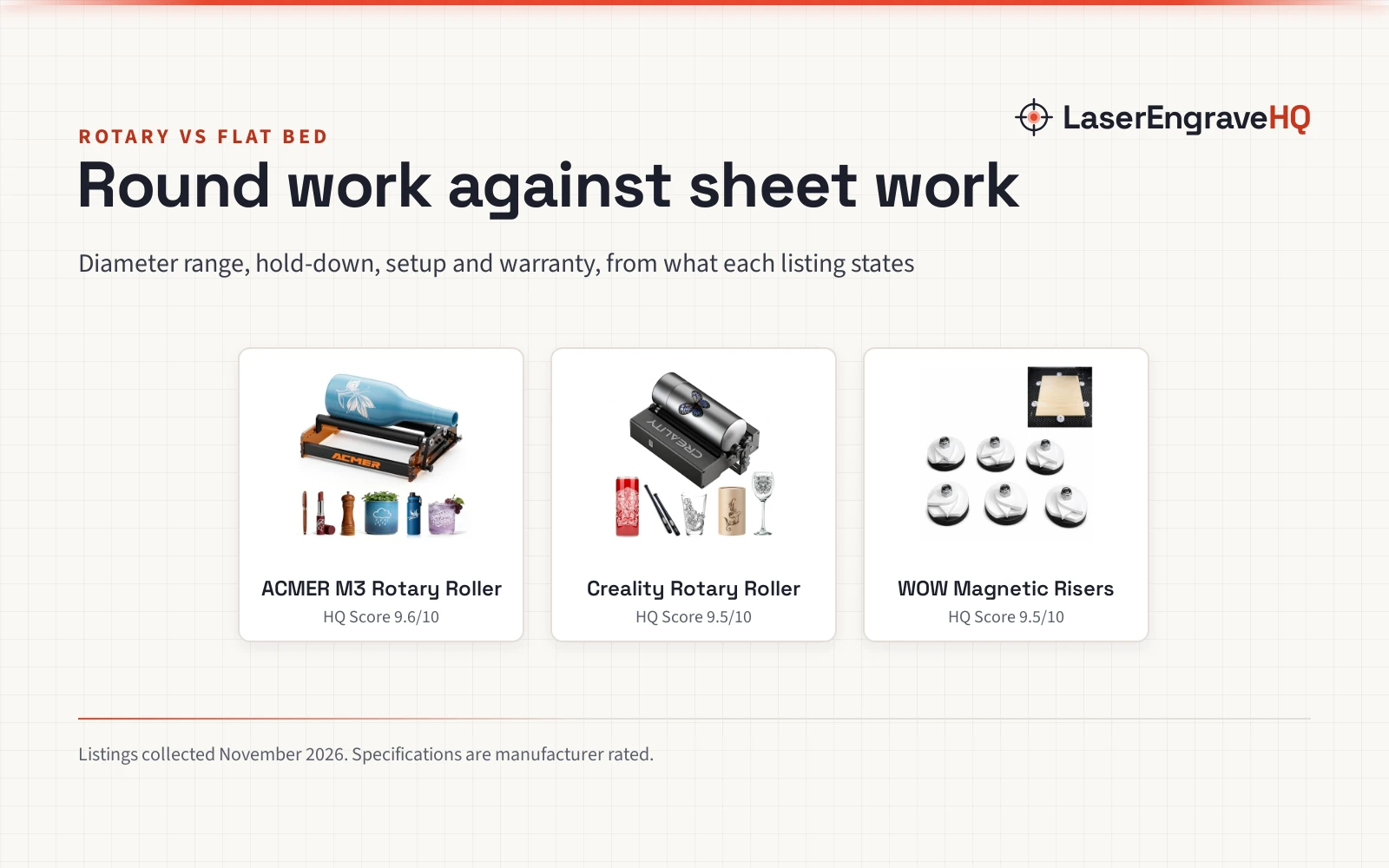
2 rotary rollers for cups, tumblers and bottles against a set of magnetic risers for sheet work on a honeycomb bed, compared by what…
Accessories do not change the laser, but they change how well it works. Check compatibility first, then performance figures. Compatibility lists are as the maker states them. If an accessory claims to fit many machines, look for the list rather than the claim. A good accessory solves one problem: smoke, flare-ups, uneven stock or round objects. Decide which problem you have before comparing models, then read the figures that relate to it.