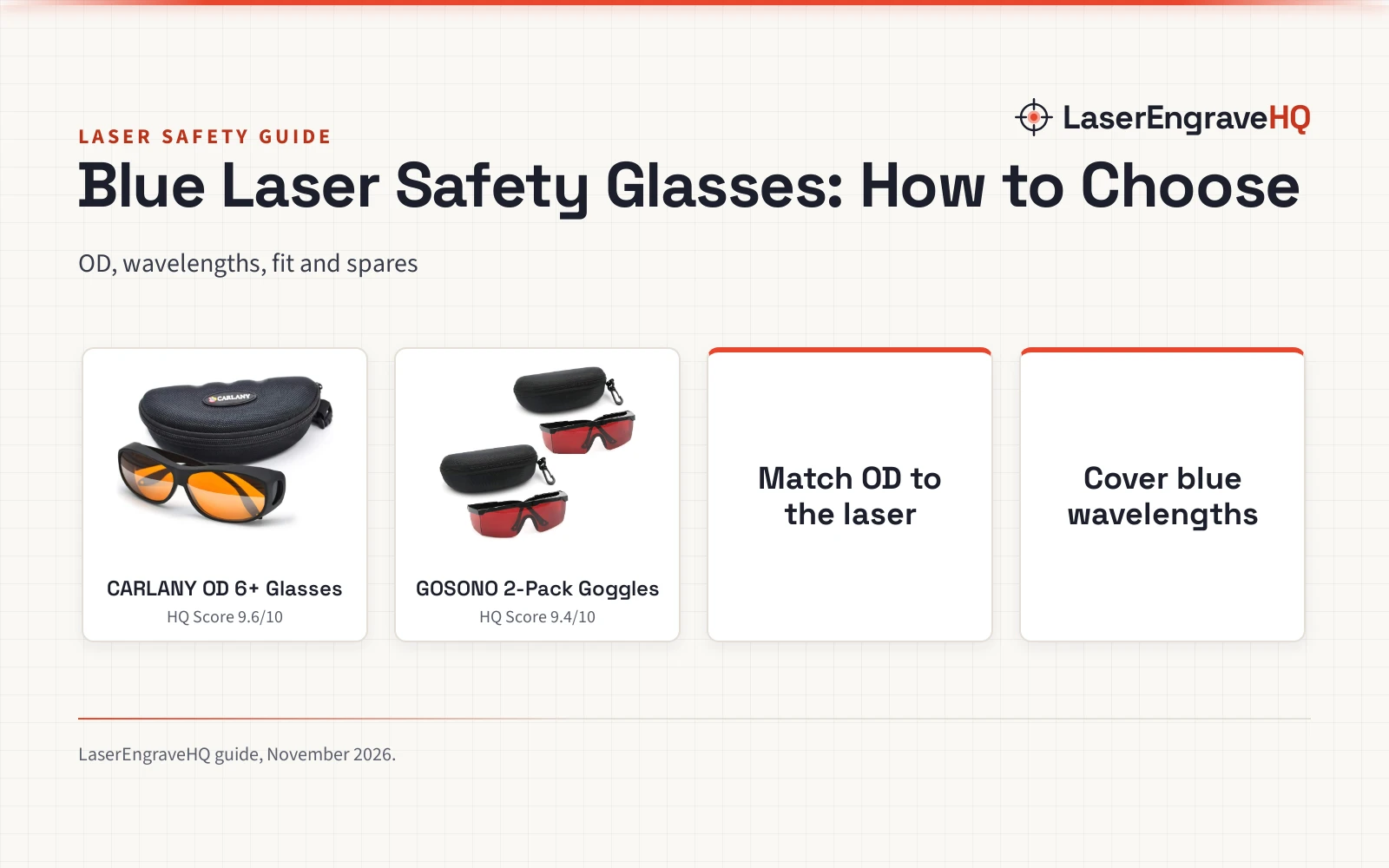
Blue Laser Safety Glasses: How to Choose
How to pick blue laser safety glasses that state an optical density and a wavelength range matching the laser, with two pairs compared.

Laser safety gear: safety glasses rated for your laser wavelength, enclosures, fume extractors and fire safety. A rating only protects you if it matches your machine, so every guide checks the stated wavelength and OD.
Bare metal points to a fiber laser, clear acrylic to CO2, wood and leather on a budget to a diode, and thick stock or 3D carving to a CNC router. The Machine Finder narrows it down in five questions, and the material guide shows what each type can cut.
How to pick blue laser safety glasses that state an optical density and a wavelength range matching the laser, with two pairs compared.
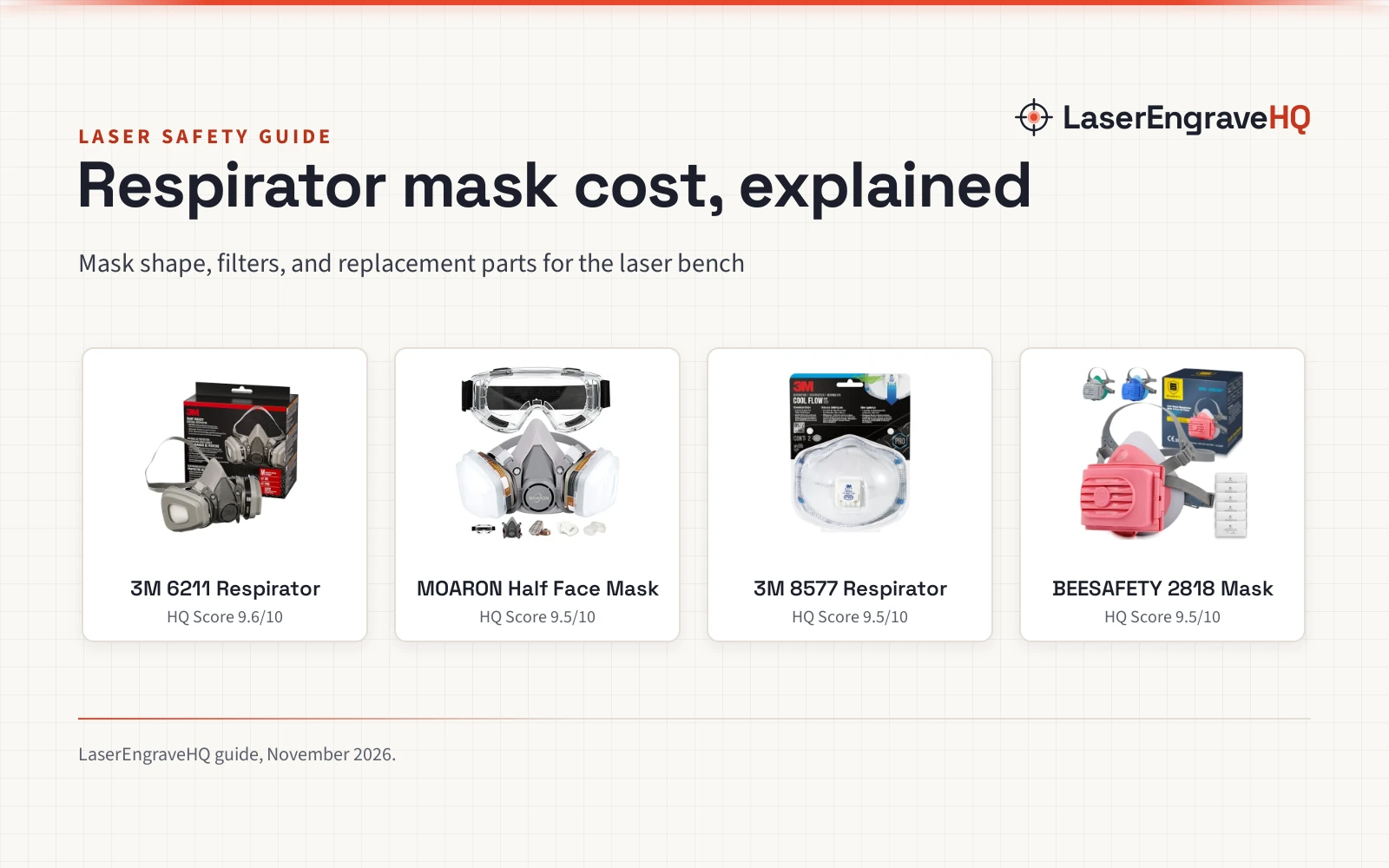
Respirator mask cost depends on the mask shape, the filter it uses, and how often its parts need replacing, so makers can match the…
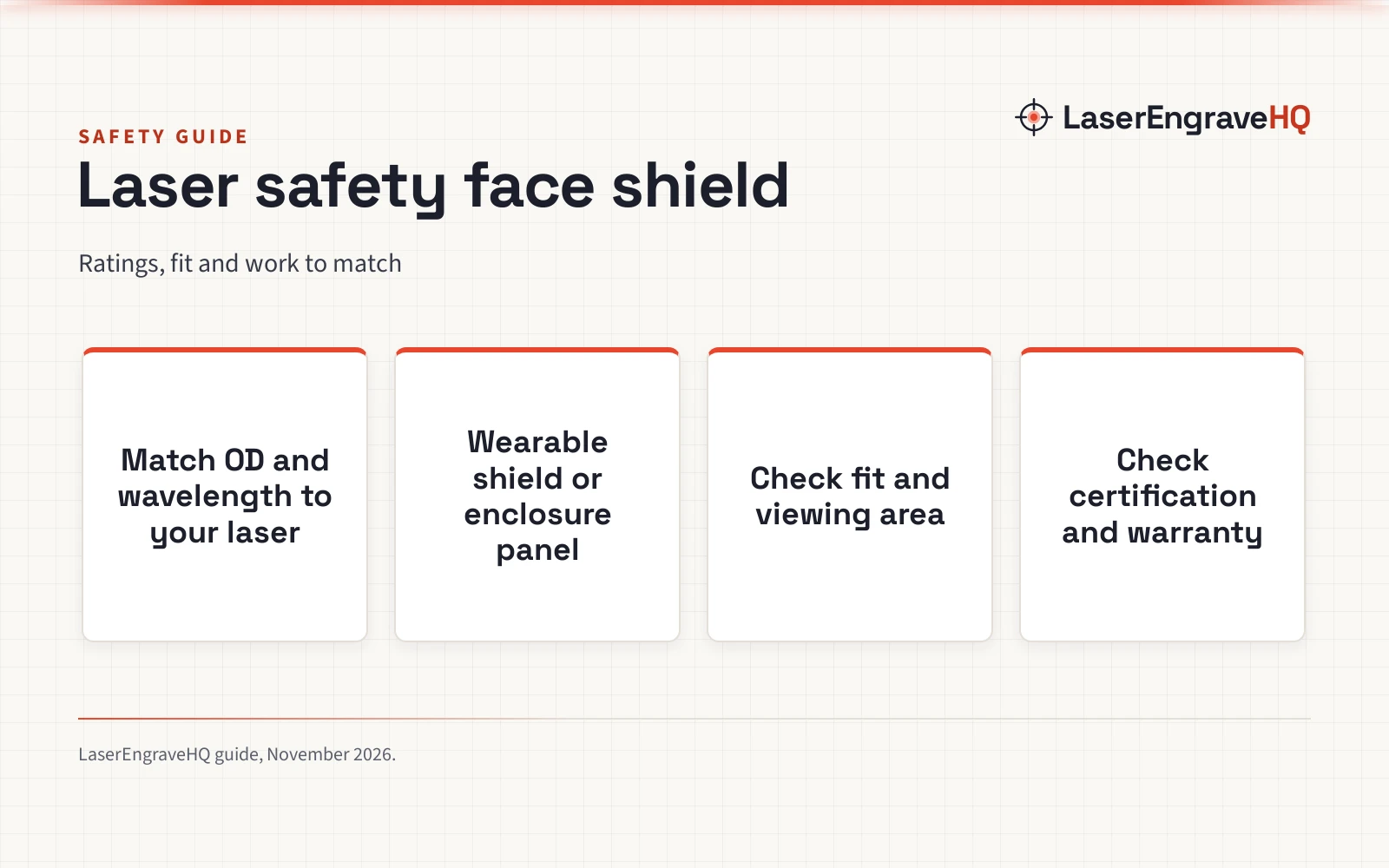
A laser safety face shield is rated for use only where its optical density and wavelength range match your laser, so check the rating,…
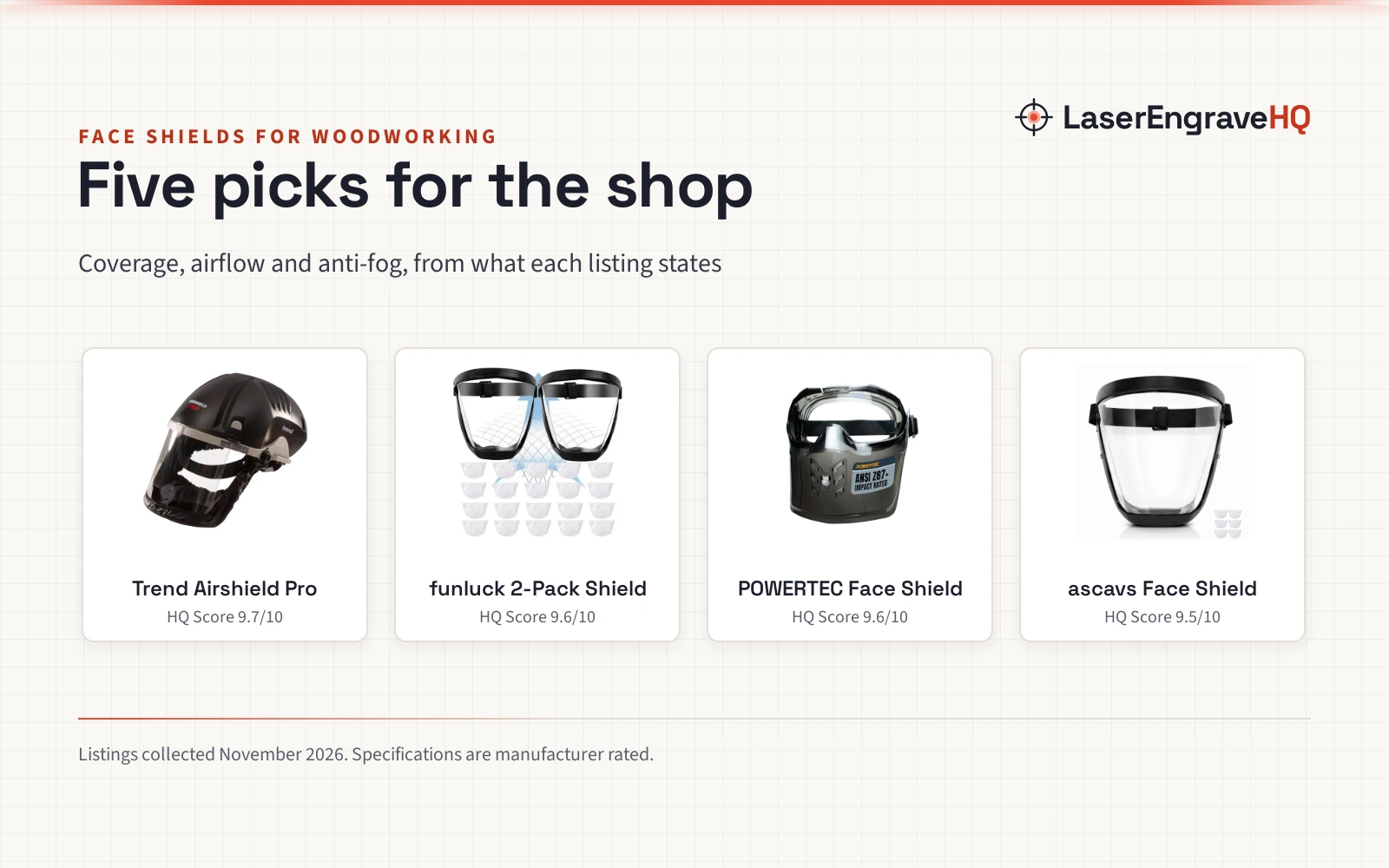
Five full-face shields for woodworking, from a powered air-circulating helmet to a two-pack of reusable visors, compared by coverage and airflow.
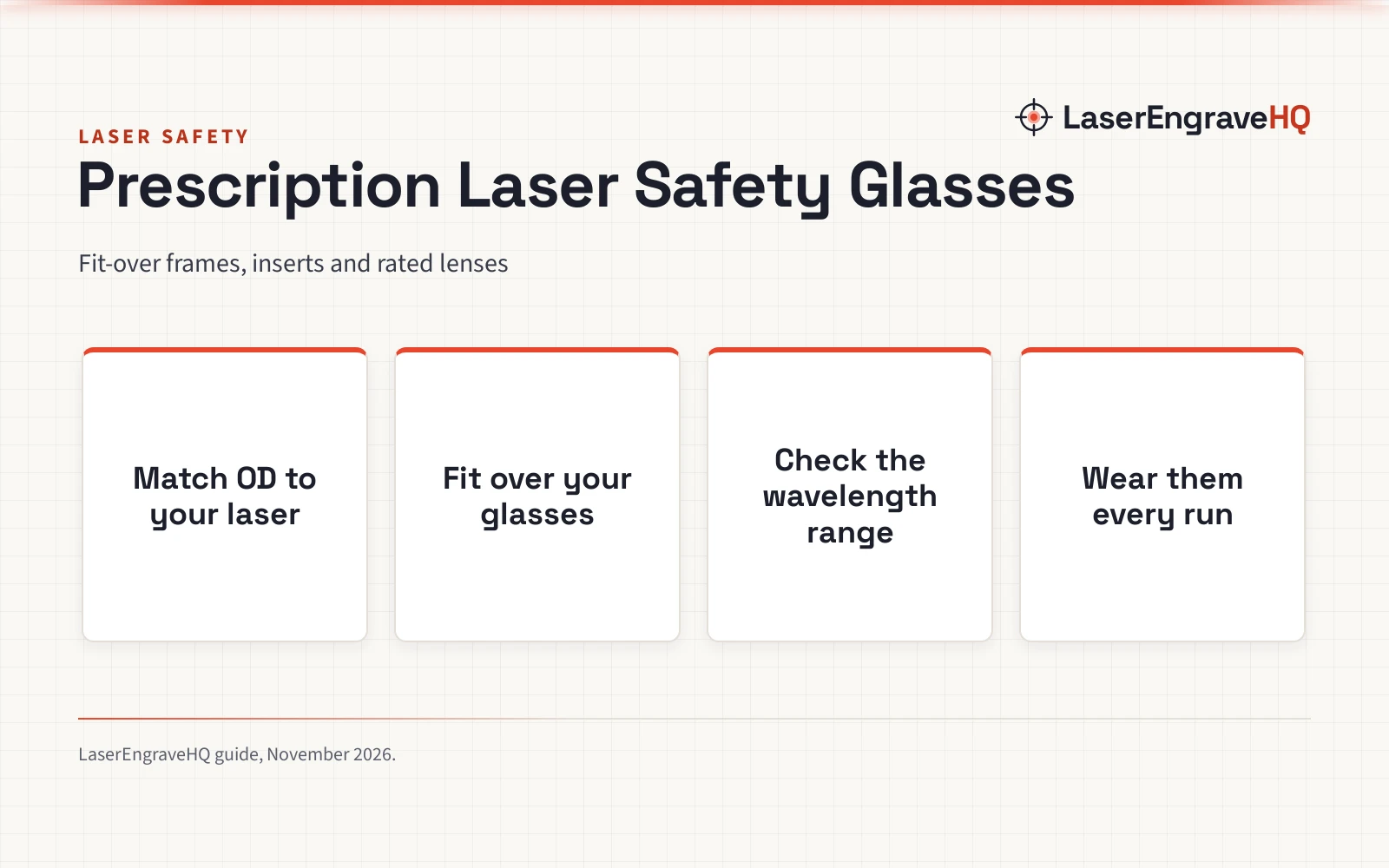
Prescription laser safety glasses explained: fit-over frames, prescription inserts and direct lenses, and how to match optical density and wavelength to your laser.
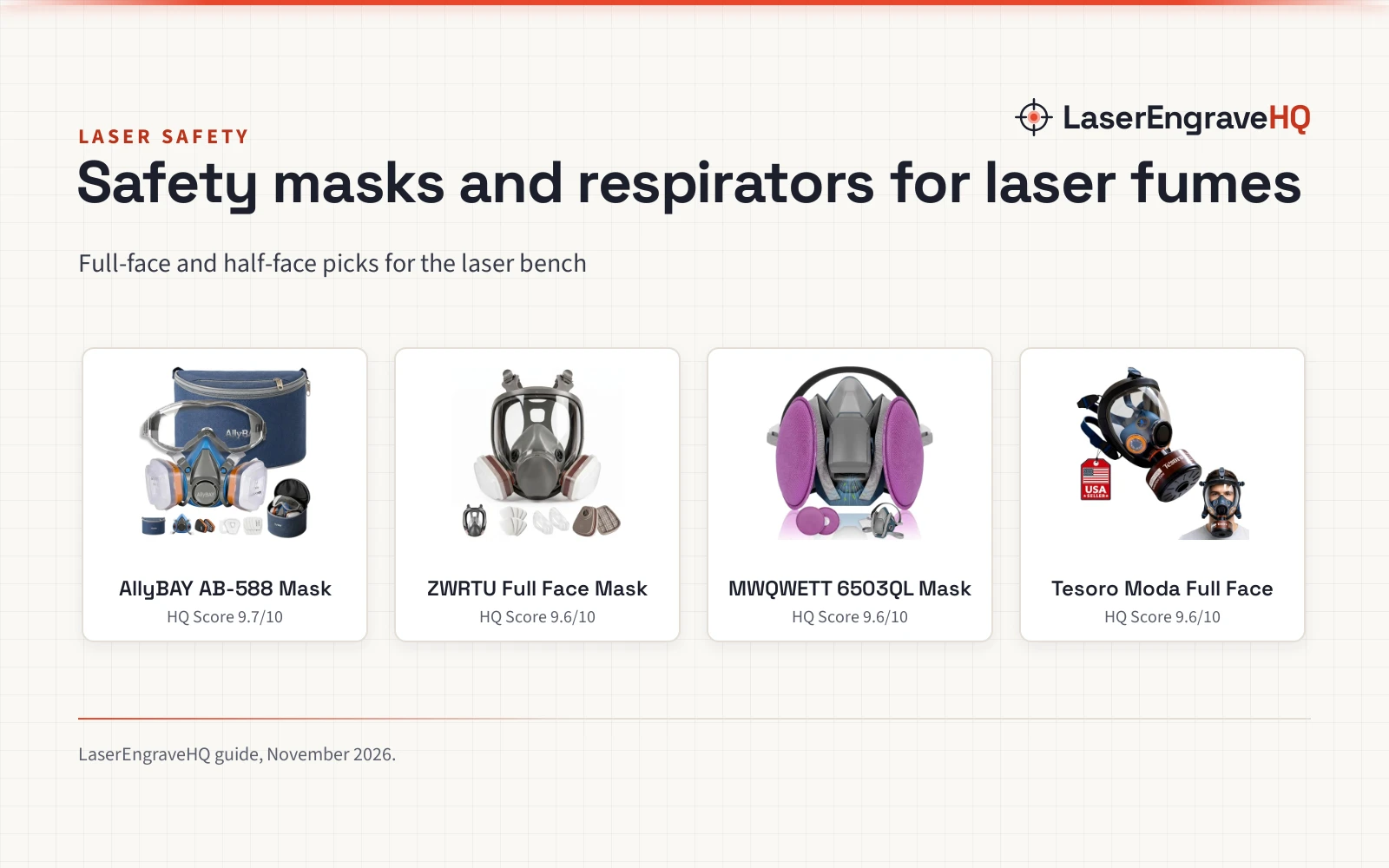
Full-face and half-face respirators for laser fumes compared on filters, fit and included spares, with ventilation guidance for the laser bench.
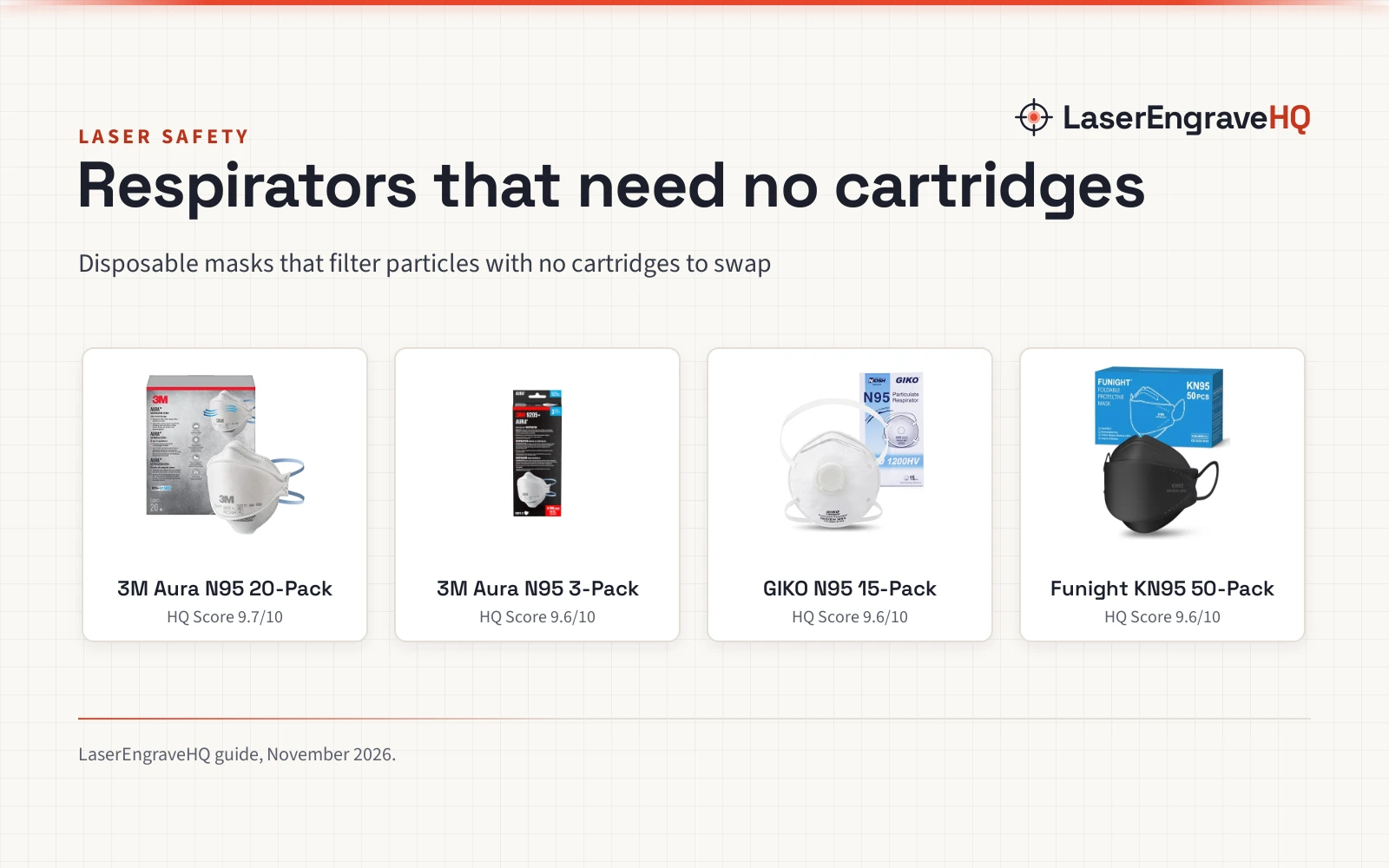
Disposable N95 and KN95 respirators filter particles with the filter built into the mask, so there are no cartridges to buy, fit or replace.
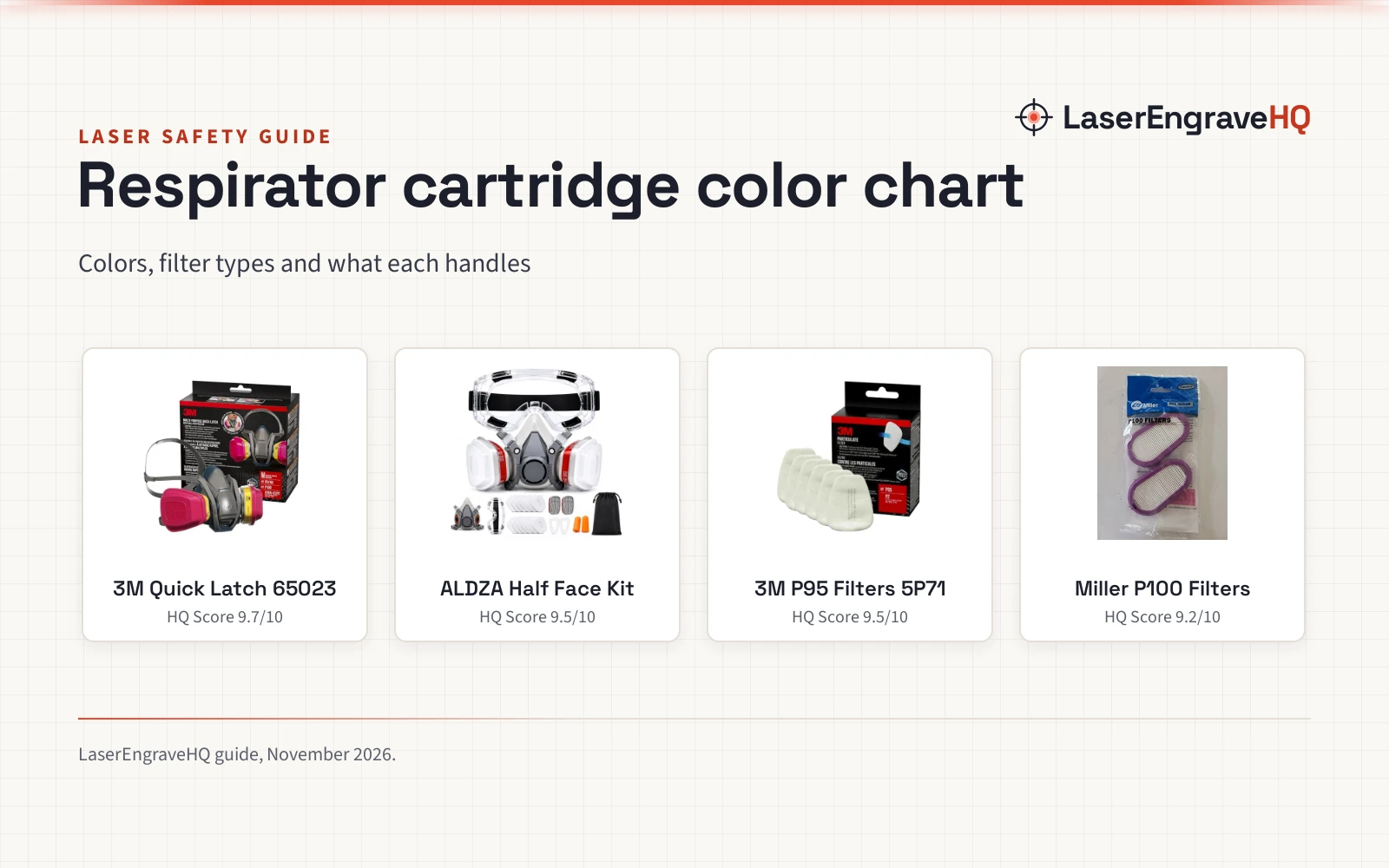
A respirator cartridge color chart that pairs each stated cartridge color with the filter type and the fumes, vapors and dust the maker states…
How to choose fiber optic laser safety glasses: match the wavelength range and OD rating to your fiber laser, then check VLT, fit and…
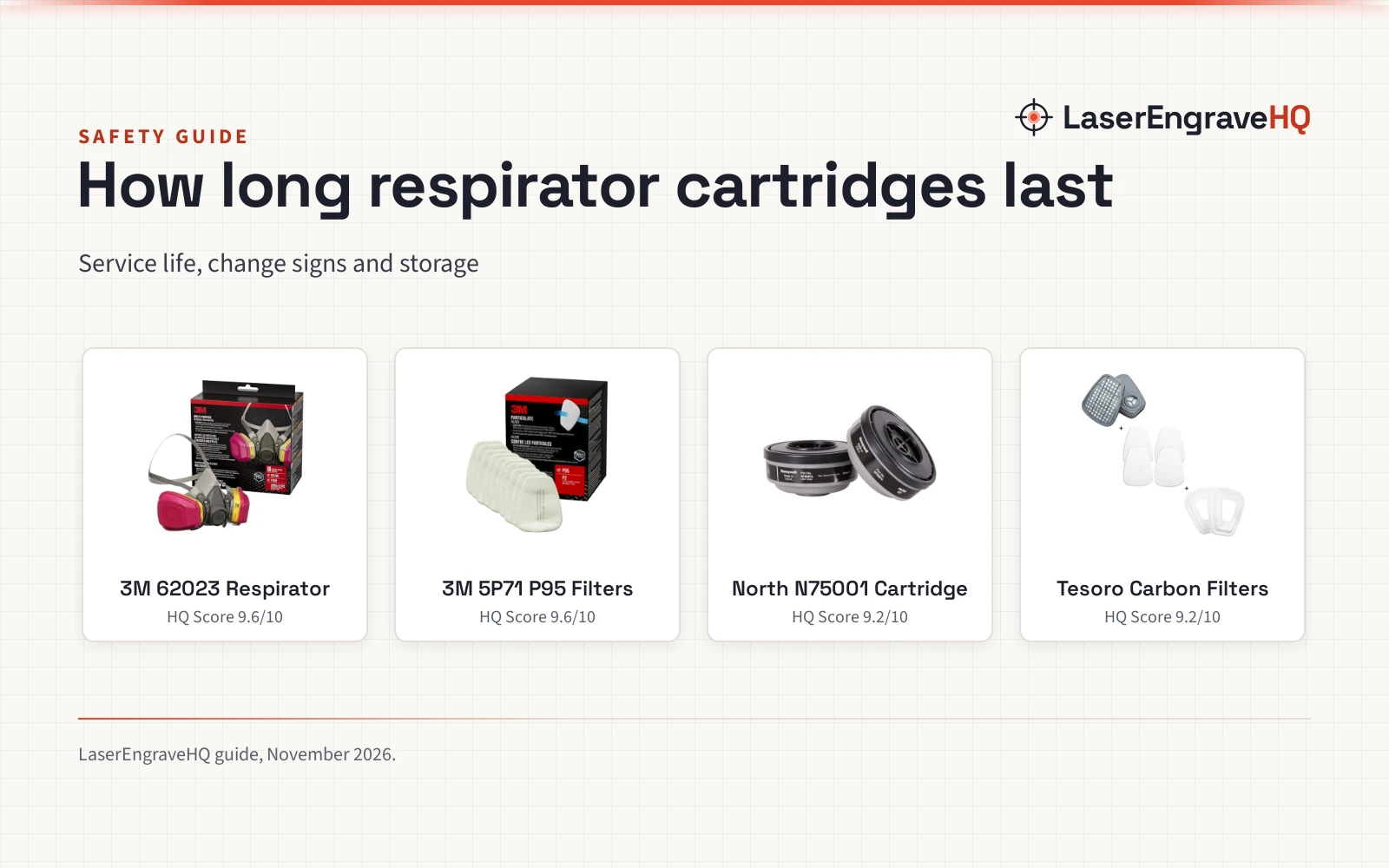
Respirator cartridges have no fixed clock: service life depends on what you breathe through them and how they are stored. Here are the signs…
Safety products work only inside the limits their rating states. These checks help you read those limits rather than the packaging. Ratings below are as the maker states them; we cannot verify them. The same goes for fire and fume products: a rating describes a defined test and not every real-world case, so use it as a minimum rather than a promise.