Best Soldering Wire (2026): 5 Picks Compared
5 rosin core solder wire spools from 0.3 mm to 1.0 mm, compared by alloy, flux, weight and melting point for electronics repair.

On this page
Top picks at a glance
As an Amazon Associate I earn from qualifying purchases.
- 1
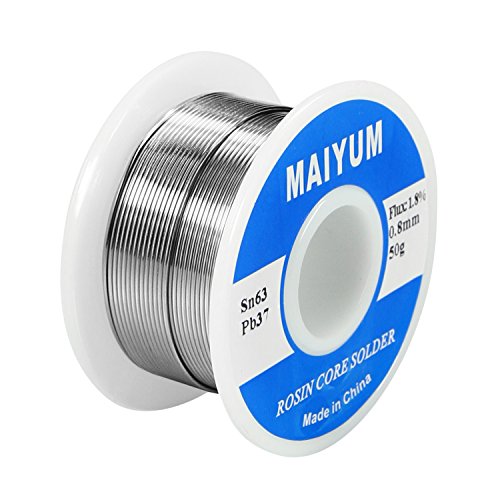 Best OverallMAIYUM 63-37 0.8mm9.6/10View on Amazon
- 2
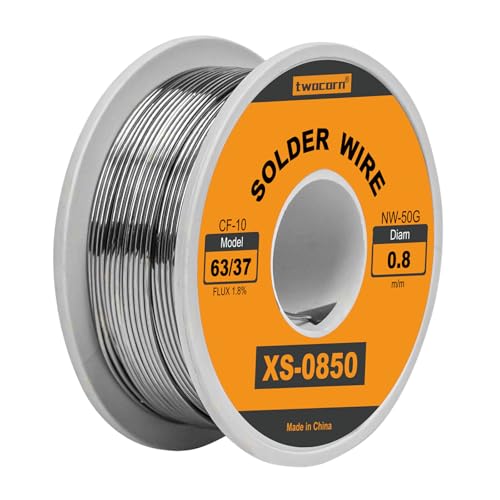 Best for BeginnersTwocorn 63-37 0.8mm9.5/10View on Amazon
- 3
 Best Fine DiameterHengTianMei 0.3mm9.4/10View on Amazon
- 4
 Best Flux ContentHGMZZQ 60-40 0.8mm9.4/10View on Amazon
A clean solder joint starts before the iron touches the board: the wire has to melt, flow and wet the joint without fuss, and the wrong diameter turns a small repair into a mess of blobs and bridges. The best soldering wire for electronics repair is a rosin core tin lead spool in a diameter that matches the pads, with enough flux to flow clean and a melting point the maker states.
This guide compares 5 such spools, each a 50 g rosin core wire, by alloy, diameter, flux and the jobs each maker names, so you can match the spool to the work on your bench.
LaserEngraveHQ earns a commission from purchases made through these links, at no extra cost to you. Read our affiliate disclosure.
Quick picks
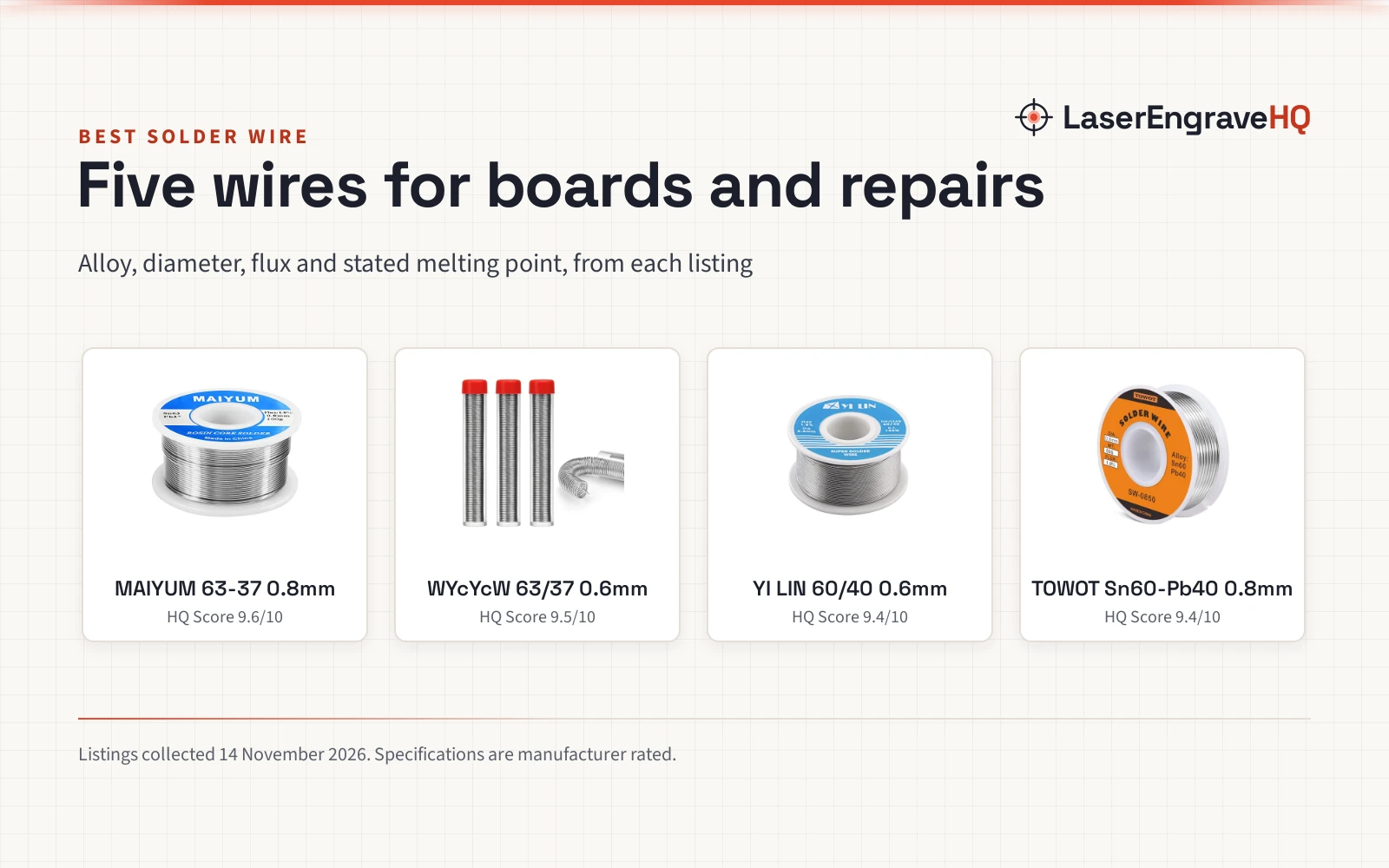
- Best Overall MAIYUM 63-37 0.8mm: 63-37 alloy, 1.8% flux, 0.8 mm diameter and a stated 361 °F/183 °C melting point, with a stated lead warning. Check price on Amazon
- Best for Beginners Twocorn 63-37 0.8mm: 63/37 no-wash wire the maker calls suitable for beginners, at 0.8 mm and 50 g, with a stated lead warning. Check price on Amazon
- Best Fine Diameter HengTianMei 0.3mm: 0.3 mm wire, the thinnest here, with 63/37 alloy, 1.8% flux and a stated 361F/183°C melting point. Check price on Amazon
- Best Flux Content HGMZZQ 60-40 0.8mm: 2.2% flux, the highest here, with 0.8 mm diameter and a stated 361F/183C melting point. Check price on Amazon
Machines on the list
MAIYUM 63-37 Rosin Core Solder Wire 0.8mm 50g Tin
A 63-37 rosin core solder wire at 0.8 mm and 50 g, with 1.8% flux and a stated 361 °F/183 °C melting point.
Pros
- 63-37 tin lead alloy with a 1.8% rosin core flux
- 0.8 mm diameter (0.0315 inch) suits circuit board work
- Melting point stated as 361 °F/183 °C
- 50 g spool the maker calls a good size for pocket carry
Cons
- Lead in the alloy, so not for food-contact items
- 0.8 mm is thicker than the 0.3 mm pick for fine-pitch pads
- 50 g spool is a small amount for steady bench work
- Flux content 1.8%, lower than the 2.2% pick
Twocorn 63/37 Solder Wire
A 63/37 no-wash rosin core solder wire at 0.8 mm and 50 g, with 1.8% flux, for beginners and repair work.
Pros
- 63/37 tin lead alloy with 1.8% no-wash rosin core flux
- Maker calls it suitable for beginners and people with years of soldering experience
- Strong adhesion and solid solder joints, as stated
- Listed for circuit board, radio, TV, refrigerator and air conditioning work
Cons
- Lead in the alloy, so not for food-contact items
- 0.8 mm is thicker than the 0.3 mm pick for fine-pitch pads
- A 50 g spool needs replacing with steady bench work
- Flux content 1.8%, lower than the 2.2% pick
HengTianMei 63/37 Rosin Core Tin Lead Solder Wire
A 63/37 rosin core solder wire at 0.3 mm and 50 g, with 1.8% flux and a stated 361F/183°C melting point, for fine pads.
Pros
- 0.3 mm diameter (0.0118 inch), the thinnest wire here
- 63/37 tin lead alloy with 1.8% flux
- Melting point stated as 361F/183°C
- Listed for radios, televisions, video recorders, stereos, wires, motors and circuit boards
Cons
- 0.3 mm wire feeds slowly on larger joints
- Lead in the alloy, so not for food-contact items
- A 50 g spool runs down with steady bench work
- Flux content 1.8%, lower than the 2.2% pick
HGMZZQ 60/40 Tin Lead Solder Wire with Rosin core
A 60/40 rosin core solder wire at 0.8 mm and 50 g, with 2.2% flux and a stated 361F/183C melting point.
Pros
- 2.2% flux, the highest content here
- Melts evenly and clean, with less smoke, as stated
- Melting point stated as 361F/183C
- Listed for household appliances, stereos, headset, toys and circuit board maintenance
Cons
- 60/40 alloy, not the 63/37 alloy the other picks use
- Lead in the alloy, so not for food-contact items
- Small 50 g spool for steady bench work
- No warranty term is stated

TOWOT 63-37 High Purity Tin Lead Rosin Core Solder
A 63-37 rosin core solder wire at 1.0 mm and 50 g, with 1.8% flux and a low melting point, for larger joints.
Pros
- 63-37 high purity tin lead alloy with 1.8% flux
- 1.0 mm diameter suits larger joints on appliances
- Low melting point with smooth flow, as stated
- Listed for circuit board, TV, radio and home appliance repair
Cons
- 1.0 mm is the thickest diameter here, less suited to fine pads
- Thick wire can flood small joints if fed too freely
- 50 g spool is a small amount for steady bench work
- No warranty term is stated
Other machines to compare
 MAIYUM 63-37 Rosin Core Solder Wire 0.8mm100g Tin LeadCheck price on Amazon
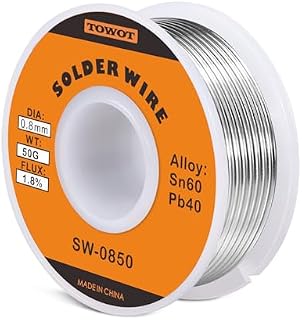 TOWOT Tin Lead Rosin Core Solder Wire for Electrical SolderingCheck price on Amazon
 WYcYcW 3Pcs Solder Wire 63/37Check price on Amazon
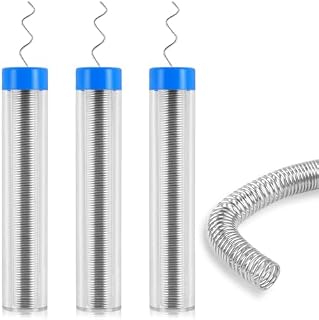 Rindion 60/40 Solder WireCheck price on Amazon
 MAIYUM 63-37 Rosin Core Solder Wire 1.0mm100g Tin LeadCheck price on Amazon
Specs compared
| Model | HQ Score | Alloy | Diameter | Flux | Weight | Melting point | Lead warning |
|---|---|---|---|---|---|---|---|
| MAIYUM 63-37 0.8mm | 9.6/10 | 63-37 | 0.8 mm | 1.8% | 50 g (0.11 lbs) | 361 °F/183 °C | Stated |
| Twocorn 63-37 0.8mm | 9.5/10 | 63/37 | 0.8 mm | 1.8% | 50 g (0.11 lb) | Not stated | Stated |
| HengTianMei 0.3mm | 9.4/10 | 63/37 | 0.3 mm | 1.8% | 50 g (1.76 oz) | 361F/183°C | Not stated |
| HGMZZQ 60-40 0.8mm | 9.4/10 | 60/40 | 0.8 mm | 2.2% | Not stated | 361F/183C | Not stated |
| TOWOT 63-37 1.0mm | 9.3/10 | 63-37 | 1.0 mm | 1.8% | 50 g | Not stated | Not stated |
Specifications are manufacturer rated, as published by each maker and collected 14 November 2026. Diameter is the wire thickness; flux is the rosin core content the maker states.
What the listings tell you, and what they leave out
Every maker here states the alloy, the diameter and the flux content, and every spool holds 50 g of wire. MAIYUM and Twocorn state a lead warning; the other makers here do not state a warning. MAIYUM, HGMZZQ and Twocorn state spool dimensions, while TOWOT and HengTianMei do not. TOWOT and HengTianMei invite buyers to contact the seller with questions.
No maker states a warranty term, so warranty scores nothing here. Treat every spool here as leaded solder: ventilate the work area, wash hands after soldering, and keep lead solder away from food-contact items.
Buying guide: the best soldering wire
Alloy: 63-37 or 60-40
The makers here use 63-37 and 60-40 tin lead alloys. Most picks use 63-37; HGMZZQ uses 60/40. The alloy sets the melting behavior, and the makers state a 361F/183C melting point for the MAIYUM, HengTianMei and HGMZZQ spools, while TOWOT and Twocorn state a low melting point without a figure.
Diameter
Diameters in this guide run from 0.3 mm to 1.0 mm. A 0.3 mm wire suits fine circuit board pads, a 0.8 mm wire suits general electronics work, and a 1.0 mm wire suits larger joints on household appliances. Match the diameter to the pads you solder most.
Flux
Flux content here is 1.8% on most picks and 2.2% on the HGMZZQ spool. The rosin core flux helps solder flow and wet the joint as the wire melts. Twocorn calls its wire no-wash, which suits work where cleaning the joint is awkward.
Lead safety
Every spool here is tin lead wire, and MAIYUM and Twocorn state a lead warning. Ventilate the work area, wash hands after soldering, and keep lead solder away from food-contact items. For a lead-free option, see the lead-free versus leaded solder guide.
How much wire a spool holds
Each spool here holds 50 g. For occasional circuit board repairs, a 50 g spool covers a long stretch of joints; for steady bench work, keep a spare spool on hand so a repair never waits on wire.
Project Match
Match the spool to the job, using only the work each maker names:
- Circuit board repair: MAIYUM, TOWOT, HengTianMei, HGMZZQ and Twocorn all name circuit boards.
- TV, radio and stereo repair: MAIYUM, TOWOT, HengTianMei and Twocorn name TV and radio work, and HGMZZQ names stereos.
- Fine-pitch pads: HengTianMei at 0.3 mm, the thinnest wire here.
- Larger household appliance joints: TOWOT at 1.0 mm, the thickest wire here, and Twocorn names refrigerator and air conditioning work.
- Beginners: Twocorn, which the maker calls suitable for beginners.
How the scores add up
Each spool is scored on performance, build, value, safety and warranty, with the weights published on the How We Pick page. A spec the maker does not publish scores nothing.
| Product | HQ Score | Perf. /35 | Build /25 | Value /25 | Safety /10 | Warranty /5 |
|---|---|---|---|---|---|---|
| MAIYUM 63-37 0.8mm | 9.6 | 32 | 21 | 20 | 3 | 0 |
| Twocorn 63-37 0.8mm | 9.5 | 30 | 21 | 20 | 3 | 0 |
| HengTianMei 0.3mm | 9.4 | 29 | 20 | 20 | 0 | 0 |
| HGMZZQ 60-40 0.8mm | 9.4 | 28 | 20 | 19 | 0 | 0 |
| TOWOT 63-37 1.0mm | 9.3 | 26 | 19 | 19 | 0 | 0 |
We translate weighted points into a score with 9.2 as its floor and 9.8 as its cap; the straight-line conversion keeps the ranking exactly.
FAQ: lasers and CNC
What is soldering wire?
Soldering wire is a metal alloy wire with a rosin flux core that melts to join electronic parts. The spools in this guide are tin lead wire in 63-37 or 60-40 alloy with 1.8% or 2.2% flux. As the wire melts, the flux core cleans the joint so the solder flows and bonds.
How to choose soldering wire?
Match the diameter to the pads: 0.3 mm for fine circuit board pads, 0.8 mm for general electronics work, and 1.0 mm for larger joints. Then check the alloy, the flux content and the melting point the maker states, and note whether the maker states a lead warning.
How much soldering wire do I need?
Each spool in this guide holds 50 g, which covers occasional circuit board repairs and DIY electronics work. If you solder most days, keep a spare spool on hand so a repair never waits on wire.
Do I need soldering wire?
You need it for any job that joins wires or parts on a circuit board: repairs to a TV, radio or household appliance, or DIY electronics work. Without it, an iron alone cannot make a joint. Use the wire with an iron that matches the work; see the soldering iron guide.
What size soldering wire for electronics?
For electronics, 0.8 mm is the size on most picks here, 0.3 mm suits fine pads, and 1.0 mm suits larger joints. Start with 0.8 mm for general circuit board work, and add a 0.3 mm spool for fine-pitch pads.
Related: the soldering flux versus soldering paste guide, the lead-free versus leaded solder comparison, the best soldering iron for electronics roundup, the best soldering station roundup, the best beginner soldering kit roundup, the best solder helping hands roundup, the best soldering gun roundup, and the soldering iron versus soldering station comparison. Also see the breadboard versus PCB guide and the electronics making hub.