Breadboard vs PCB: Which One Should You Buy?
A breadboard suits a circuit that still changes, while a PCB suits a circuit that is ready to stay put; this guide compares the two and covers breadboard kits for prototyping.

On this page
Top picks at a glance
As an Amazon Associate I earn from qualifying purchases.
- 1
 ElectroCookie Prototype PCB Solderable Breadboard for9.6/10View on Amazon
- 2
 EPLZON 10 Pcs Solderable Breadboard PCB Board Gold-Plated9.6/10View on Amazon
- 3
 QSYZAIL 54 Pcs Double Sided PCB Perf Board Kit in 5 Sizes9.5/10View on Amazon
- 4
 BOJACK 3 Values 130 Pcs Solderless Breadboard 4 Pcs 830 TieView on Amazon
- 5
 ELEGOO 400-Point Solderless Breadboard with 4 Power Rails 3PCSView on Amazon
- 6
 REXQualis 6PCS Small Breadborad 400 Point SolderlessView on Amazon
- 7
 Makeronics 3220-Point Solderless BreadboardView on Amazon
- 8
 Makeronics 1660 Tie Points Solderless BreadboardView on Amazon
- 9
 Jameco Valuepro 830-Point Solderless BreadboardView on Amazon
Prototyping a circuit means changing it, and the breadboard vs pcb choice decides how easy those changes are. A breadboard holds parts without solder, so a circuit can be built, moved and rebuilt on the same board. A PCB holds parts with solder, so a finished circuit stays put. This guide explains how each board works, when each one fits, and covers the breadboard kits that suit a bench.
Other machines to compare
 BOJACK 3 Values 130 Pcs Solderless Breadboard 4 Pcs 830 TieCheck price on Amazon
 ELEGOO 400-Point Solderless Breadboard with 4 Power Rails 3PCSCheck price on Amazon
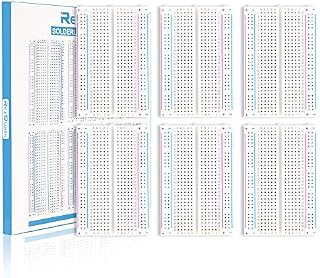 REXQualis 6PCS Small Breadborad 400 Point SolderlessCheck price on Amazon
 Makeronics 3220-Point Solderless BreadboardCheck price on Amazon
 Makeronics 1660 Tie Points Solderless BreadboardCheck price on Amazon
 Jameco Valuepro 830-Point Solderless BreadboardCheck price on Amazon
LaserEngraveHQ earns a commission from purchases made through these links, at no extra cost to you. Read our affiliate disclosure.
The listings state board sizes, tie points and lead sizes, not how many parts a finished circuit needs.
Breadboard vs PCB: How Each One Works
A breadboard is a solderless board for a temporary prototype. Metal strips under the board join the holes: the top and bottom rows run horizontally and split in the middle, while the remaining holes run vertically. Parts plug in by their leads, and jumper wires join the rows, so a circuit can change without heating a joint. The ELEGOO boards take 21-26 AWG leads, and the ELEGOO 400-point boards list 2.54 mm spacing for common through-hole parts, including resistors, LEDs, capacitors, transistors, pin headers and compatible DIP ICs.
A PCB is a board where parts are soldered in place. Once soldered, a part stays where it sits, and a change means heating joints and moving parts. That permanence suits a circuit that is finished and needs to survive handling, while a breadboard suits a circuit that is still being worked out. A soldered board also needs solder; see the lead-free vs leaded solder comparison before choosing a solder type.
When a Breadboard Is the Right Call
A breadboard fits while a circuit is still changing. A maker can plug in parts, check the result, swap a part and check again, all without solder. The ELEGOO 830-point boards suit larger electronics, robotics and STEM prototypes, and boards can be clipped side by side for a wider area.
A breadboard also fits learning: several circuits can stay assembled at once on separate boards, and a board can be rewired as a lesson or a design changes.
When a PCB Makes More Sense
A PCB fits once a circuit works and needs to stay that way. Soldered joints hold parts through handling and moving, and a finished board can go into an enclosure or a product without the risk of a lead slipping out of a hole.
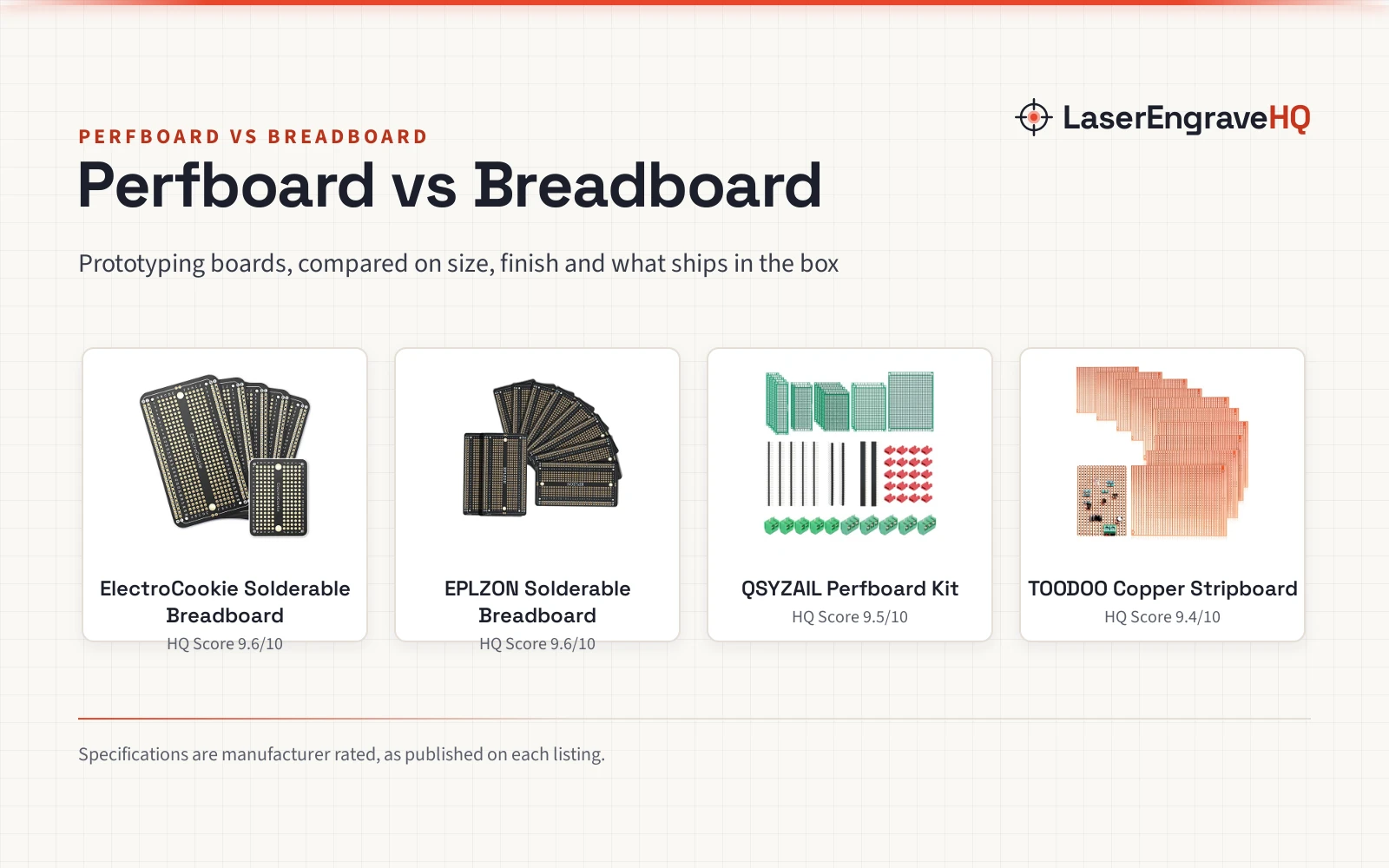
A PCB also fits when a circuit needs to be repeated. The same layout can be made again and again, while a breadboard layout has to be rebuilt by hand each time. A perfboard sits between the two: parts are soldered, but the layout is still set by hand. See the perfboard vs breadboard comparison for how that middle option works.
The Gear: Breadboard Kits for Prototyping
Each kit below is a solderless breadboard set, listed in order of the strongest overall pick first.
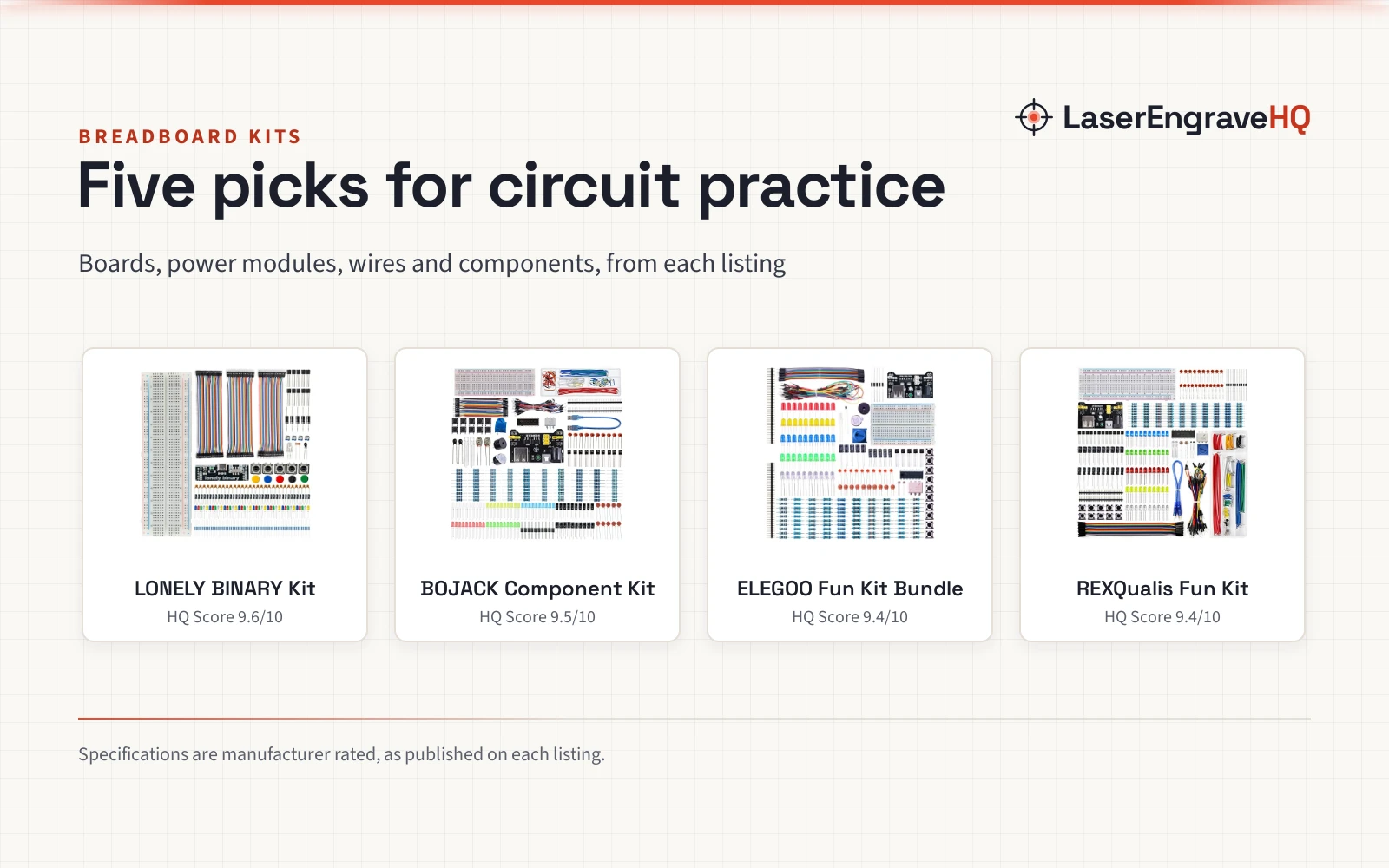
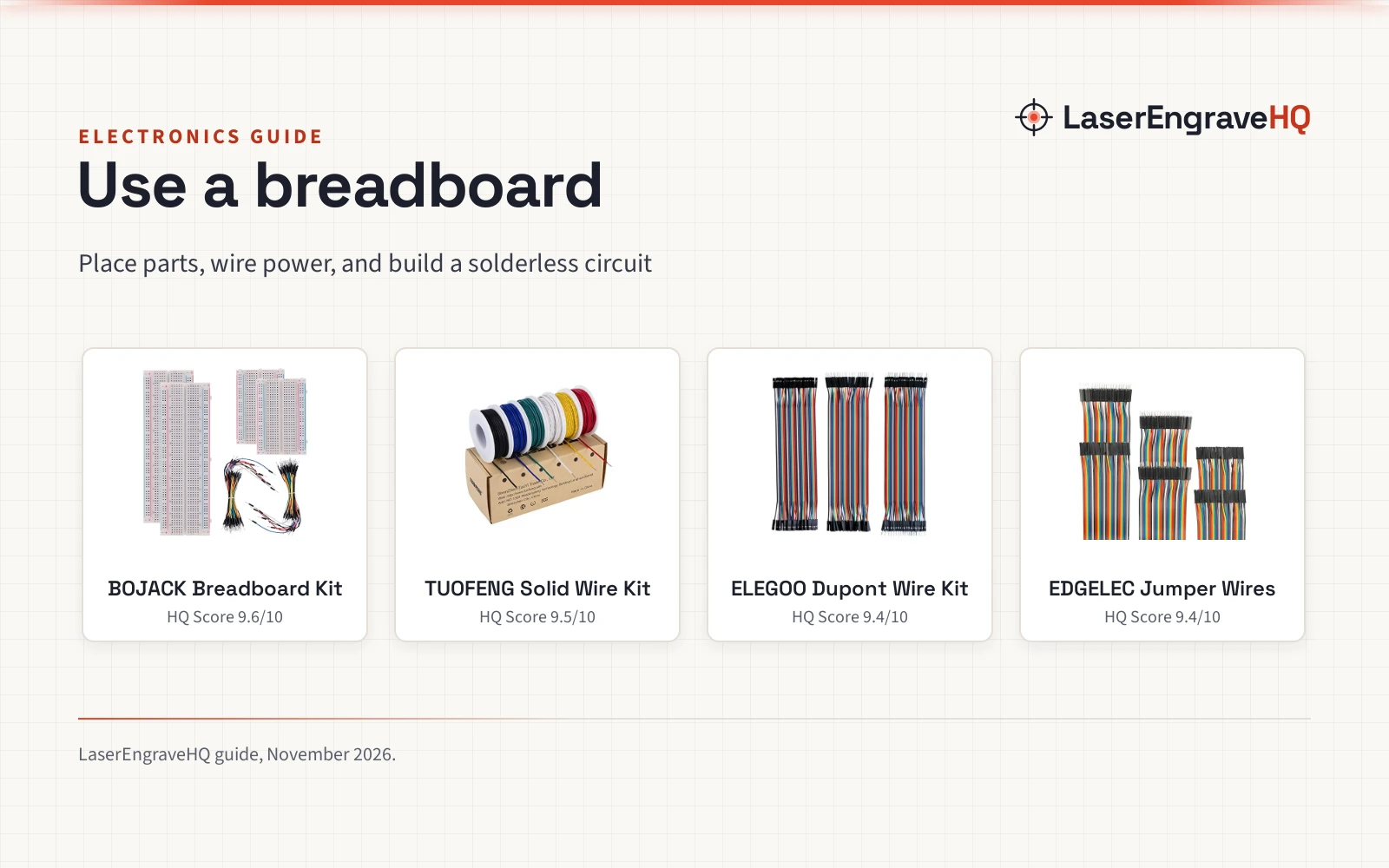
BOJACK solderless breadboard kit. The BOJACK kit brings 4 solderless breadboards in 830 and 400 tie point sizes, plus 126 flexible jumper wires. The boards use an ABS plastic panel with a tin-plated phosphor bronze contact sheet, and boards can be spliced together by unit. The top and bottom rows of holes run horizontally and split in the middle, while the remaining holes run vertically.
ELEGOO 830-point breadboard kit. The ELEGOO kit holds 3 full-size breadboards, each with 830 tie points: a 630-point terminal area plus two 100-point distribution strips, with 4 power rails. Each board measures 6.5 inches by 2.16 inches by 0.39 inches, takes 21-26 AWG leads, and has a self-adhesive back and side clips. The maker states a 1 year manufacturer warranty, and the package holds 3 boards only, with jumper wires, components and controller boards sold separately.
ELEGOO 400-point breadboard kit. The ELEGOO 400-point kit holds 6 compact boards, each with 400 tie points: a 300-point terminal area plus four 25-point power-rail sections, and the maker lists 2,400 tie points across the set. The boards list 2.54 mm spacing for common through-hole parts, take 21-26 AWG leads, and have side clips and adhesive backs, with a 1 Year Manufacturer warranty stated. No jumper wires, power module, controller, components or tutorial are included.
REXQualis breadboard kit. The REXQualis kit holds 4 boards: 2 at 830 tie points and 2 at 400 tie points. The 830-point boards give a 630 tie-point circuit area plus 2×100 tie-point distribution strips with 4 power rails, while the 400-point boards give a 300 tie-point circuit area plus 2×50 tie-point distribution strips. The boards take 20-29 AWG wire, which the maker lists as 0.3-0.8mm, and the pack measures 6.6 inches by 6.6 inches by 0.5 inches, or 164 by 54 by 9 millimeter. The maker gives two sizes, 6.6 by 6.6 by 0.5 inches and 164 by 54 by 9 millimeter; check before ordering. The boards have self-adhesive tape on the back and a white ABS plastic body with a black printed legend.
Common Mistakes to Avoid
- Forcing oversized or bent pins into the holes; straight leads go in vertically, and a questionable node is worth checking with a multimeter before powering the board.
- Skipping a check of contacts and rails before powering a board.
- Expecting jumper wires, a power module or a controller in the box when the kit lists boards only.
- Treating a breadboard as a permanent home for a finished circuit; a soldered PCB suits a circuit that is done changing.
- Placing a wide module across a single board when it can sit across two boards to keep nearby rows in reach.
Breadboard vs PCB: The Short Version
- Pick a breadboard while a circuit still changes.
- Pick a PCB once a circuit works and needs to stay put.
- Match the board to the parts: through-hole leads, pin headers and DIP ICs fit the boards covered here.
- Check what the kit includes: some kits list boards only, with wires and power parts sold separately.
- Keep spare rows free for a circuit that may grow.
- Move a proved layout to a PCB when the design is settled.
FAQ: lasers and CNC
How do the connections inside a breadboard work?
Metal strips under the board join the holes. The top and bottom rows run horizontally and split in the middle, while the remaining holes run vertically, so parts plug in by their leads and jumper wires join the rows.
How does a breadboard power supply work?
Feed power into the board’s power rails, which carry power and ground along the edges of the board. None of the kits covered here includes a power module: the ELEGOO 830-point kit lists boards only, and the ELEGOO 400-point kit lists no power module in the box. A supply or module comes separately, and the rails distribute it.
What is a breadboard used for in robotics?
A breadboard holds a robot circuit while it is still being worked out: sensors, LEDs, resistors, capacitors, transistors and jumper wires can be plugged in, moved and rewired without solder as the design changes. The ELEGOO 830-point boards are listed for electronics, robotics and STEM prototypes.
Where are breadboards sold?
Electronics retailers and online marketplaces carry breadboard kits in the sizes covered here. Pick a size that fits the circuit, and check what the kit includes before ordering.
Which component packages fit a breadboard?
Through-hole parts with 2.54 mm spacing fit the ELEGOO 400-point boards, including pin headers and compatible DIP ICs. Leads in the 21-26 AWG range suit the ELEGOO boards, while the REXQualis boards take 20-29 AWG wire. Parts with bent or oversized pins should not be forced in.
Related: the perfboard vs breadboard comparison, the beginner soldering kit guide and the soldering iron vs soldering station comparison.