Soldering Flux vs Soldering Paste: Which One Should You Buy?
Paste flux cleans the joint and helps solder flow; this guide explains how it differs from liquid flux and soldering paste, and compares four paste fluxes for electronics repair.

On this page
Top picks at a glance
As an Amazon Associate I earn from qualifying purchases.
- 1
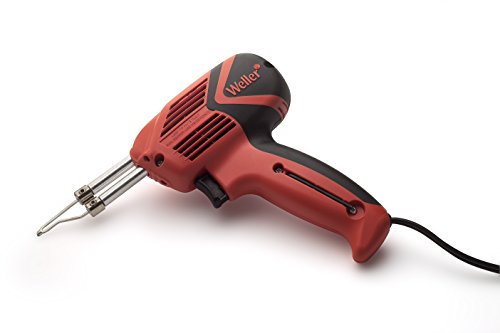 Weller Geuinine Universal Soldering Gun Kit 140W/100W 120V9.7/10View on Amazon
- 2
 Soldering Gun Kit9.7/10View on Amazon
- 3
 FNIRSI DWS-200 200W High Power Soldering Iron Station Kit9.7/10View on Amazon
- 4
 Liquid Solder Flux DropperView on Amazon
- 5
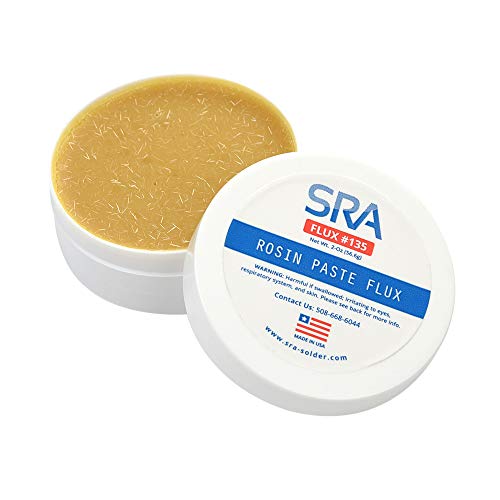 SRA Solder 135 Rosin Paste Soldering Flux For ElectronicsView on Amazon
- 6
 TOWOT Liquid Solder FluxView on Amazon
- 7
 2 Jar Solder FluxView on Amazon
- 8
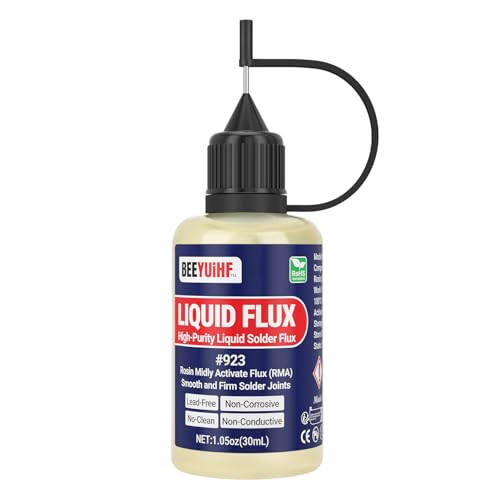 BEEYUIHF Liquid Solder Flux DropperView on Amazon
- 9
 No Clean Solder Flux Paste for Electronics RepairView on Amazon
A joint that will not wet, a wire that beads up instead of bonding, a pad that stays bare while the iron sits on it. That frustration is usually a flux problem, not an iron problem, and the fix starts with picking the right form. This guide answers soldering flux vs soldering paste, explains paste flux, and compares four paste fluxes for electronics repair.
Other machines to compare
 Liquid Solder Flux DropperCheck price on Amazon
 SRA Solder 135 Rosin Paste Soldering Flux For ElectronicsCheck price on Amazon
 TOWOT Liquid Solder FluxCheck price on Amazon
 2 Jar Solder FluxCheck price on Amazon
 BEEYUIHF Liquid Solder Flux DropperCheck price on Amazon
 No Clean Solder Flux Paste for Electronics RepairCheck price on Amazon
LaserEngraveHQ earns a commission from purchases made through these links, at no extra cost to you. Read our affiliate disclosure.
Paste flux is flux in paste form, a partner for solder wire rather than a source of solder.
Soldering Flux vs Soldering Paste: The Short Answer
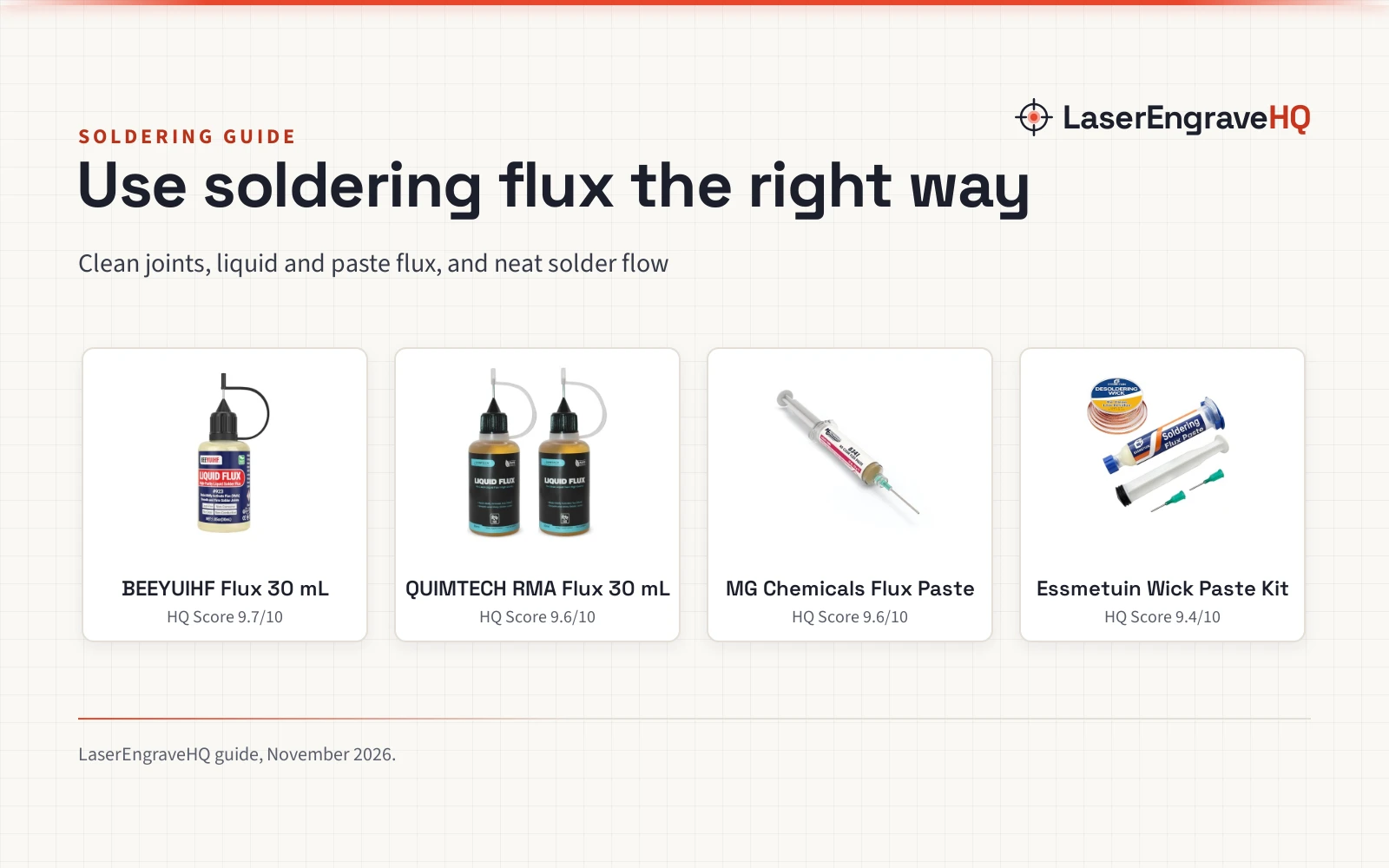
Soldering flux is a cleaning agent that removes oxidation from metal surfaces so solder can wet the joint and bond. Soldering paste, in the listings here, is flux in paste form: a thick paste that stays where it is put instead of running across a board. The four products below are paste fluxes, so they clean the joint and help solder flow, while the solder itself still comes from solder wire. In short, one is the job and the other is the form it comes in.
What Is Soldering Flux?
Flux is a chemical helper for soldering. Metal surfaces oxidize in air, and solder will not bond to an oxidized surface, so flux strips that oxidation away and keeps the surface clean while the joint is hot. The SRA, Tozersis and MG Chemicals pastes are rosin fluxes, and the SRA listing calls its product a type RA rosin activated flux. The MG Chemicals listing states that its rosin residue is non-corrosive, non-conducting and moisture resistant, and the Tozersis listing describes its paste as non-corrosive when used as directed.
What Is Soldering Paste?
Soldering paste is flux sold as a paste. The SRA listing describes a semi-solid wax consistency, and the Tozersis listing describes a paste that stays in place and helps prevent overuse. The listings here cover a syringe pack, a pneumatic dispenser, and a jar. Because it is thick, paste flux suits small pads and tight gaps where liquid flux would spread too far.
How to Use Soldering Flux Paste
Start with a clean tip. Dip a copper wire into the paste, or apply the paste to the board with a syringe or dispenser, where the joint will be. The Tozersis listing notes that its syringe comes with two fine tips for accurate placement on small pads and tight gaps. Heat the joint, feed in solder wire, and watch the solder flow. The Tozersis listing notes that its no-clean paste leaves minimal residue, so extra cleaning is usually unnecessary. After the work, reseal the container tightly, since paste can dry out when left open.
Four Paste Fluxes for Electronics Repair
The four paste fluxes below are ranked by the specs each maker states.
SRA 135 Rosin Paste Flux
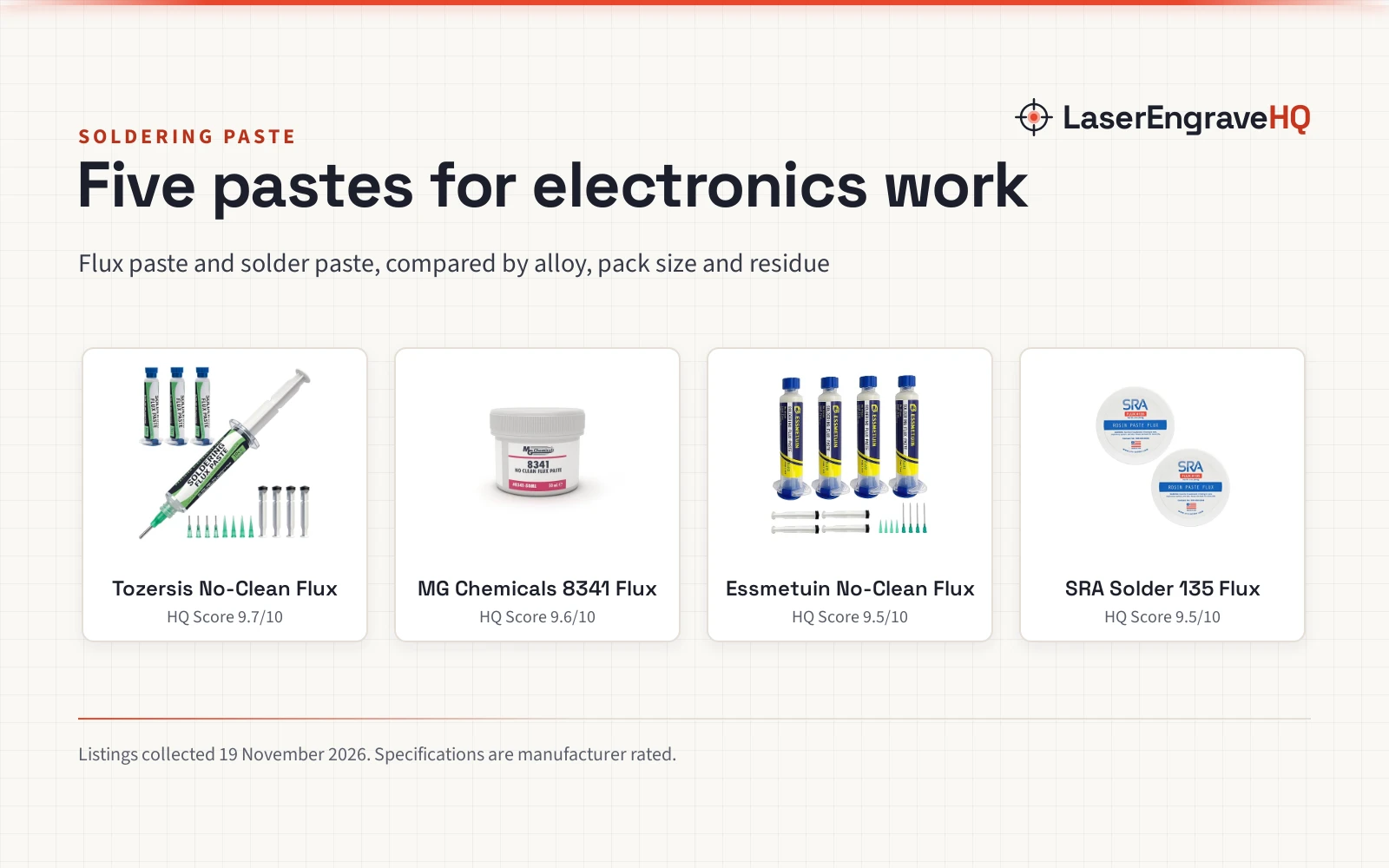
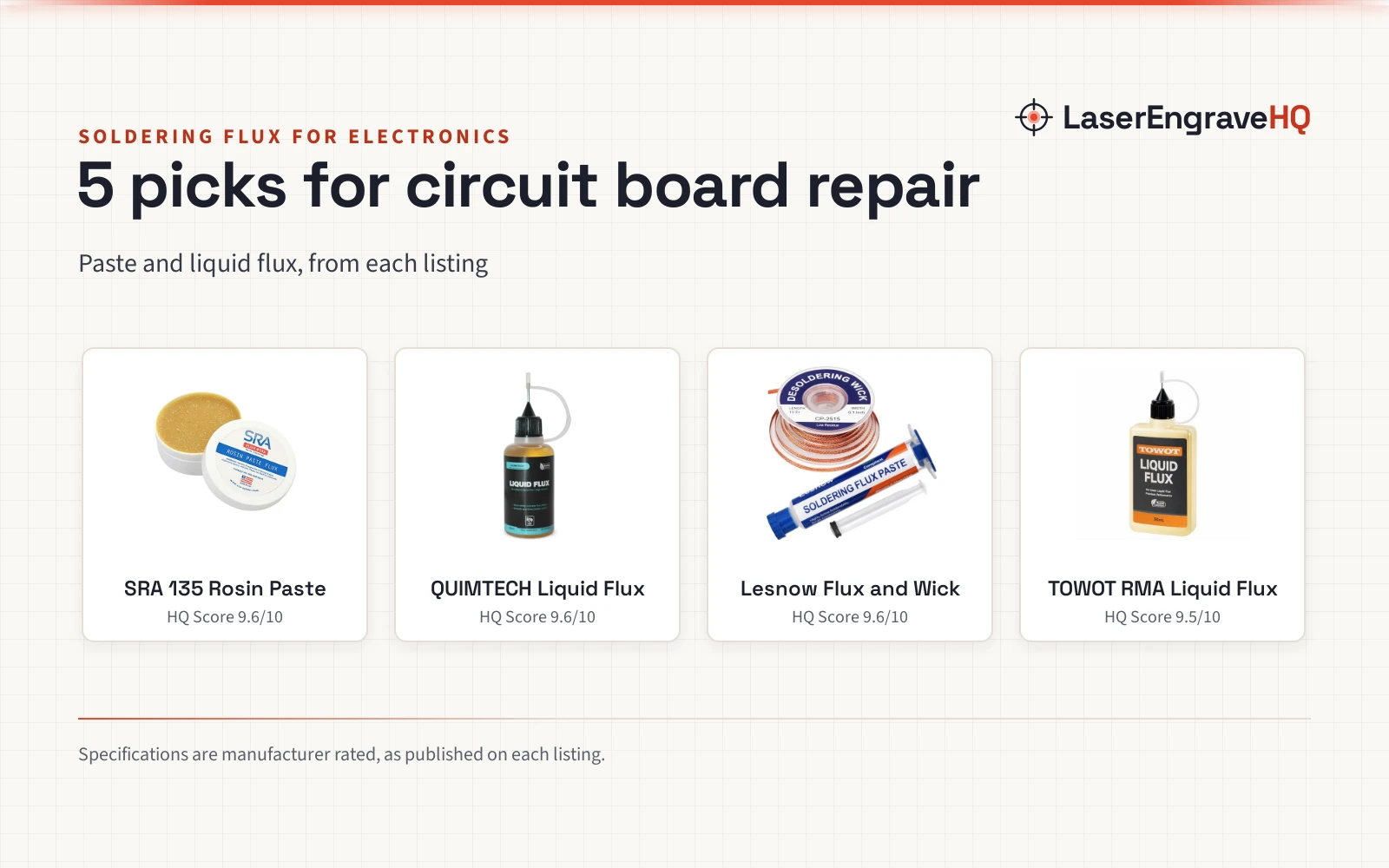
The SRA 135 is a rosin paste flux in a 2oz jar, listed as a type RA rosin activated flux, active from 93 to 315 degrees Celsius (200 to 600 degrees Fahrenheit). Its semi-solid wax paste is acid free and no-clean, leaving safe residues with no goopy mess. The jar measures 3.0 inches by 1.0 inches by 3.0 inches and weighs 0.125 pounds. Suits bench work on circuit boards and copper wire; skip it when fine placement needs a syringe, since no applicator is stated.
Pros:
- Type RA flux, active from 93 to 315 degrees Celsius (200 to 600 degrees Fahrenheit)
- No-clean, acid-free paste; safe residues with no goopy mess
- Semi-solid wax consistency gives control over application
- 2oz jar (56.6g) suits repeated bench work
Cons:
- No applicator, so fine placement is harder than with a syringe
- No warranty term is stated
- No shelf life is stated
- Only one jar size is stated
Tozersis No Clean Flux Paste
The Tozersis flux paste comes as a four-pack of 10cc syringes with two fine tips for accurate placement. Its high-activity rosin flux removes oxidation and improves solder wetting, and the paste is lead-free, halogen-free, and non-corrosive when used as directed. Residue is minimal, so extra cleaning is usually unnecessary, with a shelf life of 12 months away from heat and sunlight. A 1 Year warranty is stated. Suits phone, appliance, and circuit board repair. Skip it for very cold rooms: the maker notes slight thickening in extremely cold environments.
Pros:
- Four 10cc syringes with two fine tips for precise placement
- High-activity rosin flux removes oxidation and improves wetting
- Lead-free, halogen-free, no-clean paste; minimal residue
- 1 Year warranty and 12 months of shelf life
Cons:
- Paste may thicken slightly in extremely cold environments
- Syringes must be resealed tightly after each use
- No active temperature range is stated
- Each syringe holds 10cc, so long sessions may need more than one
Lesnow Solder Flux Paste and Wick
The Lesnow kit pairs a 10cc supply of no-clean solder flux paste with a 10ft desoldering wick braid. The paste is halogen-free and non-corrosive, and the wick is made of copper wires in a precise weave that the maker says improves capillary action and solder absorption. The wick measures 10 feet long and 0.1 inch wide, and the kit suits removing relays and components from printed circuit boards and re-soldering keyboard switches. Suits benches that need paste and a removal tool in one kit. Skip it when the work needs a syringe, since the paste comes with no applicator stated.
Pros:
- Kit includes paste and a 10ft copper desoldering wick
- Halogen-free, non-corrosive paste with good fluidity
- Copper braid wick removes solder without damaging components
- Suits labs, home, and industry work on small boards
Cons:
- No warranty term is stated
- No shelf life is stated
- The 0.1 inch wick is narrow, so wide joints need more passes
- No active temperature range is stated
MG Chemicals 8341 Flux Paste
The MG Chemicals 8341 is a no-clean flux paste in a 10 mL pneumatic dispenser. The maker states superior fluxing ability with instant wetting, and a rosin residue that is non-corrosive, non-conducting, and moisture resistant. The paste is compatible with lead-free and leaded solder systems, and the dispenser measures 0.47 inches by 0.47 inches by 0.16 inches. Suits controlled application. Skip it when a larger supply is wanted, since only one 10 mL dispenser is included.
Pros:
- Pneumatic dispenser with plunger and dispensing tip
- Rosin residue is non-corrosive, non-conducting, and moisture resistant
- Compatible with lead-free and leaded solder systems
- Instant wetting after soldering, per the maker
Cons:
- Only one 10 mL dispenser is included
- No active temperature range is stated
- No shelf life is stated
- No larger size or multi-pack is stated
Which One Should You Buy?
For most electronics repair, the SRA 135 jar is the safe starting point, with its stated temperature range, jar size, and weight, and its no-clean rosin paste suits boards and copper wire. The Tozersis four-pack is the pick for fine work, since its syringes place paste exactly where it is needed, and it is the only one of the four with a stated warranty term. The Lesnow kit is the pick when removal work is part of the job, since the wick comes with the paste. The MG Chemicals dispenser suits controlled application from a tip. Pair any of them with a good iron; the best soldering iron for electronics guide and the best beginner soldering kit guide cover the rest of the bench.
FAQ: lasers and CNC
What is soldering flux?
Soldering flux is a cleaning agent that removes oxidation from metal so molten solder can wet the joint and bond. The pastes here are rosin fluxes; the SRA listing calls its product a type RA rosin activated flux.
How does soldering flux work?
Flux strips oxidation from the metal surface and keeps it clean while the joint is hot, so solder flows smoothly and bonds securely. The Tozersis listing says the same: its high-activity rosin flux removes oxidation and improves solder wetting.
How to use soldering flux paste?
Apply the paste to the joint with a syringe, a dispenser, or by dipping a copper wire into a jar, then heat the joint and feed in solder wire. The SRA listing puts it simply: dip copper wires or apply the flux to the board and watch the solder flow. Reseal the container after use so the paste does not dry out.
Is soldering flux conductive?
The MG Chemicals listing states that its rosin residue is non-conducting, and the SRA listing describes an acid-free flux made for circuit boards and copper wire. Follow what the maker states for the paste in use.
What is soldering flux made of?
The SRA, Tozersis and MG Chemicals pastes in this guide are rosin fluxes. The SRA listing calls its product a rosin paste, the Tozersis listing describes a high-activity rosin flux, and the MG Chemicals listing describes a rosin residue.
Related: the best soldering iron guide, lead free vs leaded solder and soldering iron vs soldering station. Also see the soldering gun vs soldering iron guide.