What Is a FDM Printer? A Beginner Guide for Makers
A machine that melts plastic filament and builds objects in thin layers: how an FDM printer works, what it prints, and what to check before buying.

On this page
Top picks at a glance
As an Amazon Associate I earn from qualifying purchases.
- 1
 Bambu Lab P2S 3D Printer9.6/10View on Amazon
- 2
 Portable 3D Printer9.2/10View on Amazon
- 3
 ELEGOO Saturn 4 12K Resin 3D Printer9.5/10View on Amazon
What is a FDM printer? It is a machine that builds solid objects from plastic filament, melting the filament and laying it down in thin layers until the shape is complete. The filament feeds through a heated nozzle that moves across a flat build plate, and each pass adds a fresh layer of plastic on top of the last. This guide explains how an FDM printer works, what it can make, what filament it uses, and what to look for before buying.
LaserEngraveHQ earns a commission from purchases made through these links, at no extra cost to you.
This guide gives no measurements or prices, because the figures vary by model and seller. The sections below explain how FDM printers work in plain terms, so you can compare models with a clear picture of the machine.
How an FDM printer works
FDM stands for fused deposition modeling. A spool of plastic filament feeds into the printer, where a heated nozzle melts it. The nozzle moves across the build plate in a set pattern, laying down a thin line of melted plastic that cools and hardens in place. The nozzle or the plate then shifts by a layer height and lays down the next layer, and the shape grows from the plate upward until the print is done. Slicing software turns a digital model into layers and a path for the nozzle, and the printer follows that path.
The parts of an FDM printer
Most FDM printers share the same parts, arranged in different frames. The spool holder carries the filament. The extruder grips the filament and pushes it toward the nozzle. The hot end melts the filament and shapes the flow. The build plate holds the print and is often heated so the first layer sticks. The frame and the motors move the nozzle and the plate in smooth, steady steps. Some printers enclose the whole build area, which keeps the temperature steady and keeps drafts away from the print. A printer with a heated bed and an enclosed frame handles a wider range of filament than an open frame.
What filament does an FDM printer use
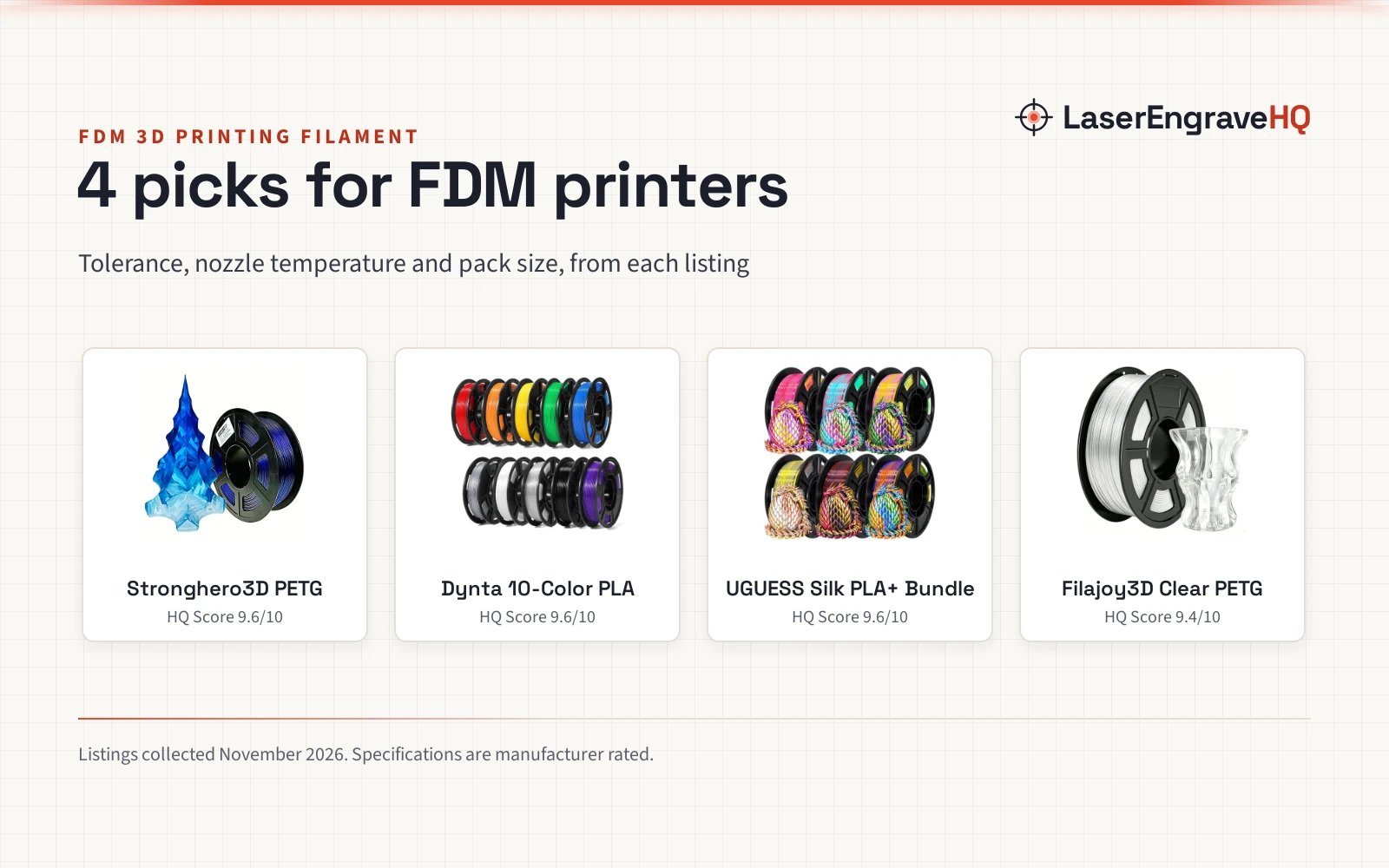
The common filament for FDM printers is PLA, a plant-based plastic that prints at moderate temperatures and suits models, ornaments, functional parts and household supplies. PETG is a tougher plastic that handles outdoor use and higher temperatures, while ABS is a strong plastic used for sturdy parts, though it gives off more fumes while printing and needs a ventilated room. Specialty filaments add colour, shine or flexibility: silk PLA has a glossy finish, and dual-colour PLA shows a different colour on each side of the strand, so the print shifts between the colours as the viewing angle changes. Check the filament the printer supports before buying a spool, and start with PLA if you are new to printing. See the guide to what PLA silk is and the best 3D printing filament for the types compared.
What can you make with an FDM printer
FDM printers suit objects that are sturdy rather than tiny and delicate. Common prints are models and figures, household fixes and replacement parts, storage boxes and organizers, cosplay props, planters and garden gear, and prototypes for products that later go into production. A printer with a large build area makes bigger parts, while a small printer suits ornaments and desk items. Prints come off the plate with visible layer lines, so parts that need a smooth finish get sanded or coated after printing. For parts that break on a machine you own, see the 3D printer replacement parts guide.
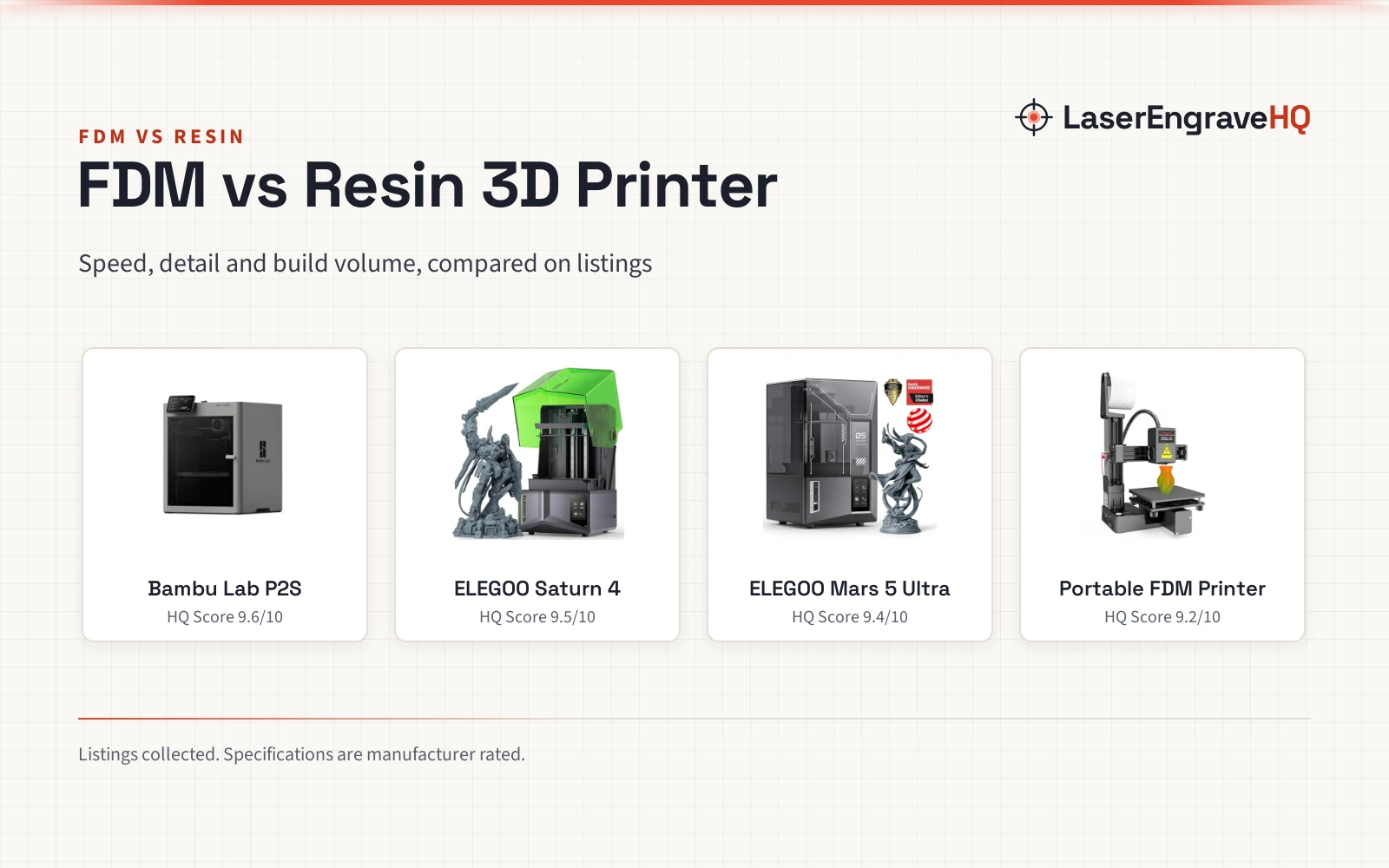
FDM vs resin printers
The other common home printer type is the resin printer, which hardens liquid resin with light instead of melting filament. Resin printers give finer detail and smoother surfaces, which suits miniatures and jewelry, but the resin needs careful handling and the build area is usually smaller. FDM printers give stronger, larger parts, cost less to run for everyday prints, and use filament that is easy to store and handle. Choose FDM for sturdy functional parts and large prints, and resin for tiny detailed models where surface finish matters most. See the resin 3D printer for beginners guide for the other side of the choice.
What to look for before buying
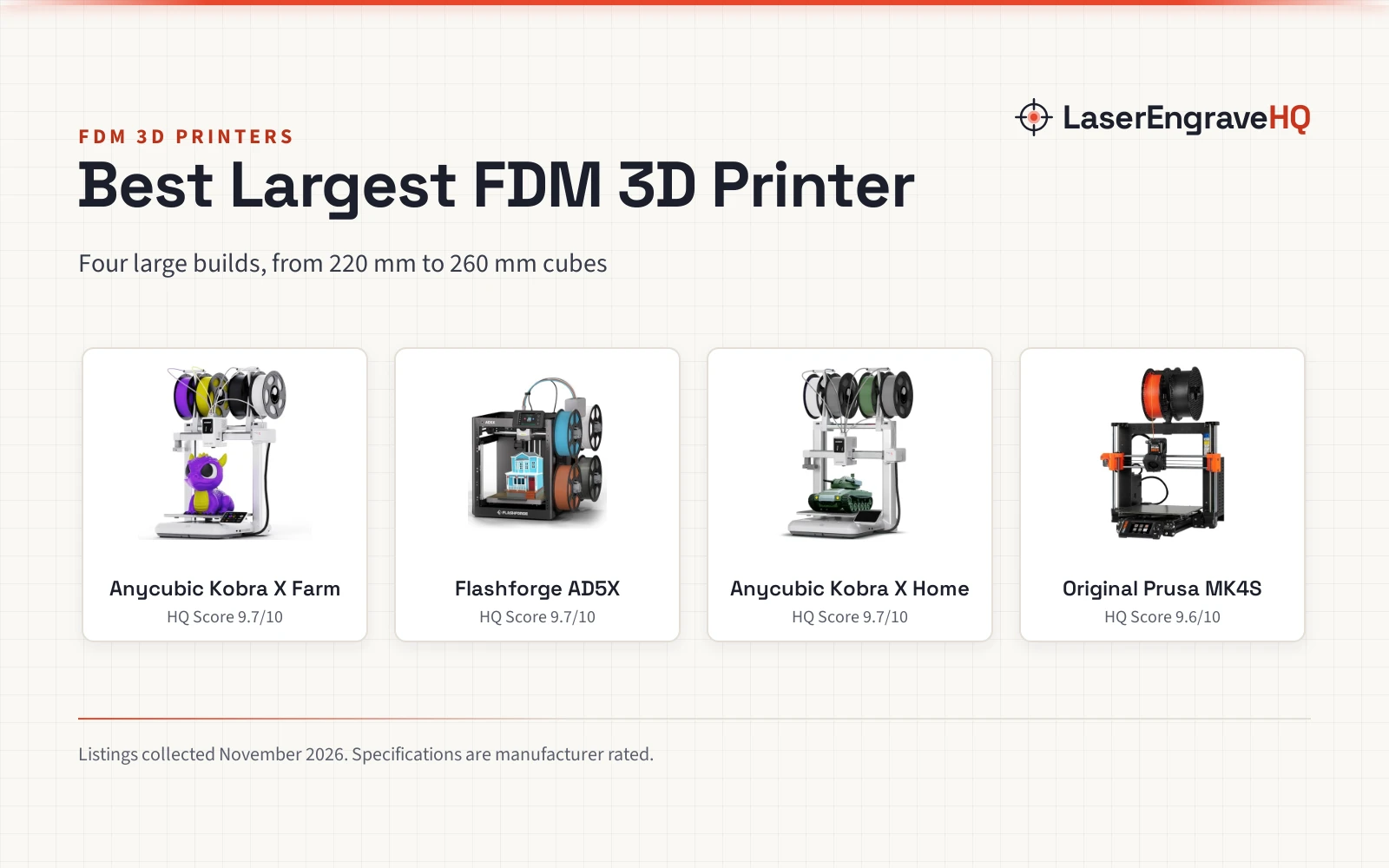
Start with the build size: check the largest object the printer can make, and match it to the parts you plan to print. Check the filament range the maker states, and whether the bed is heated, since a heated bed helps the first layer stick. An enclosed frame keeps drafts away and suits a wider range of filament, while an open frame is easier to watch during a print. Look at how the printer is set up out of the box, and whether the maker publishes clear guidance for common problems such as a first layer that will not stick. See 3D printer first layer problems and fixes for the usual causes. A printer with a strong community and ready spare parts is easier to keep running than a printer with neither.
Common mistakes to avoid
- Skipping bed leveling and then wondering why the first layer will not stick.
- Printing with damp filament that has sat open, which causes rough surfaces and weak layers.
- Choosing a specialty filament for a first print instead of starting with plain PLA.
- Leaving a print running far from the printer for its whole run.
- Expecting a perfect surface straight off the plate; parts that need a smooth finish need sanding or coating after printing.
What is a FDM printer: the short version
- A machine that melts plastic filament and builds objects in thin layers.
- PLA is the common filament; PETG and ABS suit tougher jobs.
- FDM suits sturdy, larger parts; resin suits tiny detailed models.
- Check build size, heated bed, filament range and enclosure before buying.
- Level the bed, keep filament dry, and start with plain PLA.
FAQ: lasers and CNC
What does FDM stand for?
Fused deposition modeling. The name describes the process: the printer fuses melted filament and deposits it in layers to build the shape.
What filament does an FDM printer use?
PLA is the most common, and most printers also handle PETG and ABS, though ABS prints best in an enclosed frame with ventilation. Specialty filaments such as silk PLA and dual-colour PLA add finish and colour. Check the filament range the maker states before buying a spool.
Is an FDM printer good for beginners?
Yes. It is the most approachable printer type for a beginner, and PLA is a forgiving filament to start with. Start with small models, level the bed, and keep the filament dry.
How is an FDM printer different from a resin printer?
An FDM printer melts filament through a heated nozzle, while a resin printer hardens liquid resin with light. FDM suits larger, sturdier parts; resin suits tiny models with fine detail.
Do FDM printers need ventilation?
Print in a ventilated room. PLA gives off little odour, but ABS and some other materials give off more fumes while printing, so check the guidance for the material you use and keep fresh air moving.
What can an FDM printer not do?
It cannot match the fine detail of a resin printer, and prints show layer lines unless finished after printing. Very small parts and smooth curved surfaces are harder on FDM, and large flat overhangs need support material to print well.
Related: what is a fdm printer, best 3D printing filament, multi colour 3D printer for beginners and 3D printer replacement parts.