Reamer Types: Hand, Machine and Adjustable Explained
Hand, machine, adjustable, and bridge reamers finish drilled holes to size, and this guide explains how each type works and how to choose among them.

On this page
Top picks at a glance
As an Amazon Associate I earn from qualifying purchases.
- 1
 Accusize Chucking Reamer Set9.7/10View on Amazon
- 2
 4PCS M35 HSS Taper Chucking Reamer Set 3/8"9.7/10View on Amazon
- 3
 Reamer Drill Bit for Metal9.7/10View on Amazon
A drilled hole often looks finished until a pin, shaft, or dowel needs a close fit, and that is where reamer types earn their place. Reamer types are the hand, machine, adjustable, and bridge tools that shave a thin layer from an existing hole to bring it to size and leave a smoother wall. A drill bit opens the hole, and a reamer finishes it, so the choice of reamer decides how smooth the wall is and how close the finished hole sits to size.
LaserEngraveHQ earns a commission from purchases made through these links, at no extra cost to you. Read our affiliate disclosure.
A reamer follows the hole that already exists, so it cannot fix a hole drilled in the wrong place. Start with a drilled hole in the right spot, then let the reamer bring that hole to size and finish.
Reamer types at a glance
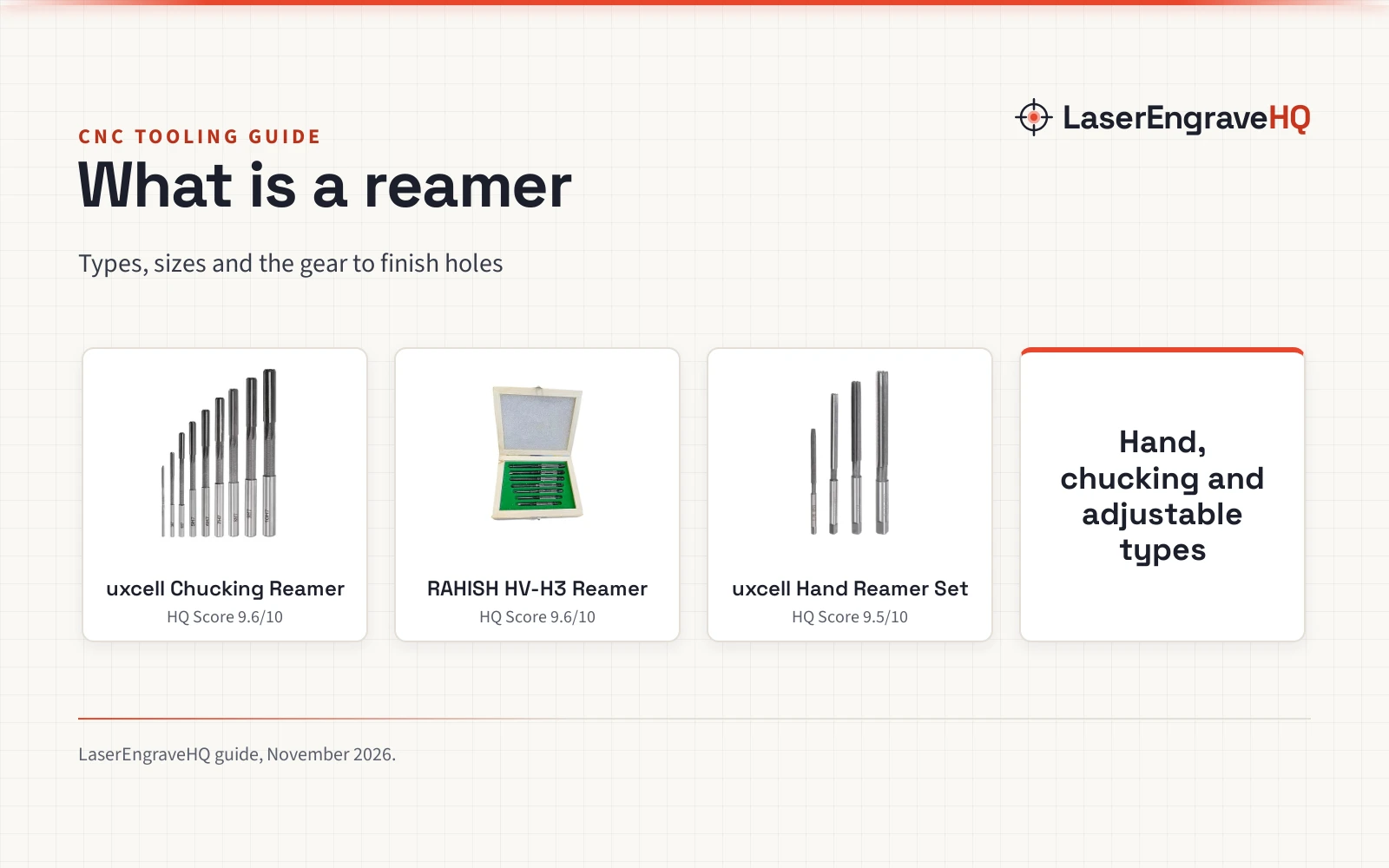
Reamer types split into groups by how they are driven and by the shape of the cutting end. Hand reamers turn by hand for light finishing and fitting work. Machine reamers, also called chucking reamers, run in a lathe, drill press, or machining center. Adjustable reamers use blades that move outward to cover a range of hole sizes. Bridge reamers carry a tapered tip for aligning holes in structural work.
| Type | How it is driven | Typical use |
|---|---|---|
| Hand reamer | Turned by hand | Light finishing and fitting |
| Machine reamer | Held in a machine chuck | Accurate finishing in a lathe or drill press |
| Adjustable reamer | Turned by hand or in a machine | Holes between fixed sizes |
| Bridge reamer | Used with power tools | Aligning and enlarging holes in structural steel |
Hand reamers
A hand reamer is turned by hand, with a wrench on the square drive at the end of the shank, and it removes only a thin layer from the wall of an existing hole. Hand reamers suit fitting work where a pin or shaft should slide into a hole with a close fit, and where the maker wants to feel the cut and stop as soon as the fit is right. A tapered lead centers the tool before the full cutting edges engage, and a steady, straight turn leaves a smooth wall when the drilled hole is already close to size.
Machine reamers and chucking reamers
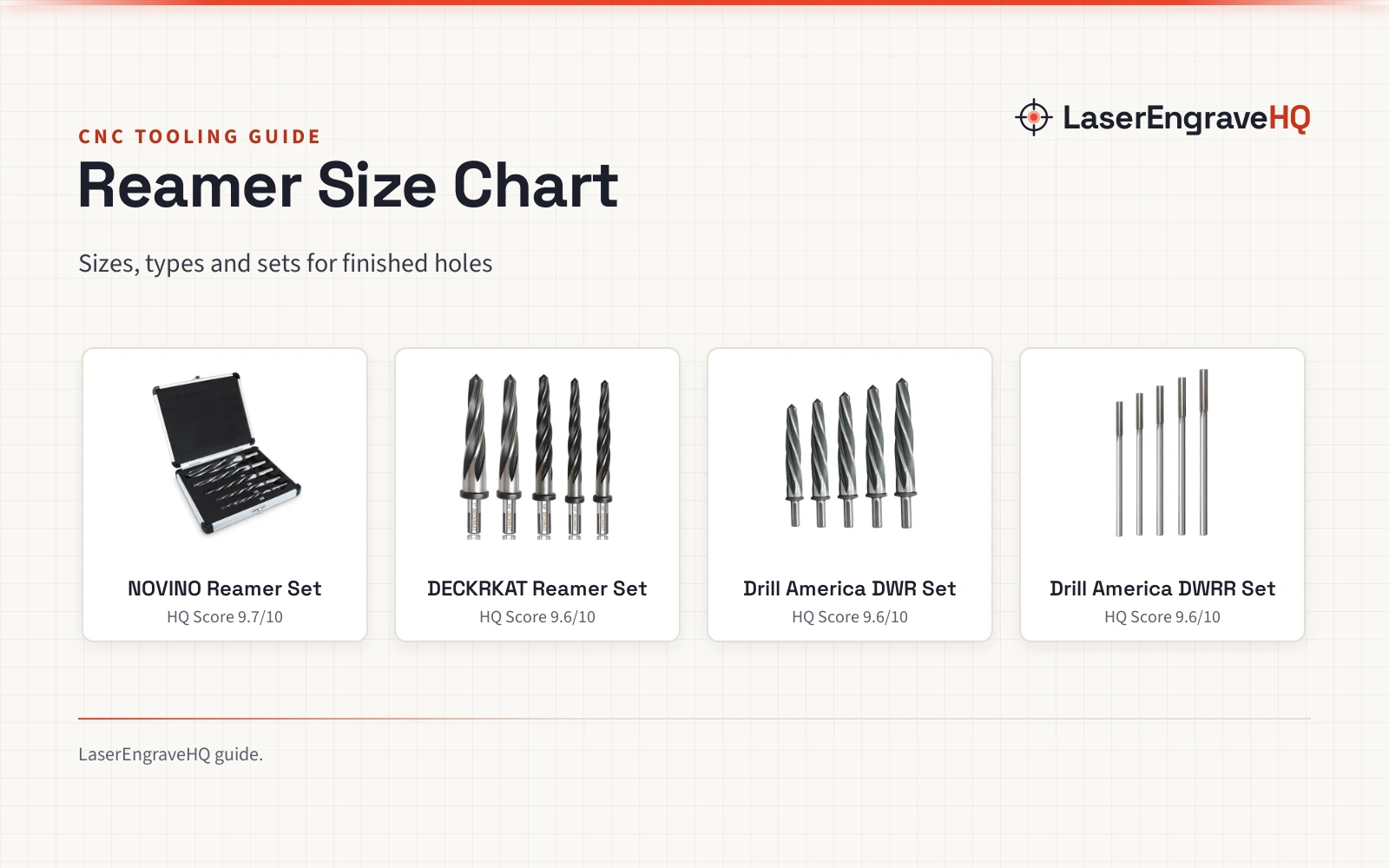
A machine reamer, often called a chucking reamer, is held in a chuck and driven by a lathe, drill press, screw machine, or machining center, and it finishes holes to a close tolerance with a steady feed. Accusize Industrial Tools describes its chucking reamers with a straight shank, straight flutes, and a right-hand cut in M2 high-speed steel. uxcell lists a chucking reamer set in sizes from 2mm to 10mm with H8 tolerance, in high-speed steel for general purpose work in stainless steel, aluminum, copper, alloy, and plastic. Accusize Industrial Tools lists a 7-piece fractional set from 1/8 inch to 1/2 inch by 1/16 inch in M2 high-speed steel, with a 45-degree chamfer, and a 29-piece set from 1/16 inch to 1/2 inch by 1/64 inch with a tolerance of +0.0002 inch to -0.0000 inch. For background on the machines that drive these tools, see the types of CNC machines guide, and for the holders that grip them, see collet versus drill chuck for CNC.
Adjustable reamers
An adjustable reamer carries blades set in slots in the body, and the blades move outward as a nut or collar is turned, so the cutting diameter can be set to a size between the fixed sizes of a standard set. That adjustability suits a shop that needs an odd hole size for a mating part, or that wants to take up wear by opening the blades a little. The blades must sit even, or the hole will cut oversize on the high side and leave a rough wall, so an adjustable reamer needs care at setup and a check of the hole size as the work proceeds.
Bridge and construction reamers
A bridge reamer, also called a construction reamer, has a tapered point that enters overlapping holes and pulls them into line, then enlarges the hole so a bolt can pass through. These reamers are made for structural steel, automotive work, and truck and trailer work, where bolt holes in separate plates must line up. Topfurn lists a 5-piece taper chucking reamer set in sizes 3/8 inch, 1/2 inch, 5/8 inch, 3/4 inch, and 1 inch, in 6542 high-speed steel, with a triple flat shank that grips in a chuck and resists slipping in power tools. Yunnergo lists a 4-piece set in sizes 3/8 inch, 1/2 inch, 5/8 inch, and 3/4 inch, and notes that the tool requires an existing hole or a guide hole. Champion lists a 4-piece set in the same sizes that fits most power tools, deburs welded and punched holes, and cuts stainless steel and tough alloys.
Straight flute and spiral flute reamers
Flute shape decides how chips leave the hole and how smooth the finish feels. A straight flute reamer, the shape named in the chucking reamer listings here, lets chips collect in the flutes and suits shallow cuts and general purpose reaming in most materials. A spiral flute, also described as a helical design, uses a spiral groove to carry debris out of the hole, and it suits work where chips must clear with ease and the finish should stay clean and free of burrs. Topfurn describes a 5-blade helical design that gives smooth, precise cuts and clean, burr-free holes in steel, metal, wood, and alloy.
How to choose among reamer types
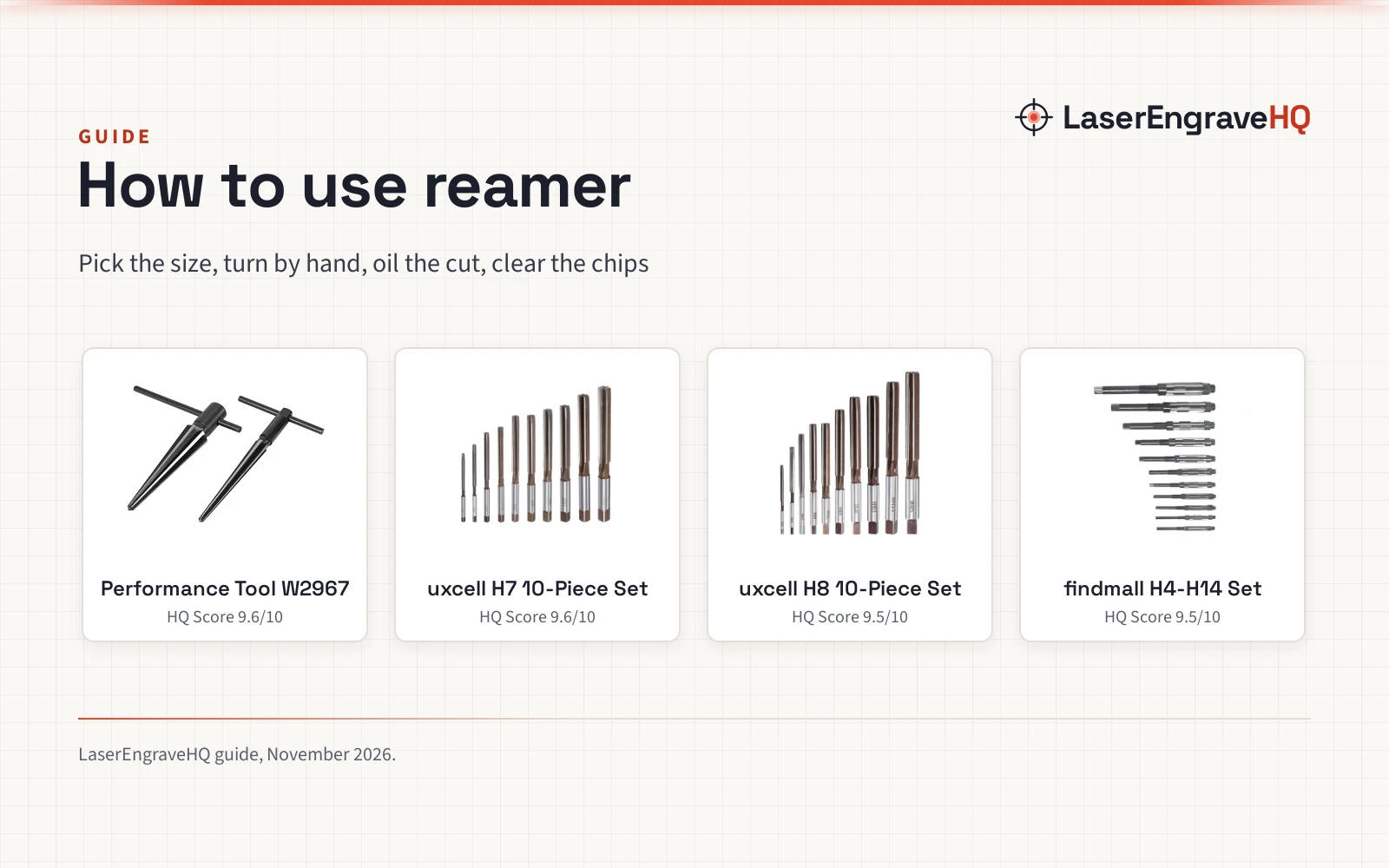
Start from the hole and the machine at hand. When the hole needs only a light finish and a close fit by hand, a hand reamer gives control and a smooth wall. When the hole must meet a stated tolerance in a lathe, drill press, or machining center, a chucking reamer is the right group. When the hole size falls between fixed sizes, or a worn hole needs to be opened a little, an adjustable reamer covers the gap. When bolt holes in plates must line up, a bridge reamer with a tapered tip does the aligning and the enlarging in the same pass. Match the material too, and check that the listing names the material of the part. For sizing help, see the reamer size chart, and for the steps of using the tool, see how to use a reamer. The CNC tooling hub gathers related tooling guides.
Common mistakes to avoid
- Using a reamer to open a hole from solid material, when a drill bit should open it and the reamer should only finish it.
- Forcing a reamer through a hole far under size, which loads the cutting edges and leaves a rough wall.
- Letting a hand reamer tilt, which cuts the hole oversize at the mouth and out of round.
- Skipping the check of flute shape and material, then finding the reamer clogs or leaves burrs.
- Ordering a set without checking that its size range covers the finished hole size.
Reamer types: the short version
- A reamer finishes an existing hole to size and leaves a smoother wall.
- Hand reamers turn by hand for light fitting work.
- Machine reamers run in a chuck for accurate finishing.
- Adjustable reamers cover sizes between fixed sizes.
- Bridge reamers align and enlarge bolt holes in structural work.
- Match flute shape and material to the job, then check the size range.
FAQ: lasers and CNC
What is a reamer used for?
A reamer finishes an existing drilled hole to size and leaves a smoother wall and a hole closer to size than a drill bit alone, so the finished hole can take a pin, shaft, or bolt with a close fit.
Can a reamer drill a hole from solid material?
No. A reamer needs an existing hole to follow, and a drill bit should open the hole before the reamer finishes it. Using a reamer as a drill loads the cutting edges and can leave a rough or oversize hole.
What is the difference between a hand reamer and a machine reamer?
A hand reamer is turned by hand and suits light finishing and fitting work where control matters. A machine reamer is held in a chuck and driven by a lathe, drill press, or machining center for accurate finishing at a steady feed.
What does H8 tolerance mean on a reamer set?
H8 is a tolerance grade for the finished hole, and uxcell lists H8 tolerance for its chucking reamer set in sizes from 2mm to 10mm.
Which reamer type suits bridge and construction work?
A bridge reamer suits that work, because its tapered tip enters overlapping holes, pulls them into line, and enlarges the hole for a bolt. Topfurn lists a 5-piece set in sizes from 3/8 inch to 1 inch for bridge and construction reaming.
Related: the CNC tooling hub, reamer size chart and how to use a reamer. Also see the HSS reamer set guide. Also see the drill bit types guide.