What Is Reamer and What It Is Used For
A reamer enlarges and finishes a drilled hole to a precise size and a smooth surface, and this guide explains the types, sizes and gear to choose.

On this page
Top picks at a glance
As an Amazon Associate I earn from qualifying purchases.
- 1
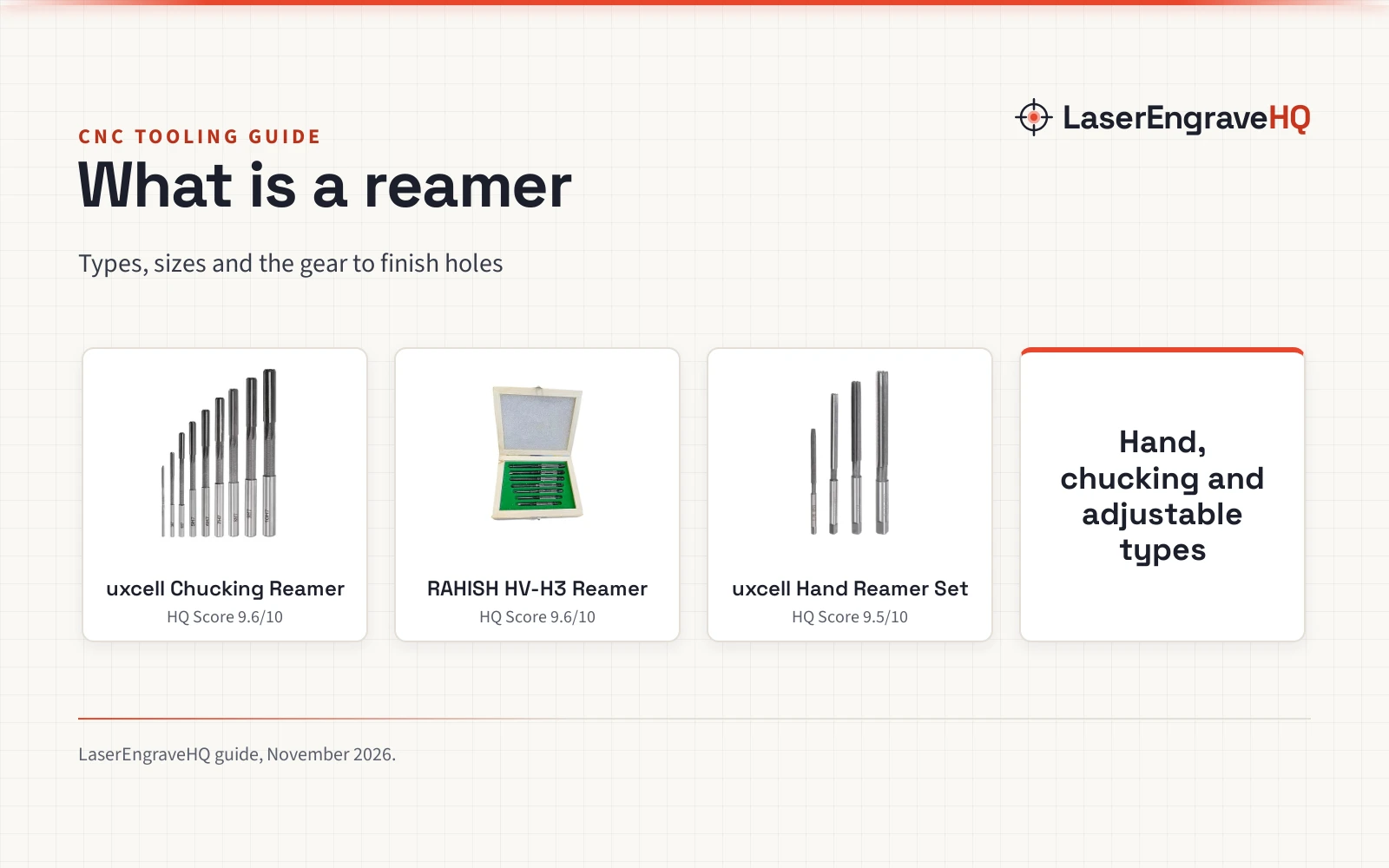
 uxcell Chucking Reamer Set Lathe Machine Reamer9.6/10View on Amazon
- 2
 Adjustable Hand Reamer Tool HV-H3 for Metal & Wood9.6/10View on Amazon
- 3
 uxcell 3pcs Hand Reamers Set,Reamer Bit Straight9.5/10View on Amazon
This guide covers what is reamer. A drilled hole is rarely finished as it comes off the drill bit, and that gap is what a reamer closes. What is a reamer? A reamer is a cutting tool that enlarges a drilled hole by a thin layer and finishes it to a precise size with a smooth surface. A drill bit makes the hole; a reamer makes the hole fit. This guide explains the types of reamers, how each type works, the sizes and tolerance to look for, and the gear that handles each part of the job.
LaserEngraveHQ earns a commission from purchases made through these links, at no extra cost to you. Read our affiliate disclosure.
uxcell Chucking Reamer Set Lathe Machine Reamer
A 9-piece high-speed steel chucking reamer set in sizes from 2 mm to 10 mm with H7 tolerance.
Pros
- 9 sizes from 2 mm to 10 mm cover a full range of small holes
- H7 tolerance suits holes that need a precise fit
- High-speed steel with hardness and toughness for wear resistance
- Straight flutes for shallow cuts in stainless steel, aluminum, copper, alloy and plastic
Cons
- Needs a lathe, drill press or screw machine
- Base high-speed steel only, with no added coating
- No warranty term is stated
- Straight flutes collect chips that need clearing
Adjustable Hand Reamer Tool HV-H3 for Metal & Wood
An adjustable hand reamer with carbon steel blades and a mild steel body, expanding from 1/4 in to 15/32 in (6.35 to 11.90 mm).
Pros
- Adjusts from 1/4 in to 15/32 in across a range of hole sizes
- Carbon steel blades on a mild steel body for durability and precision
- Square end works with adjustable wrenches or T-handle wrenches
- Straight flutes let debris escape for smooth, precise cuts
Cons
- Made for light cuts, not heavy stock removal
- No warranty term is stated
- Size changes need a nut adjustment before the next hole
- Needs tapping fluid or cutting oil to reduce friction and extend tool life
uxcell 3pcs Hand Reamers Set,Reamer Bit Straight
A hand reamer set in alloy steel with straight flutes for enlarging, smoothing and finishing holes in metal and wood.
Pros
- Straight flutes for shallow cuts with roundness, straightness and concentricity
- Alloy steel build with hardness, toughness and wear resistance
- Works by hand with a wrench, T-handle wrench or extension rod
- Suits hole repair work, pipe, fittings and woodworking applications
Cons
- Straight flutes collect chips that need clearing
- Chips can clog the flutes and affect cutting performance
- Made for light cuts and repair work, not heavy reaming
- Largest size is 5/16 in, so larger holes need a bigger reamer
What Is a Reamer and What It Does: what is reamer
A reamer is a rotary cutting tool with flutes along its length that shave a thin layer from the inside of a drilled hole. The flutes carry the cutting edges and collect chips as the tool cuts, leaving a smooth surface a drill bit alone does not give. Reamers work in metal, plastic and wood, and the choice comes down to how the tool is driven: by hand or in a machine.
The job of a reamer is finishing, not drilling: it brings a drilled hole to the size a pin, bolt or shaft needs.
Hand Reamers and Chucking Reamers
Hand reamers are driven by hand with a wrench, a T-handle wrench or an extension rod. The tool turns slowly for light cuts and repair work. Adjustable hand reamers expand across a range of sizes, which suits repair benches where hole sizes vary.
Chucking reamers, also called machine reamers, run in a lathe, a drill press or a screw machine. The machine holds the reamer straight and turns it at a steady rate, which suits repeat work.
How a Reamer Finishes a Hole
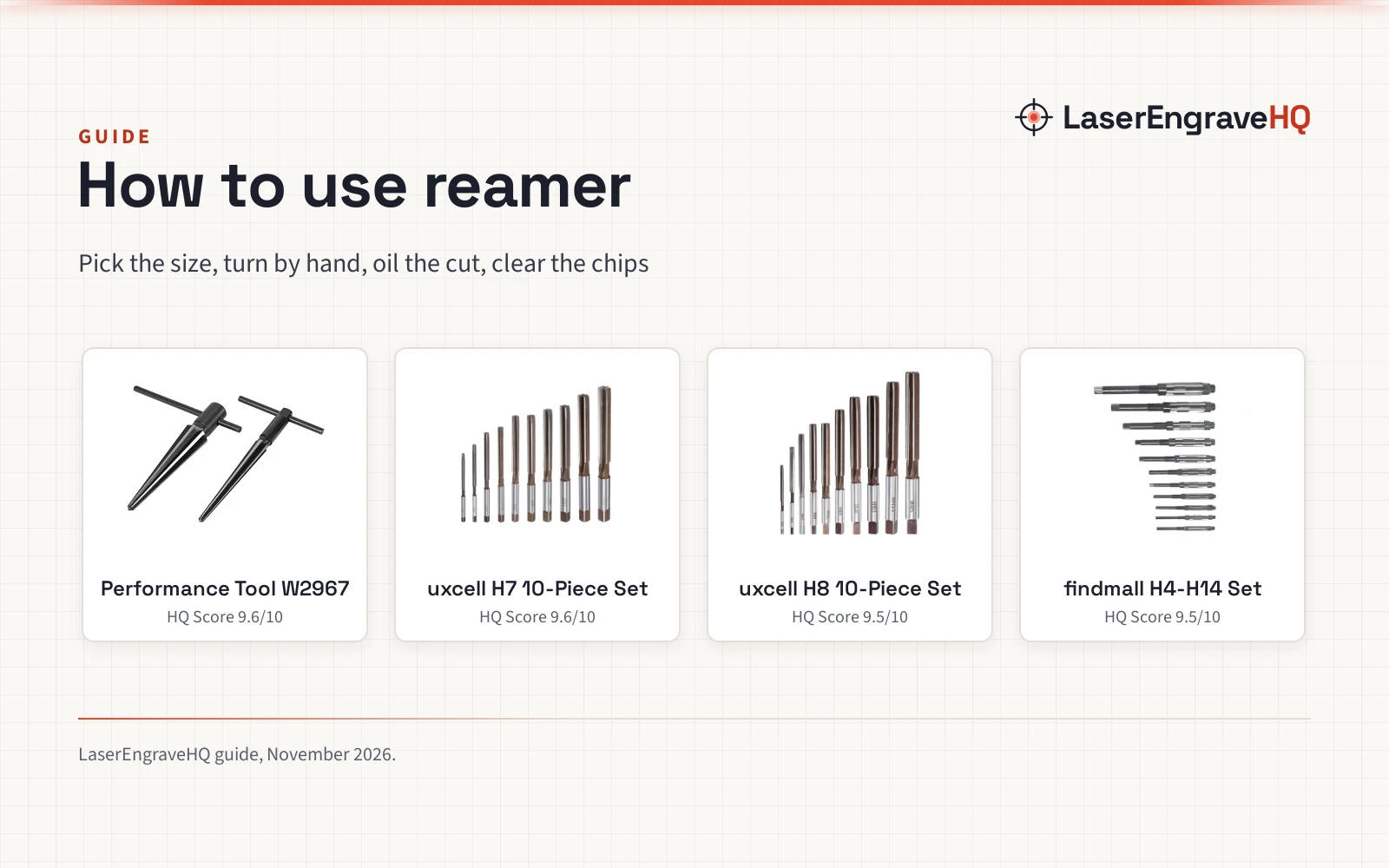
Start with a drilled hole close to the finished size, then turn the reamer through it in a steady motion. The reamer removes a thin layer from the hole surface, which improves precision and reduces surface roughness. Cutting fluid or lubricant on the reamer and the workpiece reduces friction, improves the surface finish and increases tool life. See the how to use a reamer guide.
Watch the chips as the work goes on. Straight flutes collect chips in the flutes, and clogged flutes affect cutting performance, so clear them before they pack in.
Reamer Sizes and H7 Tolerance
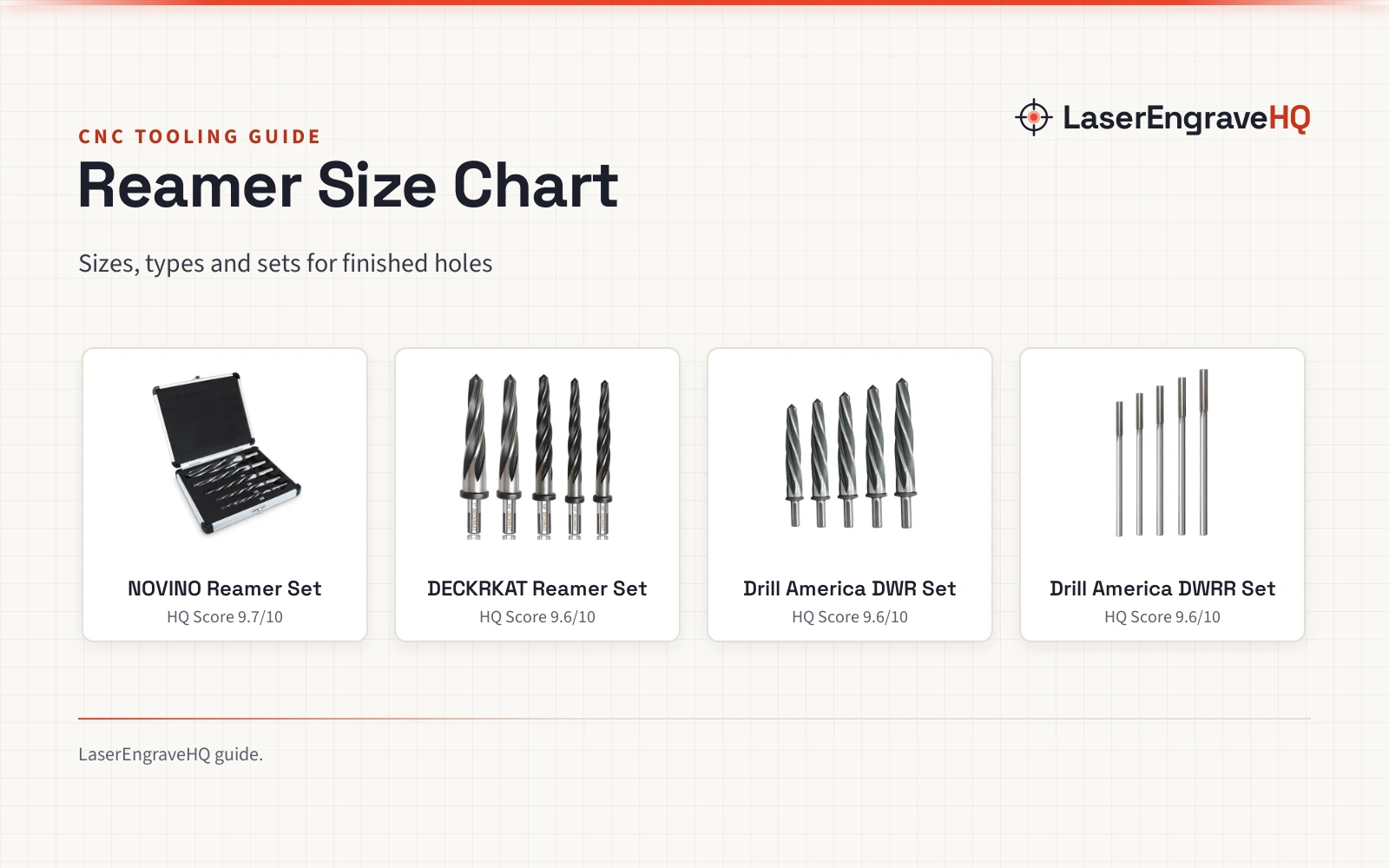
Fixed reamer sizes are stated as the nominal diameter of the tool, and adjustable reamers expand across a stated range. The uxcell chucking set runs from 2 mm to 10 mm, the uxcell hand set covers 1/8 in, 3/16 in, 1/4 in and 5/16 in, and the RAHISH adjustable reamer expands from 1/4 in to 15/32 in, or 6.35 to 11.90 mm. Match the reamer to the hole the mating part needs. The reamer size chart lays out the sizes to match to a hole.
H7 is the tolerance class the uxcell sets state for the reamer size. The fit of a pin or shaft in the finished hole also depends on the size of that mating part, so match both parts to the fit the job needs.
Choosing a Reamer for the Hole
Match the drive to the work. Hand reamers suit repair benches, hole repair and woodworking where the tool turns by hand, while chucking reamers suit lathes, drill presses and screw machines where the machine holds the tool. An adjustable reamer suits a bench that sees many hole sizes, since the blades expand across a range instead of swapping a fixed reamer for every size.
Match the material to the listing. The sets here state stainless steel, aluminum, copper, alloy, plastic and wood, with the RAHISH tool adding cast iron and non-ferrous metals. High-speed steel and alloy steel bring hardness, toughness and wear resistance for general purpose work. Read the reamer types guide for hand, machine and adjustable designs.
Reamer Gear for the Job
The finishing step needs a reamer matched to the hole size, the drive and the material, and the sets below cover hand repair, adjustable sizing and machine reaming.
FAQ: lasers and CNC
What is a reamer used for?
A reamer enlarges and finishes a drilled hole to a precise size with a smooth surface. The listings here state uses in hole repair work, pipe and fittings and woodworking.
Can a reamer drill a hole?
No. A reamer follows a drilled hole and removes a thin layer from the hole surface. Drill the hole close to the finished size, then turn the reamer through it to finish the hole.
What does H7 tolerance mean on a reamer?
H7 is the tolerance class the uxcell chucking set and the uxcell hand set state for the reamer size. The finished fit also depends on the size of the pin or shaft that goes in the hole.
How to choose a reamer size?
Match the reamer to the finished hole size. The chucking set runs from 2 mm to 10 mm, the hand set covers 1/8 in to 5/16 in, and the adjustable reamer expands from 1/4 in to 15/32 in.
Related: the CNC tooling hub, reamer types and best HSS reamer set. Also see the reamer size chart and the how to use a reamer guide.