Photogrammetry vs 3d Scanner: Which One Should You Buy?
Photogrammetry rebuilds a model from photos while a 3d scanner captures the shape directly, so the right pick turns on accuracy, object size and surface.

On this page
Top picks at a glance
As an Amazon Associate I earn from qualifying purchases.
- 1
 Revopoint MIRACO Plus 3D Scanner9.7/10View on Amazon
- 2
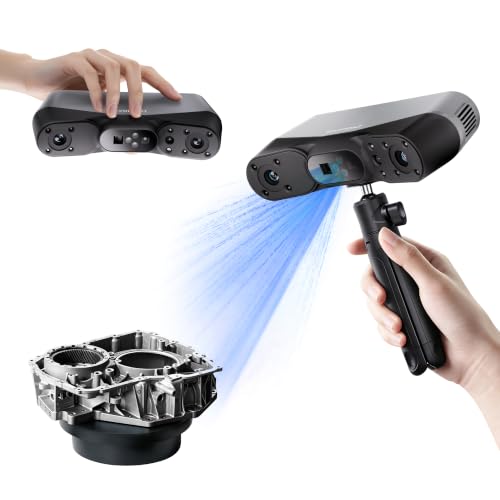 Revopoint POP 4 3D Scanner9.6/10View on Amazon
- 3
 Creality 3D Scanner CR-Scan Raptor for 3D Printing9.6/10View on Amazon
- 4
 Revopoint MetroY Ultra 3D ScannerView on Amazon
- 5
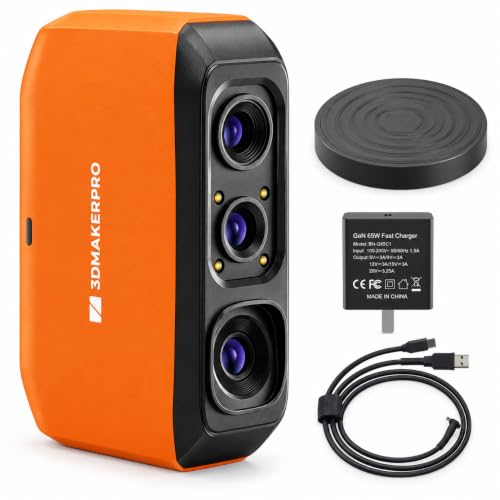 Fox 3D ScannerView on Amazon
- 6
 Creality CR-Ferret SE 3D ScannerView on Amazon
- 7
 3DMakerpro Fox 3D ScannerView on Amazon
- 8
 3DMakerpro 3D Scanner Moose LiteView on Amazon
- 9
 EINSTAR 2 Wireless 3D ScannerView on Amazon
You want a digital model of a real object, either to print it, to measure it or to rebuild it in CAD. Photogrammetry vs 3d scanner is the choice between taking photos with a camera and letting software rebuild the shape, or sweeping a handheld scanner over the object and capturing the shape directly. The right pick depends on the accuracy you need, the size of the object and the surfaces you scan.
Other machines to compare
 Revopoint MetroY Ultra 3D ScannerCheck price on Amazon
 Fox 3D ScannerCheck price on Amazon
 Creality CR-Ferret SE 3D ScannerCheck price on Amazon
 3DMakerpro Fox 3D ScannerCheck price on Amazon
 3DMakerpro 3D Scanner Moose LiteCheck price on Amazon
 EINSTAR 2 Wireless 3D ScannerCheck price on Amazon
LaserEngraveHQ earns a commission from purchases made through these links, at no extra cost to you. Read our affiliate disclosure.
Photogrammetry vs 3d scanner: the short answer
Photogrammetry starts with photos. You shoot the object from many angles, then software matches the photos and rebuilds a model. A 3d scanner starts with hardware: it measures the surface directly instead of inferring it from photos. Photogrammetry fits textured, matte objects and a camera you already own. A scanner fits work where the listing states a measurement accuracy you can plan around, such as inspection, reverse engineering and print-ready capture of parts with fine detail.
What photogrammetry does
Photogrammetry turns a set of photos into a model. The software looks for the same points across photos taken from different angles and builds the surface from those matches. It needs overlap between shots, steady light and a surface with enough texture for the software to match. Plain, dark or shiny surfaces give it little to work with, which is why the scanner listings make a point of handling dark and shiny surfaces. Photogrammetry has no accuracy figure stated in this guide, since the result depends on the camera, the photos and the software, and none of the listings here state a photogrammetry figure.
What a 3d scanner does
A 3d scanner measures the surface itself instead of inferring it from photos. The Revopoint MetroY Ultra uses blue laser and structured light in 5 modes, from 34 laser cross-lines for rapid scans to a single-line mode for deep holes and full-field blue structured light for marker-free scans. The Fox uses AI SLAM tracking that recognizes object features and re-locks onto scanned areas if tracking is interrupted, also without markers. The Fox turns raw scans into printable models with one-click processing in JMStudio, which handles point cloud alignment, fusion, noise reduction and mesh optimization.
Accuracy: what the listings state
The Revopoint listing states 0.01mm single-frame precision and 0.015mm + 0.04mm/m volumetric accuracy, with on-site verification against the included metrology-grade carbon fiber ball plate. Its Revo Measure software is PTB-certified and supports 11 GD&T measurement types, dimension extraction and CAD deviation analysis with color maps. The Fox listing states up to 0.07mm accuracy and 0.10mm resolution, aimed at 3D printing, CAD modeling, reverse engineering, digital archiving, quality inspection and product design. Read the figures as the makers’ stated accuracy, not as a result for every object.
Speed and workflow
The Revopoint scans at up to 90 fps with an NVIDIA GPU or 60 fps on CPU, and its 5 modes cover rapid large-area scans, fine details, deep holes, marker-free scans and one-click automatic turntable scanning. Revo Measure runs on Windows 10/11 only, and the kit includes a 1-year license for the software. The Fox connects to a computer, launches JMStudio and starts scanning with guided workflows, live feedback and real-time model preview. JMStudio runs on Windows 10/11 64-bit and macOS 12/13. The Revopoint adds Wi-Fi 6 control through Revo Mirror on a PC, tablet or mobile device, and a 5600mAh battery grip that provides about 2.5 hours of power for outdoor and mobile work.
Object size and surfaces
The Fox scans objects from 40mm to 1200mm, from small parts to full-size subjects such as figurines, shoes, sculptures, tools and body parts. The Revopoint listing describes its range as small parts to medium-sized objects and states no numeric object-size range. For surfaces, the Revopoint scans black, high-gloss and metallic industrial components directly without scanning spray, and works in harsh sunlight up to 100,000 lux. The Fox uses an NIR optical system that performs well on many matte dark and low-reflective surfaces. For surfaces that still fight capture, a matte spray helps: see the best matte spray for 3d scanning and best spray for 3D scanning picks.
The gear: 2 scanners to compare
The Revopoint MetroY Ultra CMM Edition is the industrial kit here. It ships with the scanner, a metrology-grade carbon fiber ball plate for on-site verification and a 1-year license for Revo Measure, and it carries a 2 year manufacturer warranty. Its 5 modes, 90 fps top speed with an NVIDIA GPU, outdoor use in sunlight up to 100,000 lux and Wi-Fi 6 control fit inspection work where a stated accuracy figure matters. A wrinkle in the listing: the title spells the model MetroY Ultra while the bullets spell it Metro Ultra in places.
The Fox is the lighter, simpler handheld here. It weighs 210g, scans marker-free with AI SLAM tracking and exports finished models in OBJ, STL, PLY or ASC formats. One-click modeling in JMStudio turns raw scans into printable models without complex manual editing. The Fox listing states no warranty term and no outdoor figures, so it reads as a bench and home-studio tool rather than a field inspection kit.
Which one should you buy?
Pick photogrammetry if you already own a camera, your objects are textured and matte, and you can accept a result that depends on the photos and the software. Pick a scanner if you want the shape measured directly and a stated accuracy figure to plan around. Between the 2 scanners here, the Revopoint fits inspection and measurement work with its 0.01mm precision, PTB-certified software and 2 year manufacturer warranty. The Fox fits printing, archiving and reverse engineering at the bench, with its 210g weight, 40mm to 1200mm range and one-click modeling. Either way, match the pick to the object size and the surface in front of you, not to the spec sheet alone.
FAQ: lasers and CNC
Can photogrammetry match a 3d scanner for accuracy?
The scanner listings state their figures: 0.01mm single-frame precision for the Revopoint and up to 0.07mm accuracy for the Fox. Photogrammetry has no stated accuracy figure in this guide, since the result depends on the camera, the photos and the software. If a stated accuracy figure matters for the job, a scanner gives you a figure to plan around.
Do I need a powerful computer to scan?
The Revopoint runs at up to 90 fps with an NVIDIA GPU and 60 fps on CPU. Revo Measure only supports Windows 10/11, so check compatibility before buying. The Fox runs JMStudio on Windows 10/11 64-bit and macOS 12/13.
Can I scan dark or shiny objects?
The Revopoint scans black, high-gloss and metallic components directly without scanning spray. The Fox handles many matte dark and low-reflective surfaces with its NIR optical system. For surfaces that still resist capture, a matte spray can help.
What file formats do the scanners export?
The Fox exports finished models in OBJ, STL, PLY and ASC formats. The Revopoint listing states PDF report generation from Revo Measure and no mesh export formats. If your workflow needs a specific format, confirm it in the listing before buying.
Which scanner is better for outdoor work?
The Revopoint lists outdoor scans in harsh sunlight up to 100,000 lux, a 5600mAh battery grip with about 2.5 hours of power and Wi-Fi 6 control. The Fox listing states no outdoor figures. For outdoor and mobile inspection, the Revopoint is the pick here with stated outdoor figures.
Related: the 3D scanner vs iPhone LiDAR, low cost 3D scanning and SLA vs DLP 3D printer guides.