Activated Carbon vs Hepa Filter for Laser: Which One Should You Buy?
A practical workshop guide comparing activated carbon and HEPA filtration for laser engravers: learn how HEPA traps smoke particles, carbon captures chemical fumes, and why recirculating extractors need both.

On this page
Top picks at a glance
As an Amazon Associate I earn from qualifying purchases.
- 1
 Laser Fume Extractor Compatible with 10 to 40W Laser9.5/10View on Amazon
- 2
 KQZ Laser Fume Extractor with Exhaust for Under 60W Laser9.5/10View on Amazon
- 3
 xTool Desktop Smoke Purifier for M29.5/10View on Amazon
- 4
 Activated Carbon for 3D PrintersView on Amazon
- 5
 Activated Carbon for 3D Printers & Laser EngraversView on Amazon
- 6
 Activated Carbon GAC for 3D Printers & Laser EngraversView on Amazon
- 7
 FumeClear FC-2001S Solder Fume Extractor PortableView on Amazon
- 8
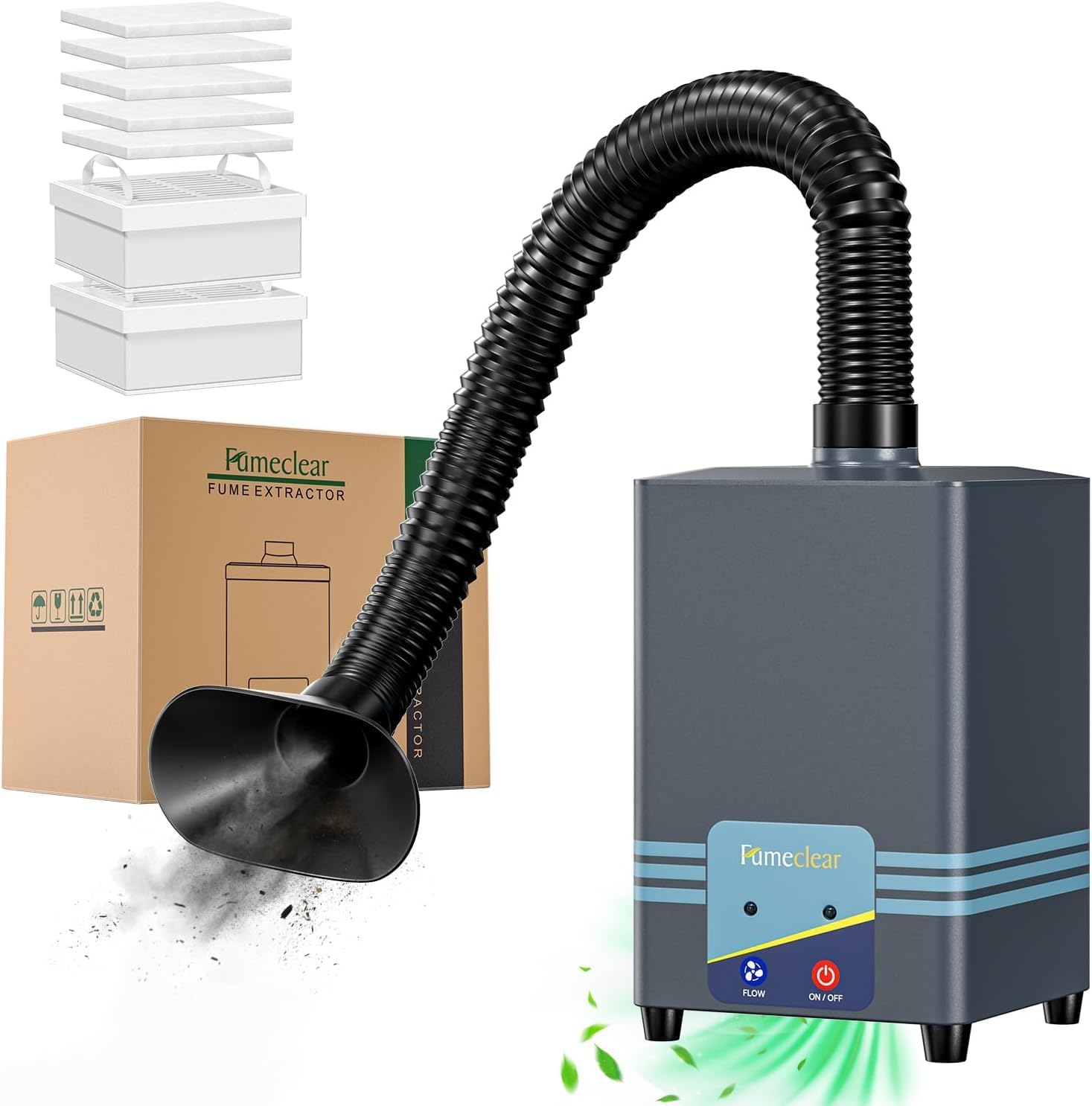 FumeClear FC-2001SG Solder Fume Extractor PortableView on Amazon
- 9
 AC Infinity Air Carbon Filter 6" with Premium AustralianView on Amazon
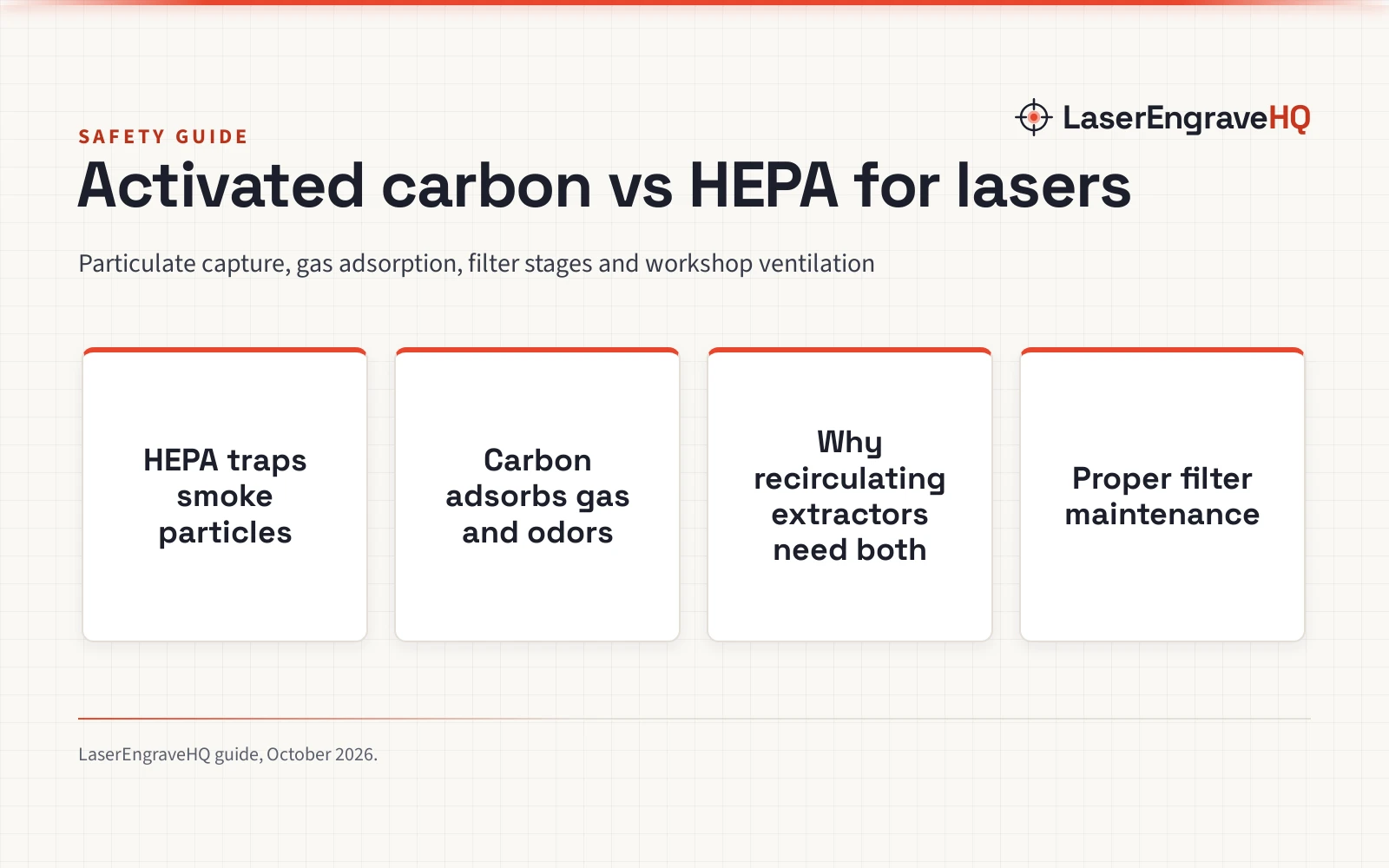
When cutting custom wood signs, engraving leather patches, or batching personalized tumblers indoors, managing workshop air is an immediate priority. The direct answer to activated carbon vs hepa filter for laser exhaust is that for a recirculating indoor setup, you need both. A HEPA filter captures physical smoke particles and dust, while an activated carbon filter adsorbs volatile organic compounds, chemical fumes, and persistent odors that pass through particulate media. Relying on only one filter type leaves your workspace exposed either to visible smoke or invisible chemical gases.
Other machines to compare
 Activated Carbon for 3D PrintersCheck price on Amazon
 Activated Carbon for 3D Printers & Laser EngraversCheck price on Amazon
 Activated Carbon GAC for 3D Printers & Laser EngraversCheck price on Amazon
 FumeClear FC-2001S Solder Fume Extractor PortableCheck price on Amazon
 FumeClear FC-2001SG Solder Fume Extractor PortableCheck price on Amazon
 AC Infinity Air Carbon Filter 6" with Premium AustralianCheck price on Amazon
LaserEngraveHQ earns a commission from purchases made through these links, at no extra cost to you. Read our affiliate disclosure.
Filter lifespan depends on the materials you process. Plywood and MDF generate dense particulate soot that loads mechanical filters quickly, whereas acrylics release concentrated VOCs that consume carbon media. Treat manufacturer hour specifications as baseline figures under moderate use, not guarantees for continuous cutting.
Step 1: Understand how HEPA filters capture laser smoke
High Efficiency Particulate Air filters capture solid airborne matter generated during thermal laser cutting. As the beam burns wood, scorches leather, or marks plastics, it releases microscopic ash, carbonized dust, and dense soot that create visible smoke. Pleated fiberglass or synthetic media traps these solid particles through impaction and diffusion. For example, Glowforge lists its Craft Laser Filter as incorporating pleated filtration with fiberglass media to capture airborne particles. However, HEPA media cannot capture chemical vapors, gases, or odors, which pass through the fibers without obstruction.
Step 2: Understand how activated carbon captures laser fumes
Activated carbon targets vapor-phase pollutants that bypass mechanical filters. Intense laser heat releases volatile organic compounds and persistent odors, including formaldehyde from engineered wood binders and acrylic vapors. Through adsorption, gas molecules adhere to the internal pore surfaces of the carbon. Media suppliers process coconut shell carbon to maximize internal area: Carbon Bulk Sales specifies thermally activated carbon with a particle size distribution of 3-5mm and a total surface area of 1100+ m2/g, and Green Piece specifies a 3-5mm granule size with 1100+ m2/g surface area. Granular refills are available in 1 pound and 6 pounds bags from Activated Carbon Depot, and 1 pound, 5 pounds, and 20 pounds packs from Carbon Bulk Sales. Carbon cannot capture raw smoke; unshielded granules quickly foul with soot and ash.
Step 3: Recognize why laser exhaust requires both filter types
Laser cutting produces a dual waste stream: solid airborne particulate soot alongside vaporized chemical fumes. No single filter mechanism handles both phases. Using HEPA alone allows gaseous volatile organic compounds to circulate freely in your breathing zone, while using activated carbon alone allows raw soot to coat the granules and restrict airflow. Review our guide on is laser engraving smoke toxic for background on these emissions. Multi-stage units solve this by pairing media: Glowforge states in its listing that its Craft Laser Filter helps trap 99.9% of particles and fumes. Compare setups in our best fume extractor for laser engraver guide.
Step 4: Arrange the filter stages in the correct order
Filtration media must follow a strict sequence from coarsest to finest:
- Intake pre-filter: Captures coarse ash flakes and charred wood debris to protect subsequent stages.
- Intermediate HEPA stage: Traps fine smoke particles, sub-micron soot, and airborne dust.
- Final activated carbon bed: Adsorbs volatile organic compounds and chemical odors from the particulate-free air before exhaust.
Placing carbon before HEPA causes soot to foul the carbon pores immediately. Placing carbon after HEPA keeps adsorption sites clean. Compare airflow requirements in our fume extractor vs exhaust fan guide and look at exhaust fan for laser enclosure options.
Step 5: Calculate filter media lifespan and replacement timing
Filter lifespan depends on workload and material choice. Cutting Baltic birch plywood generates heavy soot that loads particulate media quickly, whereas cutting acrylic exhausts carbon adsorption capacity with chemical vapor. Glowforge lists its specific replacement cartridge as providing up to 100 hours of printing time. The complete Glowforge filter housing weighs 15 pounds, while its drop-in replacement cartridge weighs 3.8 pounds. Monitor two symptoms to know when to service the system: a drop in fan airflow indicates that the particulate filter is saturated with soot, while odor breakthrough at the exhaust indicates that carbon media is spent and requires replacement or a fresh granular refill.
Step 6: Choose between a recirculating filter and outdoor venting
A recirculating filter suits spaces where building walls or windows cannot accommodate ductwork, as covered in our guide on can you run a laser engraver indoors. However, venting directly outdoors remains the preferred workshop method whenever possible. Outdoor exhaust eliminates recurring consumable filter costs and prevents odor buildup inside the room. Review how to vent a CO2 laser outside and our best exhaust fan for laser engraver guide. Both approaches require a sealed housing: see our best laser engraver enclosure guide and how to build a laser engraver enclosure.
Step 7: Maintain your workshop filtration system safely
Inspect duct joints and cabinet seals regularly to prevent leaks from discharging fumes into the shop. Place spent cartridges and saturated carbon into sealed bags for disposal. Never process forbidden materials: cutting PVC, vinyl, PVC-based artificial leather, polycarbonate, or ABS generates corrosive hydrogen chloride gas and hazardous byproducts that destroy optics, ruin carbon beds, and bypass HEPA filters. Check our guide on materials you should never laser cut and follow the laser engraver safety checklist before each job. Adhering to standards from the Occupational Safety and Health Administration (OSHA) keeps your workspace safe.
Common mistakes to avoid
- Using a HEPA filter alone and assuming odor-free air without carbon media.
- Exposing activated carbon to raw smoke without a particulate pre-filter.
- Ignoring chemical odors when carbon media is saturated.
- Attempting to wash or blow out loaded HEPA filters.
- Using unwashed carbon fines that lack vapor-phase pore structure.
- Cutting banned materials like PVC or vinyl that release corrosive acids.
Activated carbon vs hepa filter for laser: the short version
- Use both media in recirculating units: HEPA for smoke and carbon for VOCs.
- Place a coarse pre-filter at the intake to capture large ash flakes.
- Pass air through a pleated HEPA filter to remove fine soot.
- Route particulate-free air through activated carbon to adsorb gases.
- Replace media when airflow drops or odors break through.
- Ensure your enclosure is sealed, and vent outdoors whenever practical.
FAQ: lasers and CNC
Can a HEPA filter alone remove laser odors and chemical fumes?
No. HEPA filters trap only solid airborne particles like dust and soot. Chemical gases, VOCs, and odors pass directly through mechanical fiber gaps. You must pair HEPA with activated carbon to capture gaseous emissions.
Can an activated carbon filter capture visible laser smoke?
No. Carbon adsorbs gases and vapors. Directing raw smoke into carbon granules quickly coats their pores with soot, blinding adsorption sites. A HEPA filter must capture smoke first.
In what order should laser filter layers be installed?
Air must flow from coarsest to finest: pre-filter at the intake, HEPA filter in the middle, and activated carbon bed at the exhaust.
How often should you replace laser filter cartridges?
Lifespan depends on materials and volume. For example, Glowforge lists its replacement cartridge as lasting up to 100 hours of printing time. Replace HEPA media when airflow drops and carbon when odors escape.
Can you vent a laser engraver indoors without exhausting outside?
Yes, by using a multi-stage fume extractor combining HEPA and activated carbon with a sealed enclosure. However, venting directly outdoors with an exhaust fan remains preferable when possible.
Can activated carbon granules be refilled instead of buying new cartridges?
Yes. Many extractors accept bulk media. Suppliers like Carbon Bulk Sales and Green Piece offer 3-5mm granular carbon with 1100+ m2/g surface area in bulk bags for compatible housings.
Related: the laser safety hub, best fume extractor for laser engraver and fume extractor vs exhaust fan. Also see our can you run a laser engraver indoors. Also see our materials you should never laser cut.