Laser Safety Glasses vs Regular Safety Glasses: Which One Should You Buy?
A plain guide to laser safety glasses vs regular safety glasses: what each type guards against, and how to pick eyewear that matches a laser.

On this page
Top picks at a glance
As an Amazon Associate I earn from qualifying purchases.
- 1
 LaserPair Laser Safety Glasses 200-534nm and 740-1095nm Laser9.7/10View on Amazon
- 2
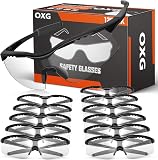 OXG 12 Pack Safety Glasses9.8/10View on Amazon
- 3
 LaserPair Laser Safety Glasses 200-460nm OD6+ & 800-1095nm9.7/10View on Amazon
- 4
 4 Pieces Laser Engraving Making Paper for Glass CeramicsView on Amazon
- 5
 Professional OD6+ CO2 Laser Safety GlassesView on Amazon
- 6
 xTool Laser Safety GlassesView on Amazon
A laser beam hits the workpiece, and the glasses on your face decide what reaches your eyes. Laser safety glasses vs regular safety glasses is the question every maker faces before switching a machine on: regular safety glasses shield against flying debris, while laser eyewear must also block the beam itself. The short answer is that regular glasses are not laser protection, even when they look alike.
Other machines to compare
 4 Pieces Laser Engraving Making Paper for Glass CeramicsCheck price on Amazon
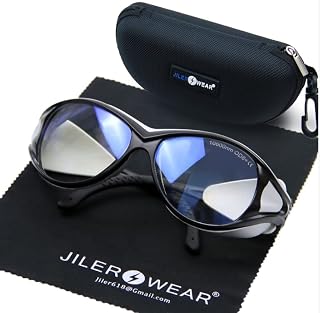 Professional OD6+ CO2 Laser Safety GlassesCheck price on Amazon
 xTool Laser Safety GlassesCheck price on Amazon
LaserEngraveHQ earns a commission from purchases made through these links, at no extra cost to you. Read our affiliate disclosure.
Laser safety glasses vs regular safety glasses: the core difference
Regular safety glasses are built to stop things that fly: wood chips, metal shavings and dust kicked up by cutting, sanding and shop work. The TICONN and BISON LIFE listings describe polycarbonate lenses that resist scratches and impacts, and each states ANSI Z87.1, the impact standard for protective eyewear. Side shields and wraparound curves add coverage from the sides, where debris can slip past a flat lens.
Laser eyewear has a different job. It must block a beam at the wavelengths a machine emits, and that protection is only real when the listing states an optical density (OD) and a wavelength range that matches the machine. A tinted lens or an orange shield without those ratings is not laser protection, however dark it looks. ANSI Z87.1 on its own says nothing about laser wavelengths: it covers impact, not beam blocking.
That gap is why the categories must not be swapped. Regular glasses belong on debris tasks around the shop. Laser work calls for eyewear whose listing names OD and a wavelength range for the machine in use, plus the usual shop habits of ventilation and fire watch.
What regular safety glasses do well
For debris work, regular safety glasses cover a wide set of jobs. The TICONN listing names construction, cycling, yard work, lab work and woodworking, with UV400 protection and lenses that resist scratches. The BISON LIFE listing adds a wraparound shape with deep side temples and 180° coverage, plus an anti-scratch coating for a wide, undistorted view. The SQIMZAR listing brings side shields with anti-fog, anti-scratch, anti-dust and anti-blue light features for woodworkers, metal and construction workers, laboratory technicians, dentists and shooters.
Fit matters as much as the lens. The TICONN listing describes a lightweight one-size design that fits most adult face shapes without excess pressure during extended wear. The BISON LIFE listing describes an ergonomic curve with universal-fit temples for a snug, slip-resistant fit. The SQIMZAR listing describes a comfortable fit for different face types without slipping. None of these claims change the core limit: comfort and impact resistance do not equal laser protection.
What laser eyewear must state before it counts as protection
Before eyewear counts as laser protection, its listing must state an optical density and a wavelength range, and that range must match the machine it will face. Without those facts, there is nothing to check the glasses against, and no way to know which beams they block. Makers should ask for these facts from the listing, and treat any pair that gives neither as regular glasses.
Machine safety runs alongside eyewear. Ventilation should carry fumes out of the room, and a running job should never be left unattended. Materials matter too: never laser-cut PVC, vinyl or PVC-based faux leather, and avoid cutting polycarbonate or ABS, since those materials can release harmful fumes and damage the machine. For guidance on laser products, see FDA (CDRH) publications on laser safety.
The gear in this guide
The picks below are all regular safety glasses. None of the listings states an optical density or a wavelength range, so none of them counts as laser eyewear. They rank here by impact rating, coverage and warranty terms stated in their listings, with the ANSI-rated pairs ahead of the pair that states no ANSI rating.
BISON LIFE Clear Safety Glasses. The highest-ranked pick is the BISON LIFE pair, which the listing certifies to ANSI Z87.1 with the mark embossed on the temple. Its wraparound polycarbonate lens gives 180° coverage with deep side temples and full brow and peripheral coverage, and an anti-scratch coating keeps the view wide and undistorted. It comes as a 12 pack for stocking worksites, labs and schools, weighs 0.1 pounds, and carries a lifetime warranty.
TICONN 12PK Clear Safety Glasses. The TICONN pair meets ANSI Z87.1 and adds UV400 protection, with durable polycarbonate lenses that resist scratches and impacts from flying debris, wood chips and metal shavings. Its lightweight one-size design fits most adult face shapes without excess pressure during extended wear, and the clear lens keeps vision sharp with no optical distortion. It comes as a 12 pack, and the line is available in multiple pack sizes for workshops, classrooms and team purchases.
SQIMZAR 3 PCS Safety Glasses. The SQIMZAR set comes as 3 pieces with side shields, anti-fog and anti-scratch features, plus anti-dust, anti-pollen, anti-particle and anti-blue light coverage. Its listing suits woodworkers, metal and construction workers, laboratory technicians, dentists and shooters, and it adds UV protection for screen work such as playing on a computer or watching TV. Its listing states no ANSI rating, so it ranks behind the ANSI-rated picks for shop debris work where an impact rating matters.
How to choose for a laser workspace
Start from the machine, not the glasses. Find the wavelength range the machine emits, then look for eyewear whose listing states an optical density and a matching range. If a listing gives neither, treat the pair as debris protection only and keep looking for rated eyewear for beam work.
Keep regular glasses for the jobs they suit: clearing debris, sanding, cutting prep and bench work where chips fly. Keep rated laser eyewear for time near a running beam, and store them apart so a quick grab never mixes them up. Pair the eyewear plan with ventilation that carries fumes outdoors and a fire plan that keeps an extinguisher within reach. The how to choose a laser engraver guide helps match a machine to a project before eyewear enters the picture.
FAQ: lasers and CNC
Can regular safety glasses protect against a laser beam?
No. Regular safety glasses are rated for impact and debris, not for blocking a beam. Laser protection needs a stated optical density and a wavelength range that matches the machine, and regular glasses state neither.
What do optical density and wavelength range mean?
Optical density says how much light the lens blocks at given wavelengths, and the wavelength range says which wavelengths that blocking covers. Each must match the machine: a pair rated for a narrow range gives no stated protection outside it.
Are ANSI Z87.1 glasses enough for laser work?
No. ANSI Z87.1 covers impact resistance for protective eyewear. It does not state laser protection, so an ANSI-rated pair still needs a stated optical density and wavelength range before it counts as laser eyewear.
Do I need laser glasses for a diode laser?
Any accessible laser beam calls for eyewear rated for that machine, whatever the laser type. Check the machine wavelength range, then pick eyewear whose listing states an optical density and a matching range. Regular safety glasses are not a substitute.
Which pick suits stocking glasses for a team?
The BISON LIFE and TICONN picks come as a 12 pack, which suits worksites, labs, schools and team purchases. The SQIMZAR set comes as 3 pieces, which suits smaller groups or spares. None of these picks counts as laser eyewear.
Related: the laser safety hub and the fume extractor guide.