Materials You Should Never Laser Cut: Complete Safety Guide
A workshop safety guide explaining materials you should never laser cut, why chlorine and toxic fumes damage equipment, and safe alternatives for cutting.

On this page
Top picks at a glance
As an Amazon Associate I earn from qualifying purchases.
- 1
 TOOCAA 10W Enclosed Laser Engraver for Tumblers9.6/10View on Amazon
- 2
 CREALITY FALCON A1 10W Laser Engraver9.6/10View on Amazon
- 3
 CREALITY FALCON A1 White 10W Laser Engraver9.6/10View on Amazon
Materials you should never laser cut include polyvinyl chloride, vinyl, ABS resin, polycarbonate, epoxy, and synthetic leather made with chlorine. Cutting these unsafe laser materials can release corrosive hydrogen chloride gas, generate toxic airborne byproducts, and permanently ruin optical lenses and motion rails. The sections below explain the chemical breakdown of hazardous plastics, how to inspect unknown blanks, and safe alternatives for your workshop.
LaserEngraveHQ earns a commission from purchases made through these links, at no extra cost to you. Read our affiliate disclosure.
Laser processing relies on thermal decomposition. When a concentrated beam vaporizes synthetic polymers, the emitted gases mirror their chemical makeup. If the polymer contains halogens or cyanide precursors, those fumes become corrosive or hazardous upon contact with air.
Step 1: Identify chlorine-bearing polymers like PVC and vinyl
Polyvinyl chloride, known as PVC or vinyl, is the most hazardous common material in laser crafting. When makers ask can you laser cut pvc, safety agencies and machine makers provide a clear negative. PVC contains chlorine bonded into the polymer chain. Under the heat of a laser beam, thermal breakdown releases gaseous hydrogen chloride.
When hydrogen chloride mixes with airborne humidity, it forms hydrochloric acid. This acidic vapor clouds lenses, strips mirror coatings, pits aluminum frames, and corrodes linear rails during the cut. Inhaling acidic fumes also violates OSHA workplace air quality limits. Vinyl records, PVC signage boards, PVC-based heat-transfer films, and pleather with vinyl backing must never enter a laser workspace.
Step 2: Recognize toxic decomposition in ABS and resin compounds
Acrylonitrile butadiene styrene, or ABS, is common in 3D printing filaments and injection molding, but it performs poorly under a laser. Thermal breakdown of ABS releases styrene gas, butadiene, and airborne cyanide compounds. Rather than vaporizing cleanly, ABS melts into sticky puddles that ignite easily on the honeycomb bed.
Epoxy resins, polyurethane foams, and fiberglass present matching hazards. Laser processing of epoxy generates dense fumes containing amine compounds. Flexible polyurethane foam vaporizes into airborne isocyanates and hydrogen cyanide gas while leaving combustible residues in exhaust ducts. Fiberglass combines glass fibers with resin binder; the beam cannot vaporize the silicate fibers cleanly, scattering airborne glass dust and scorched binder.
Step 3: Understand melting hazards in polycarbonate and dense plastics
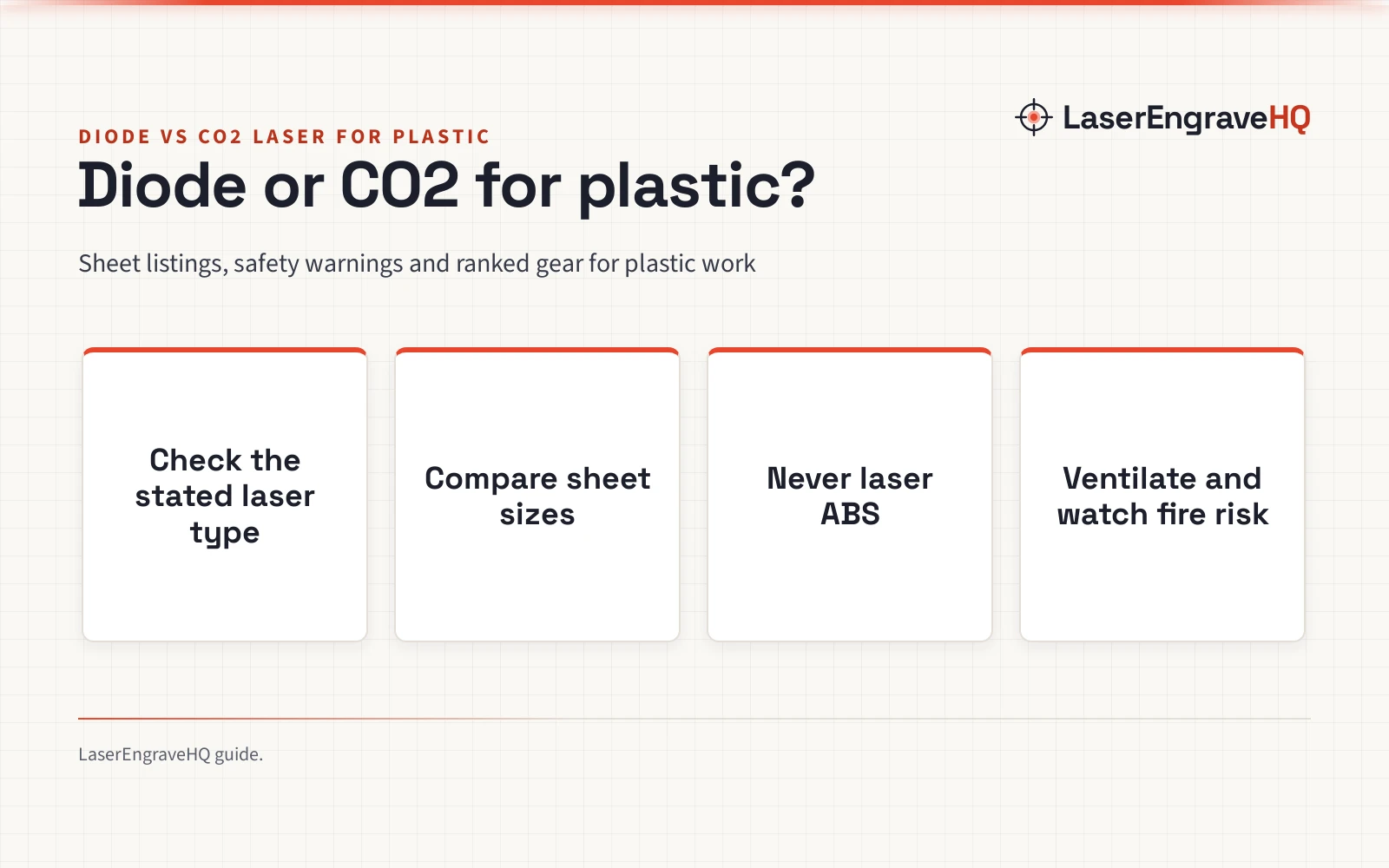
Polycarbonate, frequently sold as Lexan, offers high impact strength for window panes and shields. However, polycarbonate decomposes poorly under thermal laser radiation. Instead of depolymerizing cleanly into a vapor like acrylic, polycarbonate chars, burns, and produces dense black soot. The molten plastic fuses behind the cut path, leaving scorched yellow and black edges while generating persistent flame-ups that can ignite your honeycomb table.
High-density polyethylene and polypropylene also create severe cutting problems due to low melting thresholds. A cutting laser melts wide channels around the beam rather than producing a crisp cut line. The molten material drips onto the support bed, ignites persistent fires, and leaves uneven, beaded edges that ruin finished work.
Step 4: Check unidentified materials with safety data sheets and copper screening
A central rule for workshop safety is treating every unmarked blank as dangerous until verified. Never place scrap plastic or mystery faux leather under a laser without paperwork. Manufacturers publish Safety Data Sheets that disclose polymer composition and decomposition products. If a supplier cannot provide documentation confirming the absence of chlorine and vinyl, keep the material away from your machine.
When checking flexible films or craft sheets without paperwork, workshop technicians rely on copper wire flame screening, historically known as the Beilstein flame method. A clean copper wire is heated until glowing, touched to a small shaving of the material, and returned to a torch flame. If the flame flashes bright green, the plastic contains halogens such as chlorine and must be banned from the laser enclosure. If no green flash appears, chlorine content is unlikely, though operators should still check for excessive melting, smoke, and odor before processing any unknown stock.
Step 5: Inspect retail laser kits and blanks before processing
Many beginners assume that blanks bundled in craft packs are automatically safe for laser processing. That assumption can cause expensive machine damage because multi-material craft kits frequently package unsafe laser materials alongside safe blanks. Retail listings show surprising oversights by third-party suppliers who bundle incompatible items in starter packs.
For example, the Adrattnay Laser Material Explore Kit includes 10 PVC sheets inside its 170-piece supply set marketed for diode and CO2 cutting machines. Similarly, Tondiamo lists PVC sheets among the components of its 76-piece laser cutting materials kit. Processing PVC releases corrosive hydrogen chloride regardless of whether a kit vendor includes it in a beginner bundle. By contrast, reputable suppliers document safe plastics and wood panels. Gnomeshgh provides a 2-year manufacturer warranty for its 20-pack of 7.5-mil black PET sheets, noting that its food-grade PET sheets withstand temperatures up to 150 degrees Celsius for stencil crafts. For wood projects, the Ecurfu 4-pack of 1/12-inch basswood sheets carries a 1-year manufacturer warranty, delivering clean natural panels free from vinyl backing.
Step 6: Choose safe workshop alternatives for cutting and engraving
Eliminating hazardous materials does not limit creative output. For every unsafe polymer, reliable and laser-friendly blanks produce crisp results without damaging equipment. Cast acrylic serves as the premier plastic for laser cutting, vaporizing into clean monomer gas that leaves polished edges without melting slag. Extruded acrylic also cuts cleanly, though cast sheets produce brighter engraved contrast. Our guide on what materials can a laser engraver cut outlines optimal machine settings for rigid plastics.
For organic projects, natural hardwoods, certified plywood, and vegetable-tanned leather deliver clean results. When cutting organic blanks on the best laser engraver for wood, combustion generates wood smoke rather than acidic gases, which workshop extraction handles easily. For engineered panels, our guide on can you laser engrave MDF safely explains binder resin standards. For flexible crafts, genuine leather, wool felt, and polyester stencil film replace hazardous vinyl and pleather.
Step 7: Maintain proper exhaust ventilation and fire safety equipment
Even when processing safe materials, laser cutting produces particulate matter, volatile organic compounds, and fire risks. Operating an enclosed cutter indoors requires reliable exhaust planning. If your workspace lacks direct outdoor ducting, a filtration unit from our best fume extractor for laser engraver guide captures particulates and organic odors through activated carbon stages.
Review our guides on do laser engravers need ventilation and can you run a laser engraver indoors before starting large projects. Keep a fire extinguisher rated for electrical and paper fires within arm reach of the machine, and never leave an active laser job unattended. For eye protection, consult our laser safety glasses guide to match filter optical density to your machine wavelength.
Common mistakes to avoid
- Assuming every retail blank labeled for craft cutters is safe for laser beams.
- Cutting vinyl or pleather without checking the backing for chlorine content.
- Attempting to cut polycarbonate because it resembles clear acrylic sheet.
- Relying on open windows or room air purifiers instead of dedicated laser fume extraction.
- Leaving active laser cutting jobs unattended while processing combustible materials.
- Ignoring sticky residue on linear rails that signals corrosive gas release.
Materials you should never laser cut: the short version
- Never cut PVC, vinyl, or pleather containing chlorine, which produce corrosive hydrochloric acid gas.
- Avoid ABS plastic, polyurethane foam, and epoxy resins that release toxic fumes and leave flammable sludge.
- Skip polycarbonate, HDPE, and polypropylene, which melt, scorch, and produce persistent flare-ups.
- Verify unknown plastics with safety data sheets or copper wire flame screening before processing.
- Inspect multi-material craft kits to discard incompatible sheets bundled by third-party sellers.
- Choose cast acrylic, laser-grade plywood, natural hardwood, and polyester stencil films as safe alternatives.
- Maintain dedicated exhaust ventilation, optical eye protection, and fire extinguishers in your workspace.
Strict workshop material standards protect your equipment and ensure a safe crafting environment.
FAQ: lasers and CNC
Can you laser cut PVC?
No, you should never cut PVC on a laser. Under the thermal beam, PVC breaks down to release hydrogen chloride gas. When this gas contacts atmospheric moisture, it creates hydrochloric acid that rapidly corrodes linear rails, optical coatings, and machine electronics while posing severe respiratory risks.
Can you laser cut polycarbonate or Lexan?
No, polycarbonate is unsuitable for laser cutting. Under the laser beam, polycarbonate chars and combusts rather than vaporizing cleanly. The process generates heavy black soot, scorched cut edges that fuse back together behind the beam, and persistent open flames that risk damaging your machine bed.
Why is ABS considered an unsafe laser material?
ABS releases toxic airborne compounds including styrene and cyanide precursors when heated by a laser. In addition to chemical hazards, ABS melts into flammable puddles on the cutting table rather than vaporizing cleanly, creating significant fire hazards.
How do you tell if an unknown plastic contains chlorine?
The safest approach is consulting the manufacturer Safety Data Sheet. In a workshop setting without documentation, technicians use copper wire flame screening: touch a heated copper wire to a plastic shaving and place it in a torch flame. A vivid green flame indicates halogen content like chlorine, signaling that the material is unsafe for laser work.
Can you laser cut faux leather or pleather?
Most synthetic leathers should not be laser cut because they typically incorporate a PVC face or vinyl backing that releases hydrochloric acid. While certain specialized, laser-certified faux leathers made from pure polyurethane are marketed as laser-safe, unmarked pleather must never be cut. When in doubt, stick to vegetable-tanned natural leather.
What materials are safe to cut on a laser?
Safe materials include cast and extruded acrylic, natural woods like basswood and birch plywood, vegetable-tanned leather, paper, cardboard, and polyester films like PET. Always ensure proper exhaust ventilation and air assist when cutting any approved material.
Related: the laser engraver hub, our material guide, PVC vs acrylic sheet, can you laser engrave MDF safely, and the laser safety category. Also see our best fume extractor for laser engraver and laser safety glasses guide.