Is Laser Engraving Smoke Toxic? Hazards and Workshop Safety
A practical safety guide explaining why laser engraving smoke is toxic, which materials produce dangerous fumes, and how to set up proper workshop ventilation.

On this page
Top picks at a glance
As an Amazon Associate I earn from qualifying purchases.
- 1
 Portable Fire Extinguisher9.4/10View on Amazon
- 2
 xTool SafetyPro AP2 Smoke Purifier for Laser Engraver9.6/10View on Amazon
- 3
 Laser Fume Extractor Compatible with 10 to 40W Laser9.5/10View on Amazon
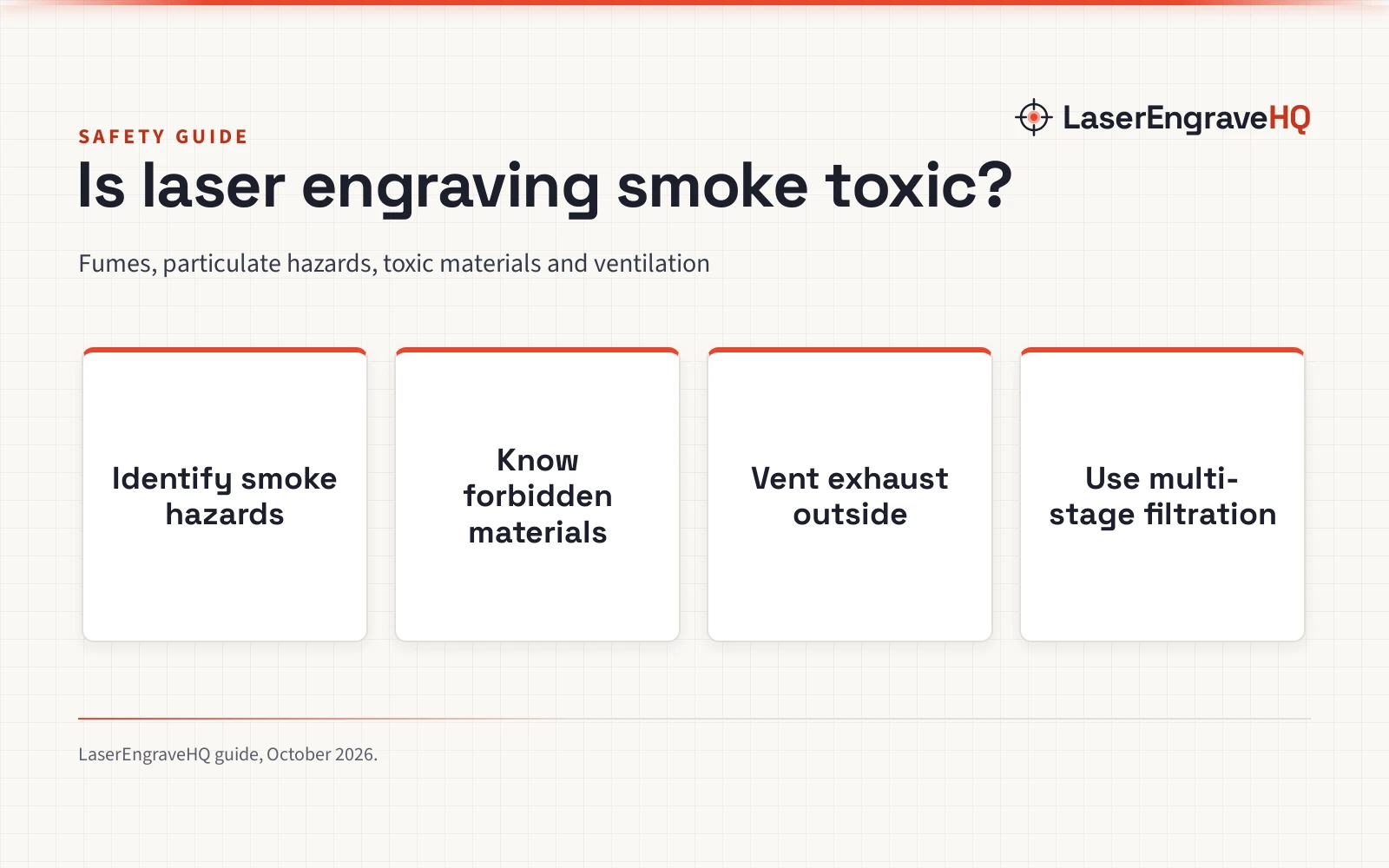
Is laser engraving smoke toxic? Yes, laser engraving smoke is toxic. When a laser beam vaporizes material, thermal decomposition releases a concentrated mixture of fine particulate matter, volatile organic compounds, and irritating chemical fumes into the air. Breathing this smoke exposes makers to hazardous airborne byproducts that can irritate airways, contaminate workshop surfaces, and degrade optical components. The sections below explain what makes laser fumes hazardous, which materials to avoid completely, and how to configure safe workshop extraction and filtration.
LaserEngraveHQ earns a commission from purchases made through these links, at no extra cost to you. Read our affiliate disclosure.
Laser smoke contains airborne particulates and chemical vapors that require mechanical capture. This guide outlines ventilation methods, equipment specifications from published listings, and workshop safety practices without offering medical advice.
Step 1: Understand what laser smoke contains
Laser engraving works by focusing intense optical energy onto a tiny spot. When the material absorbs this concentrated energy, its temperature spikes almost instantly, causing the substrate to burn, melt, or vaporize. This rapid thermal decomposition transforms solid materials into airborne pollutants that disperse into your workspace if left unmanaged.
The resulting smoke presents distinct hazards: respirable particulates and gas-phase chemical vapors. Coarse smoke particles visible to the naked eye represent only a fraction of the emissions. Sub-micron particulates remain suspended in ambient air for extended periods, penetrating deep into breathing zones and settling across equipment. Meanwhile, organic materials, adhesives, and coatings release volatile organic compounds and thermal degradation products during vapor cutting.
Federal occupational safety guidelines established by OSHA emphasize source capture for airborne contaminants, while machine radiation standards overseen by the FDA Center for Devices and Radiological Health govern optical containment and interlocks. Understanding that smoke contains microscopic solids alongside airborne chemical gases explains why simple dust masks or standard ceiling fans fail to protect a workshop. Effective protection requires capturing both phases before they spread.
Step 2: Identify hazardous and forbidden materials
Every material creates smoke when burned, but certain common plastics and synthetic compounds release exceptionally dangerous byproducts when processed with a laser beam. Processing the wrong substrate produces corrosive acidic gases that damage metal rails, cloud focus lenses, and create serious respiratory hazards for the operator.
Never cut or engrave polyvinyl chloride, vinyl records, vinyl heat-transfer sheets, or PVC-based artificial leather. When chlorinated polymers undergo thermal breakdown, they release hydrogen chloride gas. In the presence of ambient moisture, hydrogen chloride forms hydrochloric acid, which aggressively corrodes machine chassis, ruins electronics, and creates toxic fumes. For a full breakdown of prohibited workshop stock, consult our guide to materials you should never laser cut.
Other synthetic plastics pose severe hazards under a laser beam. Polycarbonate tends to produce dense black soot and flame up easily rather than cutting cleanly. Acrylonitrile butadiene styrene releases hazardous styrene vapors, unpleasant odors, and dense chemical soot when burned. Engineered woods like medium-density fiberboard use synthetic resin binders that release formaldehyde vapors when vaporized. When working with engineered wood, review our recommendations on how to laser engrave MDF safely.
Step 3: Choose between outdoor exhaust and multi-stage filtration
Workshop smoke management relies on distinct approaches: exhausting fumes directly outdoors through dedicated ductwork or scrubbing the air through a multi-stage closed filtration unit. Deciding between direct venting and indoor filtration depends on your shop location, neighborhood layout, and building access.
Venting outdoors is the most reliable method for high-volume engraving. An exhaust fan pulls fumes from the laser enclosure and expels them outside through a rigid or semi-rigid duct routed through a window insert or wall port. Because direct venting removes particulates and gases from the building without requiring consumable filters, it provides dependable airflow. To configure an exterior discharge system properly, follow our step-by-step instructions on how to vent a CO2 laser outside.
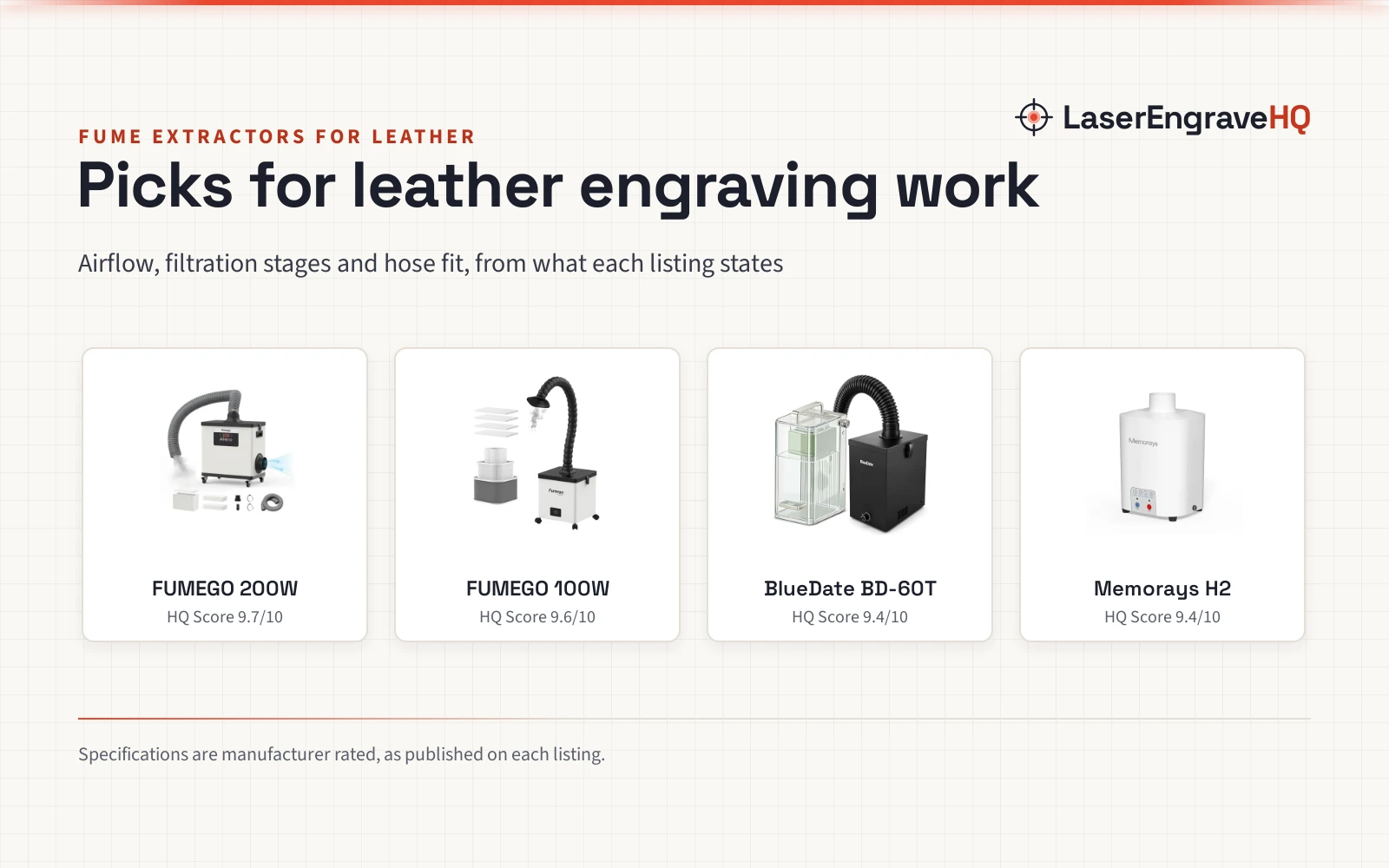
When outdoor ducting is impossible due to apartment rules, cold climates, or basement layouts, a standalone filtration unit is required. These machines pull contaminated air through progressive filter layers before recirculating purified air into the room. To compare dedicated filtration units, read our best fume extractor for laser engraver comparison guide.
Step 4: Select adequate airflow and extraction equipment
Effective fume capture requires matching the extractor airflow and motor capacity to the volume of smoke your machine generates. Light surface engraving on wood produces a low smoke volume, whereas cutting through thick acrylic or dense leather vaporizes significantly more material and generates heavy fumes that require stronger extraction.
Published equipment specifications illustrate how manufacturers scale extraction capacity. The KNOKOO listing publishes a 60 watts motor connected to a 60 mm diameter duct hose, designed specifically for 5W-10W laser engravers and rated for 2.2 kPa suction. For standalone desktop filtration, the NEETOP listing specifies a 60W motor delivering 250m³/h suction while keeping sound output to 55dB.
Higher-capacity units offer increased airflow for heavier smoke output. The NLVYPRO listing specifies a 200W motor delivering 177 CFM airflow (300 m³/h) through 4-layer filtration that captures 99.97% of fine dust and reduces odors up to 90%. For higher volume capture, the Zericuf listing specifies a 180W brushless motor delivering 320m³/h airflow, with 3-stage filtration using an H13 HEPA filter that captures 99.997% of 0.3 micron particles alongside high-iodine activated carbon. For dedicated cutting setups, see our guide to the fume extractor for laser cutting.
Step 5: Enclose the machine and position ductwork correctly
Even powerful extraction fans cannot protect your breathing zone if the laser chassis allows smoke to escape before reaching the exhaust port. Open-frame engravers disperse smoke freely in all directions, making effective source capture nearly impossible without an enclosed workspace.
Enclosing the engraving machine creates a contained chamber where exhaust fans establish negative air pressure. Negative pressure ensures that ambient room air is drawn into the enclosure through designated intake vents, preventing smoke from escaping into the workspace. Makers can explore factory enclosures in our enclosed laser engraver roundup, or assemble a custom enclosure following our guide on how to build a laser engraver enclosure.
Duct routing also determines extraction efficiency. Keep flexible ducting as short and straight as possible, because sharp bends and ribbed hose walls create friction that reduces airflow volume. When venting outdoors, ensure the exit pipe points away from open windows, air conditioner intakes, and neighboring doors to prevent expelled smoke from drifting back inside.
Step 6: Maintain filters and monitor workshop air quality
Filtration systems degrade as they accumulate particulates and chemical compounds. Pre-filter pads trap coarse wood dust and acrylic residue, but as pores fill, system resistance increases and air velocity drops. If airflow diminishes, smoke lingers inside the enclosure and escapes into the room.
Activated carbon adsorbs volatile chemical vapors through surface pore binding. Unlike particulate filters that show visible discoloration, activated carbon beds become saturated without changing appearance. When carbon becomes spent, chemical odors pass straight through into the exhaust stream, making odor detection the primary indicator for carbon replacement. For particulate stages, extractor units like the Zericuf and NLVYPRO include smart clog alerts and filter reminders that warn makers when restricted airflow indicates that pre-filters or HEPA stages require servicing.
Fire safety and optical protection remain essential companions to ventilation. Laser cutting generates combustible smoke residue and ember hazards. For complete workspace precautions, eye protection guidelines, and machine interlocks, consult our comprehensive laser safety resource.
Common mistakes to avoid
- Operating an open-frame laser indoors without an enclosure or localized exhaust hood.
- Venting smoke near open windows, doors, or fresh-air intake vents where exhaust drifts back inside.
- Assuming standard dust masks or household HEPA air purifiers can remove hazardous chemical gases.
- Engraving unknown plastics or vinyl without verifying that the chemical formulation contains no PVC or chlorine.
- Ignoring carbon filter saturation and continuing to run jobs after chemical odors become noticeable.
- Opening the enclosure lid immediately after a job finishes before the exhaust fan clears the internal chamber.
Is laser engraving smoke toxic: the short version
- Laser smoke contains hazardous microscopic particulates and volatile chemical vapors created by vaporizing material.
- Never engrave PVC, vinyl, ABS, or polycarbonate due to corrosive acid and toxic gas emissions.
- Enclose your machine to maintain negative air pressure and prevent smoke from escaping into the room.
- Exhaust fumes directly outdoors through smooth ducting whenever building layout permits.
- Use multi-stage filtration combining pre-filters, H13 HEPA, and activated carbon when outdoor venting is unavailable.
- Replace saturated carbon filters and clogged pre-filters promptly to maintain consistent capture velocity.
Managing laser smoke requires a proactive safety workflow. Capturing emissions at the source protects workshop air, keeps optical lenses clear, and ensures a clean operating environment for every engraving project.
FAQ: lasers and CNC
Why is laser smoke toxic even when engraving natural wood?
Even untreated natural wood releases fine combustion particulates, carbon monoxide, and volatile organic compounds such as organic acids and aldehydes when vaporized at high temperatures. While natural wood smoke does not generate corrosive hydrochloric acid like PVC, unventilated wood emissions still concentrate respirable ash and volatile vapors in indoor air, requiring active exhaust or filtration.
Is diode laser smoke less toxic than CO2 laser smoke?
No. Smoke toxicity depends on the chemical composition of the workpiece being vaporized, not the light source cutting it. Vaporizing acrylic, leather, or engineered wood with a diode laser generates the same hazardous compounds as cutting those materials with a CO2 laser.
Can I rely on an open window for laser ventilation?
An open window provides passive air exchange but cannot generate the directional negative pressure needed to extract smoke from a laser enclosure. Thermal fumes rise and disperse across the room before drifting outside. For detailed requirements on room air exchange, read our guide on whether laser engravers need ventilation.
Does an air assist pump remove toxic fumes?
No. An air assist pump delivers a concentrated stream of pressurized air directly at the focal point to blow away debris, suppress flames, and keep the lens clean. It moves smoke away from the cut kerf into the cabinet, but does not extract or filter smoke from the room.
Can you operate a laser engraver indoors safely?
Makers can operate laser engravers indoors safely only when using an enclosed machine paired with an outdoor exhaust duct or a multi-stage fume extractor. Running unvented machines in living spaces allows contaminants to accumulate indoors. Review our complete checklist on whether you can run a laser engraver indoors before starting.
How do you know when fume extractor filters need replacement?
Pre-filters require replacement when visible particulate accumulation restricts airflow or triggers pressure buzzer alarms. Activated carbon filters must be replaced whenever chemical odors become detectable in the exhaust stream, because odor breakthrough indicates that the carbon pore structure is fully saturated.
Related: the laser safety hub, laser engraver ventilation guide and fume extractor for laser cutting. Also see our guide on materials you should never laser cut. Also see our recommendations on how to vent a CO2 laser outside.