Laser Classes Explained Class 1 vs Class 4: Workshop Safety Guide
A practical guide to laser hazard classes: learn how enclosed Class 1 systems differ from open Class 4 cutters, eye protection requirements, and workshop safety rules.

On this page
Top picks at a glance
As an Amazon Associate I earn from qualifying purchases.
- 1
 LaserPair Laser Safety Glasses 200-534nm and 740-1095nm Laser9.7/10View on Amazon
- 2
 Economical Red Dot Laser ModuleView on Amazon
- 3
 WAINLUXPRO K10 5W Laser EngraverView on Amazon
- 4
 Laser Engraver 5.5W Enclosed 300×300mm Engraving Area Class 1View on Amazon
Laser classes explained class 1 vs class 4 comes down to accessible beam hazard and enclosure design: Class 1 systems present no optical hazard during normal operation, either because the beam is inherently low in power or because a high-power laser is fully enclosed with safety interlocks, while Class 4 systems expose an unshielded, high-power beam capable of causing permanent eye injury, skin burns, and workshop fires. In desktop engraving, an open machine typically carries a Class 4 rating whenever an operator can access the raw beam path, whereas fully enclosed cutters achieve Class 1 status. The sections below walk through the classification system step by step, showing how hazard levels work and how to set up safe workshop controls.
Other machines to compare
 Economical Red Dot Laser ModuleCheck price on Amazon
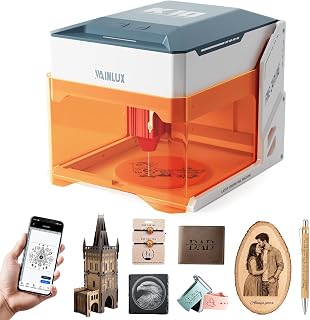 WAINLUXPRO K10 5W Laser EngraverCheck price on Amazon
 Laser Engraver 5.5W Enclosed 300×300mm Engraving Area Class 1Check price on Amazon
LaserEngraveHQ earns a commission from purchases made through these links, at no extra cost to you. Read our affiliate disclosure.
Laser classification evaluates accessible radiation during normal operation under standards like IEC 60825-1:2014. An open diode or CO2 cutter carries a Class 4 rating because the beam path is open, but placing that mechanism inside an interlocked enclosure can turn the overall machine into a Class 1 device.
Step 1: Understand how laser hazard classes are defined
Laser classification does not measure cutting speed or power draw. It defines the biological hazard to human eyes and skin if someone encounters the beam. Standards from the International Electrotechnical Commission, such as IEC 60825-1:2014, and rules from the FDA Center for Devices and Radiological Health categorize lasers by accessible emission limits. Accessible emission measures radiation that can escape the machine and reach a person during routine operation.
When a beam is completely sealed inside an interlocked cabinet, accessible radiation can be zero even if a strong laser operates inside. When a beam runs on an open gantry, accessible radiation equals the full beam output. For example, in handheld devices, maker Lennoos lists a Class 1 laser product certified under IEC 60825-1:2014 with maximum output power less than 0.39 mW at a wavelength of 532 nm. Because that specific pointer emits less than 0.39 mW, its accessible beam cannot harm an eye during normal operation.
Step 2: How Class 1 laser systems protect the operator
Class 1 is the safest regulatory tier. A Class 1 laser system produces no hazardous optical radiation during normal operation. This occurs either because the laser source is inherently weak, or because an engineered enclosure blocks all beam escape.
Most enclosed desktop cutters achieve a Class 1 rating through protective engineering. The cutting bed sits inside a light-tight housing. The lid features electrical interlock switches that disengage the beam immediately if opened during a job. Viewing windows use certified acrylic that absorbs the specific wavelength of the laser diode or CO2 tube. Because dangerous radiation cannot leave the enclosure, operators do not need protective eyewear during routine cutting jobs. Compare models in our best enclosed laser engraver guide, or review design tradeoffs in our open frame vs enclosed laser engraver breakdown.
Step 3: Why open engravers are classified as Class 4
Class 4 is the highest hazard category. Any laser device emitting accessible radiation above lower regulatory thresholds falls into Class 4. Most open-frame diode engravers, open galvo markers, and unenclosed CO2 cutters capable of cutting or engraving fall into Class 4. Because these beams can cut wood and etch metal, an open beam creates acute hazards across the workshop.
A Class 4 beam produces direct and indirect hazards:
- Direct beam exposure: Looking into the beam path causes instant, irreversible retinal injury before a person can blink.
- Specular reflection: Smooth surfaces like metal clamps or glass reflect the beam like a mirror at full power.
- Diffuse reflection: Radiation scattered from rough surfaces like wood or leather remains intense enough to cause permanent eye damage.
- Fire risk: Concentrated thermal energy can ignite materials if an axis stalls. Keep an extinguisher nearby and follow our guide on what to do if your laser engraver catches fire.
Step 4: Intermediate ratings from Class 2 to Class 3R
Intermediate laser categories help explain the broad gap between Class 1 and Class 4. Workshop tools frequently use these lower ratings for alignment guides and layout lines.
Class 2 applies to visible light lasers emitting 1mW or less. A Class 2 beam is considered safe for accidental exposure because natural human aversion makes a person turn away. For example, maker DOVOH lists an alignment tool under IEC 60825-1:2014 with output less than 1mW at a wavelength of 520nm, rated as Class 2. Maker M Monoie lists a Class 2 indicator conforming to IEC 60825-1 standards at 1mW or less. Maker Quarton lists a red diode module emitting at 650nm with output less than 1mW under Class 2, and brand PLS lists a Class 2 alignment tool with power under 1mW.
Class 3R covers slightly higher power where direct viewing presents risk. For example, maker Laserlands lists a line module rated Class IIIr with output under 5mW at a wavelength of 532nm. Practical laser cutting and material engraving require far higher optical energy than these alignment tiers provide, meaning unshielded cutting heads typically operate at Class 4 power levels unless housed within a Class 1 enclosure.
Step 5: Choose protective eyewear by wavelength and rating
Operating an open Class 4 laser engraver requires certified eye protection for everyone in the room. Diffuse reflections off a honeycomb bed or wooden workpiece can cause irreversible eye injury in an instant. Standard sunglasses and uncertified orange plastic shields offer zero protection against laser radiation.
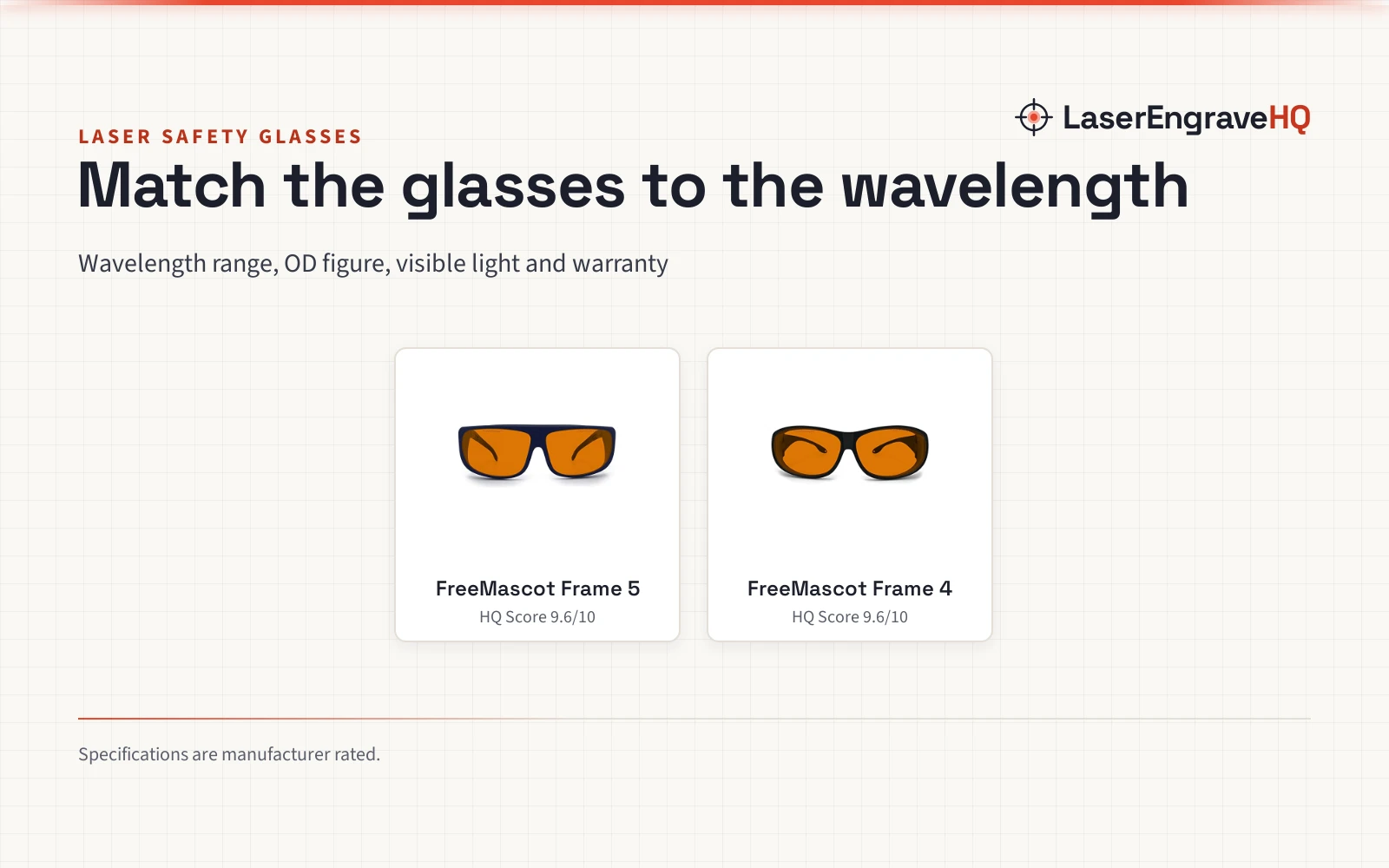
Eyewear protects only when its listing specifies an optical density rating and a wavelength band matching the laser source. Optical density indicates beam attenuation, where higher numbers reduce transmitted radiation. A wavelength range alone without a verified optical density rating does not prove adequate protection for high-power cutting beams. For example, maker TOREGE lists safety goggles advertising coverage from 200nm to 2000nm with 15 percent visible light transmission, but without specifying an optical density rating for specific laser cutting wavelengths. Before operating a Class 4 machine, always confirm that your glasses carry a checkable optical density rating tailored to your exact laser source, whether diode, CO2, or fiber. For complete selection details, consult our how to choose laser safety glasses guide and our laser safety glasses guide.
Step 6: Set up workshop ventilation and fume extraction
While laser classes define optical radiation, thermal cutting also vaporizes workpieces into dense smoke and airborne particulates. Operating a Class 4 machine requires adequate ventilation to maintain breathable air and keep optics clean.
Material safety is essential. Never cut or engrave PVC, vinyl, PVC faux leather, polycarbonate, or ABS. When burned by a laser, PVC and vinyl produce corrosive hydrogen chloride gas that damages equipment and harms breathing passages. Polycarbonate melts and produces heavy soot, while ABS releases toxic airborne compounds. For a full list of hazardous stock, review our guide on materials you should never laser cut.
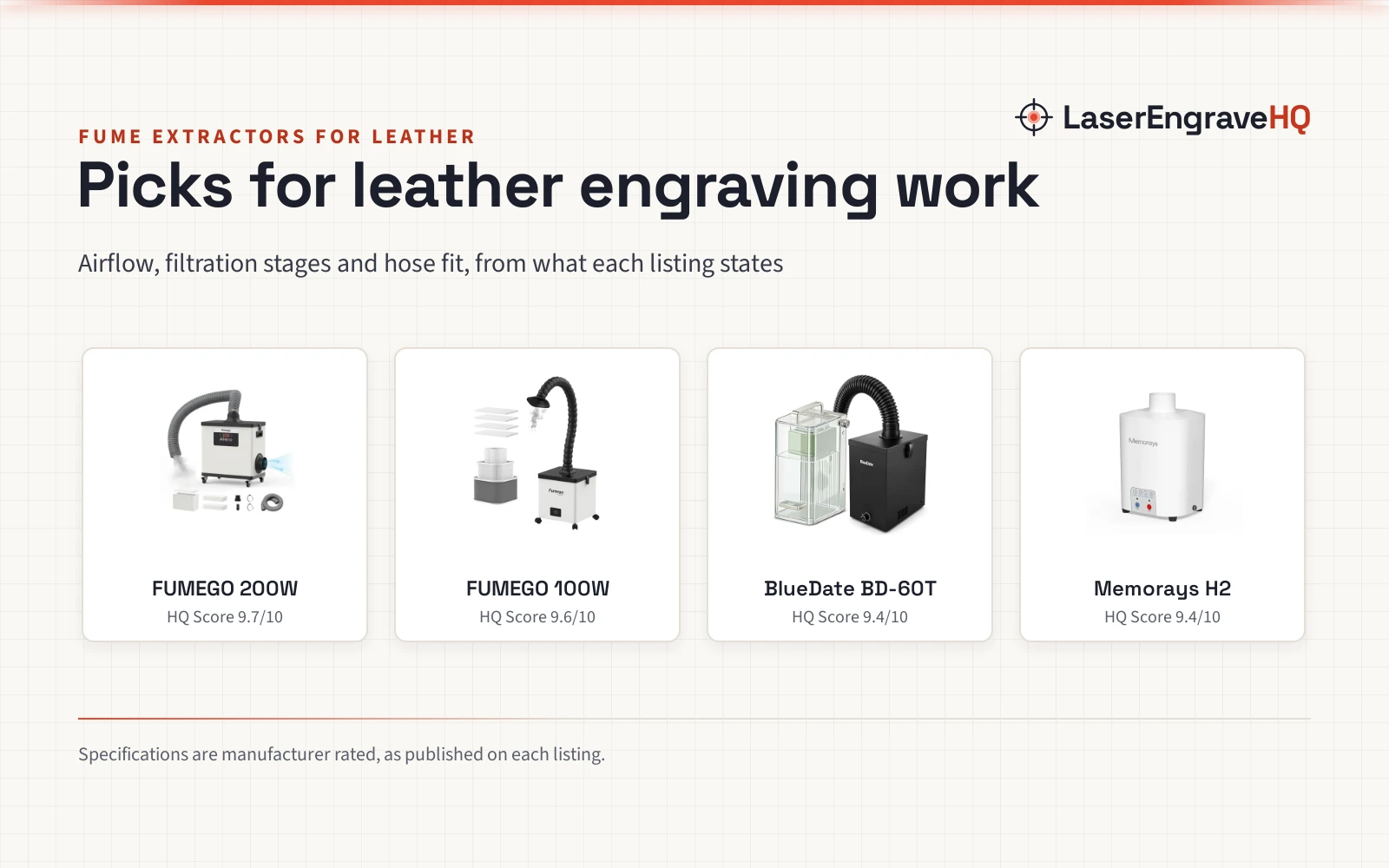
For permissible materials like wood and slate, exhaust fumes outdoors or use a dedicated filter. Read our overview on do laser engravers need ventilation, and compare workshop filters in our best fume extractor for laser engraver review.
Step 7: Enclosure upgrades and workshop control measures
Makers operating an open Class 4 gantry can lower workshop hazard levels by adding a protective enclosure. An external enclosure with certified filtered acrylic prevents diffuse radiation from escaping into the room and contains fumes for clean extraction.
A proper enclosure must feature functional electrical interlocks. Interlock switches cut beam power the moment a lid opens, preventing accidental exposure while positioning workpieces. Without interlocks, a housing acts only as a dust cover rather than a certified barrier. Learn setup steps in our how to build a laser engraver enclosure guide, and inspect your workspace using our laser engraver safety checklist.
Common mistakes to avoid
- Assuming an open diode laser is safe simply because it sits on a small hobby desk.
- Relying on unrated sunglasses or decorative plastic instead of certified laser eyewear.
- Running an open Class 4 machine in shared areas where bystanders or pets can see diffuse beam reflections.
- Engraving prohibited materials like PVC, vinyl, polycarbonate, or ABS that emit hazardous vapors.
- Leaving an operating laser unattended without an extinguisher nearby.
- Using an enclosure without door interlocks to stop the beam when opened.
Laser classes explained class 1 vs class 4: the short version
- Class 1 systems prevent hazardous optical radiation from escaping, either through inherently low beam power or complete, interlocked enclosures.
- Class 4 systems expose an open, high-power beam capable of causing permanent eye damage, burns, and fires from direct or scattered reflections.
- Intermediate ratings like Class 2 (under 1mW) and Class 3R (under 5mW) apply to low-power alignment references.
- Operating an open Class 4 machine demands certified safety glasses with verified optical density matched to the laser wavelength.
- All laser cutting requires outdoor exhaust or a dedicated fume filter to remove airborne particulates.
- Adding an interlocked, filtered enclosure to an open gantry upgrades workshop safety toward Class 1 conditions.
Following these fundamental controls ensures productive engraving while keeping eyes, skin, and workspaces secure.
FAQ: lasers and CNC
What is the main difference between Class 1 and Class 4 lasers?
The core difference is accessible radiation. Class 1 lasers present no optical hazard under normal operation because the beam is either inherently weak or completely enclosed with interlocks. Class 4 lasers expose an open, high-power beam that can cause immediate blindness, skin burns, and fires from direct or scattered light.
Can a Class 4 laser become a Class 1 laser?
Yes. Many desktop engravers house a powerful Class 4 laser mechanism inside an interlocked cabinet with certified viewing windows. Because the enclosure blocks hazardous radiation during operation, the complete machine is classified as a Class 1 system.
Do I need safety glasses with a Class 1 laser engraver?
Under normal operation with an intact Class 1 enclosure, safety glasses are not required because no hazardous radiation escapes. If you bypass safety interlocks or open the enclosure during operation, the machine reverts to Class 4 hazards and requires certified eyewear.
What does laser class meaning refer to in workshop tools?
Laser class meaning refers to the regulatory hazard tier assigned under standards like IEC 60825-1. It categorizes biological risks to eyes and skin based on accessible radiation rather than cutting speed, guiding proper eyewear and enclosure selection.
Are open desktop laser engravers usually Class 4?
Yes. Most open-frame desktop engravers used for cutting and engraving operate at power levels capable of burning wood or acrylic. Because they feature an unshielded beam path with accessible radiation exceeding lower safety limits, they are categorized as Class 4 machines. Only very low-power alignment or pointer modules fall into lower hazard classes.
Why is diffuse reflection dangerous with Class 4 lasers?
Class 4 lasers emit enough optical energy that light scattering off matte surfaces like wood, cardboard, or stone retains hazardous intensity. Viewing diffuse reflections without proper eyewear can cause permanent retinal damage.
Related: the laser safety hub, laser engraver with enclosure and best safety glasses for laser engraving. Also see our guides on running a laser engraver indoors and is laser engraving smoke toxic.