Laser Engraving vs Machine Engraving: Which One Should You Buy?
A comprehensive comparison of laser engraving vs machine engraving covering optical beams, mechanical rotary cutting, material compatibility, tooling costs, and workshop safety.

On this page
Top picks at a glance
As an Amazon Associate I earn from qualifying purchases.
- 1
 xTool S1 40W Laser Cutter and Laser Engraver for Tumblers9.7/10View on Amazon
- 2
 xTool M2 20W Color Craft Laser Engraver9.7/10View on Amazon
- 3
 OMTech 100W CO2 Laser Engraver with 4 Way Pass Through Air9.7/10View on Amazon
- 4
 60 PCS Cork Coasters for Laser EngravingView on Amazon
- 5
 Orange Rubber Stamp Sheet for Laser Engraving Machine with A4View on Amazon
- 6
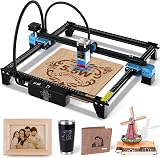 Twotrees TTS-55 Pro Laser Engraver 5500mW Laser EngravingView on Amazon
- 7
 Tondiamo A4 Rubber Stamp Sheet for Laser Engraving MachineView on Amazon
- 8
 ACMER S2 Laser EngraverView on Amazon
- 9
 Longer Laser Engraving and Cutting Machine Air PumpView on Amazon
Laser engraving vs machine engraving comes down to non-contact optical energy versus mechanical rotary cutting: a laser uses a focused beam of light to vaporize or chemically alter surface material without touching the workpiece, while a machine engraver uses a motorized spindle with a fluted cutter or a diamond drag stylus to carve grooves physically. For delicate substrates, detailed graphics, and fine text, a laser engraver delivers crisp marks without clamping pressure or cutter wear. For deep relief carving in hardwood, dimensional bevels, and channels in metal, a mechanical machine engraver provides physical chip clearing that light alone cannot match. The sections below walk through each decision step by step so you can choose the right tool for your workshop.
Other machines to compare
 60 PCS Cork Coasters for Laser EngravingCheck price on Amazon
 Orange Rubber Stamp Sheet for Laser Engraving Machine with A4Check price on Amazon
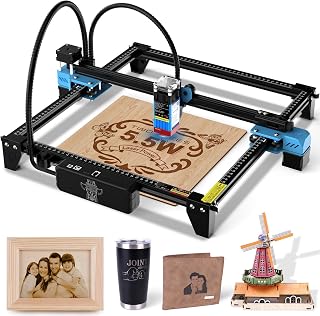 Twotrees TTS-55 Pro Laser Engraver 5500mW Laser EngravingCheck price on Amazon
 Tondiamo A4 Rubber Stamp Sheet for Laser Engraving MachineCheck price on Amazon
 ACMER S2 Laser EngraverCheck price on Amazon
 Longer Laser Engraving and Cutting Machine Air PumpCheck price on Amazon
LaserEngraveHQ earns a commission from purchases made through these links, at no extra cost to you. Read our affiliate disclosure.
Neither tool replaces the other across every workshop project. Lasers excel at surface contrast, micro lettering, and flat marking, but cannot produce deep flat-bottomed pockets in dense materials without burning. Mechanical engravers carve true dimensional profiles, but require rigid clamping and periodic cutter replacement.
Step 1: Compare optical beam marking with mechanical rotary cutting
The primary distinction between laser engraving and machine engraving is physical contact. A laser engraver focuses light directly onto the material surface. Because no physical tool touches the blank, the machine exerts no lateral cutting force, eliminating mechanical vibration and tool chatter. See our laser engraver for beginners guide for an overview of optical setups.
A machine engraver relies on a rotating spindle holding a cutting bit, end mill, or rotary burr, or a diamond drag stylus for non-rotary scoring. As a rotating cutter enters the stock, it shears away chips to form grooves or bevels. This creates mechanical resistance, requiring a rigid frame and steady motion. Review our guide to a desktop CNC machine for beginners to understand spindle mechanics.
Step 2: Match your core materials to each engraving process
Material choice often settles the decision. Laser systems interact thermally with organic surfaces like wood, leather, paper, and slate. On wood, a laser vaporizes lignin to create dark, contrasting marks. For home decor, natural stone blanks such as 4-inch square slate coasters engrave with clean, light contrast.
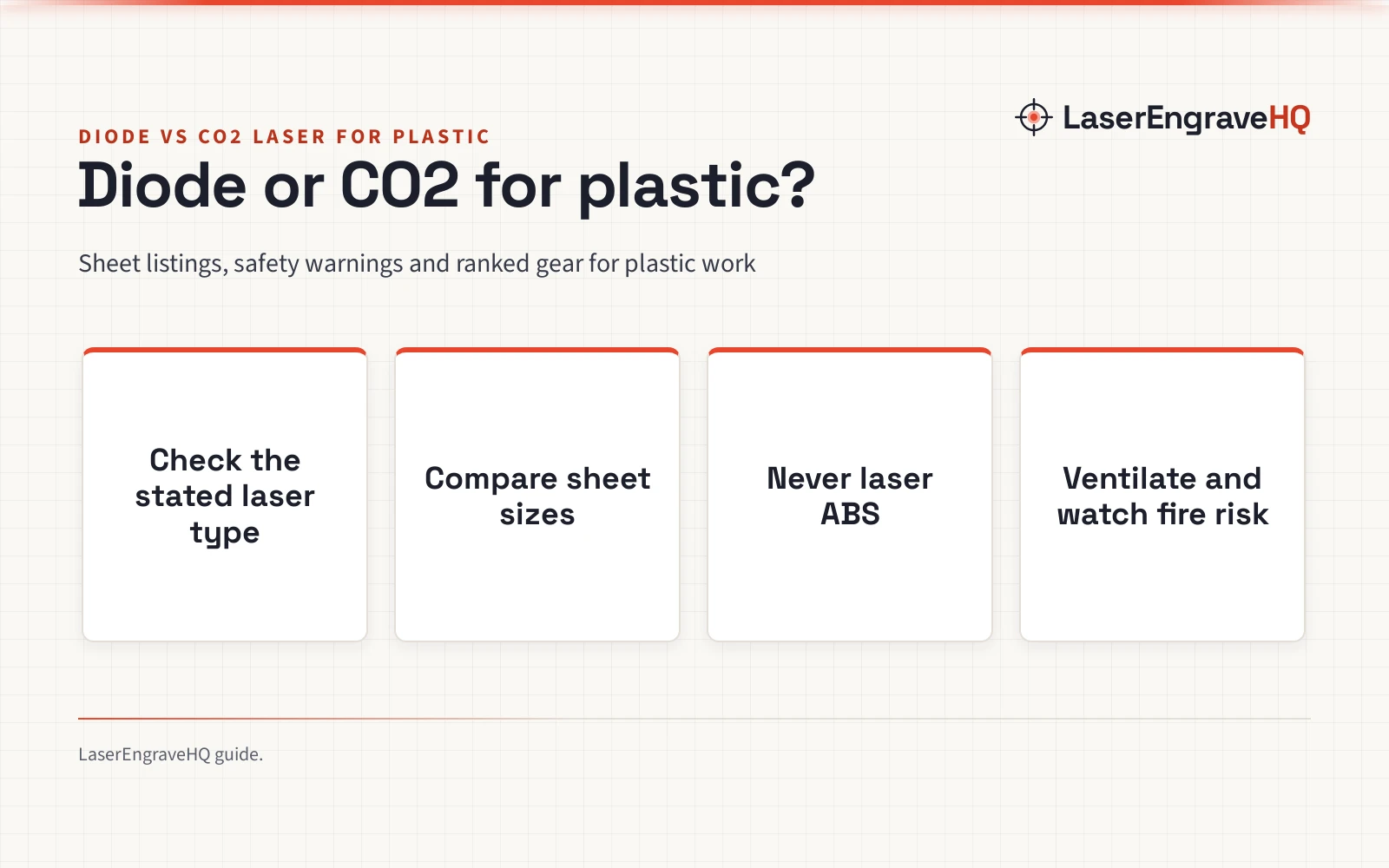
Plastics demand caution. A CO2 laser engraves cast acrylic cleanly with bright frosted contrast without mechanical stress. However, never process PVC, vinyl, PVC faux leather, polycarbonate, or ABS with a laser. Vinyl and PVC release corrosive hydrogen chloride gas that damages machine rails and optics, while polycarbonate and ABS produce heavy soot and noxious fumes. A mechanical engraver cuts and carves polycarbonate and dense plastics cleanly without thermal breakdown.
For metal, both methods diverge. Mechanical engravers carve grooves directly into brass, aluminum, and steel. Diode lasers, such as 10W optical units, produce surface oxidation marks on bare stainless steel or remove coatings, but cannot deep-engrave metal or mark bare aluminum; see our review answering can a 10W laser engrave metal. For CO2 lasers, maker specifications for OMTech laser marking spray state that a 25W or higher CO2 tube bonds permanent black marks onto bare aluminum, brass, and stainless steel, as covered in our guide on what is a CO2 laser engraver. Direct deep bare-metal engraving without additives requires a tool from our best fiber laser engraver lineup. Both diode and CO2 lasers easily personalize coated drinkware, such as 40 oz powder-coated 304 stainless steel tumblers, by removing the coating to expose bright metal.
Step 3: Evaluate fine graphic detail versus deep relief carving
Your desired depth and artwork style dictate the better machine. Laser beams focus down to a tiny spot diameter, rendering intricate line art, miniature typography, and photographic halftone portraits with exceptional clarity. Because the beam evaporates material without displacing chips, fine lines remain crisp without tear-out.
However, lasers struggle when projects demand substantial depth in solid materials. Multiple overlapping laser passes in wood create scorched sidewalls and uneven floors. When a design requires deep relief carving, V-groove lettering, or architectural contours, a mechanical engraver is the proper choice. Fluted cutters evacuate chips cleanly, leaving flat-bottomed channels that no laser beam duplicates. Our comparison of a CNC router vs laser cutter explains these cutting differences.
Step 4: Compare cutting bit maintenance with laser optical care
Both machines require ongoing care, but consumable parts differ completely. A mechanical engraver relies on physical cutting tools that experience friction and wear. End mills, V-bits, and burrs dull over time, especially in hardwoods or abrasive composites. Dull cutters cause chatter, tear out wood grain, and can break mid-job, demanding regular replacement.
A laser engraver features no spinning cutters that dull against stock. Instead, maintenance centers on optical cleanliness and alignment. Smoke and vaporized resins settle on the lens and mirrors, reducing optical power if not cleaned with isopropyl alcohol. Focal distance must also remain exact; for instance, the LaserPecker LP1 Plus listing specifies maintaining a 200 mm distance between the laser lens and the material surface using the included ruler. Over extended use, laser diodes lose power and CO2 tubes require replacement.
Step 5: Check workholding clamps and workpiece clamping demands
Workholding creates a major workflow difference. Because a laser engraver applies no physical cutting force to the stock, heavy mechanical clamps are unnecessary. While lightweight sheets or thin veneers may need simple pins or magnets to prevent shifting from exhaust airflow, blanks generally sit flat on a honeycomb bed, allowing operators to run batches without complex clamping.
Machine engraving requires uncompromising workholding. Spinning bits exert rotational and lateral cutting forces. If a workpiece shifts during a pass, the cutter can bind, snap, or ruin the stock. Operators must fasten materials using hold-down clamps, cam clamps, or strong tape, adding setup time to every run. For cylindrical work, a laser rotary turns lightweight hollow drinkware smoothly under the beam without deforming thin walls, whereas a mechanical rotary engraver requires a rigid chuck to withstand cutter pressure on solid blanks.
Step 6: Plan workshop safety, ventilation and noise controls
Operating either machine requires strict safety practices. Laser engravers produce concentrated optical radiation that can cause permanent eye injury. Operators must wear certified safety glasses with optical density and wavelength coverage matching the machine; unrated orange acrylic shields do not protect against laser beams. See our guide on best safety glasses for laser engraving for selection advice. Furthermore, vaporizing materials produces smoke that demands outdoor exhaust or a unit from our best fume extractor for laser engraver guide. Keep an extinguisher nearby and never leave an active laser unattended.
Mechanical engravers present mechanical hazards. High-speed spindles generate audible noise and throw wood chips, sawdust, or metal shavings. Operators need impact-resistant eye protection, hearing earmuffs, and a dust collection shroud connected to a vacuum. Dull bits carving dry hardwood can also overheat and scorch wood if feed rates stall.
Step 7: Decide based on your production volume and product line
Choosing between laser engraving and machine engraving hinges on your planned products. If your shop focuses on personalized gifts, custom drinkware, leather goods, and high-resolution branding, a laser engraver delivers rapid turnaround with minimal setup. When reviewing options, read our guide on how to choose a laser engraver.
If your plans center on dimensional wooden signs, relief carving, architectural plaques, or machining thick non-ferrous metal, a mechanical machine engraver or CNC router is the right choice. Many personalization shops eventually run both machines side by side: the mechanical router cuts and shapes dense blanks, while the laser engraver applies intricate branding.
Common mistakes to avoid
- Attempting to laser-engrave PVC or vinyl, which produces corrosive hydrogen chloride gas, or polycarbonate, which burns and releases heavy soot.
- Expecting a diode or CO2 laser to cut or deep-engrave bare metal, which requires a mechanical spindle or a fiber laser.
- Underestimating workpiece clamping and hold-down requirements on a mechanical machine engraver.
- Using unrated tinted acrylic panels instead of certified laser safety glasses with verified optical density and wavelength coverage.
- Assuming a laser can replace a mechanical spindle for deep relief carving and flat-bottom mortise pockets in dense wood.
- Neglecting cutter wear and replacement tooling costs when planning mechanical machine engraving work.
Laser engraving vs machine engraving: the short version
- Laser engraving uses a non-contact optical beam for high-resolution surface contrast, micro lettering, and photographic detail.
- Machine engraving uses a motorized spinning cutter to carve true physical depth, angled bevels, and dimensional relief.
- Lasers handle delicate, lightweight blanks without heavy mechanical clamps, but produce combustion smoke requiring exhaust or fume extraction.
- Mechanical engravers require rigid workholding clamps and dust collection, but safely process dense plastics that cannot handle laser heat.
- Direct deep engraving into bare metal requires a mechanical cutter or fiber laser, while diode and CO2 lasers use coatings or bonding agents for high-contrast marks.
- Select a laser engraver for personalized gifts, drinkware, and flat graphics; choose a machine engraver for deep wood relief and structural signs.
Deciding between both methods comes down to whether your designs require crisp surface contrast or tactile dimensional depth.
FAQ: lasers and CNC
What is laser engraving compared to machine engraving?
Laser engraving uses optical energy to vaporize surface material without physical contact, producing high-contrast graphics. Machine engraving uses a motorized spindle with a cutting bit or a diamond stylus to physically shear chips or score grooves, carving tactile depth into the material.
What is a laser etching machine?
A laser etching machine is an optical system adjusted to modify only the top surface layer of a workpiece. Instead of vaporizing a deep cavity, it melts and expands the surface material, creating high-contrast marks and scannable codes with minimal depth removal.
Can a laser engraving machine mark metal like a mechanical engraver?
A mechanical engraver carves physical grooves into bare metals using cutting bits or diamond styluses. Diode and CO2 lasers cannot carve depth into metal, though diodes can produce surface oxidation on stainless steel or strip paint from coated 304 stainless steel tumblers. For bare aluminum, brass, and steel, OMTech specifications indicate its marking spray allows a 25W or higher CO2 laser to fuse permanent black graphics, while direct deep engraving without additives requires a dedicated fiber laser.
How do rotary attachments compare on laser and machine engravers?
A laser rotary turns cylindrical items under a stationary beam without tool pressure, making it ideal for thin-walled drinkware. A machine engraver rotary axis requires a rigid chuck to resist cutter deflection during carving, making it better suited for solid blanks.
How do you clean wood after laser engraving?
Laser engraving leaves smoke soot and vaporized resin around the graphic. Clean the surface by gently wiping with a lint-free cloth dampened with isopropyl alcohol or denatured alcohol, or apply paper transfer tape over the wood before engraving to catch surface smoke.
How do you use a CO2 laser engraving machine safely?
Operate inside a protective enclosure, exhaust smoke outdoors or through a certified fume extractor, wear safety glasses certified for CO2 laser wavelengths, keep an extinguisher near the bench, and never leave an active job unattended.
Related: the laser engraver hub, the CNC router hub, CNC router vs laser cutter, laser engraver for beginners and desktop CNC machine for beginners. Also see our best laser engraver for wood and best laser engraver for metal.