What Is a CO2 Laser Engraver? How It Works and What It Cuts
A complete starter guide explaining what a CO2 laser engraver is, how the gas tube and optics work, what materials it cuts, and how to operate one safely.

On this page
Top picks at a glance
As an Amazon Associate I earn from qualifying purchases.
- 1
 xTool P3 80W Flagship CO2 Laser Cutter with Intelligent9.7/10View on Amazon
- 2
 OMTech 100W CO2 Laser Engraver with 4 Way Pass Through Air9.7/10View on Amazon
- 3
 xTool P2S 55W CO2 Laser Cutter9.7/10View on Amazon
- 4
 xTool SafetyPro AP2 Smoke Purifier for Laser EngraverView on Amazon
- 5
 OMTech K40+ 45W Desktop CO2 Laser Engraver & Cutter 12" × 8"View on Amazon
- 6
 OMTech K40+ 45W CO2 Laser Engraver & Cutter with Rotary AxisView on Amazon
- 7
 OMTech K40+ 45W CO2 Laser Engraver & Cutter with LaserView on Amazon
- 8
 ORTUR Laser Master 2 S2 LU2-10A Laser Engraver LaserView on Amazon
- 9
 ORTUR Laser Rotary RollerView on Amazon
What is a CO2 laser engraver? To answer directly: a CO2 laser engraver is a computer-controlled machine that uses a carbon dioxide gas discharge tube to produce an infrared beam for cutting, etching, and marking non-metallic materials and coated workpieces. Rather than using mechanical bits, the machine shapes materials along programmed vector paths and raster scans, producing polished acrylic edges, dark wood engravings, and detailed craft cuts. The guide below explains how the tube and optics work together, what materials you can cut, and essential workshop safety rules.
Other machines to compare
 xTool SafetyPro AP2 Smoke Purifier for Laser EngraverCheck price on Amazon
 OMTech K40+ 45W Desktop CO2 Laser Engraver & Cutter 12" × 8"Check price on Amazon
 OMTech K40+ 45W CO2 Laser Engraver & Cutter with Rotary AxisCheck price on Amazon
 OMTech K40+ 45W CO2 Laser Engraver & Cutter with LaserCheck price on Amazon
 ORTUR Laser Master 2 S2 LU2-10A Laser Engraver LaserCheck price on Amazon
 ORTUR Laser Rotary RollerCheck price on Amazon
LaserEngraveHQ earns a commission from purchases made through these links, at no extra cost to you. Read our affiliate disclosure.
A CO2 laser produces an invisible infrared beam that can cause severe eye injury or ignite materials. Always operate within a closed enclosure, wear certified protective glasses matching the wavelength, and run active ventilation to exhaust fumes outdoors.
Step 1: Generating the beam inside the gas tube
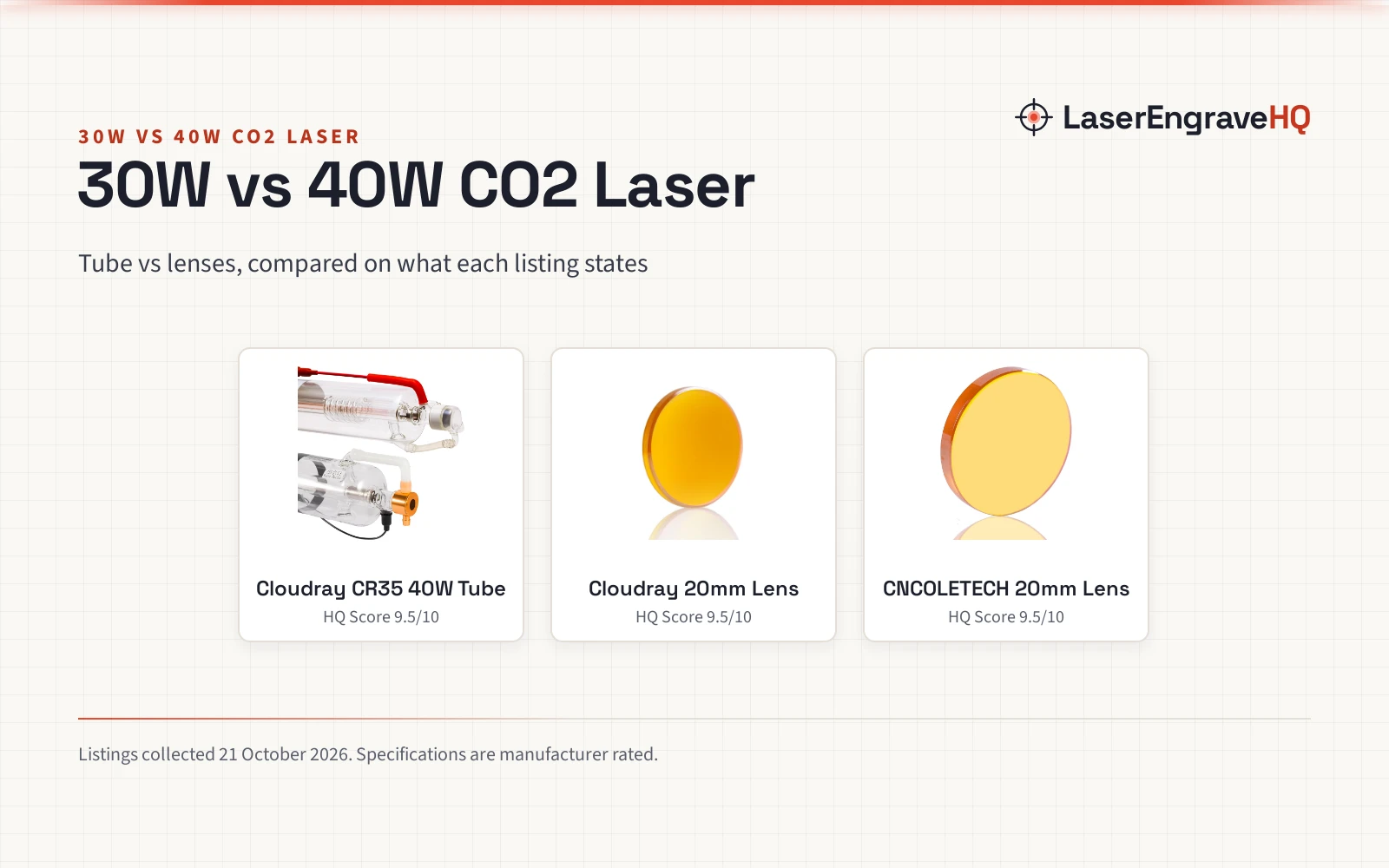
The core of most workshop CO2 laser engravers is a sealed, water-cooled glass tube containing carbon dioxide, nitrogen, hydrogen, and helium. A high-voltage power supply discharges electricity through the gas mixture, exciting nitrogen molecules that transfer energy to carbon dioxide molecules, stimulating them to emit photons in the far-infrared spectrum.
Light reflects between a rear mirror and a partially transmissive output coupler until optical gain creates a coherent beam. Because discharge creates substantial heat, glass tubes require continuous cooling water flow from an external reservoir or chiller to maintain a stable operating temperature and prevent thermal stress.
Step 2: Directing the beam across optical mirrors
Unlike fiber lasers that route light through flexible glass cables, a gantry CO2 laser beam travels through free air across front-surface mirrors. The beam leaves the stationary tube and strikes the first mirror, turning along the Y-axis rail. A second mirror on the moving gantry receives the beam and directs it along the X-axis rail toward the laser head.
A turning mirror atop the carriage angles the beam downward into the nozzle. This flying-optics design keeps the heavy tube stationary while allowing the lightweight head to glide across the bed. Accurate mirror alignment ensures the beam strikes the center of each optic across the entire work surface.
Step 3: Focusing the beam through the focal lens
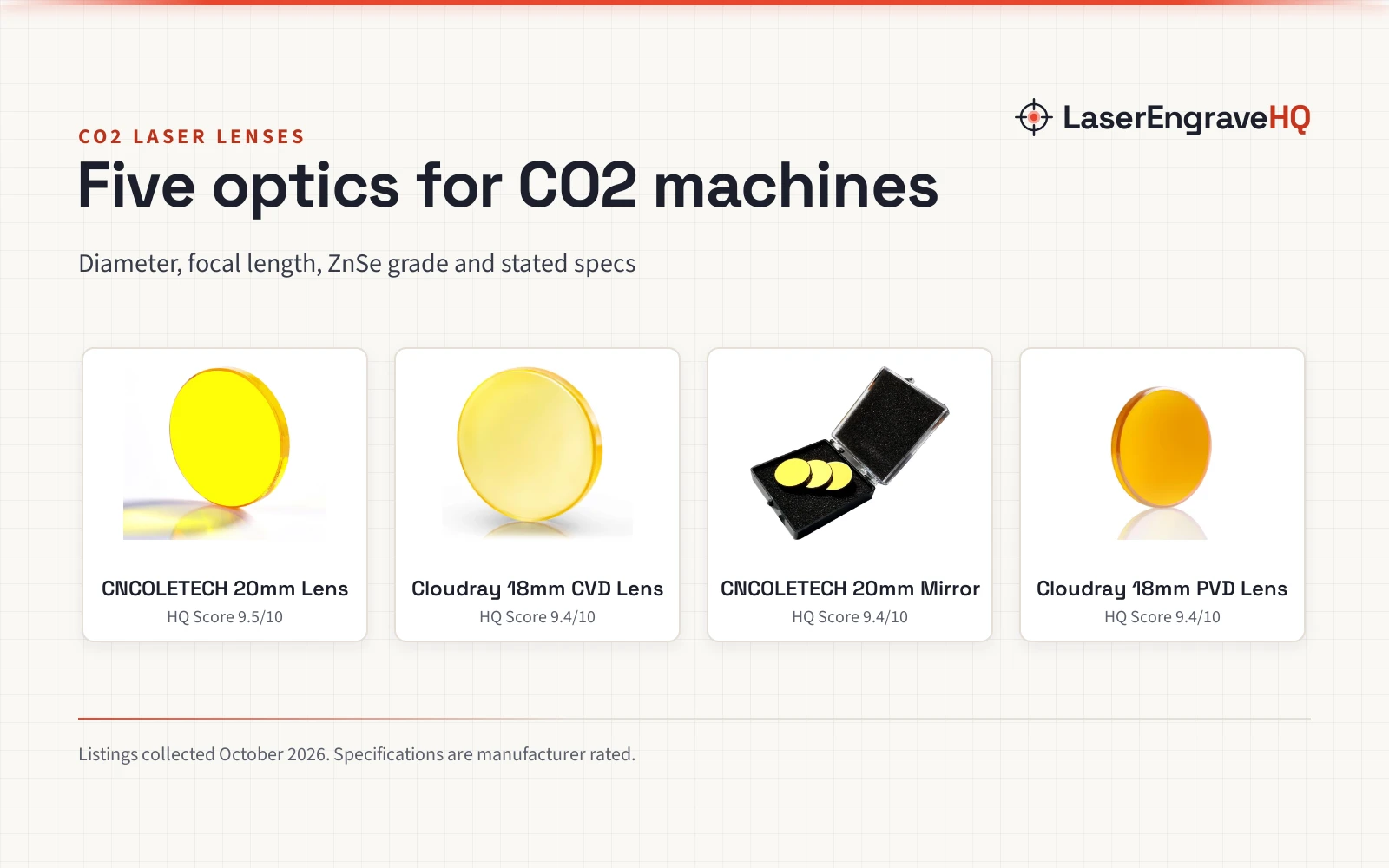
Before reaching the workpiece, the raw laser beam passes through a convex focusing lens inside the nozzle assembly. The unfocused beam leaving the tube has diffuse energy that scorches surfaces rather than cutting cleanly. The lens converges these parallel rays into an extremely small focal spot where power density reaches its peak.
At this focal spot, concentrated thermal energy vaporizes material with minimal heat transfer into adjacent areas. Lenses with short focal lengths produce narrow spots for fine raster engraving, whereas longer lenses maintain straight beam profiles for slicing thicker boards. Operators clean lenses regularly to prevent smoke residue from absorbing heat and cracking optical coatings.
Step 4: Cutting, engraving, and material selection
The focused beam processes materials in two modes: vector cutting along continuous paths, and raster engraving where the head scans back and forth to etch graphics. A dedicated laser air assist pump blows compressed air through the nozzle tip, preventing flare-ups, clearing charred debris, and protecting the lens from sticky vapors.
CO2 lasers excel on non-metallic materials because organic fibers, polymers, and mineral surfaces readily absorb far-infrared light. Suitable options include hardwoods, plywood, leather, cardboard, paper, glass, slate, and acrylic. Extruded acrylic cuts cleanly with smooth, flame-polished edges, while cast acrylic engraves with a bright, frosty white finish. The beam also etches uncoated glass, slate coasters, ceramic tiles, and stone by fracturing surface minerals, and marks anodized aluminum by vaporizing the surface dye layer. Our guide on diode vs CO2 laser machines compares their cutting limits in detail.
However, never cut or engrave PVC, vinyl, vinyl-based faux leather, polycarbonate, or ABS. PVC and vinyl release corrosive hydrogen chloride gas that destroys machine rails and damages lungs. Polycarbonate produces heavy soot, and ABS emits toxic vapors. Always verify material safety before placing stock on your honeycomb bed for laser cutter table.
Step 5: Enclosure safety and exhaust ventilation
Because a CO2 beam is invisible and poses severe fire and eye hazards, quality machines house the gantry in a rigid enclosure with magnetic interlocks that disable the beam when the door opens. In the United States, laser equipment complies with standards from the Center for Devices and Radiological Health (CDRH), a division of the FDA. Fully enclosed systems with interlocks qualify as Class 1 devices during normal use.
Vaporizing materials generates smoke and airborne chemicals that must leave the workspace. Operators connect flexible ducting to an inline exhaust fan that vents outdoors. Where outdoor exhaust is impractical, pair your machine with a multi-stage fume extractor guide unit featuring HEPA and activated carbon filtration.
Always keep a fire extinguisher near the machine, never leave an active job unattended, and wear certified safety glasses for laser engraving matching the CO2 wavelength whenever inspecting optics. If you are comparing machines across budgets, see our guide on how to choose a laser engraver.
Common mistakes to avoid
- Cutting hazardous materials like PVC, vinyl, or ABS that release corrosive chlorine gas and toxic fumes.
- Running the laser tube without verified water flow, leading to catastrophic thermal cracking of the glass.
- Operating vector cutting jobs without air assist, which increases flare-ups and fouls the lens.
- Using unrated orange acrylic shields or sunglasses instead of wavelength-certified laser safety glasses.
- Failing to align optical mirrors, which causes power loss and uneven cuts across the bed.
- Leaving an active laser job running without direct supervision where fire risk exists.
What is a CO2 laser engraver: the short version
- An internal power supply discharges electricity through a carbon dioxide gas mixture to generate an infrared laser beam.
- Front-surface optical mirrors route the beam along moving gantry rails to the mobile laser carriage.
- A convex optical lens focuses the wide beam into a concentrated, high-energy focal spot on the workpiece.
- The concentrated heat vaporizes or micro-fractures non-metallic materials cleanly, creating crisp vector cuts and detailed raster engravings.
- Pressurized air assist clears the cut line while an exhaust blower expels smoke and fumes outdoors.
Together, these subsystems provide accurate non-contact cutting across wood, acrylic, paper, and leather. To explore recommended hardware, read our best CO2 laser cutter for home use guide and our starter walkthrough on the laser engraver for beginners page.
FAQ: lasers and CNC
What does a CO2 laser engraver do?
A CO2 laser engraver cuts, scores, and etches non-metallic materials under computer numerical control. It cuts vector shapes for wooden signs, acrylic displays, and fabric patterns, while also rastering photographs, custom lettering, and artwork into wood, leather, glass, stone, and coated metal surfaces.
What can a CO2 laser engraver do that a diode laser cannot?
A CO2 laser cuts clear acrylic and engraves glass surfaces with ease, whereas visible blue diode beams pass straight through transparent materials without being absorbed. In addition, CO2 tubes offer higher optical output power, allowing clean single-pass cuts through thicker boards.
Can a CO2 laser engraver cut metal?
Standard workshop CO2 lasers cannot cut bare metal sheets because metals reflect infrared light and conduct heat away too quickly at hobby wattage levels. However, a CO2 laser can engrave coated metals like anodized aluminum or mark bare steel when treated with a laser marking spray.
Can I run a CO2 laser engraver at home?
Yes, provided you choose an enclosed model with safety interlocks and exhaust all fumes outdoors. You must also maintain active cooling, keep a fire extinguisher nearby, and supervise every active job to manage fire risk.
What is the best CO2 laser engraver for small business use?
The right model depends on your bed size and production volume. Enclosed benchtop machines with motorized Z tables and pass-through doors suit craft workshops. See our guide to the best laser engraver for small business picks to compare models.
How often should I clean the mirrors and lens?
Inspect optics before each long cutting session and clean them whenever smoke haze or residue appears. In busy shops cutting resinous wood or acrylic, wiping the lower lens surface after heavy cutting runs prevents heat damage to optical coatings.
Related: explore our main laser engraver hub, our dedicated CO2 laser category page, and our comparison of diode vs CO2 laser tools. For overall machine buying guidance, consult our overview on how to choose a laser engraver. Also see our xtool p3 review. Also see our how to align mirrors on a co2 laser. Also see our 60w vs 80w co2 laser. Also see our pass through slot vs removable bottom laser. Also see our flying optics vs moving material laser cutter. Also see our conveyor laser cutter vs standard flatbed laser. Also see our 30w vs 40w co2 laser. Also see our best co2 laser lens.