Pass Through Slot vs Removable Bottom Laser: Which One Should You Buy?
Pass through slot vs removable bottom laser: slots handle material longer than the cabinet, removable bottoms handle objects taller than it. How each works and which fits your work.

On this page
Top picks at a glance
As an Amazon Associate I earn from qualifying purchases.
- 1
 OMTech Maker 90W CO2 Laser Engraver & Cutter with Water9.6/10View on Amazon
- 2
 xTool P3 80W Flagship CO2 Laser Cutter with Intelligent9.7/10View on Amazon
- 3
 VEVOR 50W CO2 Laser Engraver9.6/10View on Amazon
- 4
 10 Pack 48" Black Upgraded 2020 T-Slot Aluminum ExtrusionView on Amazon
- 5
 10PCS 48inch 2020 Aluminum ExtrusionView on Amazon
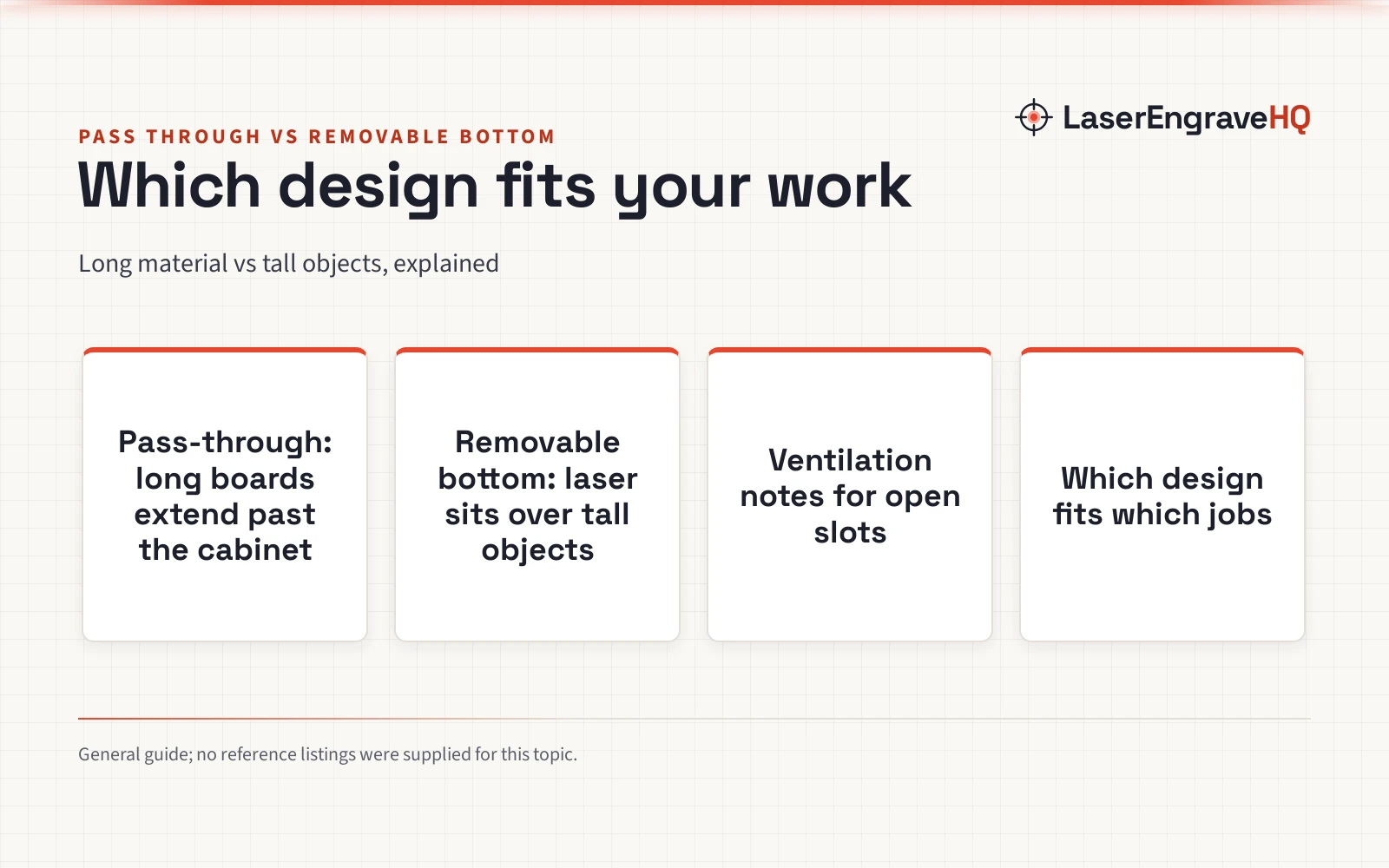
Pass through slot vs removable bottom laser, the direct answer: a pass-through slot handles material that is longer than the cabinet, and a removable bottom handles objects that are taller than the cabinet. Both solve the same problem, work that does not fit inside a closed box, from opposite directions. This guide explains how each design works and which one fits your laser work.
Other machines to compare
 10 Pack 48" Black Upgraded 2020 T-Slot Aluminum ExtrusionCheck price on Amazon
 10PCS 48inch 2020 Aluminum ExtrusionCheck price on Amazon
LaserEngraveHQ earns a commission from purchases made through these links, at no extra cost to you. Read our affiliate disclosure.
pass through slot vs removable bottom laser: the short version
- Pass-through slot: openings in the front and back of the cabinet let long boards, signs and panels extend past the machine while the laser works on the middle. Best for long, flat work.
- Removable bottom: the floor of the cabinet lifts out so the machine sits over a tall object, like a box, a stool or a piece of furniture, and engraves its top or side. Best for tall, bulky work.
- Neither changes the laser itself: power, speed and software stay the same. The difference is purely which shapes of material can reach the beam.
How pass-through slots work
A pass-through is a slot cut into the front and rear panels of the laser cabinet, usually with a small door or flap that closes it when not in use. You slide a long board in through the front, position the section to engrave under the head, and the excess length hangs out the back. Between passes you slide the board forward and continue the design down its length. The bed stays put and the material moves, which keeps alignment simple as long as the board stays straight and level through both slots.
The limits are height and support. The slot is only as tall as the cabinet opening, so thick stock may not pass, and a long board needs support outside the machine on both ends, otherwise it tips or drags. Ventilation also needs attention: an open slot is a gap in the enclosure, so the exhaust has to keep up or fumes escape into the room. Check the exhaust setup before running long jobs with the slots open.
How removable bottoms work
A removable bottom is a floor panel that lifts out of the cabinet, leaving the machine open underneath. You set the laser over the object, a crate, a chair seat, a cabinet door standing on edge, and the beam reaches down past where the floor used to be. Some machines pair this with a riser base that lifts the whole cabinet for extra clearance. The material stays put and the laser moves over it, which suits one-off bulky items that would never fit inside any cabinet.
The limits are the mirror image. The object must fit under the gantry with the floor removed, and it must be stable: a wobbly stool under a laser is a bad idea. Focus distance still matters, so the surface to engrave has to sit within the lens range, and the open bottom changes the airflow, which can affect both fume extraction and cut quality on the lower edge. This design shines for tall items and does nothing for long boards.
Which design fits your work
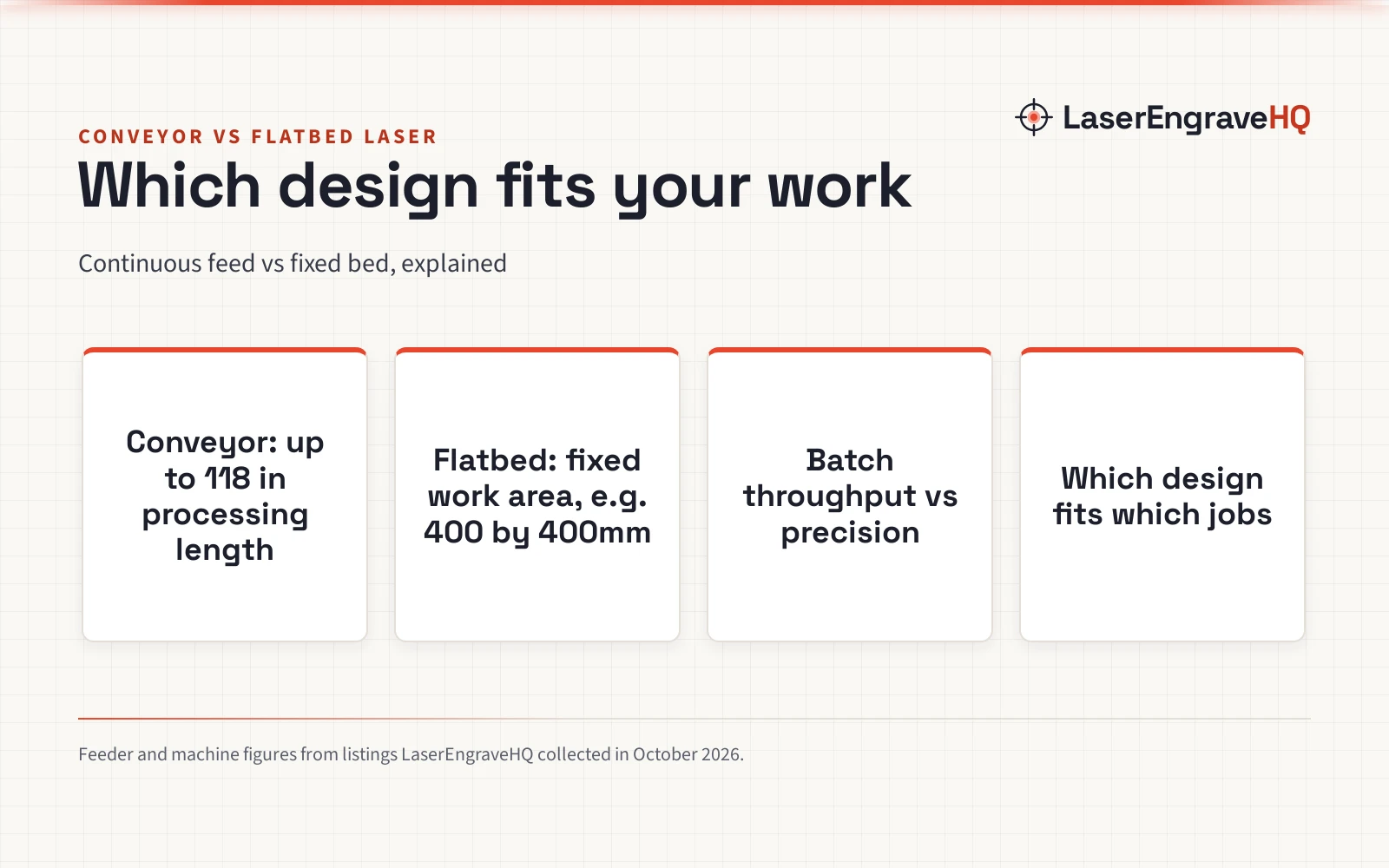
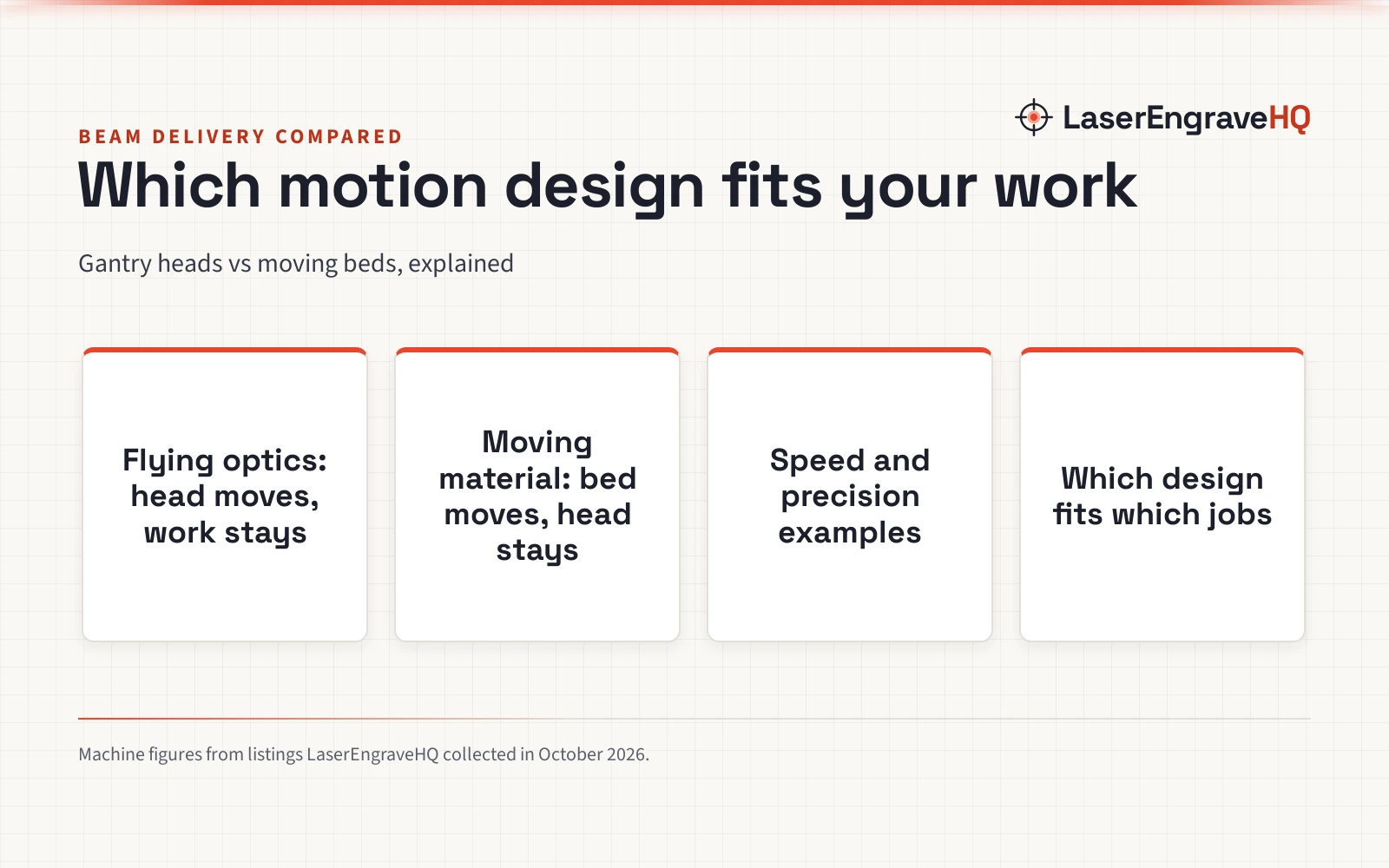
Choose by the shape of the work you actually do. Signs, planks, long panels and batch runs of boards point to pass-through slots: the material feeds through, the setup repeats, and production stays smooth. Furniture, boxes, tall decor and items that cannot be laid flat point to a removable bottom: the machine goes to the work instead of the other way around.
A few machines offer both, and that is the most flexible setup for a mixed shop. If you must pick one, count your last jobs, not your imagined ones: the design that would have helped most often is the right answer. Either way, keep the enclosure habits that both designs disturb, exhaust running, lid closed where it closes, and never leave a running laser unattended, especially with a slot or floor open.
Buying advice: checking the design before you buy
Start with your last ten jobs, not your dream jobs. Write down the longest board you actually cut and the tallest object you actually engraved. If the longest board is longer than the cabinet you are eyeing, pass-through slots earn their keep; if the tallest object would not fit under the gantry, a removable bottom does. Buying the feature that matches your real work is the whole decision.
Then check the details sellers gloss over. A pass-through slot is only as tall as the cabinet opening, so compare it against your thickest stock before you assume your boards will feed through. A long board also needs support outside the machine on both ends, or it tips and drags mid-job; plan the roller stands or the table space now, not on delivery day. An open slot is a gap in the enclosure, so confirm your exhaust can keep up before you run long jobs with the slots open; see our venting guide for what that setup looks like.
For removable bottoms, check that the floor truly lifts out. Some machines describe a fixed panel with screws as removable, which is not the same as a floor designed to come out for every tall job. With the floor out, the surface you engrave still has to sit within the lens focus range, and the object has to be stable under the gantry; a wobbly stool is a bad idea no matter what the listing promises. If you do mixed work, a few machines offer both features, and that is the most flexible setup for a shop that cuts long panels one day and engraves furniture the next. When in doubt, start with our laser engraver buying guide and the safety checklist before you spend.
FAQ: lasers and CNC
Can I engrave something longer than my laser bed?
With pass-through slots, yes: the board extends past the front and back while the laser works section by section. Without slots, the work has to fit inside the cabinet.
Can I engrave a tall object with a desktop laser?
With a removable bottom, often yes: the floor lifts out and the machine sits over the object. Check that the surface to engrave falls within the focus range of the lens.
Do pass-through slots weaken fume extraction?
An open slot is a gap in the enclosure, so extraction has to work harder. Run the exhaust at full, keep the room ventilated, and see our venting guide for setup details.
Which is better for a small business?
Pass-through slots suit product lines made from boards and panels, where repeatability pays. A removable bottom suits custom work on bulky finished goods. Match the design to the work you sell most.
Do I need either feature to start?
No. Standard enclosed machines handle the vast majority of beginner work, from coasters to cutting boards. Add pass-through or a removable bottom when real jobs start hitting the cabinet walls. See laser engraver basics for the fundamentals.
Related: laser engraver basics, using a laser cutting machine, the maintenance checklist, and the laser engravers hub.