40W vs 50W CO2 Laser: Which One Should You Buy?
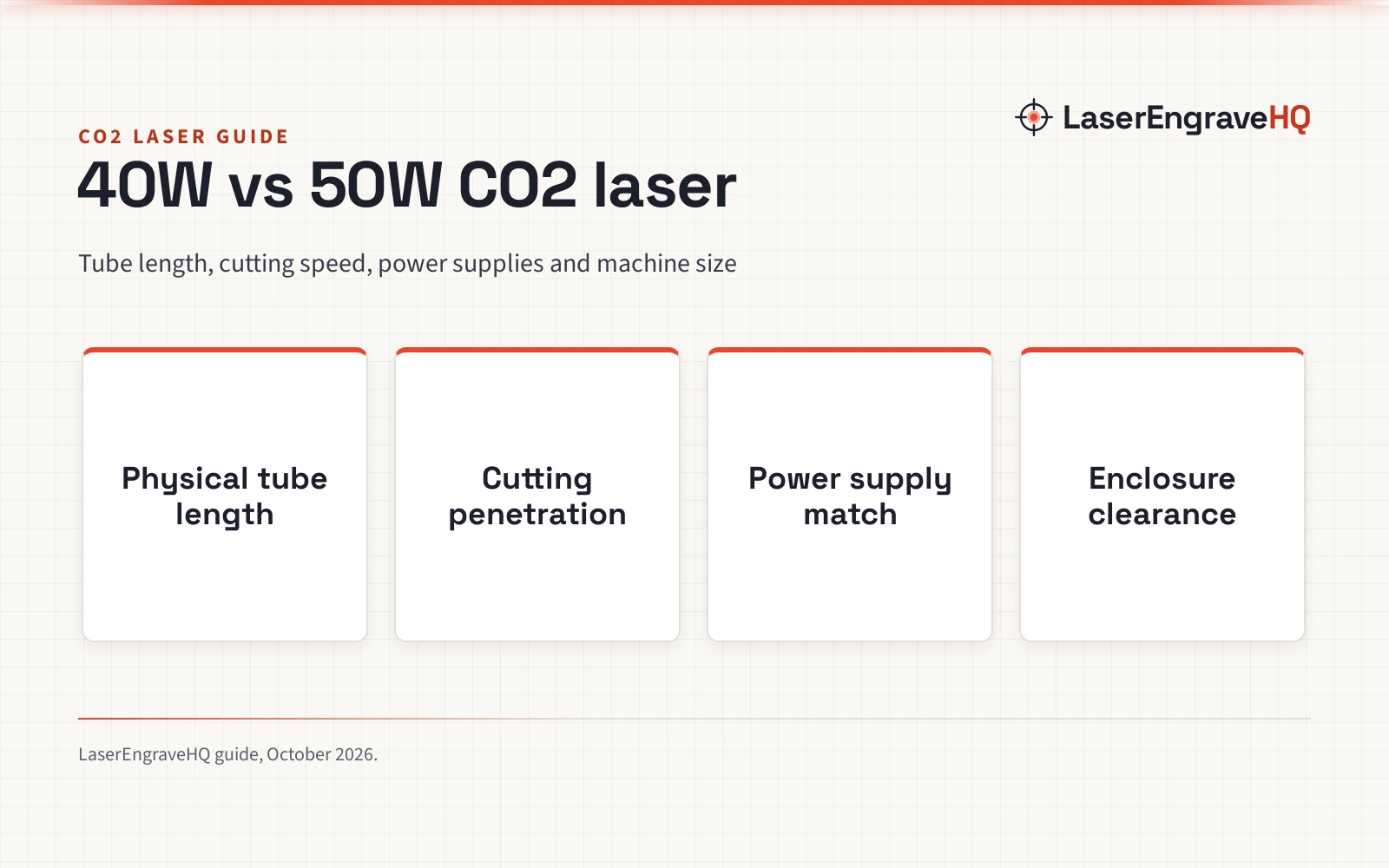
A practical workshop comparison between 40W and 50W CO2 laser cutters, covering physical tube lengths, cutting speed gains, power supplies, and enclosure space.

On this page
Top picks at a glance
As an Amazon Associate I earn from qualifying purchases.
- 1
 xTool S1 40W Laser Cutter and Laser Engraver for Tumblers9.7/10View on Amazon
- 2
 Laser Engraver9.4/10View on Amazon
- 3
 xTool F2 Ultra 60W MOPA & 40W Diode Dual Laser Engraver 100+9.6/10View on Amazon
- 4
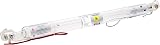 TEN-HIGH 40W CO2 Laser Tube 700mm D50mmView on Amazon
- 5
 MCWlaser 40W Laser Tube 700mm Length 50mm Dia for CO2 LaserView on Amazon
- 6
 SenTECH 40W CO2 Glass Laser Tube 700mm Length Dia 50mm forView on Amazon
- 7
 LONGER RAY5 40W Laser EngraverView on Amazon
- 8
 Longer Laser B1 40W Laser Engraver Cutter with Auto Air AssistView on Amazon
When making acrylic signs, wooden plaques, leather patches, or craft parts, choosing between a 40w vs 50w co2 laser comes down to enclosure clearance and cutting throughput. If you need a compact desktop machine for engraving without modifying the cabinet, 40W handles delicate surface work cleanly. If your work focuses on faster cutting through sheet stock and your cabinet fits a longer tube, 50W provides extra power for single-pass cuts. Below, we compare the differences step by step.
Other machines to compare
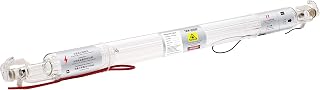 TEN-HIGH 40W CO2 Laser Tube 700mm D50mmCheck price on Amazon
 MCWlaser 40W Laser Tube 700mm Length 50mm Dia for CO2 LaserCheck price on Amazon
 SenTECH 40W CO2 Glass Laser Tube 700mm Length Dia 50mm forCheck price on Amazon
 LONGER RAY5 40W Laser EngraverCheck price on Amazon
 Longer Laser B1 40W Laser Engraver Cutter with Auto Air AssistCheck price on Amazon
LaserEngraveHQ earns a commission from purchases made through these links, at no extra cost to you. Read our affiliate disclosure.
CO2 laser power correlates directly with tube length. Check cabinet interior clearance and power supply ratings before buying a replacement tube or upgrade.
Step 1: Compare physical tube length and machine enclosure space
In a glass CO2 tube, optical power depends on the internal discharge length. Higher wattage requires a longer tube, which directly affects cabinet fit.
Listings show clear dimension differences. For 40W, TEN-HIGH lists a 700mm length, 50mm outer diameter, 1.5 kg weight, and 27.56″L x 1.97″W dimensions. MCWlaser lists its 40W tube at 700mm length, 50mm diameter, and 500 g weight. Cloudray lists its 40W CR35 tube at 720mm length, 50mm diameter, and 28.35″L x 1.97″W dimensions. For 50W, SenTECH lists an 800mm length, 50mm diameter, 1.78 kg weight, and 31.5″L x 1.97″W dimensions.
While all these listings specify a 50mm diameter, the 800mm SenTECH tube is longer than 700mm or 720mm 40W tubes. In a compact cabinet built for 700mm, an 800mm tube extends past the side panel, requiring an extension box to cover high-voltage wiring.
Step 2: Evaluate cutting penetration and engraving detail
Both wattages share core optical specs. TEN-HIGH lists an infrared wavelength of 10.6um and TEM00 mode, while Cloudray and MCWlaser also state TEM00 mode. With focused 10.6um beams, fine engraving on wood, slate, and coated drinkware looks virtually identical.
The difference is cutting speed. While 40W can require multiple passes on dense hardwoods and cast acrylic, 50W delivers higher energy density for clean single-pass cuts at faster feed rates. For cut ornaments, signs, and boxes, 50W saves time. For photos, leather, or paper, 40W allows finer low-power control without burning. See our guide on the best CO2 laser cutter for home use.
Step 3: Verify power supply voltage and electrical current
A CO2 tube requires a high-voltage power supply to strike an arc and maintain operating current. A longer 50W tube needs higher voltage than a 40W tube.
Listings provide concrete electrical specs for 40W tubes. Cloudray lists a triggering voltage of 13KV, working voltage of 9KV, triggering current of 4mA, and max working current of 20mA for its CR35 tube (rated power 35W, maximum power 45W). MCWlaser lists rated power 40W and peak power 45W. TEN-HIGH states 40~45W. SenTECH lists its 50W tube at 50W, but does not state voltage or current.
Driving a 50W tube like the 800mm SenTECH with a 40W supply causes beam flickering or failure to strike. Always match supply ratings to tube wattage. See our what is a CO2 laser engraver guide.
Step 4: Configure water cooling and thermal management
Glass CO2 tubes need continuous distilled water cooling. Excess heat reduces gas efficiency and risks tube cracking.
Because 50W generates more waste heat during long cutting jobs, it benefits from a dedicated refrigeration unit, whereas a clean water reservoir can handle short 40W engraving sessions. See our CO2 laser water chiller guide. Always verify bubble-free water flow before pulsing the beam.
Step 5: Check optical mirror alignment and focal lenses
Both 40W and 50W lasers operate at a 10.6um wavelength, using reflective mirrors and a focus lens to deliver the beam. See our guide on how to align mirrors on a CO2 laser.
When replacing a 700mm TEN-HIGH or 720mm Cloudray 40W tube with an 800mm SenTECH 50W tube, the output coupler position shifts. Recheck mirror alignment across the bed so the beam enters the nozzle center without clipping.
Step 6: Plan workshop ventilation and fume extraction
Vaporizing material produces smoke and fumes. Because 50W cuts faster and vaporizes more stock per minute than 40W, it requires robust exhaust to keep optics clean and protect workshop air.
Vent outdoors or use filtration. See our reviews of the best fume extractor for laser engraver options and how to vent a CO2 laser outside. Keep an extinguisher nearby, as covered in our best fire extinguisher for laser engraver guide, and never leave cutting unattended.
Never cut PVC, vinyl, PVC faux leather, polycarbonate, or ABS. They release corrosive chlorine gas and toxic fumes that damage optics and mechanics. Review our guide on materials you should never laser cut.
Step 7: Match the laser wattage to your project workload
A 40W laser fits makers focusing on engraved coasters, drinkware, keychains, and paper crafts. It fits desktop chassis enclosures without modification, with widely available replacement tubes.
A 50W laser suits small businesses making signage, boxes, and layered displays that demand frequent cutting. Higher power shortens runtimes and cuts in fewer passes. If your space accommodates an 800mm tube like the SenTECH model, 50W provides room to expand.
Common mistakes to avoid
- Buying an 800mm 50W tube without checking cabinet clearance.
- Powering a 50W tube with a 40W supply, causing poor striking.
- Running without coolant circulation, risking thermal shock.
- Skipping mirror alignment after tube replacement.
- Attempting to cut PVC, vinyl, polycarbonate, or ABS.
40w vs 50w co2 laser: the short version
- Choose 40W for desktop engraving in standard 700mm or 720mm cabinets.
- Choose 50W for faster sheet cutting where an 800mm tube fits.
- Match power supply ratings to tube wattage.
- Confirm water flow before firing.
- Run exhaust ventilation on all jobs.
- Follow our CO2 laser maintenance checklist.
FAQ: lasers and CNC
Can a 50W laser tube fit inside a 40W machine cabinet?
It depends on cabinet clearance. While 40W tubes from TEN-HIGH and MCWlaser measure 700mm and Cloudray lists 720mm, SenTECH lists its 50W tube at 800mm. An 800mm tube requires an extension box if the cabinet only fits 700mm or 720mm.
Can I run a 50W CO2 laser tube on a 40W power supply?
No. A 50W tube requires higher strike and run voltages. Using a supply rated for 40W (such as Cloudray’s listed 9KV working and 13KV triggering voltage) causes beam instability or supply failure.
Does a 50W CO2 laser engrave better than a 40W CO2 laser?
Engraving quality is comparable. TEN-HIGH, Cloudray, and MCWlaser all state TEM00 mode at 10.6um. A 40W tube can be easier to control at low power for delicate paper or thin leather without burning, while both engrave slate, wood, and drinkware well.
What materials should never be processed with a 40W or 50W CO2 laser?
Never cut PVC, vinyl, PVC faux leather, polycarbonate, or ABS. They release chlorine gas and corrosive toxins. See materials you should never laser cut.
Do 40W and 50W CO2 laser tubes share the same diameter?
Reference listings for TEN-HIGH, Cloudray, MCWlaser, and SenTECH all list a 50mm outer diameter. Verify your machine brackets before ordering.
How long do 40W and 50W CO2 laser tubes last?
Life depends on cooling and current. TEN-HIGH and MCWlaser list a 3 months warranty, Cloudray lists 4 months, and SenTECH does not state a term. See how long do CO2 laser tubes last.
Related: the CO2 laser cutter guide, best CO2 laser cutter for home use, and what is a CO2 laser engraver. Also see our CO2 laser maintenance checklist and how to align mirrors on a CO2 laser.