Stepper Motor Troubleshooting for CNC Machines
A practical stepper motor troubleshooting guide for CNC machines: trace stalls, missed steps and overheating to power, wiring and driver settings, then pick the driver kit that fits the fix.

On this page
Top picks at a glance
As an Amazon Associate I earn from qualifying purchases.
- 1
 Tofelf CNC Upgraded Version TB6600 Stepper Driver9.7/10View on Amazon
- 2
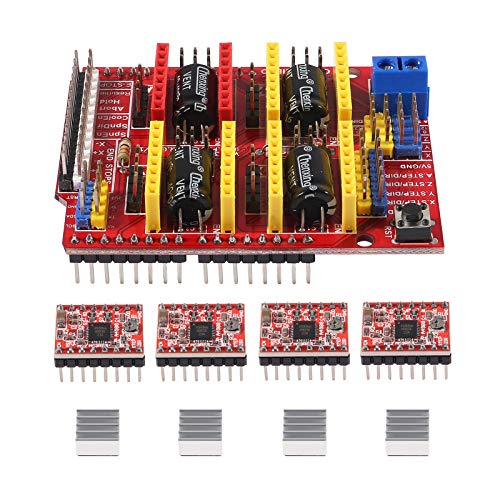 ACEIRMC 3D Printer CNC Shield V3 Engraver9.5/10View on Amazon
- 3
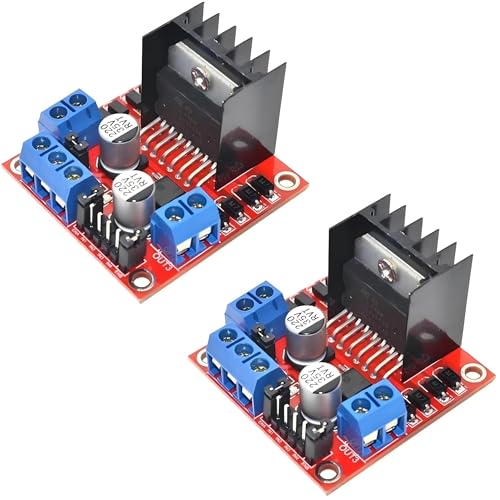 WWZMDiB 2 Pcs L298N Motor Driver Controller Board9.5/10View on Amazon
- 4
 6 PCS 28BYJ-48 ULN2003 5V Stepper Motor + ULN20039.3/10View on Amazon
Stepper motor troubleshooting on a CNC machine starts with three checks: power, wiring and driver current. A motor that stalls, misses steps or hums without turning usually has a loose wire, a supply outside the range its driver lists, or a current setting below what the motor needs. Work through the checks below in order, then match the fix to one of the driver kits at the end of this guide.
LaserEngraveHQ earns a commission from purchases made through these links, at no extra cost to you. Read our affiliate disclosure.
We do not hold these driver kits in hand, so every figure in this guide comes from what each maker publishes. Where a maker states no value, this guide says so instead of filling the gap.
Tofelf CNC Upgraded Version TB6600 Stepper Driver
A TB6600 stepper driver paired with a NEMA 17 HS4401S motor, rated for 9V to 42V DC and up to 4.0A output current, with up to 32 microstep divisions.
Pros
- 9V to 42V DC supply, up to 4.0A output across 8 current settings
- Up to 32 microstep divisions across 6 models for smoother motion
- Fits NEMA 17 and 24 motors (42 x 42 mm to 60 x 60 mm) with 4, 6 or 8 wires
- Overheat, overcurrent, undervoltage and reverse-polarity protection
Cons
- No warranty term is stated
- One driver and one motor per box, so a multi-axis machine needs one kit per axis
- No cable length is stated for the included wire
- No mounting hardware is listed in the box
ACEIRMC 3D Printer CNC Shield V3 Engraver
A CNC Shield V3 expansion board with 4 A4988 driver modules and 4 heatsinks, built to drive 4 axes on an engraving machine or 3D printer.
Pros
- Drives 4 axes (X, Y, Z, A) from one shield
- 4 A4988 driver modules with overcurrent protection
- 4 heatsinks included for the driver modules
- PWM spindle and direction pins
Cons
- No warranty term is stated
- Drive voltage and current limits are not stated
- No Arduino board is included
- No motor is included; motors must come separately
WWZMDiB 2 Pcs L298N Motor Driver Controller Board
A 2-pack of L298N dual H-bridge driver boards that drive one 2-phase or 4-phase stepper motor or two DC motors each, at up to 25W.
Pros
- Each board drives one 2-phase or 4-phase stepper motor or two DC motors
- 5V to 35V drive voltage with up to 2A per single bridge
- 25W maximum power per board
- Two boards in the pack, so a spare is on hand
Cons
- No warranty term is stated
- No protection features are stated
- No heatsink or cooling is stated
- Drive current tops out at 2A per bridge, below the 4.0A of the TB6600 kit
6 PCS 28BYJ-48 ULN2003 5V Stepper Motor + ULN2003
A 6-pack of 28BYJ-48 5V stepper motors with ULN2003 driver boards, each with four-phase LED indicators.
Pros
- 6 motors and 6 driver boards in the box
- Four-phase LED indicators show the working status of each motor
- Standard interface plugs in directly, per the maker
- Motor leads listed at 9.45 in
Cons
- No warranty term is stated
- 1.06 in motor diameter suits small mechanisms, not a full-size CNC axis
- No current rating is stated
- No protection features are stated
Stepper Motor Troubleshooting: Power, Wiring and Current
Most stepper faults trace to one of these three, so check them before swapping parts:
- Supply voltage: confirm the supply sits inside the range the driver lists. The TB6600 kit in this guide is rated for 9V to 42V DC, the L298N boards for 5V to 35V, and the ULN2003 boards for 5V. A supply outside the listed range is the first thing to rule out.
- Wiring: confirm every motor wire is seated and in the right order. The TB6600 driver runs 4, 6 or 8 wire motors, so check the motor’s wire count against that list before wiring.
- Current: confirm the driver current matches the motor. The TB6600 driver offers up to 4.0A across 8 current settings, while each L298N bridge tops out at 2A. A setting far below what the motor needs shows up as stalling under load.
- Microstepping: confirm the division setting. The TB6600 driver offers up to 32 divisions across 6 models, and a wrong division changes how far the motor moves per pulse.
Why a Stepper Motor Misses Steps or Stalls
A motor that misses steps usually gets too little current, loses a phase through a loose wire, or works against more load than the driver can push. Raise the current one setting at a time where the driver allows it, and watch whether the stall follows the same axis or the same move. The A4988 modules in the CNC Shield kit carry overcurrent protection, and the kit includes 4 heatsinks, which help when a driver runs warm during long jobs.
Why a Stepper Motor Hums but Does Not Turn
A hum with no motion points at the phases: one phase may be disconnected, or two wires may be swapped so the fields fight each other instead of stepping forward. Power down, reseat every motor wire, and confirm the wire order against the driver wiring. The ULN2003 boards in this guide carry four-phase LEDs marked A, B, C and D, which show the working status of the motor; if the LEDs still cycle while the motor only hums, the problem is in the motor wiring or the motor itself.
Overheating Drivers and What the Protections Do
A driver that cuts out mid-job may be protecting itself from heat or excess current. The TB6600 driver lists overheat, overcurrent, undervoltage and reverse-polarity protection, so a shutdown there is often the protection doing its job rather than a failure. Give the driver air, keep the heatsinks clear where the kit includes them, and lower the current setting if the motor still holds position at the lower value.
Stepper Motor Driver Kits for CNC Troubleshooting
Each kit below handles a different part of the job: setting current and microstepping, wiring four axes, keeping a spare driver on hand, or watching phase LEDs on small motors.
FAQ: lasers and CNC
Why does my stepper motor hum but not turn?
A hum with no motion usually means one phase is disconnected or two wires are swapped. Power down, reseat the motor wires, and confirm the wire order. The ULN2003 boards in this guide use A, B, C and D LEDs to show phase status.
What voltage should a stepper motor driver run at?
Use the range the maker lists: 9V to 42V DC for the TB6600 kit, 5V to 35V for the L298N boards, and 5V for the ULN2003 boards.
Why does my stepper motor miss steps?
Missed steps usually come from current set too low, a loose wire, or load the driver cannot push. The TB6600 driver allows up to 4.0A across 8 settings, and the L298N boards top out at 2A per bridge.
Can one board drive four CNC axes?
The CNC Shield V3 kit in this guide supports 4 axes, X, Y, Z and A, with 4 A4988 driver modules on one board. The A axis can copy X, Y or Z, or use pins D12 and D13 with custom firmware, and the board carries a PWM spindle pin and a direction pin.
Do stepper motor drivers need heatsinks?
Heatsinks help when a driver runs warm during long jobs. The CNC Shield kit includes 4 heatsinks for its A4988 modules, and the TB6600 driver lists overheat protection.
Related: the CNC routers hub, best CNC bit set for beginners and limit switch assembly for CNC machines.