Stepper Motor Size: NEMA Frame Chart for CNC Routers
A plain guide to stepper motor size for CNC routers, covering NEMA frame, torque, current, length, and shaft so the motor matches the machine load.

On this page
Top picks at a glance
As an Amazon Associate I earn from qualifying purchases.
- 1
 SainSmart Genmitsu 3020-PRO Ultra CNC Router Machine9.7/10View on Amazon
- 2
 STEPPERONLINE TE Series Digital Stepper Driver 1.0-4.2A9.7/10View on Amazon
- 3
 MAKERELE TB6600 Stepper Motor Driver for Nema 17 23 Stepper9.7/10View on Amazon
A CNC router that stalls mid-cut, loses position on a sign, or hums without moving often points to a motor that does not match the gantry, the cutting load, or the work the shop plans to run. Choosing the right stepper motor size means matching frame, length, torque, current, and shaft to that load before ordering parts. The sections below explain each factor in order, with the figures that listings state for common NEMA frame motors used on desktop CNC routers and laser machines.
LaserEngraveHQ earns a commission from purchases made through these links, at no extra cost to you. Read our affiliate disclosure.
Torque needs vary with gantry weight, cutting load, and travel speed, so this guide gives no universal recommendation. Compare the frame, length, torque, current, and shaft figures in each listing against the load on the machine.
What stepper motor size means for a CNC router
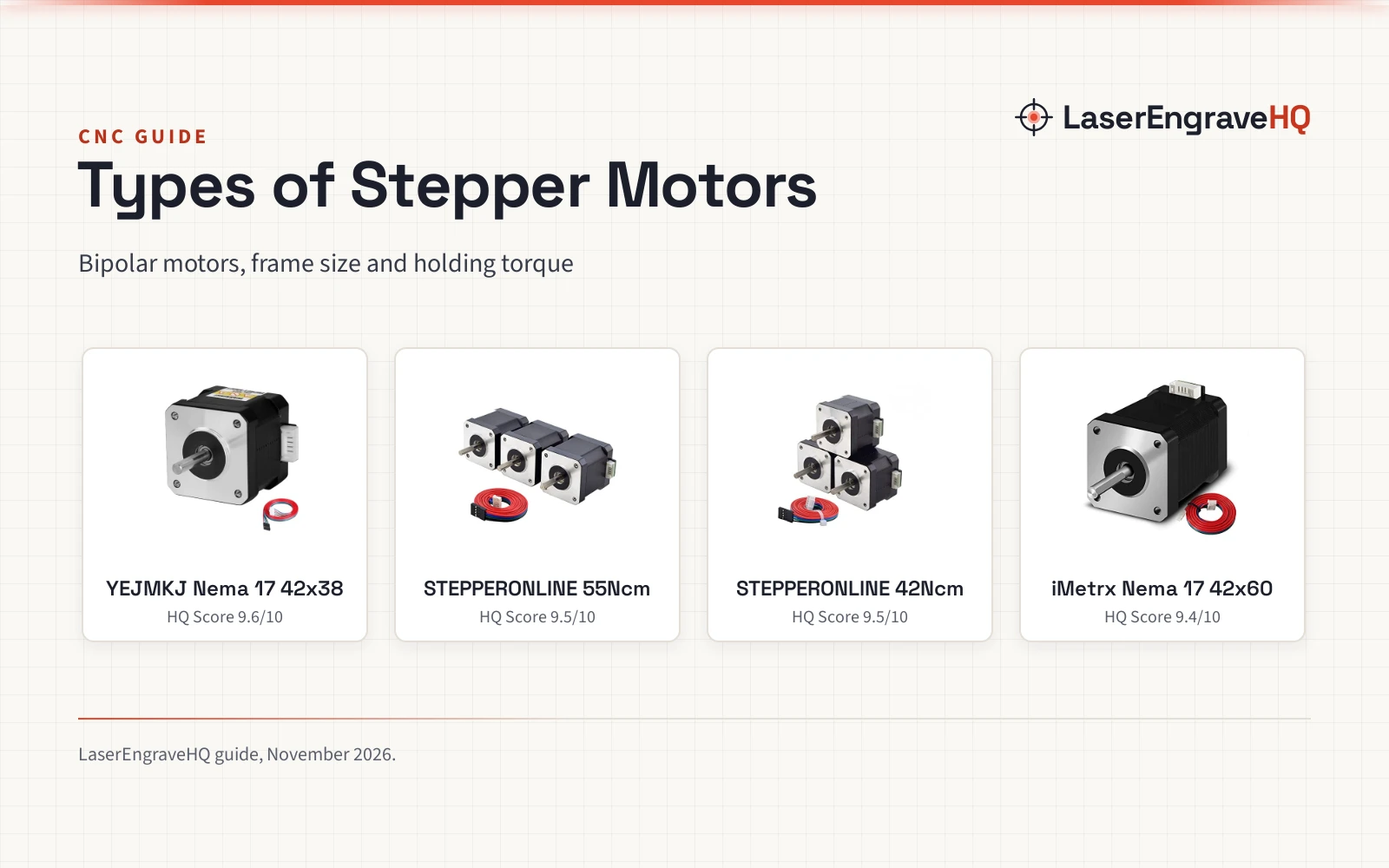
Stepper motor size covers frame, body length, holding torque, current, and shaft size together. The frame sets the mounting face, body length tracks with torque, current sets the driver demand, and shaft size sets what couplers and pulleys fit. A motor that matches on frame alone can still stall if torque or current falls short of the load.
Reference listings for NEMA 23 motors show the pattern. The frame face measures 2.24 inches by 2.24 inches in the listings that state it in the title or bullets, while body length varies: listings state 2.2 inches, 3.0 inches, and 4.45 inches, and metric listings state 57x57x41mm and 57x57x82mm. Holding torque rises with body length, from 0.7 Nm to 3 Nm.
Read the NEMA frame before torque
The NEMA frame number names the face size of the motor. In the listings used here, NEMA 23 is the frame throughout, with a face of 2.24 inches by 2.24 inches in the listings that state it in the title or bullets. That face size decides whether the motor bolts to the mount, so confirm the mount pattern on the router or laser gantry before looking at torque figures.
The frame chart below gathers the figures listings state for NEMA 23 motors:
- Face: 2.24 inches by 2.24 inches in the listings that state it in the title or bullets.
- Short bodies: 57x57x41mm and 2.2 inches long.
- Mid bodies: 57x57x82mm, 76mm, and 3.0 inches long.
- Long bodies: 4.45 inches long.
Mounting hole spacing is not stated in the listings used here.
Match torque to the load
Holding torque decides whether the motor holds position under load. Listings state it in newton metres and in ounce inches, and the figures should agree within a listing:
- 0.7 Nm (101 oz.in): on a 57x57x41mm body, current 2.4A.
- 1.24 Nm (175.6 oz.in): on a 2.2 inch body, current 2.8A.
- 1.9 Nm (269 oz.in): on a 3.0 inch body, current 2.8A.
- 2.4 Nm (339.79 oz.in): on a 57x57x82mm body, current 4.0A.
- 3 Nm (425 oz.in): on a 4.45 inch body, current 4.2A.
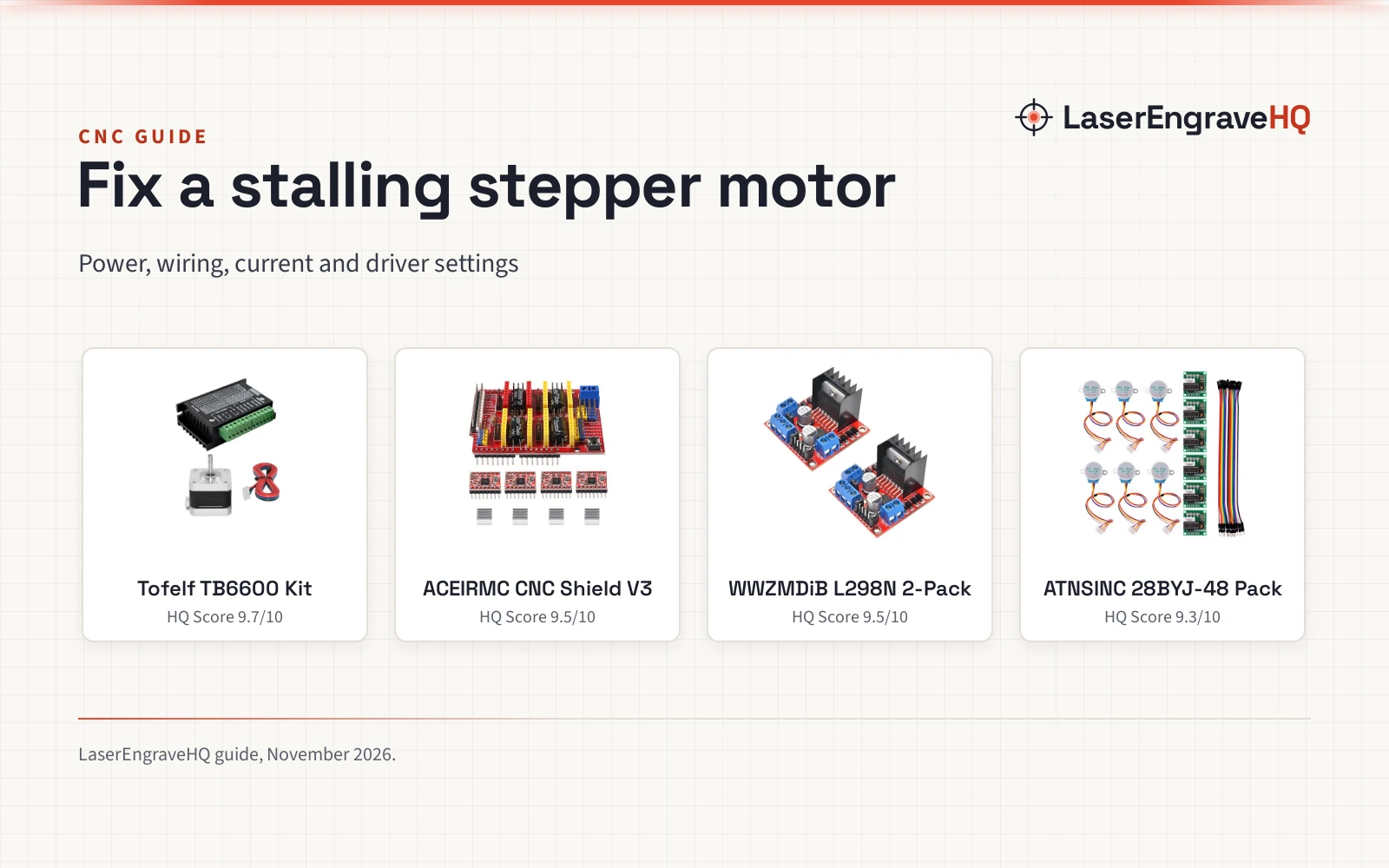
Heavier gantries and deeper cuts call for more torque. Holding torque is measured at standstill, so it does not describe how much torque the motor keeps while moving, and faster travel is not answered by holding torque alone. If the motor in place stalls or loses position, a higher torque figure may help, but check the driver current setting and the mechanics first, since a driver set below the listed current or a binding axis causes the same symptom. For how motor choice changes machine behaviour, see the stepper motor versus servo motor for CNC guide.
Match current, voltage, and driver
Current and voltage decide the driver and power supply the motor needs. The reference listings state currents of 2.4A, 2.8A, 4.0A, and 4.2A, with phase resistance of 0.65 ohms, 0.9 ohms, and 1.13 ohms.
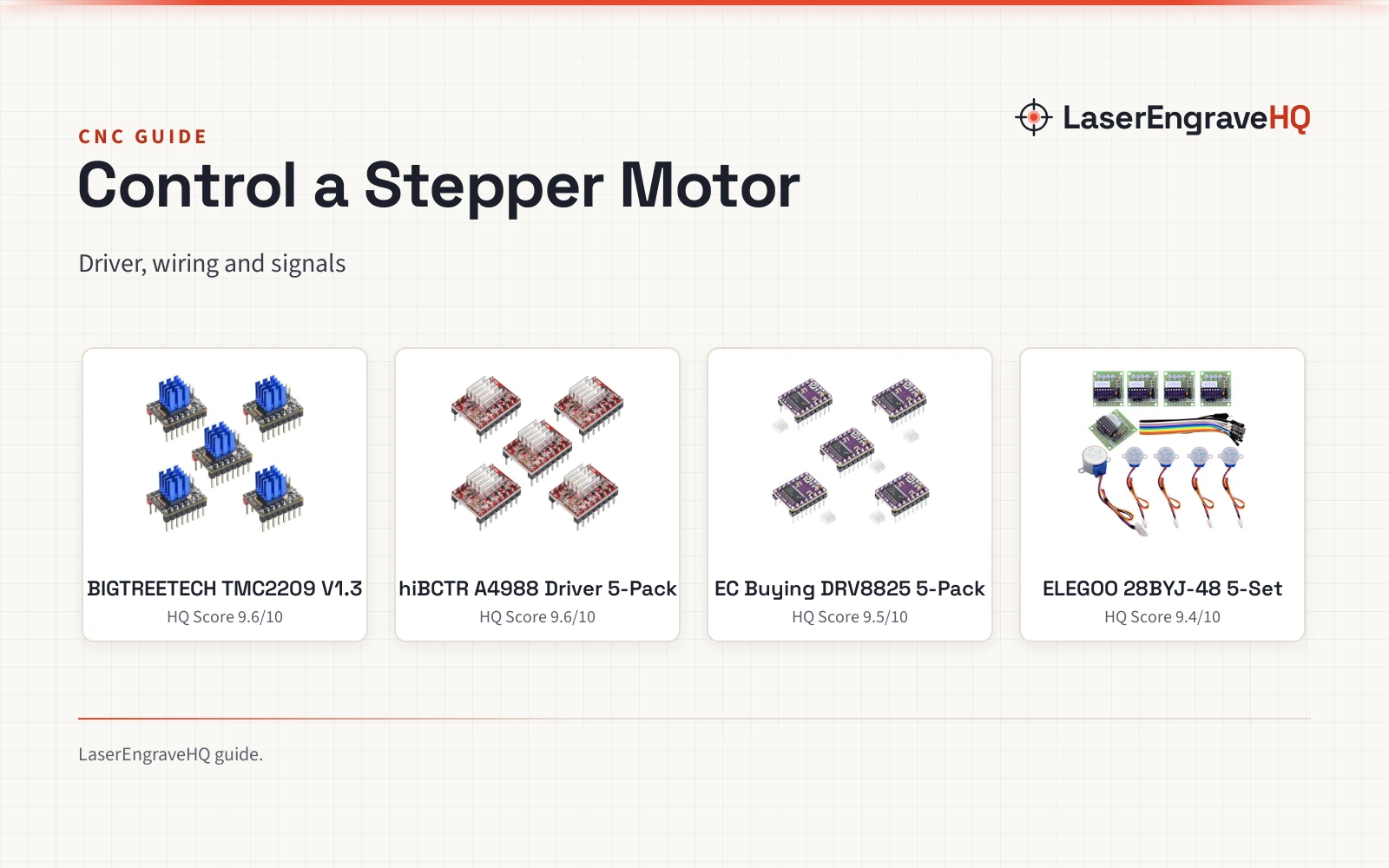
A RICHCNC listing states a working voltage of 24V, a STEPPERONLINE listing states a driving voltage of 24-48VDC and suggests 36 VDC, and a HobbyUnlimited listing recommends a driver with a voltage of 24-50VDC and a current of at least 3.5A. Match the driver to the rated current in the listing: the driver must be able to supply at least that current.
For driver options that suit common CNC builds, see the stepper driver guide for X-Carve. If the driver cannot supply the listed current, the motor cannot reach its listed holding torque.
Check length, shaft, and mounting
Body length sets how much room the motor needs behind the mount, and shaft size sets what fits on the shaft. Listings state body lengths of 2.2 inches, 3.0 inches, and 4.45 inches, and metric bodies of 57x57x41mm, 57x57x82mm, and 76mm. Shaft sizes in the listings are 6.35mm, 8mm, and 10mm. Measure the space behind the mount and the bore of the coupler or pulley before ordering.
Weight also counts on a moving gantry: listings state weights of 1.5 pounds, 2.3 pounds, and 2.4 lb. A RICHCNC listing states an 80cm cable and insulation class B.
For work that needs a flat, true spoilboard under the gantry, the spoilboard setup guide walks through surfacing and levelling. For sign work, the CNC router guide for sign making covers machine choice.
Check step angle and wiring
Step angle and wiring decide how the motor moves and how it connects to the driver. Listings state a step angle of 1.8 degrees, which the maker lists as 200 steps per revolution, and a 4-wire bipolar layout with 2-phase, 4-lead wiring. Confirm the driver supports the wiring layout and the lead count matches the driver terminals before wiring anything.
When a listing disagrees with itself, trust the title and bullets over the spec table, and confirm any figure the listing contradicts with the maker before ordering.
Common mistakes to avoid
- Ordering by frame alone and ignoring holding torque.
- Choosing a long body without checking the space behind the mount.
- Pairing a motor with a driver that cannot supply the listed current.
- Ordering a shaft size that does not match the coupler or pulley bore.
- Planning a mount around a figure that the listing contradicts elsewhere.
Stepper motor size: the short version
- Confirm the NEMA frame fits the machine mount.
- Match holding torque to the gantry and cutting load.
- Match the driver and power supply to the listed current and voltage.
- Check body length, shaft size, and weight against the space on the machine.
- Confirm step angle, wiring, and lead count with the driver.
- Where a figure is unstated, confirm it before ordering.
After that, compare listings on stated figures and adjust the setup in small moves when a motor underperforms.
FAQ: lasers and CNC
What stepper motor size fits a desktop CNC router?
NEMA 23 is the frame in the reference listings, with a face of 2.24 inches by 2.24 inches and body lengths from 57x57x41mm to 4.45 inches. Holding torque runs from 0.7 Nm (101 oz.in) to 3 Nm (425 oz.in). Match torque to the gantry and cutting load before ordering.
Does a longer stepper motor always give more torque?
In the reference listings, torque rises with body length: a 2.2 inch body lists 1.24 Nm (175.6 oz.in), a 3.0 inch body lists 1.9 Nm (269 oz.in), and a 4.45 inch body lists 3 Nm (425 oz.in). Length is a useful guide, but compare the torque figure.
What current and voltage does a NEMA 23 stepper motor need?
Listings state currents of 2.4A, 2.8A, 4.0A, and 4.2A, with driving voltage of 24-48VDC or 24-50VDC, and a working voltage of 24V on a RICHCNC listing. A STEPPERONLINE listing suggests 36 VDC, and a HobbyUnlimited listing recommends a driver current of at least 3.5A.
What shaft size fits a NEMA 23 stepper motor?
Listings state shaft sizes of 6.35mm, 8mm, and 10mm. The right shaft matches the bore of the coupler or pulley on the machine, so measure that bore and match it to the shaft figure before ordering.
Can stepper motor size cause lost steps on a CNC router?
Yes. Lost steps happen when the cut demands more torque than the motor can deliver while it is moving, so a motor whose torque, current, or driver capacity falls short of the load can lose steps. Listings state a step angle of 1.8 degrees, or 200 steps per revolution.
Related: the stepper motor versus servo motor for CNC, stepper driver guide for X-Carve and CNC router guide for sign making. Also see the spoilboard setup guide.