Sewing Machine Crafts for Beginners: Starter Projects
Sewing machine crafts for beginners start with simple, useful projects that teach straight seams, hems and pressing while building confidence at the machine.

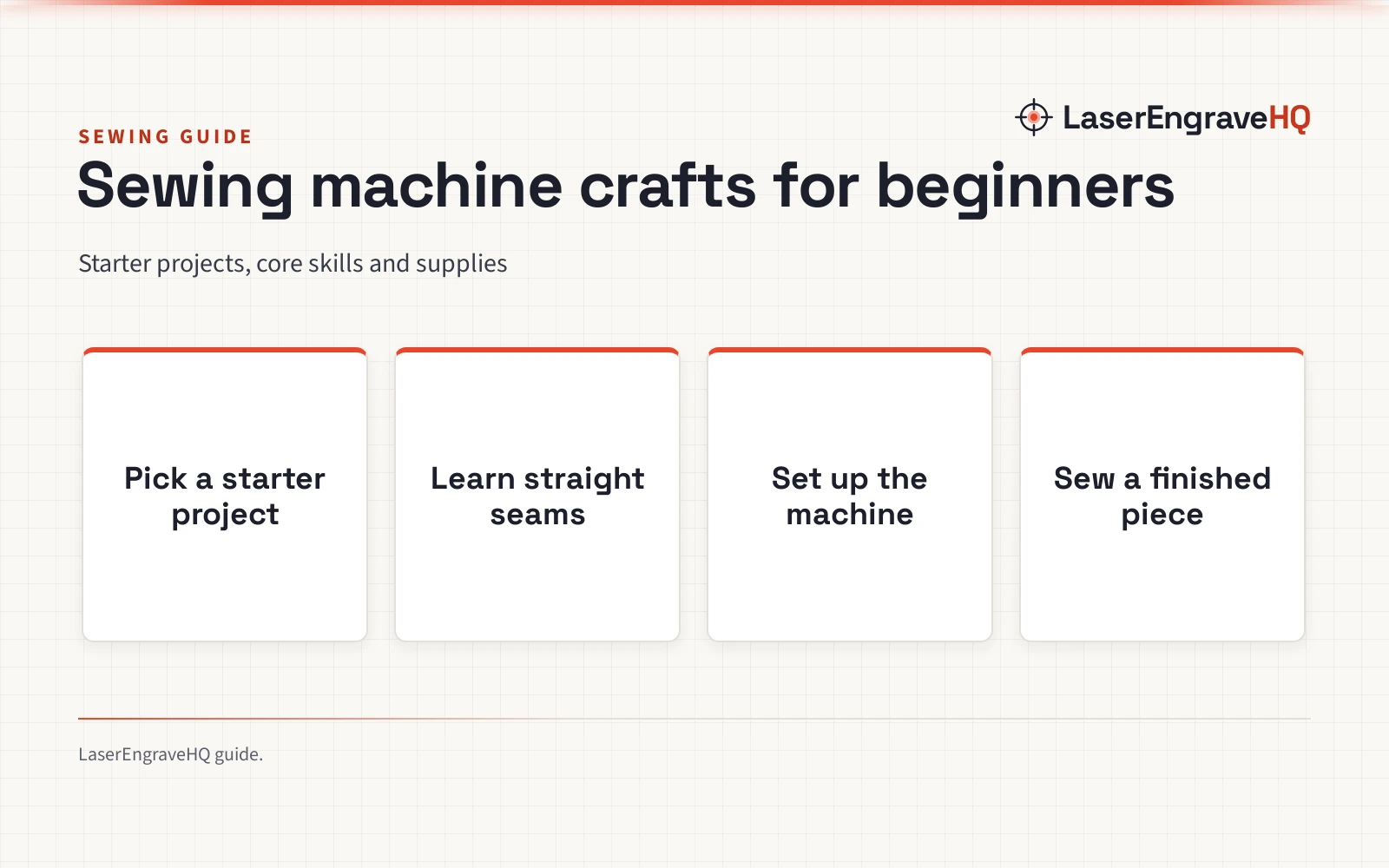
On this page
Sewing machine crafts for beginners are small, useful projects that teach core machine skills while producing something worth keeping, such as a tote bag, a cushion cover, a drawstring pouch or an apron. Each project in this guide uses straight seams, simple hems and basic pressing, so a new sewer can finish a piece and move to the next project with growing confidence. The sections below walk through choosing a starter project, setting up the machine, cutting and pressing fabric, and sewing each piece from start to finish.
As an Amazon Associate I earn from qualifying purchases. LaserEngraveHQ earns a commission from purchases made through these links, at no extra cost to you. Read our affiliate disclosure.
This guide has no product picks. It walks through starter projects and the skills each project builds, so you can start with the machine and supplies you already own.
Pick a starter project
A good starter project has a simple shape, mostly straight lines and a clear use when it is finished. A tote bag, a cushion cover and a drawstring pouch all fit that pattern, while a fitted garment with curves and closures asks for skills a new sewer is still building. Choose fabric that is easy to handle, such as plain cotton, and skip slippery or stretchy cloth until straight seams feel natural. Choose a project you actually want to use or give away, since a finished piece teaches more than a practice scrap.
Before buying supplies, read the sewing machine tips for beginners guide for setup habits that carry over to every project. When the goal is clothing, the best sewing machine for beginners to make clothes guide explains which machine features matter for garments. Keep the supply list short: fabric, matching thread, pins, scissors or a rotary cutter, and an iron for pressing.
Learn the seams every starter project uses
Almost every beginner craft rests on a straight seam, a hem and a way to stop raw edges from fraying. A straight seam joins pieces of fabric along a marked line, and a short reverse stitch at each end locks it so the seam holds when the piece is used. A hem folds a raw edge under and stitches it flat, which gives tote handles, pouch openings and apron edges a clean finish. A zigzag stitch along a raw edge keeps woven fabric from fraying, and topstitching adds a visible line that also strengthens a seam.
Practice each seam on scrap fabric from the same cloth as the project. A seam guide keeps the stitching line even; the best seam guide for sewing machine guide compares the common styles, and a magnetic seam guide clamps to the needle plate. When a seam goes wrong, a seam ripper opens the stitches without tearing the fabric, so a mistake stays easy to fix.
Set up the machine and workspace
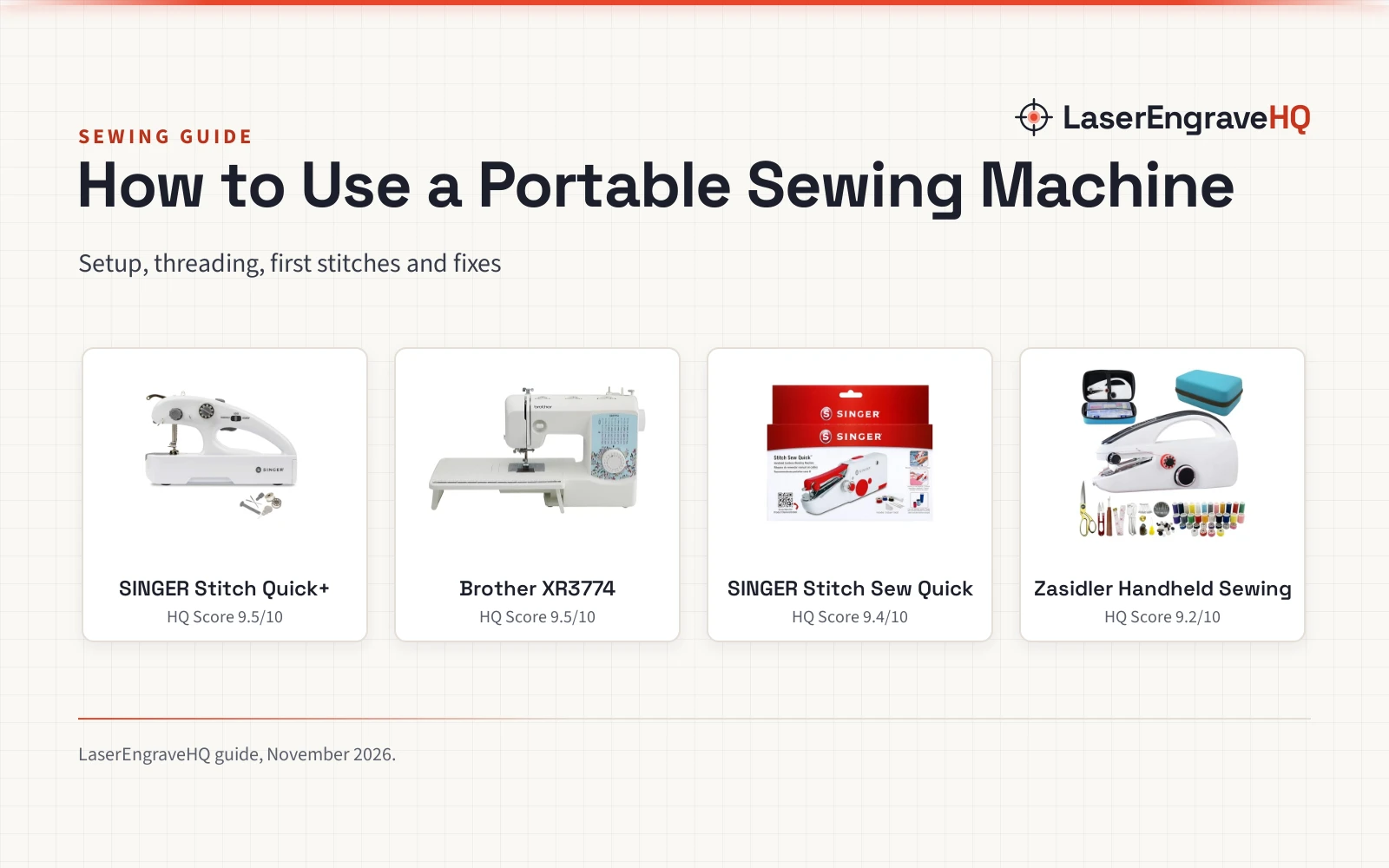
Set up in a clear space with good light, the machine on a steady table and the iron close by. Wind the bobbin, thread the machine following the manual and seat the needle and presser foot. The how to set a sewing machine guide walks through the setup order, and the bobbin setup guide covers winding and placing the bobbin. A needle threader tool helps when the needle eye is hard to see.
Sew practice lines on scrap fabric before starting the project, and adjust the tension only when the stitches look uneven. Keep pins, scissors and the seam ripper within reach, and clear cut threads away so they stay out of the machine. A tidy workspace makes it easier to keep the fabric feeding straight and the seam line even.
Cut, pin and press before you sew
Accurate cutting decides how well the pieces fit together, so mark the fabric and cut with smooth, even strokes. A rotary cutter and mat suit long straight cuts, and the rotary cutter size guide explains which cutter size fits quilting and sewing work. Scissors work well for curves and small pieces, and sharp blades matter more than speed.
Pin the pieces with the right sides together and the raw edges lined up, placing pins across the seam line so the fabric cannot shift, and pull each pin out before the needle reaches it. The sewing pins guide shows pinning techniques for beginners. Press each seam after sewing it, since pressing sets the stitches and gives the finished piece a flat, even look.
Sewing machine crafts for beginners: starter project ideas
The projects below build on each other: each project repeats the seams and pressing from the earlier sections and adds a new skill.
- Tote bag: straight seams, a boxed base and handles. Teaches measuring, topstitching and turning a bag right side out.
- Cushion cover: straight seams, even hems and an envelope back that needs no fastener. Teaches even edges and a back that overlaps neatly.
- Drawstring pouch: a casing for the cord and a gathered opening. Teaches sewing a channel and threading a cord through it.
- Apron: ties, a pocket and a neck strap. Teaches curved edges, attaching straps that take daily wear, and bias tape for the edges.
- Table runner: long straight seams and pressed edges. Teaches keeping a long seam line even from end to end.
- Fabric basket: stiff sides and a flat base. Teaches sewing through layers and shaping a piece that stands on its own.
Common mistakes to avoid
- Skipping practice seams on scrap fabric before starting the project.
- Pulling the fabric through the machine instead of letting the feed dogs move it.
- Sewing over pins, which can bend the needle and damage the fabric.
- Skipping pressing between seams, which leaves the finished piece uneven.
- Choosing slippery or stretchy fabric for a project that needs straight seams.
Sewing machine crafts for beginners: the short version
- Choose a starter project with straight lines and a clear use.
- Learn the straight seam, the hem and the zigzag edge finish.
- Set up the machine, wind the bobbin and practice on scrap fabric.
- Cut carefully, pin the pieces and press each seam as you sew.
- Sew the project slowly, fix mistakes with a seam ripper and press the finished piece.
- Pick the next project and add a new skill to the skills you already know.
FAQ: lasers and CNC
What sewing machine crafts should a beginner start with?
Start with a tote bag, a cushion cover or a drawstring pouch. Each project uses straight seams and simple hems and finishes as a useful item, which keeps motivation high while the core skills settle in.
What fabric works well for beginner sewing machine crafts?
Plain cotton is a forgiving place to start, since it presses well, holds a crease and feeds evenly under the foot. Avoid slippery or stretchy cloth until straight seams feel natural.
Do I need a serger to start sewing crafts?
No. A home sewing machine with a zigzag stitch handles raw edges well enough for starter projects. A serger trims and finishes edges in a pass, and the serger guide for beginners explains when that tool earns its place.
How do I keep seams straight as a beginner?
Use a seam guide, sew slowly and watch the fabric edge against the guide rather than the needle. Practice lines on scrap fabric help the hands learn the pace.
What supplies go with a beginner sewing machine craft?
Fabric, matching thread, pins, scissors or a rotary cutter, a seam ripper and an iron cover most starter projects. Add bias tape for aprons and straps.
Can I sell sewing machine crafts I make at home?
Yes, many makers sell simple sewn goods at craft fairs and online, starting with the projects they can make well and photograph clearly. Check local rules for selling handmade goods and price from real material and time costs.
Related: the sewing and embroidery machine hub, sewing machine tips for beginners and best sewing machine for beginners to make clothes. Also see the bias tape maker guide. Also see the continuous bias tape guide.