Resin 3D Printer Safety: Gear and Ventilation
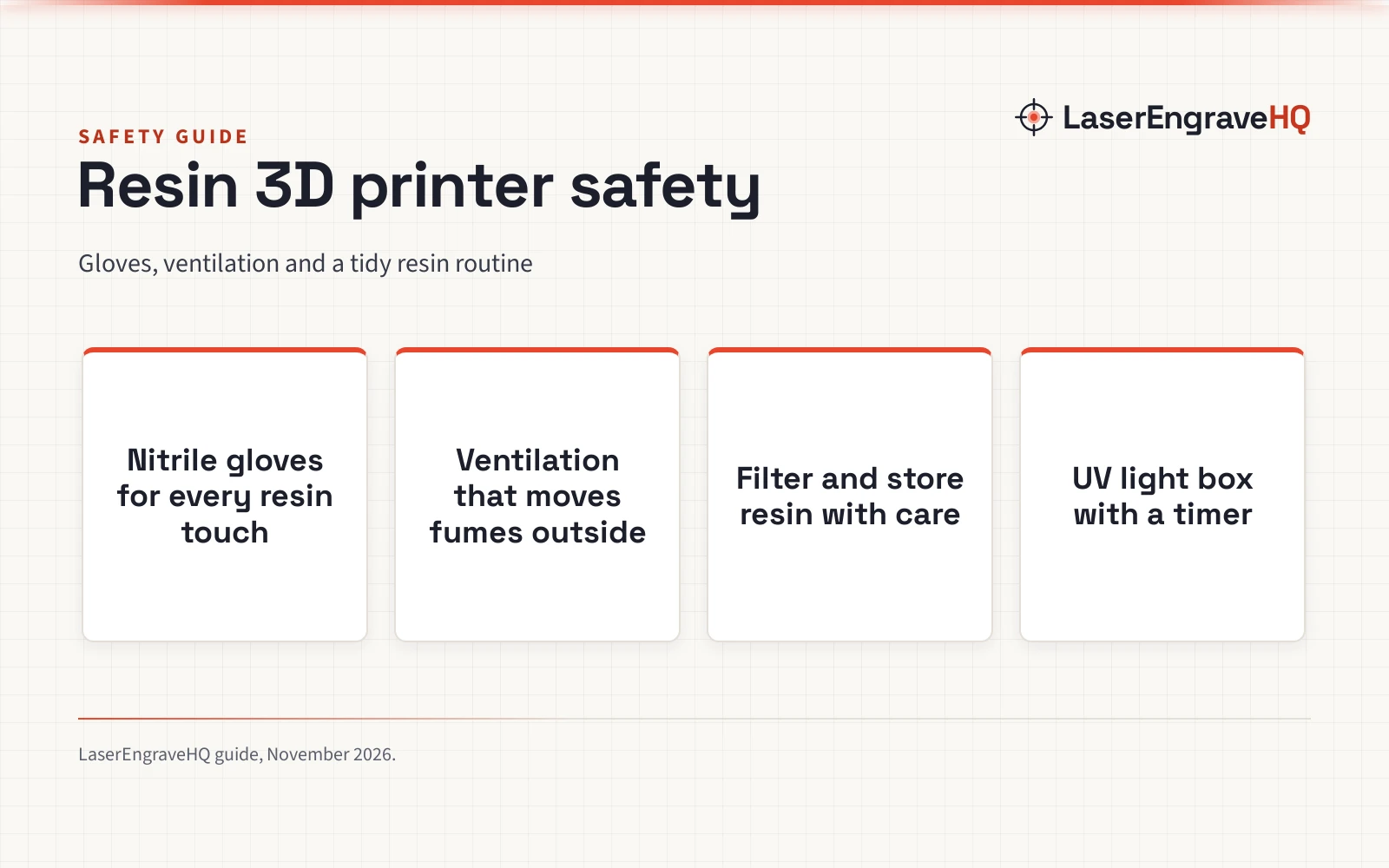
Resin 3D printer safety comes down to nitrile gloves, steady ventilation and a tidy routine for filtering, storing and hardening prints.

On this page
Top picks at a glance
As an Amazon Associate I earn from qualifying purchases.
- 1
 ANYCUBIC Resin 3D Printer9.7/10View on Amazon
- 2
 ANYCUBIC 3D Printer Resin Bundle9.6/10View on Amazon
- 3
 ELEGOO Upgraded 8K Standard 3D Printer Resin Space Grey 2000g9.6/10View on Amazon
A resin printer turns liquid resin into crisp miniatures and detailed parts, and the same liquid that makes those details possible deserves respect. Resin 3D printer safety means keeping liquid resin off skin, moving fumes out of the room and giving prints a careful finish. This guide walks through the gear and the habits that make a resin workspace safer, from gloves and ventilation to filtering, storage and the UV light box.
LaserEngraveHQ earns a commission from purchases made through these links, at no extra cost to you. Read our affiliate disclosure.
Figures in this guide come from the makers named in the text. Where a maker stays silent, this guide says so instead of filling the gap with a guess.
Resin 3D Printer Safety: The Gear That Matters
Start with the gear that touches resin. A resin accessory kit from ANYCUBIC bundles the basics: nitrile gloves, a silicone pad, a stainless steel resin filter, a water bottle, a fish scale cloth and a plastic nipper for cleaning and trimming. The 3D printer hub gathers the site printer guides. The gloves matter most, because liquid resin belongs on the print, not on skin. The maker describes the gloves as high-quality nitrile, hard wearing and corrosion resistant, strong enough to guard palms against sharp model edges while washing models and machines.
The silicone pad earns its place under the printer and the wash station. The maker lists silicon dioxide as its main component and states that it does not react with resin alcohol, so dried drips peel away and the pad folds for storage. A stainless steel filter sits over the bottle when leftover resin goes back into storage, catching solid residue. The fish scale cloth wipes machine surfaces, platforms, bins and the pad, and the plastic nipper trims supports and loose edges.
Keep this kit in a tray beside the printer. When gloves, pad, filter and cloth live together, the safe routine becomes the easy routine, and resin stays where it belongs.
Ventilate the Room and Move Fumes Outside
Resin fumes build up in a closed room, so ventilation belongs in the plan. Open a window, vent air outside and keep the printer in a room with steady airflow rather than a sealed closet. An enclosed printer helps contain fumes at the source, but it does not replace ventilation; the guide to enclosed printers for beginners explains what to look for in a housing.
A small exhaust fan adds airflow at the work area. The AmRunJe fan (on Amazon) in the reference listings measures 80 x 80 x 25 mm, runs on a 12 volt supply and is rated at 43.6 CFM, 2800 RPM and 31 dBA, drawing 2 watts at 0.16 amp. The maker lists a protective guard and a metal grill that keep fingers and dust away from the blades, and the pack holds 2 fans with grills and screw nuts. Mount the fan so it pulls air away from the work area, not across the face.
For a stronger setup, a fume extractor built for the job captures fumes at the source. The fume extractor guide explains the idea: capture fumes at the source and send them outside. A quiet fan also helps when the printer runs beside a desk; the guide to making a 3D printer quieter covers fans, motors and enclosures.
Filter, Store and Wash With Care
Leftover resin is worth saving, but only when it is clean. Pour it through the stainless steel filter back into the bottle and cap the bottle right away. Label the bottle with the resin type so the next print starts from known material. The resin types guide explains standard, tough and flexible resins and where each type fits.
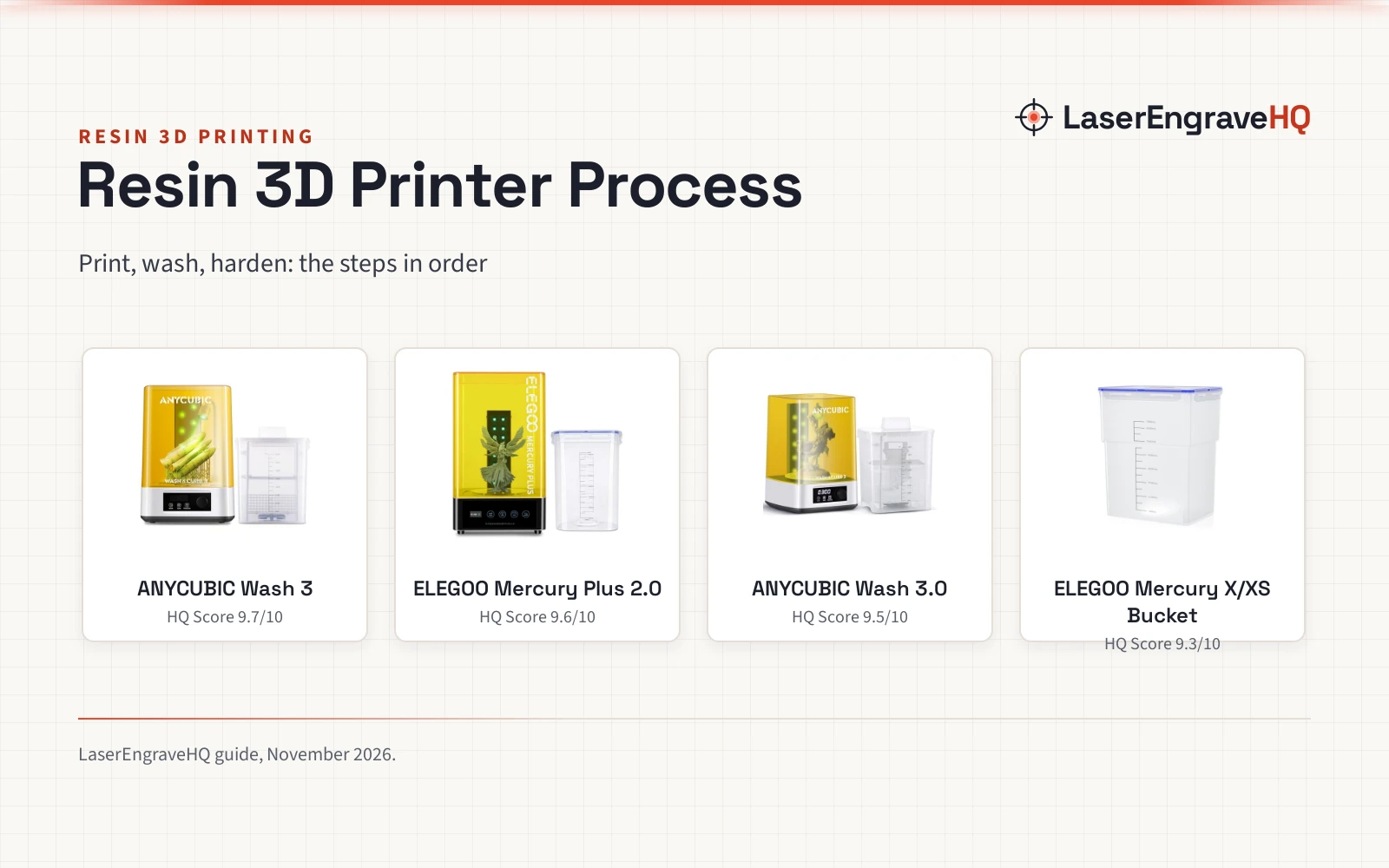
Washing needs the same care as printing. Rinse prints over the silicone pad, wipe tools with the fish scale cloth and keep wash liquid in a closed container. The water bottle in the kit offers modes for full fog, straight line and shutdown, so the spray fits the job at hand. Never pour wash liquid down a household drain; collect it and follow local rules for disposal.
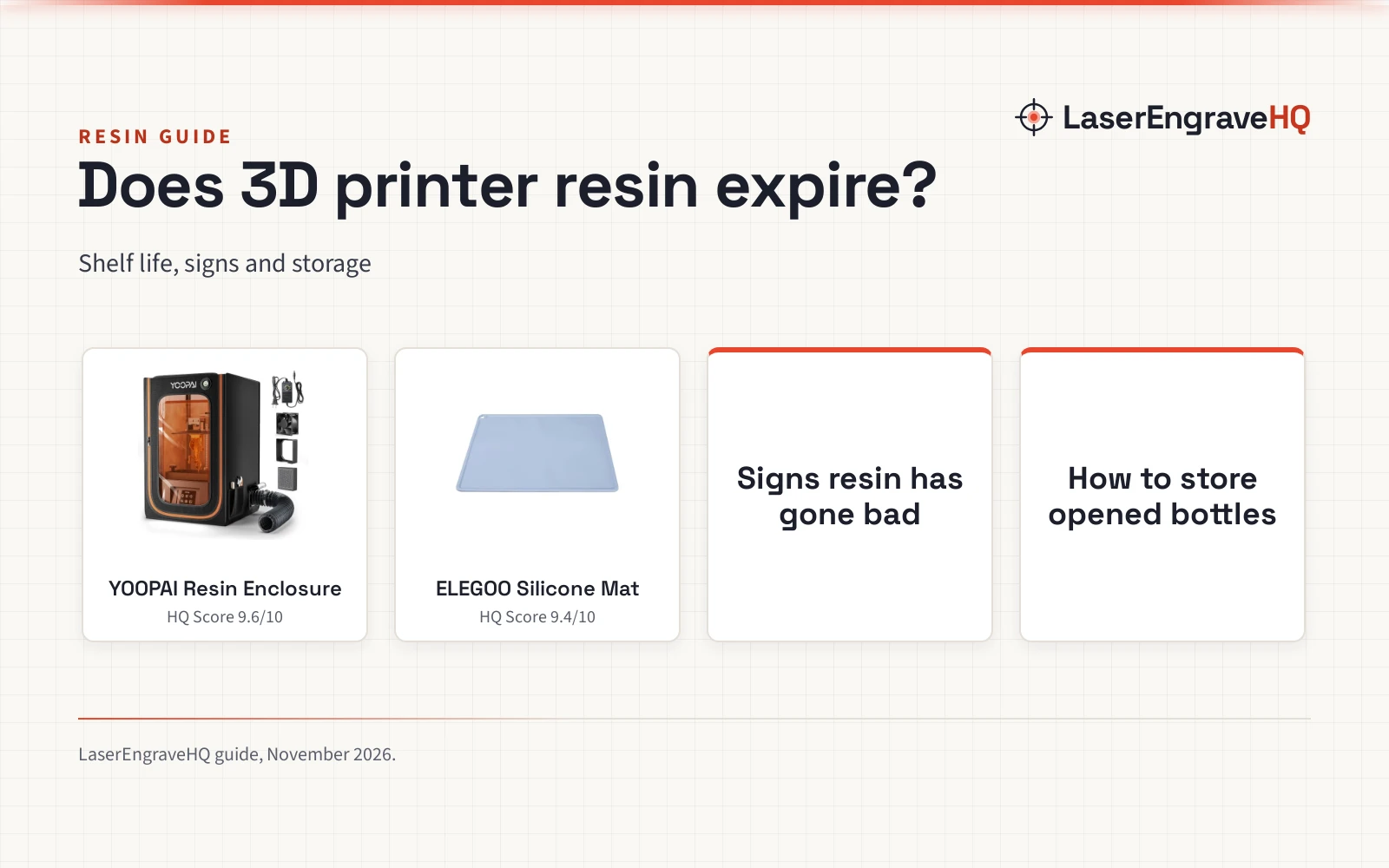
Store resin upright in a cool, dark place with the cap tight, away from sunlight and away from food and drink. Keep the work surface clear between prints so a stray drip cannot find a tool or a sleeve.
Harden Prints in the UV Light Box
Fresh prints need time under UV light to harden through, and a UV light box built for resin prints holds the model while LED beads do the work. The WRPLU box (on Amazon) in the reference listings carries 96 LED light beads at 0.5 watts each, for 48 watts in total, and the maker lists 32 circuit protections so the remaining beads keep working when a bead fails. Its UV LED wavelength is 405nm, and the maker lists compatibility with most standard 395nm resin.
The box measures 10.03 x 12.8 x 10.03 inches, and the maker builds it from 600d Oxford cloth and aluminum foil, with fire protection and a steady temperature inside. A timer offers gears for 3 minutes, 5 minutes and 10 minutes, so the hardening time fits the model.
Keep the box closed while the lights run and avoid looking straight at the LEDs. Set the timer and step away. When the timer ends, lift the print out with gloved hands and inspect it in normal light.
Common Mistakes to Avoid
- Skipping gloves for a small pour, then touching a print with bare hands.
- Running the printer in a closed room with no airflow to the outside.
- Pouring leftover resin back into the bottle without filtering it.
- Leaving the UV light box open while the LEDs run.
- Storing resin in an unmarked bottle beside food or drink.
- Washing tools over an open sink instead of over the pad.
Resin 3D Printer Safety: The Short Version
- Put nitrile gloves on before touching resin, and keep the silicone pad under the work.
- Ventilate the room and move fumes outside with a fan or an extractor.
- Filter leftover resin through stainless steel before it goes back in the bottle.
- Harden prints in the UV light box with the timer set and the box closed.
- Wash tools over the pad, wipe surfaces with the cloth and store resin capped and labeled.
FAQ: lasers and CNC
Do resin 3D printers need ventilation?
Yes. Resin fumes gather in a closed room, so give the printer steady airflow and a path for air to leave the room. The 80 mm fan in this guide is rated at 43.6 CFM and helps move air at the work area, and a fume extractor built for the job captures fumes at the source.
What gloves should I wear for resin 3D printing?
Nitrile gloves. The kit in this guide pairs nitrile gloves with a silicone pad and a stainless steel filter, so the whole routine stays together. Change gloves when they tear or when resin soaks through.
Can I look at the UV light while prints harden?
Avoid it. Keep the UV light box closed while the LEDs run and let the timer end the session. The box in this guide runs a timer with gears for 3 minutes, 5 minutes and 10 minutes, so there is no need to watch the light.
How do I store leftover resin?
Filter it through stainless steel, pour it back into its bottle, cap the bottle and label it with the resin type. Store the bottle upright in a cool, dark place away from sunlight, food and drink.
What to do if resin gets on skin
Wash the area with soap and water right away and change gloves. When resin soaks a glove, swap it for a fresh set instead of working through it.
Can a small fan help with resin printer fumes?
Yes, as part of a ventilation plan. The 80 mm fan in this guide measures 80 x 80 x 25 mm and is rated at 43.6 CFM, 2800 RPM and 31 dBA on a 12 volt supply. Mount it to pull air away from the printer, not across the face.
Related: the 3D printer hub, resin 3D printer setup and 3D printing resin types. Also see the best resin kit for beginners guide. Also see the resin 3D printer cost guide.