Pulsed vs Continuous Wave Laser Engraver: Which One Should You Buy?
Learn the differences between pulsed and continuous wave laser engravers, how peak power and heat affect materials, and which beam mode fits your workshop.

On this page
Top picks at a glance
As an Amazon Associate I earn from qualifying purchases.
- 1
 xTool S1 40W Laser Cutter and Laser Engraver for Tumblers9.7/10View on Amazon
- 2
 xTool M2 20W Color Craft Laser Engraver9.7/10View on Amazon
- 3
 OMTech 100W CO2 Laser Engraver with 4 Way Pass Through Air9.7/10View on Amazon
- 4
 WECREAT Vision 20WView on Amazon
- 5
 Creality Falcon A1C 5W AI Laser Engraver with AI CameraView on Amazon
- 6
 Longer Ray5 Laser Engraver and CutterView on Amazon
- 7
 TOOCAA 10W Laser Engraver with Air AssistView on Amazon
- 8
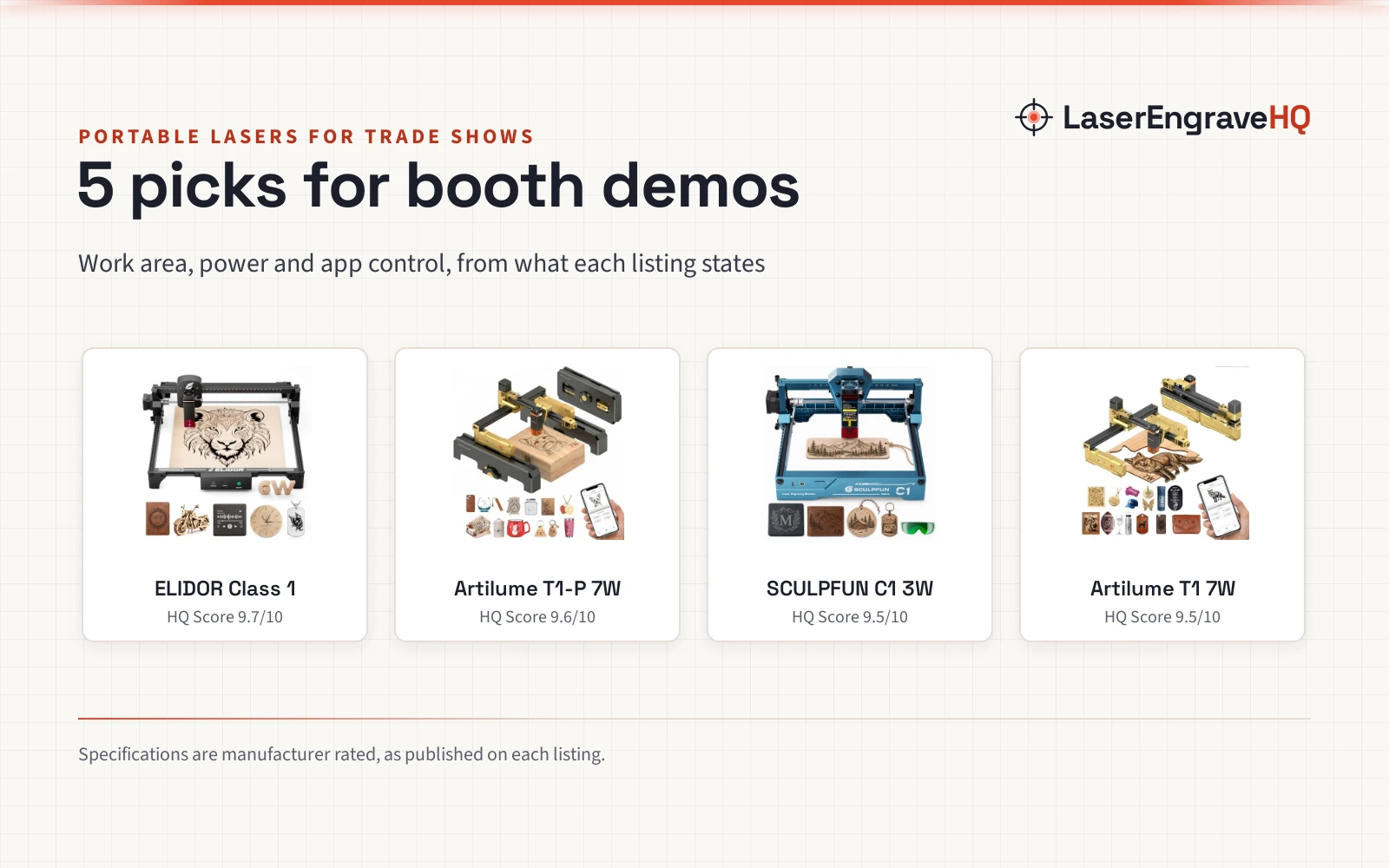
 Artilume T1 Laser Engraver MachineView on Amazon
- 9
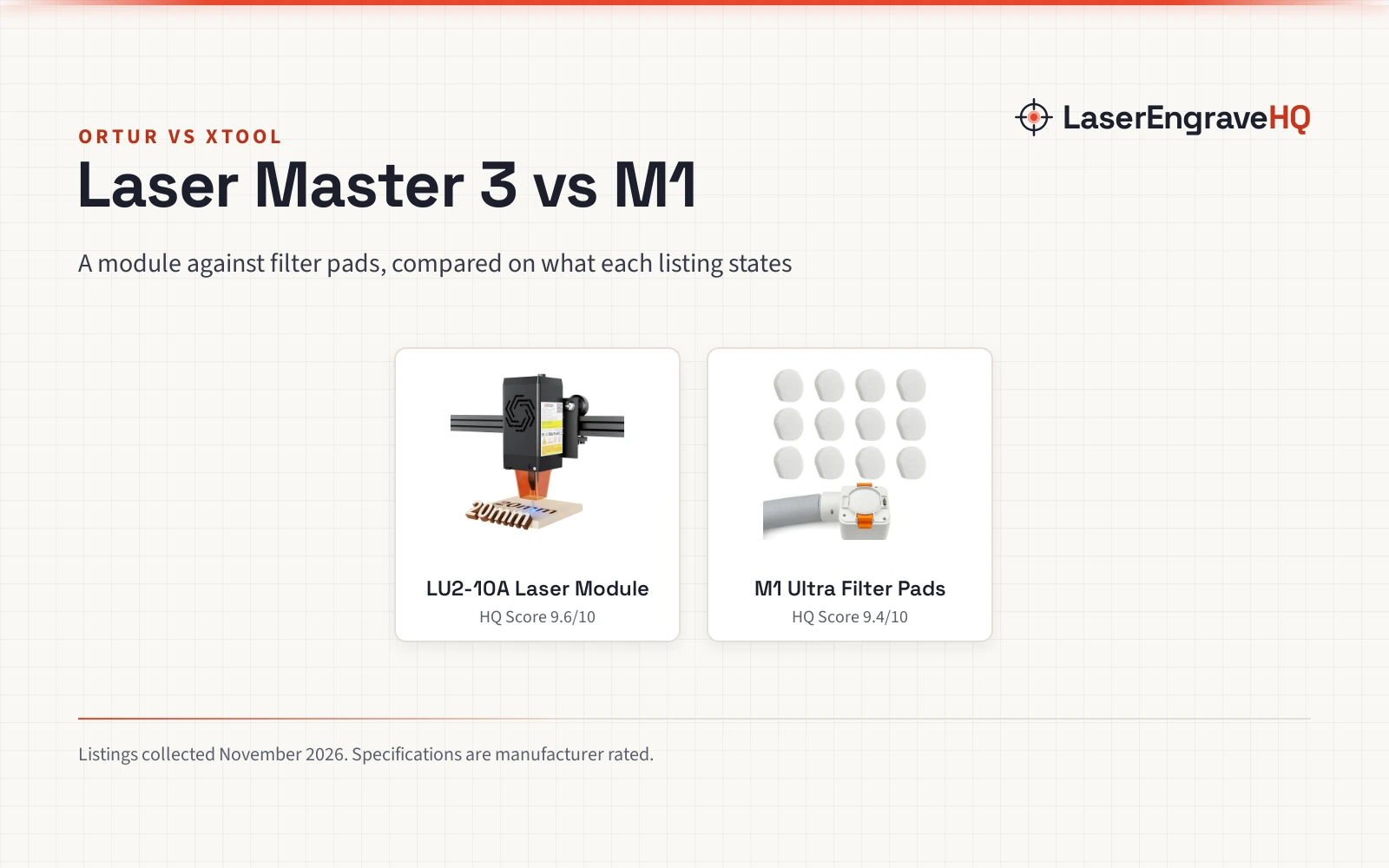
 ORTUR Laser Master 2 S2 LU2-10A Laser Engraver LaserView on Amazon
Choosing between a pulsed vs continuous wave laser engraver comes down to beam delivery and material response. A pulsed laser fires rapid bursts with high peak power, making it ideal for deep metal engraving and jewelry without excess heat bleeding into the part. A continuous wave laser emits an unbroken beam delivering steady thermal energy to cut and engrave wood, leather, paper, and compatible plastics. Below, we break down each mode and help you choose.
Other machines to compare
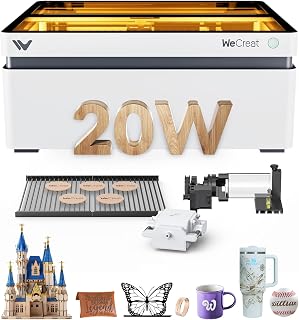 WECREAT Vision 20WCheck price on Amazon
 Creality Falcon A1C 5W AI Laser Engraver with AI CameraCheck price on Amazon
 Longer Ray5 Laser Engraver and CutterCheck price on Amazon
 TOOCAA 10W Laser Engraver with Air AssistCheck price on Amazon
 Artilume T1 Laser Engraver MachineCheck price on Amazon
 ORTUR Laser Master 2 S2 LU2-10A Laser Engraver LaserCheck price on Amazon
LaserEngraveHQ earns a commission from purchases made through these links, at no extra cost to you. Read our affiliate disclosure.
Laser power ratings often confuse buyers. Continuous wave diode and CO2 lasers are rated by continuous optical output, while pulsed fiber lasers deliver high peak spikes. A pulsed unit with modest average wattage can ablate metal that a continuous wave diode cannot mark.
Step 1: Understand continuous wave beam delivery
In continuous wave operation, the laser emits an unbroken beam. For vector cutting, optical output is delivered steadily, sustaining heat along the cut kerf to vaporize organic fibers or melt compatible plastics. In desktop shops, common continuous wave machines are diode lasers and glass tube CO2 cutters.
Always separate optical output from electrical draw. For example, the WECREAT Vision listing specifies a 20W optical output diode module cutting 10mm wood or 8mm opaque black acrylic in one pass. The Carverall JL9 listing claims single-pass cutting for 15mm plywood and 18-20mm pine with 20.2-20.6W output. Units like the TOOCAA NOVA with a 10W module or the ELIDOR Z6 with a 6W module and 0.04 × 0.14 mm spot provide lower thermal energy for surface engraving.
Read our guides on optical power vs electrical power and diode vs CO2 laser systems.
Step 2: Understand pulsed laser energy and peak power
A pulsed laser stores energy and releases it in rapid, concentrated bursts. While average wattage may seem low, each pulse concentrates thousands of watts of instantaneous peak power into a fraction of a second.
This high peak irradiance vaporizes a microscopic surface layer through ablation before heat can conduct into adjacent stock. Maker shops use solid-state fiber lasers for pulsed operation. While continuous wave diode units like the Carverall JL9 offer optional 1064nm infrared modules for surface marking, deep metal ablation requires a pulsed fiber source.
See our best fiber laser engraver guide and CO2 vs fiber laser comparison.
Step 3: Compare heat dissipation and material reactions
The core difference between beam modes is thermal dissipation. Continuous wave beams continuously inject heat into the cut zone. On low-conductivity materials like wood and leather, this sustained heat enables clean vaporization. On conductive bare metals like brass, copper, or aluminum, heat bleeds away rapidly, causing energy loss. For example, the WAINLUX K6 Pro listing cites a 455±5nm diode module with a 0.05mm spot that engraves wood and leather, but cannot mark bare steel or aluminum without coatings.
Pulsed lasers ablate metal before heat can spread, producing clean marks without warping the part. When dialed for surface annealing, controlled heat modifies the oxide layer on stainless steel. See can a diode laser engrave metal and our best laser engraver for metal guide.
Step 4: Match beam mode to your primary materials
Match your laser source to material absorption characteristics:
- Wood, paper, and cardstock: Continuous wave diode and CO2 lasers are ideal. The Carverall JL9 listing cuts 15mm plywood and 18-20mm pine, the WECREAT Vision cuts 10mm wood, and the Artilume T1 cuts 4mm basswood. Pulsed fiber lasers are inefficient for cutting wood.
- Acrylic: Continuous wave CO2 lasers cut clear and colored acrylic cleanly. Blue diodes cut opaque black acrylic (WECREAT Vision cuts 8mm black acrylic), but pass through clear acrylic. Pulsed fiber lasers cannot cut acrylic.
- Leather and slate: Continuous wave diodes excel at engraving leather patches and slate coasters.
- Bare metals: Pulsed fiber lasers are standard for deep engraving on steel, brass, and titanium. A 1064nm diode module produces surface marks, but lacks power for deep engraving.
- Hazardous materials: Never laser PVC, vinyl, PVC-based faux leather, polycarbonate, or ABS. They release toxic chlorine gas. See materials you should never laser cut.
For wood projects, read our best laser engraver for wood guide.
Step 5: Account for motion systems and engraving speed
Laser sources pair with different motion systems. Desktop continuous wave diode and CO2 machines use gantry frames moving the head across X and Y axes for large work areas.
For example, the ELIDOR Z6 provides a 300 × 300 mm bed with speeds up to 10,000 mm/min. The Creality Falcon A1C offers a 150 × 150 × 148 mm work area at 15,000 mm/min with 0.1mm positioning accuracy, using interchangeable 1.2W, 5W, and 10W modules. The Longer Ray5 Mini has a 130×130mm bed with 12,000mm/min speed and 0.01mm repeat accuracy. Enclosed units like the WECREAT Vision and TOOCAA NOVA reach 600mm/s with 0.01mm precision.
Pulsed fiber engravers use galvanometer mirror heads to steer the beam across small fields at high speeds for tags and logos. See galvo laser vs gantry laser and how to choose a laser engraver.
Step 6: Plan workshop safety and fume extraction
Configure safety and ventilation before operating:
- Ventilation: Vaporizing materials releases fine particles. Vent outdoors or use a filter from our best fume extractor for laser engraver guide.
- Eye protection: Eyewear must match the laser wavelength and optical density. A 455±5nm diode needs different filtering than a 1064nm beam. Orange shields are not rated protection. See our laser safety glasses guide.
- Enclosures: Enclosed units like the WECREAT Vision, TOOCAA NOVA, and Creality Falcon A1C provide Class 1 enclosures filtering 99% of light with interlocks. Open-frame models like the Class 4 WAINLUX K6 Pro need workspace controls. See laser classes explained.
- Fire safety: Keep a fire extinguisher nearby and never leave an active laser unattended.
Common mistakes to avoid
- Buying a continuous wave diode expecting it to deep-engrave bare metal.
- Buying a pulsed fiber laser primarily to cut sheet wood or acrylic.
- Assuming a 1064nm diode module matches the peak power of a pulsed fiber laser.
- Using unrated glasses that lack verified wavelength protection.
- Lasering banned plastics like PVC, vinyl, or ABS that emit toxic gas.
Pulsed vs continuous wave laser engraver: the short version
- Continuous wave lasers emit steady thermal beams suited for cutting and engraving wood, paper, leather, and acrylic.
- Pulsed lasers deliver high-peak bursts that vaporize bare metals without excess heat spreading.
- Diode and CO2 machines use continuous wave delivery on gantry frames for craft cutting.
- Fiber lasers use pulsed delivery on galvo mirror heads for rapid metal marking.
- Pick continuous wave for organic blanks; pick pulsed for bare metals and jewelry.
- Match eyewear to your wavelength and always vent exhaust fumes.
FAQ: lasers and CNC
Can a continuous wave laser engrave metal?
It cannot deeply engrave bare metal because heat conducts away quickly. However, continuous wave lasers can mark anodized aluminum, strip tumbler coatings, or mark stainless steel with higher-power diodes or marking spray. Deep metal engraving requires a pulsed fiber laser. See can a diode laser engrave metal.
Can a pulsed laser cut through wood or acrylic?
A pulsed laser is inefficient for cutting thick sheet stock because organic materials require steady thermal absorption. For cutting, pick a continuous wave machine from our best laser engraver for wood guide.
What is the difference between peak power and average power?
Average power measures continuous optical output, while peak power measures the intense optical concentration during a single pulse. Pulsed lasers deliver thousands of watts of peak power during brief bursts. See optical power vs electrical power.
Which laser type is better for starting a small business?
Choose continuous wave diode or CO2 for custom signs, leather patches, and tumblers. Choose pulsed fiber for jewelry, knives, and metal tags. Compare options in our best laser engraver for small business guide.
Do pulsed and continuous wave lasers require different safety glasses?
Not based on beam mode alone. Eyewear depends on the optical wavelength and certified optical density, not whether the beam is pulsed or continuous. A 455nm diode and a 1064nm fiber laser require different filters. See our laser safety glasses guide.
Are pulsed lasers faster than continuous wave lasers?
For surface marking and small logos, pulsed galvo lasers are much faster because mirrors steer the beam. For cutting sheet materials, continuous wave lasers are faster. Compare both in our galvo laser vs gantry laser guide.
Related: the laser engraver hub, best fiber laser engraver and best laser engraver for metal. Also see our guide on how to choose a laser engraver and our comparison of CO2 vs fiber laser.