Best Build Plate for Abs (2026)
Five cold and PEI build plates for ABS printing, compared by size, temperature, adhesion and printer fit.

On this page
Top picks at a glance
As an Amazon Associate I earn from qualifying purchases.
- 1
 Best OverallBIQU Frostbite Pro9.7/10View on Amazon
- 2
 Best 2-in-1KDEAVI CryoClover 2579.6/10View on Amazon
- 3
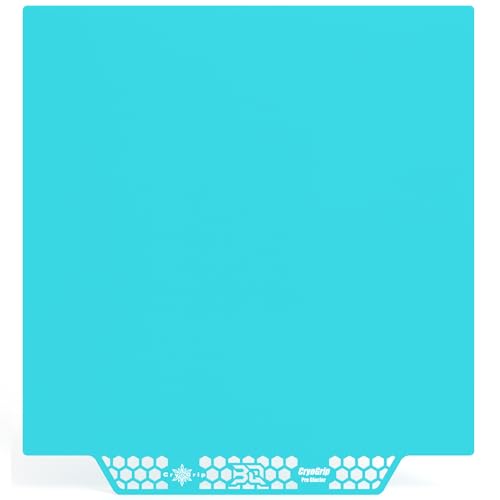 Best Wide FitBIQU Glacier 2359.6/10View on Amazon
- 4
 Best for CentauriELEGOO P209.6/10View on Amazon
- 5
 Best PEI PlateG-Hubble PEI 2809.5/10View on Amazon
An ABS part that lifts at the corners or peels off the bed wastes filament, time and a good design. The right surface holds the base layer flat while the print builds, then lets go cleanly when the part is done. This guide covers the best build plate for abs for makers printing functional parts, enclosures and prototypes, with cold plates and PEI plates compared by size, temperature and fit.
LaserEngraveHQ earns a commission from purchases made through these links, at no extra cost to you. Read our affiliate disclosure.
Quick picks
- Best Overall BIQU Frostbite Pro: ABS at 100°C on a 257x257mm plate for Bambu Lab P1S, P1P, P2S, X2D, X1C, X1E and A1, with a 7-layer build and no glue. Check price on Amazon
- Best 2-in-1 KDEAVI CryoClover 257: One side for TPU, one side for PLA, PETG and ABS at 70-90°C, in 257x257mm for Bambu Lab printers. Check price on Amazon
- Best Wide Fit BIQU Glacier 235: 235x235mm plate that fits Adventurer 5M, Ender 3, Kobra 2, Neptune 3 Pro and Neptune 4 printers. Check price on Amazon
- Best for Centauri ELEGOO P20: 276.5x260mm plate for the Centauri Series, for PLA, PETG, ABS, PA and other engineering filaments. Check price on Amazon
- Best PEI Plate G-Hubble PEI 280: Double-sided PEI in 280x280mm for the Qidi Q2, with a powder coating side rated to 300°C. Check price on Amazon
Machines on the list
BIQU Cryogrip Pro Frostbite Matte Orange Cold
A 257x257mm double-sided cold plate for Bambu Lab P1S, P1P, P2S, X2D, X1C, X1E and A1 printers, with ABS printing at 100°C and no glue.
Pros
- ABS printing at 100°C with no glue, per the maker
- 257x257mm plate with a 7-layer build and matte orange coating
- AR code on the plate for recognition by the X1C
- Prints release by bending the plate, or 10 minutes in a freezer
Cons
- No warranty term is stated
- P2S and X2D users must turn off plate printing detection
- Fits Bambu Lab printers only, not Ender, Kobra or Neptune models
- Water and soap only for cleaning; solvents can damage the surface
257x257mm 2-in-1 Build Plate for Bambu-Lab
A 257x257mm 2-in-1 cold plate for Bambu Lab printers, with one side for TPU and one side for PLA, PETG and ABS at 70-90°C.
Pros
- ABS printing at 70-90°C, with PLA at 30-50°C and PETG at 40-60°C
- 2-in-1 plate: one side for TPU, one side for PLA, PETG and ABS
- No glue steps, with a matte skin-textured surface
- Fits Bambu Lab A1, X2D, P1, P2S and X1 printers
Cons
- No warranty term is stated
- TPU works on one side only; the other side is for PLA, PETG and ABS
- Clean with soapy water only; alcohol and solvents can damage the coating
- 257x257mm size fits Bambu Lab printers only
BIQU CryoGrip Pro Glacier Build Plate 235x235mm
A 235x235mm cold plate with a 7-layer build for Adventurer 5M, Ender 3, Kobra 2 and Neptune printers, with a handle that stays cool to the touch.
Pros
- Fits Adventurer 5M, Ender 3, Kobra 2, Neptune 3 Pro and Neptune 4 printers
- 7-layer build with a polymer material for low-temperature printing
- Handle stays cool enough to touch with the bed at 100°C
- PLA, PETG, ABS and PA printing, with nozzle temperatures below 300°C
Cons
- 235x235mm plate, smaller than the 257x257mm plates here
- PLA needs 45-55°C and PETG needs 60-75°C, above room temperature
- Fits Adventurer, Ender, Kobra, Neptune and SV05, SV06 and SV07 models only
- Materials need nozzle temperatures below 300°C
ELEGOO Cold Build Plate P20 for PLA PETG ABS
A 276.5x260mm cold plate for the Centauri Series, for PLA, PETG, ABS, PA and other engineering filaments, with flex removal.
Pros
- 276.5x260mm plate for the Centauri Series
- PLA, PETG, ABS, PA and other engineering filaments on one plate
- Flex the plate to remove prints in seconds
- Durable surface coating for repeated print cycles
Cons
- Fits the Centauri Series only
- No ABS bed temperature is stated
- No cleaning method is stated
- No other surface is stated for a different finish
Upgraded 280x280mm PEI Build Plate for Qidi Q2
A 280x280mm double-sided PEI plate for the Qidi Q2, with a powder coating side rated to 300°C and an imported PEI film side.
Pros
- 280x280mm double-sided PEI for the Qidi Q2
- Powder coating side withstands temperatures up to 300°C
- Imported PEI film side for smooth, flat prints
- Cold-rolled stainless steel core for rust resistance and strength
Cons
- Fits the Qidi Q2 and similar-sized printers only
- Film side needs glue for PLA-SILK, PETG and TPU
- Demold only after natural cooling to room temperature
- Visible micro-bubbles can appear on the film side
Other machines to compare
 Creality Official K2 Plus Build Plate Frosted PEI SheetCheck price on Amazon
 370x370mm K2 Plus Build Plate Spring Steel PEI SheetCheck price on Amazon
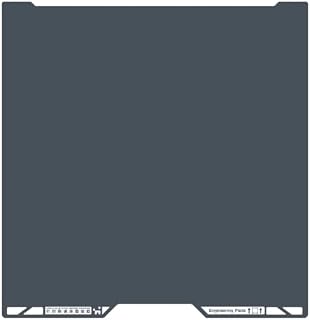 Bamboo High-Temp Engineering Build Plate for H2D/H2SCheck price on Amazon
 Bamboo Textured PEI Plate with QR Code for X2D/P2SCheck price on Amazon
 GOMENL Build Plate for Bambu Lab A1 P1P P1S P2S X1 X1C X1ECheck price on Amazon
Specs compared
| Model | HQ Score | Plate size | ABS bed temp | Sides | Fits | Warranty |
|---|---|---|---|---|---|---|
| BIQU Frostbite Pro | 9.7/10 | 257x257mm | 100°C | Double-sided | Bambu Lab P1S, P1P, P2S, X2D, X1C, X1E, A1 | Not stated |
| KDEAVI CryoClover 257 | 9.6/10 | 257x257mm | 70-90°C | 2-in-1 | Bambu Lab A1, X2D, P1, P2S, X1 | Not stated |
| BIQU Glacier 235 | 9.6/10 | 235x235mm | Not stated | Not stated | Adventurer 5M, Ender 3, Kobra 2, Neptune 3 Pro, Neptune 4 | Not stated |
| ELEGOO P20 | 9.6/10 | 276.5x260mm | Not stated | Not stated | Centauri Series | Not stated |
| G-Hubble PEI 280 | 9.5/10 | 280x280mm | Not stated | Double-sided | Qidi Q2 | Not stated |
Specs are what each manufacturer publishes as its rating on the listing, collected 19 November 2026.
How the picks were scored
Each pick is scored out of 10 on performance, build, value, safety and warranty, with the weights published on the How We Pick page. A spec the listing does not publish scores nothing.
| Product | HQ Score | Perf. /35 | Build /25 | Value /25 | Safety /10 | Warranty /5 |
|---|---|---|---|---|---|---|
| BIQU Frostbite Pro | 9.7 | 32 | 22 | 21 | n/a | 0 |
| KDEAVI CryoClover 257 | 9.6 | 30 | 21 | 21 | n/a | 0 |
| BIQU Glacier 235 | 9.6 | 29 | 21 | 20 | n/a | 0 |
| ELEGOO P20 | 9.6 | 28 | 20 | 20 | n/a | 0 |
| G-Hubble PEI 280 | 9.5 | 27 | 20 | 19 | n/a | 0 |
HQ Scores live on a 9.2 to 9.8 band: each machine’s weighted point total is projected onto it proportionally, and higher totals always show higher. With no power and no stated safety feature, the safety row shows n/a and the score comes from 90 points.
Buying guide: best build plate for abs
Match the plate to your printer
Plate size decides fit before anything else. The Frostbite Pro and CryoClover are 257x257mm for Bambu Lab printers, the Glacier is 235x235mm with a 220x220mm build volume for Adventurer, Ender, Kobra, Neptune and SV05, SV06 and SV07 printers, the P20 is 276.5x260mm for the Centauri Series, and the G-Hubble plate is 280x280mm for the Qidi Q2. Measure the bed and check the fit list before ordering, since a plate that is too large will not sit flat and a plate that is too small leaves bed area unused.
ABS temperature and adhesion
ABS needs heat at the bed to stay flat, and the two plates that state an ABS figure differ. The Frostbite Pro states ABS at 100°C with no glue, and the CryoClover states ABS at 70-90°C, also without glue steps. The Glacier, P20 and G-Hubble plates state no ABS bed temperature, so the ABS setup for those plates comes from the filament guidance. PLA and PETG figures show the same spread: the Frostbite Pro prints PLA at 30-50°C and PETG at 50-70°C, the Glacier prints PLA at 45-55°C and PETG at 60-75°C, and the CryoClover prints PLA at 30-50°C and PETG at 40-60°C.
Cleaning and print removal
Cold plates release prints by bending, and cleaning decides how long the coating keeps its grip. The Frostbite Pro cleans with water and soap, and a print that sticks too firmly goes in a freezer for 10 minutes. The Glacier cleans with water and soap or alcohol, and its handle stays cool enough to touch with the bed at 100°C. The CryoClover cleans with soapy water and warns against alcohol and solvents. The G-Hubble plate cleans with warm water, a soap-based cleaner or alcohol, and prints come off only after natural cooling to room temperature.
What to check before ordering
Two details in this lineup need a check before ordering. The G-Hubble plate carries two sizes in the maker text, 280x280mm and 280x301mm, so confirm the size for the Qidi Q2. The Frostbite Pro needs plate printing detection turned off on P2S and X2D printers, while the X1C reads the AR code on the plate. The G-Hubble film side needs glue for PLA-SILK, PETG and TPU, and the Frostbite Pro and CryoClover plates warn against solvents for cleaning.
Project Match
- Functional ABS parts on a Bambu Lab printer: BIQU Frostbite Pro, 257x257mm, ABS at 100°C with no glue.
- Flexible TPU parts plus ABS parts on one plate: KDEAVI CryoClover 257, 2-in-1, ABS at 70-90°C.
- ABS parts on Ender, Kobra, Neptune or Adventurer printers: BIQU Glacier 235, 235x235mm, 7-layer build.
- ABS and engineering filament parts on a Centauri Series printer: ELEGOO P20, 276.5x260mm.
- Smooth PEI prints on a Qidi Q2: G-Hubble PEI 280, 280x280mm, powder coating side to 300°C.
FAQ: lasers and CNC
What bed temperature does ABS need on a cold plate?
The BIQU Frostbite Pro states ABS at 100°C, and the KDEAVI CryoClover states ABS at 70-90°C. The BIQU Glacier, ELEGOO P20 and G-Hubble plates state no ABS bed temperature, so set the bed from the temperature guidance that comes with the filament.
Do cold build plates need glue for ABS?
The Frostbite and CryoClover plates print ABS without glue steps, and the Glacier plate keeps prints from warping and falling off without glue. The G-Hubble plate needs glue on the film side for PLA-SILK, PETG and TPU, not for ABS on the powder coating side.
How do you clean a cold build plate?
The Frostbite, Glacier and CryoClover plates clean with water and soap, and the Glacier also takes alcohol. The Frostbite and CryoClover plates warn against alcohol and solvents, which can damage the coating. The G-Hubble plate cleans with warm water, a soap-based cleaner or alcohol.
Which build plate fits a Bambu Lab printer?
The BIQU Frostbite Pro fits Bambu Lab P1S, P1P, P2S, X2D, X1C, X1E and A1 printers, and the KDEAVI CryoClover fits A1, X2D, P1, P2S and X1 printers. The Glacier fits Adventurer, Ender, Kobra, Neptune and SV05, SV06 and SV07 printers, the P20 fits the Centauri Series, and the G-Hubble plate fits the Qidi Q2.
Can one plate print TPU and ABS?
The KDEAVI CryoClover is a 2-in-1 plate with one side for TPU only and one side for PLA, PETG and ABS. The other plates here list PLA, PETG and ABS without TPU, so the CryoClover is the pick for a maker who prints both.
Related: best ABS filament for enclosed printers, best ABS filament for 3D printing, how to clean build plate, 3D printer first layer problems and the 3D printers hub.