Laser Cutter vs Waterjet: Which One Should You Buy?
A direct comparison of laser cutters and waterjets covering cutting mechanisms, material limits, operating costs, edge quality and workshop requirements.

On this page
Top picks at a glance
As an Amazon Associate I earn from qualifying purchases.
- 1
 xTool S1 40W Laser Cutter and Laser Engraver for Tumblers9.7/10View on Amazon
- 2
 OMTech 100W CO2 Laser Engraver with 4 Way Pass Through Air9.7/10View on Amazon
- 3
 ATOMSTACK Swift 12W Laser Engraver Cutter for Wood & Metal9.7/10View on Amazon
- 4
 xTool P2S 55W CO2 Laser CutterView on Amazon
- 5
 WECREAT Vision Pro 45W Laser Engraver and Cutter with RotaryView on Amazon
- 6
 Twotrees TTS-20 Max 20000mW Laser Engraver and Cutter MachineView on Amazon
- 7
 Longer New Upgrade RAY5 Laser Engraver CutterView on Amazon
- 8
 ACMER S1 Laser Engraver MachineView on Amazon
- 9
 ACMER S2 Laser EngraverView on Amazon
Choosing between a laser cutter vs waterjet comes down to material thickness, edge finish requirements, cutting mechanics and workshop utilities. A laser cutter uses a focused optical beam to cut wood, acrylic and leather or mark coated metals with fine kerf. A waterjet uses pressurized water mixed with abrasive garnet to erode thick metal, stone and glass without heat, but demands industrial utilities. The sections below compare both methods step by step.
Other machines to compare
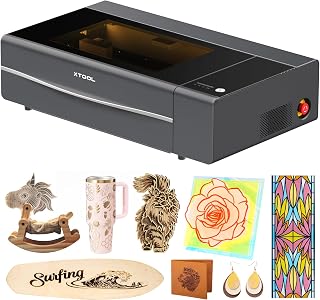 xTool P2S 55W CO2 Laser CutterCheck price on Amazon
 WECREAT Vision Pro 45W Laser Engraver and Cutter with RotaryCheck price on Amazon
 Twotrees TTS-20 Max 20000mW Laser Engraver and Cutter MachineCheck price on Amazon
 Longer New Upgrade RAY5 Laser Engraver CutterCheck price on Amazon
 ACMER S1 Laser Engraver MachineCheck price on Amazon
 ACMER S2 Laser EngraverCheck price on Amazon
LaserEngraveHQ earns a commission from purchases made through these links, at no extra cost to you. Read our affiliate disclosure.
Waterjet tables are industrial systems requiring high-pressure plumbing, heavy electrical service and abrasive disposal. Because consumer waterjet listings are not published in retail catalogs, this guide explains waterjet mechanics using workshop principles while citing verified specifications from published laser listings.
Step 1: Compare cutting mechanics and energy sources
A laser cutter focuses optical energy to melt, burn or vaporize material, using assist gas to clear the kerf. Laser sources emit distinct wavelengths: diode lasers emit blue light for wood and dark acrylic, CO2 lasers generate infrared light absorbed by clear acrylic and glass, and fiber lasers emit infrared light absorbed by metal. Focal spots are compact: the Creality Falcon Pro 10W listing states a 0.06mm spot from a 6-lens array, the ELIDOR Z6 6W listing states a 0.04 x 0.14 mm spot, and the WECREAT Vision Pro 45W lists a 0.08mm spot size. For gas-tube optics, read our guide on what is a CO2 laser engraver.
A waterjet relies on cold mechanical erosion. A high-pressure pump forces water through a jewel orifice into a supersonic stream, drawing abrasive garnet through a tungsten carbide nozzle to micro-erode the workpiece. Because erosion is mechanical, the material experiences zero heat, eliminating melted edges, scorch marks and structural distortion.
Step 2: Evaluate material compatibility and thickness limits
Material choice defines machine utility. A laser cutter excels on organics, compatible plastics and surface marking. Makers use a laser cutter wood workflow for signs, a laser cutter leather setup for hides, and a laser cutter glass process to etch drinkware. Cut thickness depends on optical wattage:
- The Artilume 7W listing states it cuts wood up to 4mm basswood with multiple passes.
- The WIZMAKER Wand 12W listing states wood cutting up to 8mm under suitable settings.
- The xTool P2S listing states its 55W CO2 tube cuts black walnut up to 18mm and acrylic up to 20mm in a single pass.
- The WECREAT Vision Pro 45W listing states single-pass cutting of 25mm wood (1 inch wood) and 20mm black acrylic.
When cutting plastics, verify composition first; see our recommended acrylic sheets for laser engraving. Never process PVC, vinyl, PVC-based faux leather, polycarbonate or ABS on a laser cutter. PVC and vinyl release corrosive chlorine gas, while polycarbonate and ABS generate dense soot and toxic fumes.
A waterjet cuts polycarbonate, rubber, composites, ceramics and laminates without fumes. While makers seeking a laser cutter that cuts metal need industrial fiber systems, an abrasive waterjet cuts thick slabs of steel, aluminum, brass and titanium cold. For thin metal marking, read our guide to the best laser engraver for metal.
Step 3: Assess cutting edge quality and heat effects
Cut edge finish differs sharply between thermal light and abrasive water. Laser cutting creates a heat-affected zone. On wood, this leaves darkened edges that require sanding for natural color. On acrylic, a CO2 laser vaporizes plastic while melting the sidewall, producing a glassy flame-polished edge straight from the bed. When industrial lasers cut sheet metal, localized thermal expansion can cause warpage or dross along the bottom edge.
A waterjet creates a cold cut with zero heat-affected zone, zero thermal stress and zero edge hardening, yielding a uniform matte finish. However, waterjets can produce kerf taper on thick stock or striations during rapid turns. Lasers provide a much narrower kerf, utilizing compact focal spots (such as 0.06mm on the Creality Falcon Pro 10W or 0.08mm on the WECREAT Vision Pro 45W), enabling delicate fretwork that wider waterjet streams cannot match.
Step 4: Calculate operating costs and consumable demands
Operating costs reveal clear differences in consumable demands. A desktop laser cutter requires minimal recurring consumables. Diode modules are sealed units, with models like the ATOMSTACK A20 Pro V2 listing a lifespan of up to 10,000 hours. CO2 tubes eventually require replacement after extended use, while optics require periodic cleaning. Electrical draw remains modest on standard circuits. For equipment budgeting, review our central laser engraver hub.
A waterjet incurs continuous consumable expenses every operating hour, consuming bulk abrasive garnet mineral, treated water, replacement jewel orifices, mixing nozzles, pump seals and hydraulic oil. Heavy pumps also draw substantial electrical power, making waterjet hourly costs substantially higher than laser operation.
Step 5: Review workspace footprint and utility requirements
Workspace limitations often decide machine choice. Laser cutters scale down to compact footprints for small workshops:
- The ATOMSTACK Swift listing states a frame measuring 297x319x128 mm with a 135×145 mm engraving area, weighing 5.7 pounds.
- The ELIDOR Z6 listing states a 300×300 mm (11.8″ x 11.8″) working area and a weight of 4.7 pounds (spec table lists 4.89 pounds).
- The enclosed xTool P2S listing states dimensions of 44.09 x 29.13 x 13.78 inches with a 26″ x 14″ bed, weighing 130.7 pounds.
These laser machines sit on workbenches, using standard electrical outlets and an exterior exhaust vent.
A waterjet demands industrial infrastructure: a steel catchment tank, an automated gantry, an abrasive hopper and a high-pressure pump. The water tank requires reinforced concrete flooring to support tons of weight, along with clean water plumbing, filtration and settling drainage.
Step 6: Account for workshop safety and waste handling
Safety protocols reflect thermal radiation versus hydraulic pressure. For lasers, fire prevention is essential; keep an extinguisher nearby and never leave jobs unattended. Stray reflections can cause eye damage; operators must wear eyewear matching the laser wavelength and optical density (such as the OD4+ standard listed with the ATOMSTACK Swift). Enclosed models vary in classification: the WECREAT Vision Pro 45W lists Class 1 certification with a metal enclosure and auto-stopping lid, while the enclosed xTool P2S lists a Class 4 rating requiring eye protection whenever the beam is accessible. For standalone setups, review our guide to the best safety glasses for laser engraving.
Smoke requires active ventilation via exhaust blowers (such as the 233.3 CFM exhaust fan listed on the xTool P2S) or multi-stage filters. Learn about filtration in our guide to the best fume extractor for laser cutting.
Waterjets produce no optical radiation or fire risk, but pose hydraulic hazards: a supersonic stream can cause severe tissue injury upon contact. Operators require splash shields, barrier guarding and hearing protection. Spent abrasive garnet also settles as heavy sludge that must be shoveled out, dried and hauled away.
Step 7: Choose the right machine for your production goals
To select the right machine, evaluate material palette, part thickness and production volume:
- Choose a laser cutter if: your work focuses on wood, acrylic, leather, paper, fabric or coated metals. Lasers provide fine detail, photo engraving, low consumable overhead and dry finished parts. For workshop options, read our guide on how to choose a laser engraver and our overview of the best CO2 laser cutter for home use.
- Choose a waterjet if: you cut thick structural steel, aluminum, stone, glass or composite laminates requiring zero heat-affected zones and cold edges. A waterjet suits facilities with industrial floor space, high electrical power, high water volume and dedicated waste handling.
- Consider hybrid alternatives: if you need mechanical cutting of thick wood, plastics and non-ferrous metals without plumbing, review our comparison of CNC router vs laser cutter systems.
Common mistakes to avoid
- Expecting a desktop craft laser to cut bare metal plates like an abrasive waterjet.
- Overlooking ongoing consumable costs of bulk abrasive garnet and pump seals on waterjets.
- Processing hazardous plastics like PVC, vinyl or ABS in a laser cutter, releasing corrosive chlorine gas or toxic fumes.
- Assuming an abrasive waterjet can engrave fine graphics, logos and photos with the speed and micro-kerf of a laser.
- Underestimating waterjet facility needs, including floor load limits, water supply and sludge disposal.
- Operating a Class 4 laser cutter without wavelength-matched protective glasses or adequate ventilation.
Laser cutter vs waterjet: the short version
- Process: Lasers cut using focused thermal light; waterjets cut using cold supersonic water and abrasive mineral erosion.
- Materials: Lasers excel on wood, acrylic, leather and surface marking; waterjets cut virtually any solid material including thick steel, stone and glass.
- Edge condition: Lasers create charred wood or flame-polished acrylic with a heat-affected zone; waterjets produce a satin matte finish with zero thermal alteration.
- Footprint: Laser cutters fit on desktop workbenches; waterjets require industrial shop floors with heavy concrete support.
- Consumables: Lasers require modest electrical power and optics cleaning; waterjets consume heavy volumes of garnet, water and high-pressure seals.
- Post-processing: Laser cut parts emerge dry; waterjet parts require drying, deburring and abrasive sludge washing.
FAQ: lasers and CNC
How thick can a laser cutter cut?
Cut thickness depends on optical power and material density. The Artilume 7W lists wood cutting up to 4mm basswood with multiple passes. A 12W diode like the WIZMAKER Wand lists wood cutting up to 8mm, while the WECREAT Vision Pro 45W lists cutting 25mm wood (1 inch wood) and 20mm black acrylic in one pass. The 55W xTool P2S CO2 laser cuts black walnut up to 18mm and acrylic up to 20mm in a single pass. Thicker materials, especially thick metal plate or stone, require an abrasive waterjet.
How to use a laser cutter for metal?
Desktop diode and CO2 lasers cannot cut bare metal plates. To mark metal, operators use anodized aluminum, coated sheet metal or chemical marking sprays that fuse under heat. Cutting bare sheet metal requires industrial fiber lasers or an abrasive waterjet that cuts steel, aluminum, brass or titanium cold, without heat-affected zones.
How much is a laser wood cutter?
Cost varies across machine classes, power outputs and enclosure designs. Retail prices fluctuate, so this guide publishes no dollar figures. Entry-level open diode engravers represent modest investments, mid-range enclosed diode units occupy an intermediate tier, and enclosed CO2 laser cutters occupy the top workshop tier. An industrial waterjet represents a substantially higher capital investment.
How to set up laser cutter ventilation and workspace safely?
Safe laser setup requires exhaust airflow, eye protection and fire monitoring. Connect your laser enclosure to an exterior duct or route exhaust through a multi-stage fume extractor. Wear safety glasses certified for your laser wavelength and optical density (such as OD4+). Keep a fire extinguisher within reach and never leave an operating machine unattended.
Why is my makeblock laser cutter not working?
When a desktop laser cutter fails to cut through material or stops firing, the issue is typically a dirty optical lens, improper focal distance, loose gantry belts or incorrect software settings. Smoke and residue condense on the protective lens, deflecting the beam. Clean the lens gently with isopropyl alcohol, verify focus height using the manufacturer gauge, and inspect belt tension across the gantry.
Can a waterjet cut materials that a laser cutter cannot?
Yes. Waterjets cut thick structural steel, aluminum, titanium, armor plate, granite, marble, thick glass and carbon fiber composites without burning or cracking. Waterjets also safely process hazardous plastics like PVC, vinyl and ABS because cold water erosion generates zero heat, preventing corrosive chlorine gas or toxic fumes.
Related: the laser engraver hub, our comparison of CNC router vs laser cutter, and our guide on diode vs CO2 laser. Also explore the what is a CO2 laser engraver overview and our recommendations for the best laser engraver for metal.



