Two Flute vs Four Flute End Mill: Which One Should You Buy?
A practical comparison of two flute vs four flute end mills: understand chip clearance, rigidity, surface finish and how to match flute count to your material.

On this page
Top picks at a glance
As an Amazon Associate I earn from qualifying purchases.
- 1
 CNC Router Bits 1/8" Shank CNC Bit End Mill 1/32" Cutting Dia9.4/10View on Amazon
- 2
 SPEED TIGER ISE Carbide End Mill 1/8”9.8/10View on Amazon
- 3
 Genmitsu 40pcs End Mills CNC Router Bits9.7/10View on Amazon
- 4
 1/8'' Shank Carbide End MillsView on Amazon
- 5
 1/8 End Mills 1/8 Inch ShankView on Amazon
- 6
 1/4 End Mills 1/4 Inch ShankView on Amazon
- 7
 HHIP 5801-0501 1/2 X 1/2 2 Flute HSS Single End Center CutView on Amazon
- 8
 1/4" Carbide Roughing End MillView on Amazon
- 9
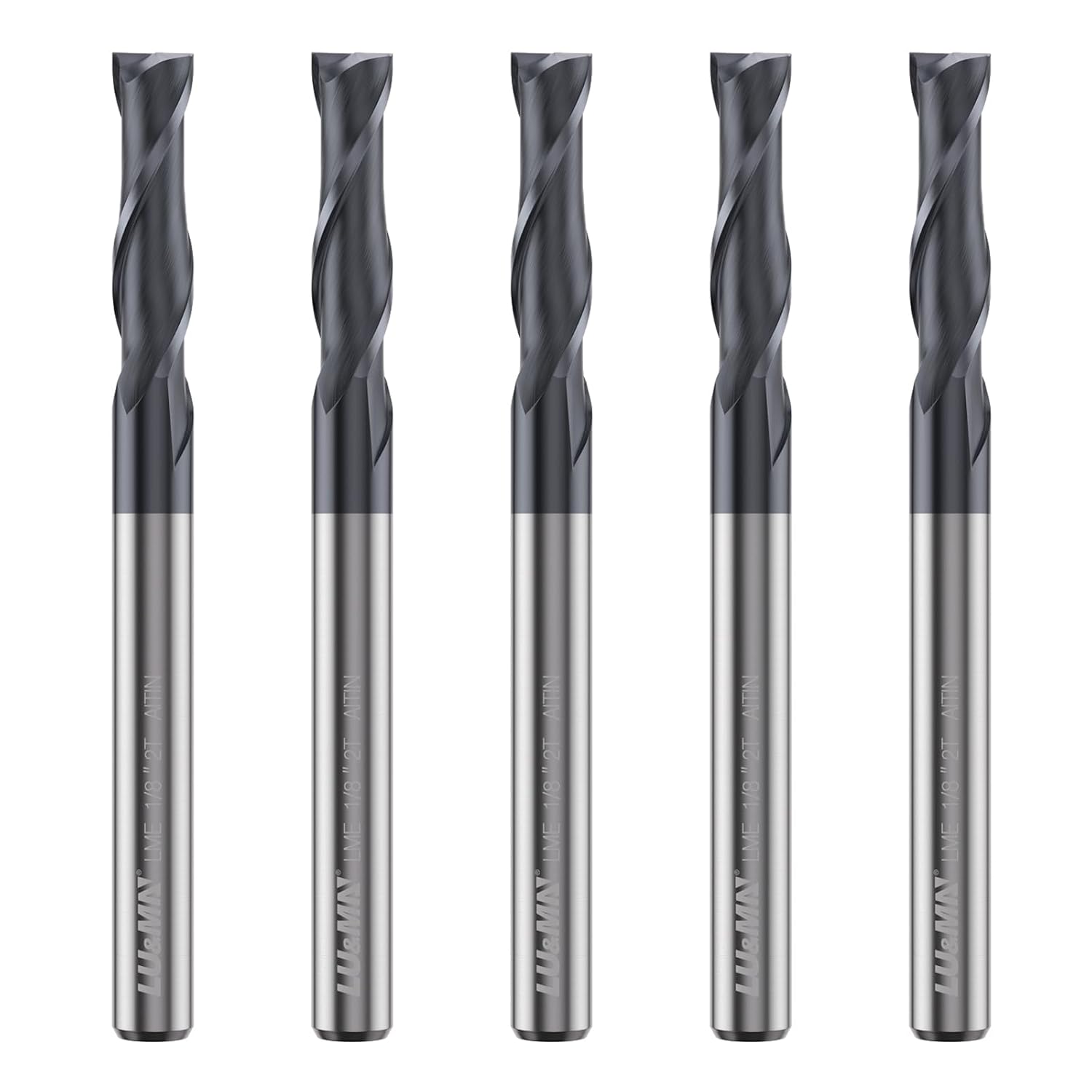 LU&MN Carbide Square End MillView on Amazon
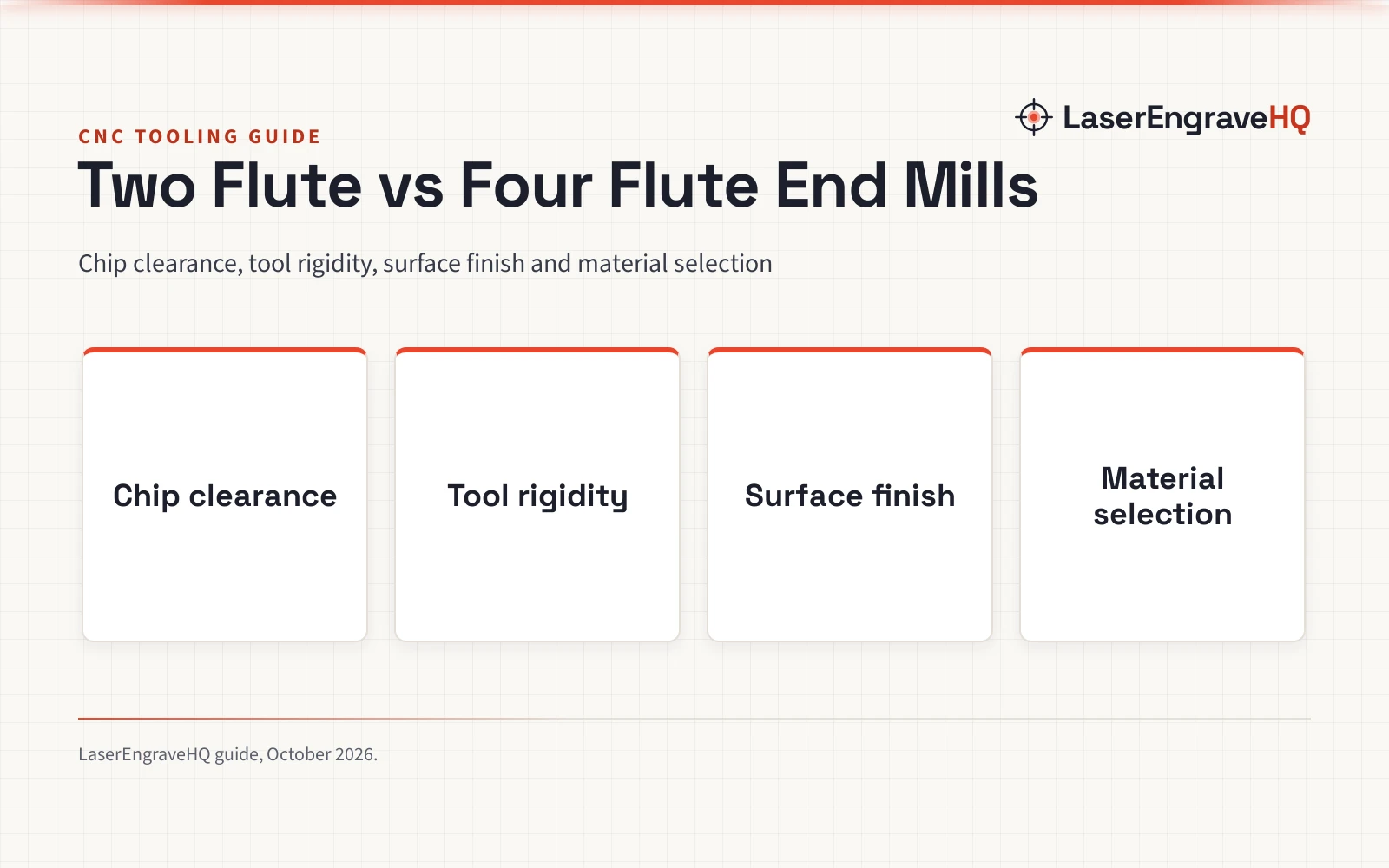
When choosing between a two flute vs four flute end mill for cutting parts or profiling signs, the decision hinges on chip clearance versus tool rigidity and surface finish. A two flute end mill provides deep flute valleys that clear chips quickly, making it ideal for slotting, deep pockets, and gummy materials like aluminum, plastics and wood, as well as steel roughing on lighter CNC routers. A four flute end mill features a thicker core and more cutting edges, making it the choice for profiling, finishing passes, and machining tough steels on rigid setups where deflection must be minimized. Below, we break down each factor step by step.
Other machines to compare
 1/8'' Shank Carbide End MillsCheck price on Amazon
 1/8 End Mills 1/8 Inch ShankCheck price on Amazon
 1/4 End Mills 1/4 Inch ShankCheck price on Amazon
 HHIP 5801-0501 1/2 X 1/2 2 Flute HSS Single End Center CutCheck price on Amazon
 1/4" Carbide Roughing End MillCheck price on Amazon
 LU&MN Carbide Square End MillCheck price on Amazon
LaserEngraveHQ earns a commission from purchases made through these links, at no extra cost to you. Read our affiliate disclosure.
End mill choice depends on machine rigidity and spindle speed as much as cutter geometry. A four flute bit requires adequate axis feed rates to prevent the cutting edges from rubbing, while a two flute bit provides the open flute volume needed to clear chips during heavy slotting.
Step 1: Compare chip evacuation and flute valley volume
The primary physical distinction between these cutters is flute valley volume, or gullet size. With two flutes instead of four, each flute valley provides significantly more space to carry chips away from the cut. This deep valley design prevents chips from packing tightly against the tool body during deep slotting or pocketing passes.
Efficient chip evacuation is essential in gummy materials like aluminum, brass and plastics. If chips cannot escape, they pack into the flutes and weld to the tool, causing immediate breakage. For example, HHIP specifies a 1/2 inch cutting diameter and 1/2 inch shank diameter on its 2 flute high-speed steel cutter with a 1 inch cutting length and 3 inch overall length. The HHIP listing notes that 2-flute geometry enhances chip clearance, making it effective for softer materials like aluminum, brass and plastics by reducing the risk of recutting chips. To see how flute volume controls heat in acrylic or soft alloys, read our comparison of a single flute vs two flute end mill.
Step 2: Evaluate tool rigidity and core diameter
While a two flute cutter excels at chip clearance, a four flute cutter wins on rigidity. The web, or central core, connects the flutes. Because four flute tools have shallower valleys, they feature a thicker core diameter that resists bending forces and lateral deflection under heavy cutting loads.
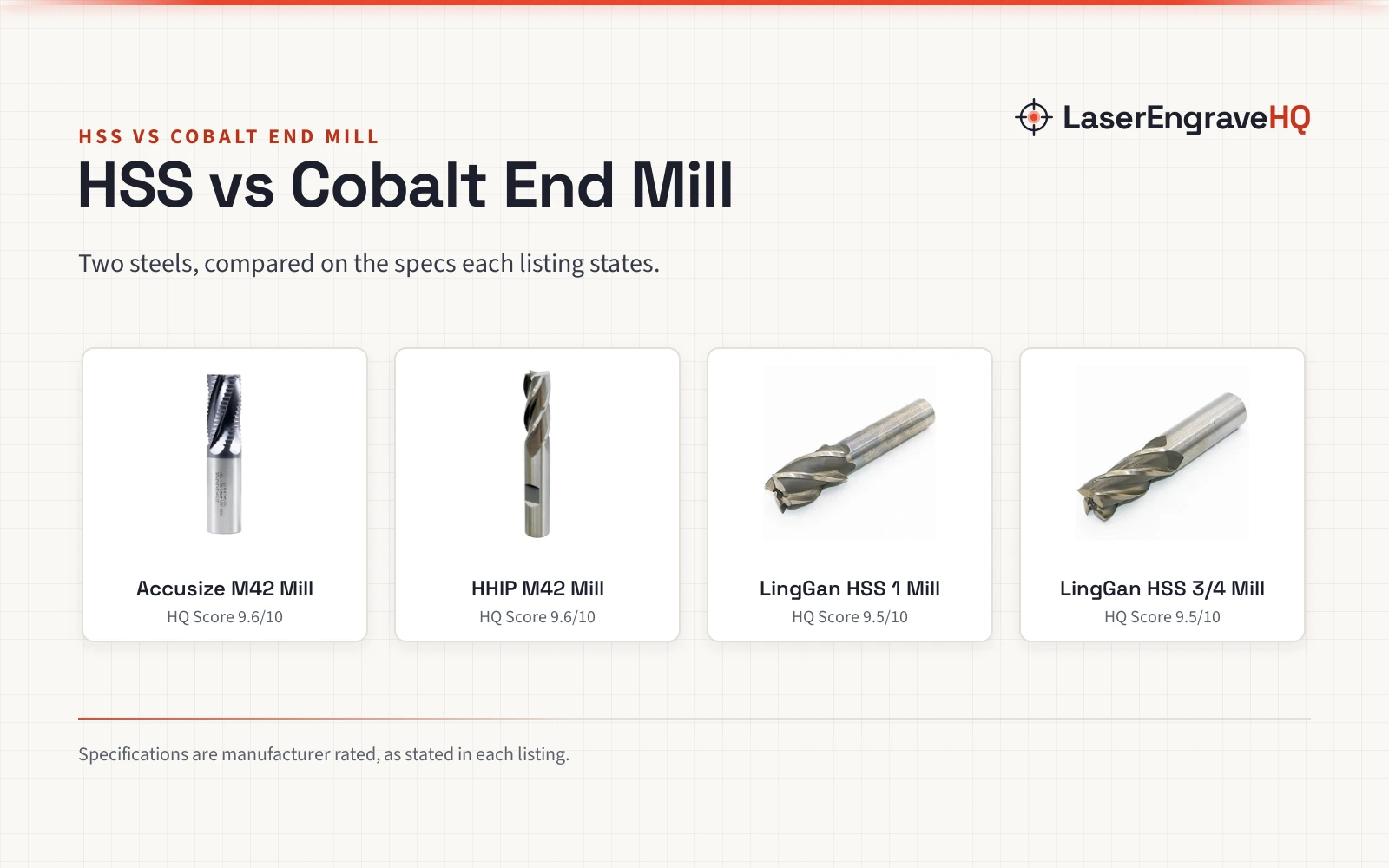
Rigidity is essential when profiling tough ferrous metals. Home of quality tools lists a 1/2 inch diameter 4 flute square end mill with AlTiN coating for steels up to HRC 45, noting that four flutes provide high rigidity for shallow slotting, profile milling and finish machining. Tool deflection causes chatter marks, dimensional error and premature corner wear. For aggressive stock removal, Accusize Industrial Tools specifies a 4 flute roughing configuration with a 1/2 inch cutting diameter, 1/2 inch shank diameter, 2 inch flute length and 4 inch overall length in M42 8% cobalt with TiAlN coating, stating that its coarse tooth geometry provides chip removal and a smooth surface finish in tough materials. For metallurgy details, explore carbide vs high speed steel end mills.
Step 3: Balance feed rate with surface finish
Surface finish is governed by chip load per tooth and feed rate per revolution. A four flute end mill has four cutting edges engaging the stock per rotation compared to two on a two flute cutter. At the same spindle speed and feed rate, each tooth on a four flute tool takes a smaller bite, leaving shallower feed marks on sidewalls for a visibly smoother finish.
If your machine is rigid enough to maintain proper chip load, a four flute cutter lets you increase table feed rate without raising spindle speed, shortening production cycle times. However, if your axis drives cannot feed fast enough to match a high spindle speed, four flutes will rub rather than shear, creating friction and dulling edges. To balance spindle speed with table feed, see our guide to CNC feeds and speeds for beginners.
Step 4: Match flute count to your workpiece material and operation
Matching tool geometry to your material and cut type prevents broken bits and poor finishes. While softer materials require fewer flutes to prevent chip packing, hard metals use both two and four flute cutters depending on whether you slot or profile. In wood and plastics, chips are voluminous. HOZLY lists a 2 flute spiral carbide compression cutter with a 25 mm cutting length and 1/8 inch shank diameter for clean wood routing without sticking, ejecting waste quickly to stop heat buildup.
In alloy steels, stainless steel and cast iron, four flutes excel at profiling, shallow slotting and finishing where rigidity resists lateral forces. For example, sisona specifies a 4 flute carbide roughing end mill with a 1/4 inch cutting diameter, 1/4 inch shank diameter and 3/4 inch cutting length with a 2-1/2 inch overall length for carbon steels, alloy steels and cast iron. Yet two flute cutters remain vital in steel for deep slotting or plunging where chip clearance is restricted. SpeTool lists a 2 flute solid carbide end mill with a 1/4 inch shank, 1/4 inch cutting diameter and 3/4 inch cutting length with TiAlN coating for HRC 55 steels and titanium alloys. For recommendations, see our guides to the best end mill for aluminum and the best end mill for steel.
Step 5: Factor in machine rigidity and spindle speed
Machine build and power dictate cutter success. Most desktop CNC routers use high-speed trim routers or compact spindles with modest torque, paired with lightweight aluminum frames. A two flute end mill is usually the best choice on desktop routers because it requires less spindle power, maintains healthy chip loads at achievable feed rates, and prevents motor stalls or lost steps from excessive lateral loads.
Rigid benchtop mills and machining centers possess the mass and low-speed torque needed to run four flute cutters efficiently. Because rigid frames resist deflection without vibration, four flute tools excel at profiling tough metals and executing fine finishing passes. If configuring a compact setup, review our guide to setting up a desktop CNC machine for beginners.
Common mistakes to avoid
- Running a four flute end mill for deep slotting in aluminum or plastics where chips quickly pack into narrow flutes and snap the cutter.
- Feeding a four flute bit too slowly at high spindle speeds, causing the cutting edges to rub and overheat rather than shear clean chips.
- Using a two flute end mill for final profiling passes when a four flute tool would provide superior sidewall surface finish.
- Ignoring machine rigidity and overloading a lightweight desktop router spindle with high flute counts in deep cuts.
- Failing to clear chips from deep pockets with continuous air blast or dust extraction, leading to chip recutting and premature tool wear.
Two flute vs four flute end mill: the short version
- Choose two flutes for full-width slotting, deep pockets and gummy materials where deep valleys prevent chip packing.
- Choose four flutes for side milling, profiling and finishing passes where a thicker core resists deflection.
- Pick two flutes on desktop CNC routers running at high spindle speeds to avoid tool rubbing and cutter overload.
- Pick four flutes on rigid milling setups to improve sidewall surface finish or increase table feed rates during profiling.
- Clear chips continuously using air blast or dust extraction to avoid recutting.
In short: reach for two flutes when chip evacuation and low cutting forces are your primary constraints, and switch to four flutes when tool rigidity and surface finish take priority.
FAQ: lasers and CNC
Can I cut aluminum with a four flute end mill?
You can cut aluminum with four flutes on shallow finishing passes with coolant or high-pressure air, but two flutes are far better for slotting and roughing. Aluminum produces gummy chips that quickly pack into narrow flutes, causing friction and breakage. As HHIP notes, two flute geometry is specifically designed to enhance chip clearance in aluminum and brass.
Which end mill gives a smoother surface finish?
A four flute end mill delivers a smoother finish on sidewalls and profiling cuts. With more cutting edges engaging per revolution, it produces smaller scallops at a given feed rate. The thicker core also reduces deflection, preventing chatter marks and holding tighter tolerances.
Why do desktop CNC routers usually use two flute bits?
Desktop CNC routers feature high-speed spindles with modest torque on lightweight aluminum frames. A two flute bit requires less cutting force and clears chips effectively at high rotational speeds, preventing spindle bogging and avoiding lost steps during heavy slotting passes.
Is a four flute end mill stronger than a two flute end mill?
Yes. A four flute end mill has a thicker web, or core, than a two flute bit of identical diameter. This larger cross-section offers far greater resistance to bending forces and deflection, keeping the cutter rigid when profiling tough steels that would cause two flutes to chatter.
Can I plunge directly into material with a four flute end mill?
Only if it is center cutting. Center-cutting end mills have edges meeting in the center, allowing straight plunge entry like a drill. Non-center-cutting bits have a hollow center and require ramp or helical entry. Two flute center-cutting bits remain standard for plunging because open flutes clear vertical chips far more effectively.
When should I choose carbide over high-speed steel for these end mills?
Solid carbide provides higher hardness and heat resistance than high-speed steel, enabling faster cutting speeds and longer edge life in abrasive materials and hard steels. However, carbide is brittle and chips during chatter. High-speed steel offers greater toughness and flex, making it forgiving on less rigid setups.
Related: the CNC tooling guide, best end mill for aluminum and best end mill for steel. Also see our upcut vs downcut end mill guide. Also see our best CNC bit set for beginners.