Upcut vs Downcut End Mill: When to Use Each Spiral Bit
A practical guide to choosing between upcut and downcut end mills: understand chip evacuation, surface tear-out, hold-down forces, and when to pick each spiral bit for CNC work.

On this page
Top picks at a glance
As an Amazon Associate I earn from qualifying purchases.
- 1
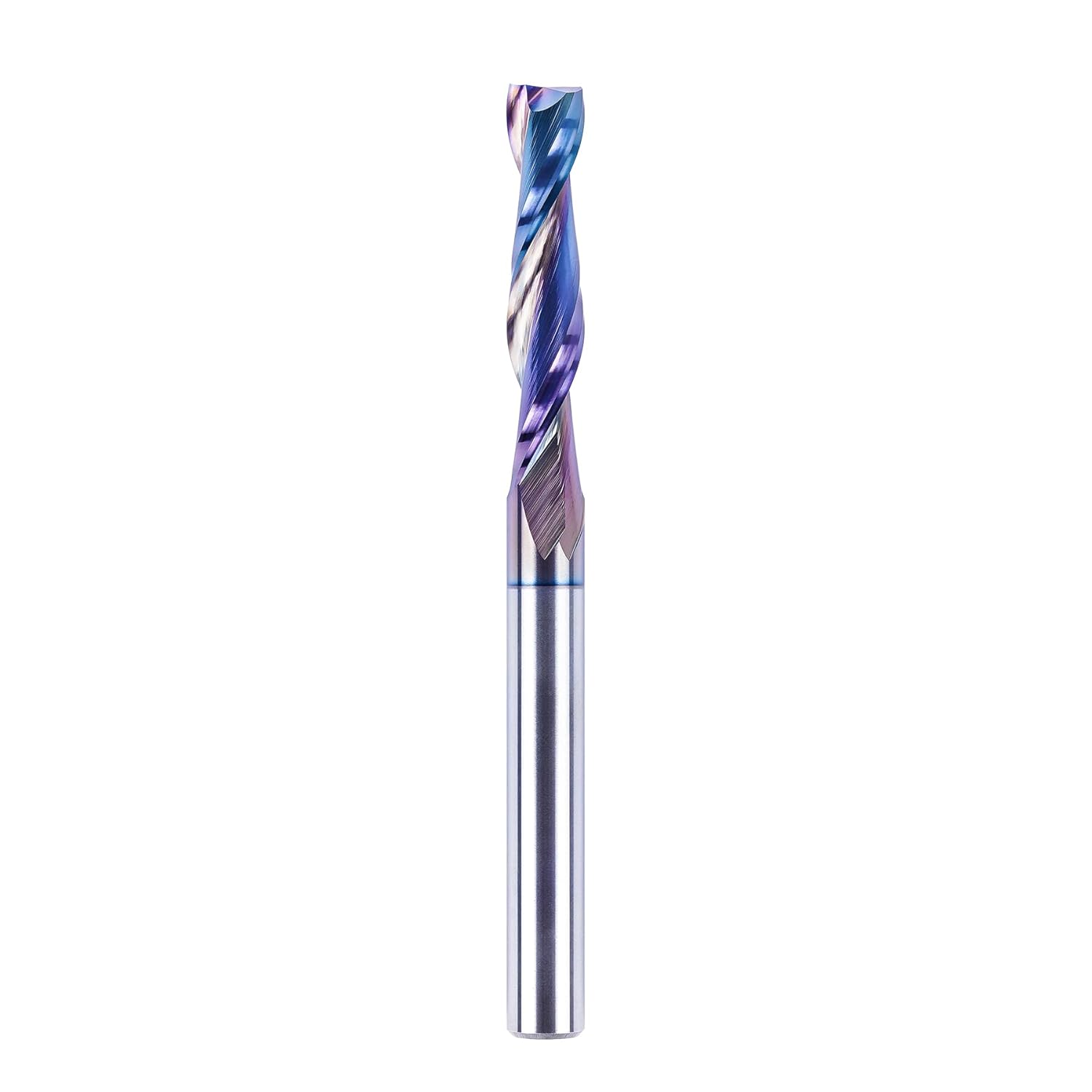 SpeTool Upcut Spiral Router Bits 1/4 Inch Shank with Coating9.7/10View on Amazon
- 2
 SpeTool 5PCS Spiral Downcut Router Bits 1/4" Shank 1" Cutting9.7/10View on Amazon
- 3
 1/8 Router Bits 1/4 Shank9.7/10View on Amazon
- 4
 SpeTool Carbide Upcut Inlay Router Bit 1/32 Inch CuttingView on Amazon
- 5
 EANOSIC Extra Long 4 Inch Upcut Spiral Router Bit 1/4 InchView on Amazon
- 6
 EANOSIC Upcut Spiral Router Bit 1/4 inch ShankView on Amazon
- 7
 EANOSIC Upcut Spiral Router Bit 3-Flute with 1/2” ShankView on Amazon
- 8
 EANOSIC Upcut Spiral Router Bits 1/4 inch ShankView on Amazon
- 9
 SpeTool O Flute UpCut 1/2 inch Carbide End Mill Single FluteView on Amazon
The choice of an upcut vs downcut end mill comes down to chip direction and edge quality: an upcut bit pulls chips upward to clear waste and prevent heat buildup, while a downcut bit pushes chips downward to keep the top surface crisp and free of tear-out. Choosing between them depends on whether you are cutting deep pockets, trimming sheet goods, or managing hold-down forces on your CNC bed. The sections below explain how spiral flute geometry works step by step, when to use each cutter type, and how to avoid mistakes on wood projects.
Other machines to compare
 SpeTool Carbide Upcut Inlay Router Bit 1/32 Inch CuttingCheck price on Amazon
 EANOSIC Extra Long 4 Inch Upcut Spiral Router Bit 1/4 InchCheck price on Amazon
 EANOSIC Upcut Spiral Router Bit 1/4 inch ShankCheck price on Amazon
 EANOSIC Upcut Spiral Router Bit 3-Flute with 1/2” ShankCheck price on Amazon
 EANOSIC Upcut Spiral Router Bits 1/4 inch ShankCheck price on Amazon
 SpeTool O Flute UpCut 1/2 inch Carbide End Mill Single FluteCheck price on Amazon
LaserEngraveHQ earns a commission from purchases made through these links, at no extra cost to you. Read our affiliate disclosure.
Spiral end mills exert strong vertical forces. An upcut bit pulls stock toward the spindle, while a downcut bit presses it into your spoilboard. Check your hold-down setup before cutting.
Step 1: Understand how spiral flute geometry controls chip direction
A spiral router bit operates like an Archimedes screw. On an upcut bit, the flutes feature a right-hand upward spiral that draws waste chips upward out of the cut channel as the spindle rotates clockwise. This rapid chip evacuation keeps the path clear, dissipates heat, and prevents recutting chips.
A downcut bit reverses this twist with a downward spiral. As it spins, the flutes push chips downward into the cut channel, shearing surface fibers cleanly against underlying material to leave a crisp top surface without splintering.
For upcut toolpaths, YOKISHUN lists a spiral bit with a 1/4 inch shank, a 1/4 inch cutting diameter, a 2 inch cutting length, and a 4 inch overall length. For downcut routing, SpeTool lists a bit with a 1/4 inch shank, a 1/4 inch cutting diameter, a 1 inch cutting length, and a 2-1/2 inch overall length with 2 flutes. For more on bit geometry, read our guide to CNC bits explained for beginners.
Step 2: Compare top surface and bottom surface edge quality
The main reason woodworkers switch between upcut and downcut end mills is edge tear-out. An upcut bit pulls upward as it exits the top surface, which can cause fuzzing and splintering along the top face of veneers and plywood. However, the bottom face remains clean because the cutting edge shears inward against the stock. Upcut bits suit parts where top edges will be machined away later or where only the bottom face is visible.
A downcut bit protects the top face by pressing fibers downward as it cuts, leaving clean edges on hardwoods, melamine, and plywood. On through cuts, downward forces push unsupported bottom fibers into the spoilboard, which can cause tear-out along the bottom exit.
For fine work, SHARPRO lists a downcut bit with a 1/4 inch shank, a 1/8 inch cutting diameter, a 1 inch cutting length, a 3 inch overall length, 2 flutes, and a stated 140-degree included end cutting angle. For compact collets, HQMaster lists downcut spiral bits with a 1/8 inch shank (3.175mm), a 1/8 inch cutting diameter (3.175mm), a 17mm cutting length, and a 45mm overall length with 2 flutes in a 5 pack. Compare cutters in our roundup of the best CNC router bits and guide to CNC router bits for cutting wood.
Step 3: Manage chip evacuation and heat buildup
Chip evacuation affects bit temperature and tool life. Cutting chips carry away frictional heat. When chips pack into the cut channel, the cutter rubs against waste, creating heat that dulls carbide edges and scorches wood.
Upcut end mills evacuate chips naturally, making them the preferred choice for deep pocketing, slotting, and heavy material removal. Downcut bits pack chips into the cut. In deep slots or blind pockets, trapped waste raises heat and tool deflection. To keep downcut bits cool, adjust feed rates and pass depths as outlined in our guide to CNC feeds and speeds for beginners.
Makers also use surface coatings to resist thermal wear. SpeTool claims its coated downcut spiral bit provides up to 2.5 times the life of uncoated carbide on a bit with a 1/4 inch shank, a 1/4 inch cutting diameter, and a 1 inch cutting length. For an extra long compression bit with a 1/4 inch shank, a 2 inch cutting length, a 4 inch overall length, and 2 flutes, EANOSIC claims its nano coating offers up to 2.5X longer life compared to uncoated bits.
Step 4: Balance vertical cutting forces and workholding
Spiral flutes create vertical cutting forces that affect how securely stock remains anchored to the CNC table.
An upcut end mill pulls the workpiece upward toward the collet. If clamping is weak, this force can lift thin stock, causing chatter or loose parts. When running upcut bits, anchor stock firmly with mechanical clamps or vacuum tables. Find reliable options in our guide to the best CNC hold-down clamps.
A downcut end mill pushes the workpiece downward against the table, helping keep thin sheets and small craft parts flat with lighter clamping. To prevent marking your base table on through cuts, ensure your spoilboard is properly prepared as detailed in our best CNC spoilboard guide.
Step 5: Use compression bits for clean top and bottom edges
When cutting through double-sided sheet goods like veneered plywood or laminated panels, an upcut bit tends to splinter the top face, while a downcut bit can splinter the bottom face on through cuts.
A compression end mill combines both geometries: an upcut spiral at the tip pulls upward, while a downcut spiral above pushes downward. At full depth, both edges shear fibers toward the center of the board, leaving clean top and bottom edges simultaneously.
SpeTool lists a compression bit with a 1/4 inch shank, a 1/4 inch cutting diameter, a 1-1/4 inch cutting length, and a 3 inch overall length with 2 flutes, as well as a model with a 1/4 inch shank, a 1/4 inch cutting diameter, a 1 inch cutting length, and a 2-1/2 inch overall length with 1 flute noted in its spec table. For routers with a 1/2 inch collet, EANOSIC lists a compression bit with a 1/2 inch shank, a 1/2 inch cutting diameter, a 1-1/2 inch cutting length, and a 4 inch overall length with 2 flutes. In multi-packs, ZahyoX lists a compression bit with a 1/4 inch shank, a 1/4 inch cutting diameter, a 1 inch cutting length, and a 2-1/2 inch overall length with 2 flutes in a 5 pack. See our review of CNC router bit types and starter picks in the best CNC bit set for beginners.
Common mistakes to avoid
- Using an upcut bit on delicate veneers without leaving allowance for a finishing pass.
- Plunging a downcut bit deep into narrow slots where packed chips cause burning.
- Using light hold-down tape for aggressive upcut roughing passes.
- Running a compression bit at a shallow pass depth where the downcut section never engages the top surface.
- Failing to clear chips from blind downcut mortises between passes.
Upcut vs downcut end mill: the short version
- Pick an upcut bit for roughing, slotting, and deep pockets where chips must clear quickly.
- Pick a downcut bit for shallow grooves, inlays, and sheet goods where the top face must stay clean.
- Pick a compression bit for through cuts in plywood where both faces must stay clean.
- Use rigid clamps when upcut spirals pull stock upward toward the collet.
- Avoid deep single-pass slotting when downcut spirals push chips toward the spoilboard.
Match flute direction to your material and toolpath to balance chip evacuation against surface quality.
FAQ: lasers and CNC
Can I use an upcut end mill for cutting plywood?
Yes, if top surface splintering is acceptable, such as parts with edges routed later. For finished furniture where the top veneer must stay crisp, a downcut bit or compression spiral delivers cleaner results.
Why does my downcut bit leave burned edges?
Downcut flutes push chips downward into the cut. In deep slots, packed chips trap heat and scorch the wood. To reduce burning, decrease pass depth, increase feed rate, or use an upcut bit for roughing.
What is the difference between an upcut bit and a downcut bit?
The difference is flute spiral direction. An upcut bit spirals upward to pull chips out and dissipate heat. A downcut bit spirals downward to shear fibers cleanly and preserve top edges.
When should I use a compression bit instead of a downcut bit?
Use a compression bit for through cuts in double-sided sheet goods like veneered plywood or melamine. Its combined flutes protect both faces, whereas a downcut bit can tear bottom fibers on exit.
Do downcut bits push the workpiece into the spoilboard?
Yes. The downward spiral presses stock against the table, helping stabilize thin panels, veneers, and small parts with lighter clamping.
Can I plunge directly into wood with a downcut end mill?
Direct vertical plunging is difficult because downward flutes pack chips under the tip. Use ramp or helical entry toolpaths in your CAM software so chips escape as the bit enters.
Related: the CNC tooling hub, best CNC router bits and CNC bits explained for beginners. Also see our CNC router bits for cutting wood. Also see our CNC feeds and speeds for beginners.