1/4 vs 1/2 Inch End Mill: Which One Should You Buy?
A guide to choosing between a 1/4 vs 1/2 inch end mill, covering diameter, shank fit, flute count, coating and the materials each listing states.

On this page
Top picks at a glance
As an Amazon Associate I earn from qualifying purchases.
- 1
 5/16 Inch Shank Carbide Square End Mill9.7/10View on Amazon
- 2
 SpeTool 1/8 Inch Spiral Router Bits Up Down Compression Bit9.7/10View on Amazon
- 3
 SpeTool Spiral Router Bits Down Cut 1/4 inch Cutting Diameter9.7/10View on Amazon
- 4
 LU&MN Carbide Square End MillsView on Amazon
- 5
 5PCS End Mill Set 1/4" Cutting Dia 1/4" Shank 4 Flute HSS EndView on Amazon
- 6
 XYunEnZ 1/2" 4-Flute Ball Nose End MillView on Amazon
- 7
 ACCUCUT I4KES 1/4” Carbide Square End MillView on Amazon
- 8
 JIANXING 1/4" Extra Long Carbide Square End MillView on Amazon
- 9
 SPEED TIGER EISE 1/4" Carbide Square End MillView on Amazon
Choosing a 1/4 vs 1/2 inch end mill comes down to the cut in front of you: the smaller diameter fits tighter detail work, while the larger diameter fits the 3D carving work its listing describes, with a longer length of cut stated. The listings in this guide show each diameter in 4-flute form, in carbide and high-speed steel, so the choice turns on material, machine fit and the shape of the cut rather than diameter alone.
Other machines to compare
 LU&MN Carbide Square End MillsCheck price on Amazon
 5PCS End Mill Set 1/4" Cutting Dia 1/4" Shank 4 Flute HSS EndCheck price on Amazon
 XYunEnZ 1/2" 4-Flute Ball Nose End MillCheck price on Amazon
 ACCUCUT I4KES 1/4” Carbide Square End MillCheck price on Amazon
 JIANXING 1/4" Extra Long Carbide Square End MillCheck price on Amazon
 SPEED TIGER EISE 1/4" Carbide Square End MillCheck price on Amazon
LaserEngraveHQ earns a commission from purchases made through these links, at no extra cost to you. Read our affiliate disclosure.
1/4 vs 1/2 inch end mill: the core difference
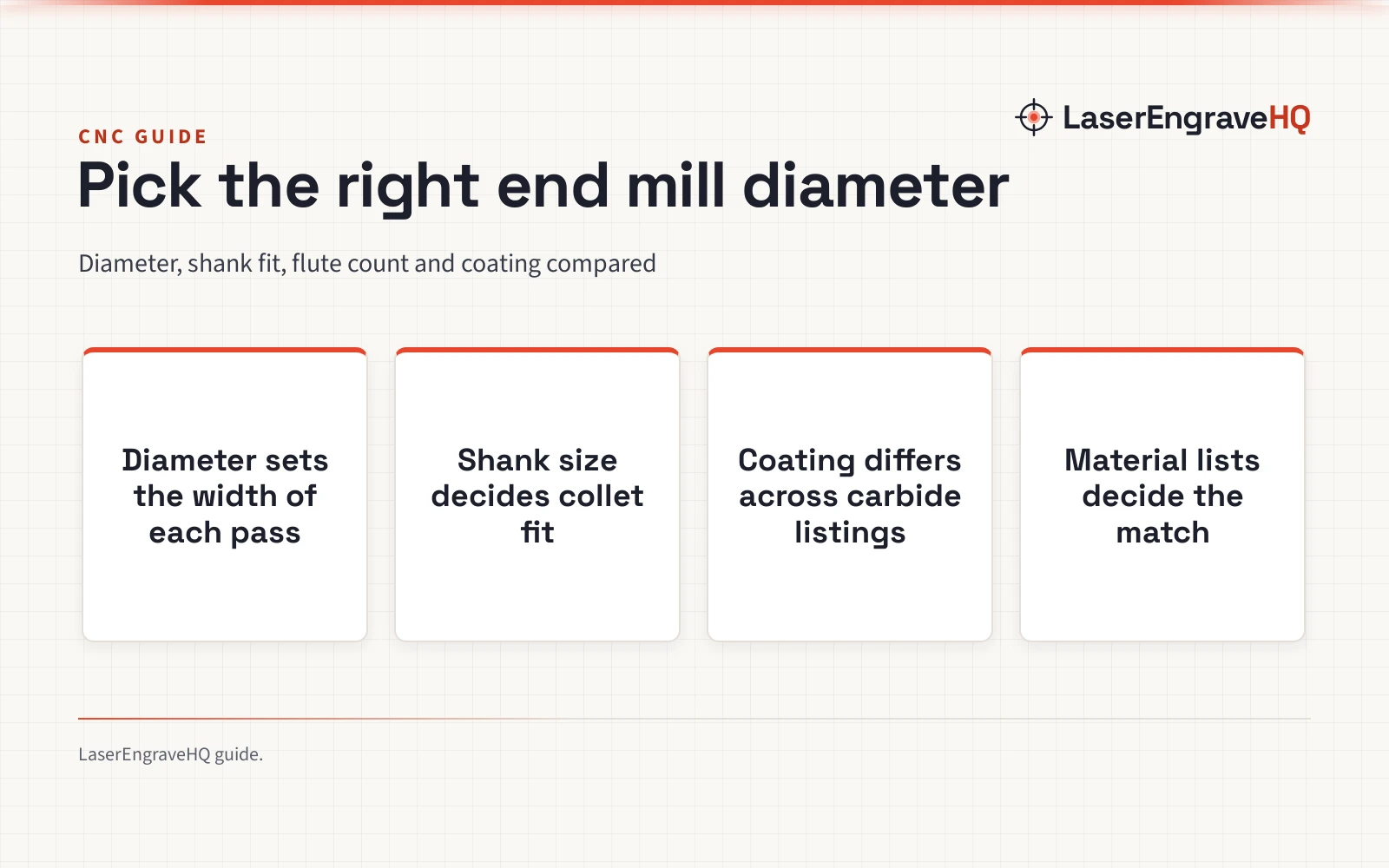
Diameter sets the width of each pass, and the listings show how the other dimensions move with it. The LU&MN 1/4 inch listing states a 1/4 inch cutting diameter, a 1/4 inch shank, a 3/4 inch cutting length and a 2-1/2 inch total length. The XYunEnZ 1/2 inch listing states a 1/2 inch cutting diameter, a 1/2 inch shank, a 1-1/4 inch length of cut and a 3 inch overall length.
Shank size decides collet fit, so diameter choice starts with the collet the machine already holds. The LU&MN listing says to be sure the collet chosen fits the device, and its 1/4 inch shank matches the 1/4 inch cutting diameter it states. The XYunEnZ listing pairs a 1/2 inch shank with its 1/2 inch cutting diameter, so a machine set up for 1/4 inch shanks needs a collet change before it can hold that bit.
Flute count stays constant across the listings in this guide: each listing states 4 flutes. The XYunEnZ listing states that a 4-flute design increases core thickness for rigidity and provides improved surface finish compared with fewer flutes. The LU&MN listing adds a broad chip groove that smooths chips without accumulating them, and a large core diameter that increases rigidity and resistance to impact.
The gear in this guide
The listings below cover the diameters in this guide, with square-ended and ball-nose shapes across carbide and high-speed steel.
LU&MN carbide square end mill set. The LU&MN listing describes a set of 5 pieces in 1/4 inch size, with a 1/4 inch cutting diameter, a 1/4 inch shank, a 3/4 inch cutting length and a 2-1/2 inch total length. The listing states solid carbide coated with TiAlN, with 4 square-ended flutes. The materials it lists are steels, carbon steels, alloy steels, pre-hardened steels, hardened steels, stainless steel materials, copper and copper alloys, and it states that materials with HRC less than 50 would be suitable. The listing also states compatibility with the majority of desktop CNC machines and other industrial CNC machines, provided the collet fits the device.
LingGan high-speed steel end mill set. The LingGan listing describes a set of 5 pieces with a 1/4 inch cutting diameter, a 1/4 inch shank and 4 flutes, forged from high-speed steel. The materials it lists are wood, aluminum, steel, titanium, foam and plastic. The listing states surface hardness up to HRC62-66. The listing title uses the words Drill Bit, while the bullets describe a milling cutter, so read the listing as an end mill set rather than a drill.
XYunEnZ ball nose end mill. The XYunEnZ listing describes 1 piece with a 1/2 inch cutting diameter, a 1/2 inch shank, a 1-1/4 inch length of cut and a 3 inch overall length. The listing states AlTiN coated carbide with a 4-flute ball nose shape, for 3D carving engraving, and it lists hardened steel, alloy steel and aluminum. The listing states that the AlTiN coating offers resistance to high-temperature oxidation and limits material adherence to the flute surface during use. The spec table in the same listing shows different product dimensions from the title and bullets, so the title and bullet figures above are the figures to plan around.
ACCUCUT carbide square end mill. The ACCUCUT listing describes 1 piece with a 1/4 inch diameter, a 5/8 inch cutting length, a 2 inch overall length, a 1/4 inch shank and a 45 degree helix. The listing states European origin ultra fine grain carbide with an AlTiCrN coating, and 4 flutes. The materials it lists are copper, copper alloys, cast iron, steels, carbon steels, alloy steels, pre-hardened steels, hardened steels and stainless steel materials, and it states that materials with HRC less than 50 are the intended range. The listing states that the 45 degree helix design can perform smooth surface finish, with better chip removal control than lower helix designs, and that the 4-flute shape suits planar, step, groove and forming surface work.
Match the diameter to the material and the machine
Start from the material list, not the diameter. The LingGan listing is the only listing in this guide that spans wood, foam and plastic alongside metals. The carbide listings center on steels. The LU&MN and ACCUCUT listings add copper alloys, and the ACCUCUT listing adds cast iron.
Then check machine fit. The LU&MN listing states compatibility with the majority of desktop CNC machines and other industrial CNC machines, with the collet fit caveat above. The other listings in this guide do not state machine compatibility, so check the shank figure against the collet on hand before ordering.
Clear chips from the cut area as work goes on, keep dust extraction running where the machine provides it, and stay near the machine while a job runs. Milling produces chips and dust, and a clear work area keeps the cut visible and the machine free of buildup.
Common mistakes to avoid
- Choosing a diameter before checking the shank against the collet on hand.
- Planning around the XYunEnZ spec table dimensions instead of the title and bullet figures.
- Reading the LingGan title as a drill listing instead of an end mill set.
- Expecting the ball nose shape to behave like a square-ended bit on planar, step and groove work.
- Skipping the material list and assuming every listing covers the same range.
1/4 vs 1/2 inch end mill: the short version
- Pick the 1/4 inch diameter when the cut needs a smaller width and the collet on hand fits a 1/4 inch shank.
- Pick the 1/2 inch diameter when the work matches the 3D carving description in the XYunEnZ listing and the collet fits a 1/2 inch shank.
- Match the coating and material to the listing: TiAlN, AlTiN and AlTiCrN coatings each appear on a different carbide listing, while the LingGan listing is high-speed steel.
- Check the title and bullets over the spec table when figures disagree.
- Clear chips, manage dust and stay near the machine while a job runs.
FAQ: lasers and CNC
Which diameter should a desktop CNC owner start with?
The LU&MN listing states compatibility with the majority of desktop CNC machines, and it uses a 1/4 inch shank, so that diameter is the straightforward starting point for a machine already set up for 1/4 inch shanks. Check the collet fit before ordering, since the listing itself gives that caveat.
Can a 1/2 inch end mill cut the same materials as a 1/4 inch one?
Only where the listings overlap. The XYunEnZ 1/2 inch listing names hardened steel, alloy steel and aluminum. The 1/4 inch carbide listings name steels and copper alloys, and the LingGan 1/4 inch listing names wood, aluminum, steel, titanium, foam and plastic. Compare the material list on each listing rather than assuming one diameter covers every range.
What does a 4-flute shape change?
The XYunEnZ listing states that a 4-flute design increases core thickness for rigidity and provides improved surface finish compared with fewer flutes. The LU&MN listing adds a broad chip groove and a large core diameter for rigidity. Each listing in this guide states 4 flutes, so flute count does not separate these listings from each other.
Does coating matter between these listings?
Each carbide listing states a different coating. The LU&MN listing states TiAlN on solid carbide. The XYunEnZ listing states AlTiN, with resistance to high-temperature oxidation stated. The ACCUCUT listing states AlTiCrN, with chromium added to the AlTiN structure for toughness and thermal resilience. The LingGan listing states high-speed steel, and no coating is stated for it.
Why do the XYunEnZ dimensions appear twice with different figures?
The title and bullets state a 1/2 inch cutting diameter, a 1/2 inch shank, a 1-1/4 inch length of cut and a 3 inch overall length, while the spec table shows different product dimensions. The listing contradicts itself, so plan around the title and bullet figures.
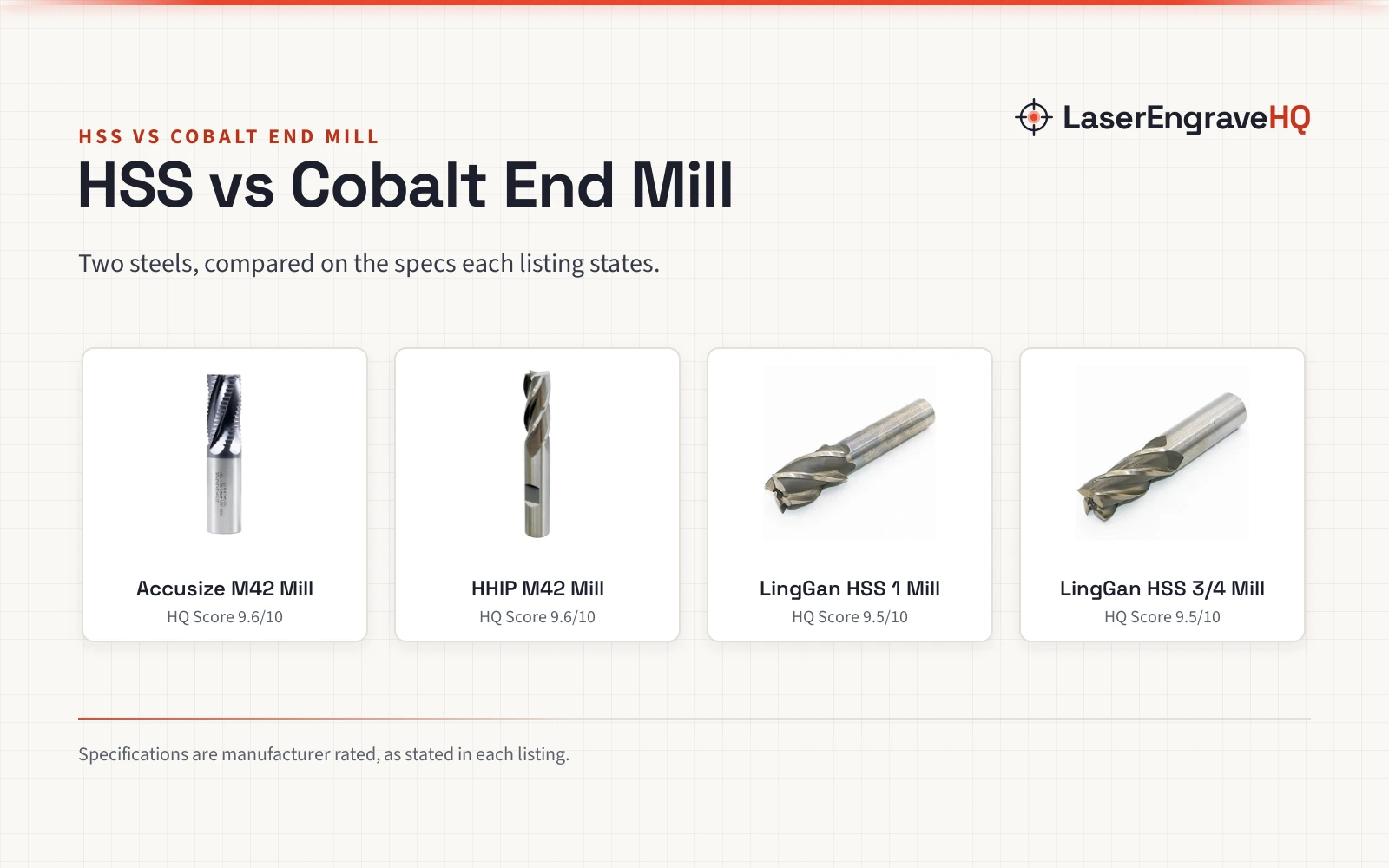
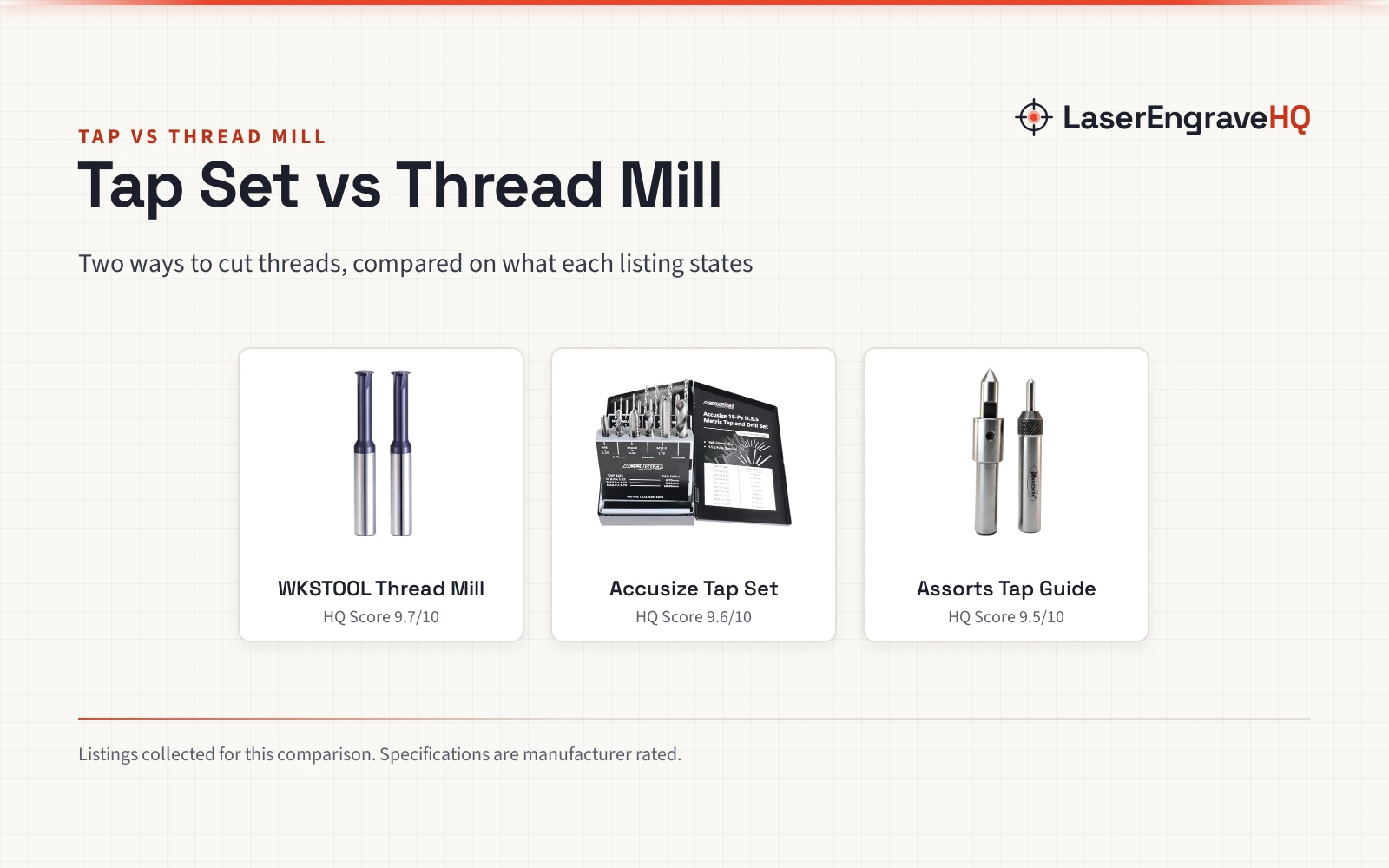
Related: roughing vs finishing end mill, carbide insert vs solid carbide end mill and tap vs thread mill. Also see the CNC tooling category.