Tough Resin vs Standard Resin: Which One Should You Buy?
Tough resin flexes under handling while standard resin stays rigid: compare the two resin types and the 4 tough resins in this guide to pick the right bottle for your print.

On this page
Top picks at a glance
As an Amazon Associate I earn from qualifying purchases.
- 1
 Polymaker PolyLite PLA Pro Filament 1.75mm 1KG Black9.6/10View on Amazon
- 2
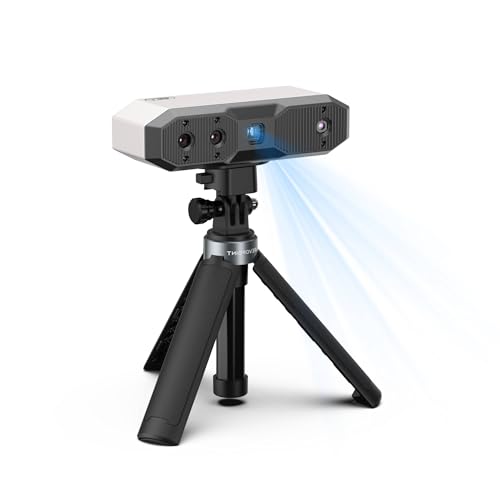 Revopoint MINI 2 3D Scanner9.6/10View on Amazon
- 3
 Gizmo Dorks 3mm9.6/10View on Amazon
- 4
 Siraya Tech Fast ABS-Like Tough 3D Printer ResinView on Amazon
- 5
 ANYCUBIC Tough Resin 2.0View on Amazon
- 6
 ELEGOO Tough 3D Printer Resin Grey 2000gView on Amazon
- 7
 ELEGOO Tough 3D Printer Resin Black 2000gView on Amazon
- 8
 ELEGOO Tough 3D Printer Resin Grey 1000gView on Amazon
- 9
 ELEGOO Tough 3D Printer Resin Black 1000gView on Amazon
Tough resin vs standard resin comes down to what the finished print has to survive. A part that gets handled, dropped, flexed or fitted into place needs the give and impact resistance that tough resin offers, while a display piece that sits on a shelf needs the crisp detail and easy printing that standard resin is known for. This guide compares the resin types side by side and walks through the tough resins we feature, so you can match the bottle to the job before you pour.
Other machines to compare
 Siraya Tech Fast ABS-Like Tough 3D Printer ResinCheck price on Amazon
 ANYCUBIC Tough Resin 2.0Check price on Amazon
 ELEGOO Tough 3D Printer Resin Grey 2000gCheck price on Amazon
 ELEGOO Tough 3D Printer Resin Black 2000gCheck price on Amazon
 ELEGOO Tough 3D Printer Resin Grey 1000gCheck price on Amazon
 ELEGOO Tough 3D Printer Resin Black 1000gCheck price on Amazon
LaserEngraveHQ earns a commission from purchases made through these links, at no extra cost to you. Read our affiliate disclosure.
Tough Resin vs Standard Resin: What Changes in the Print
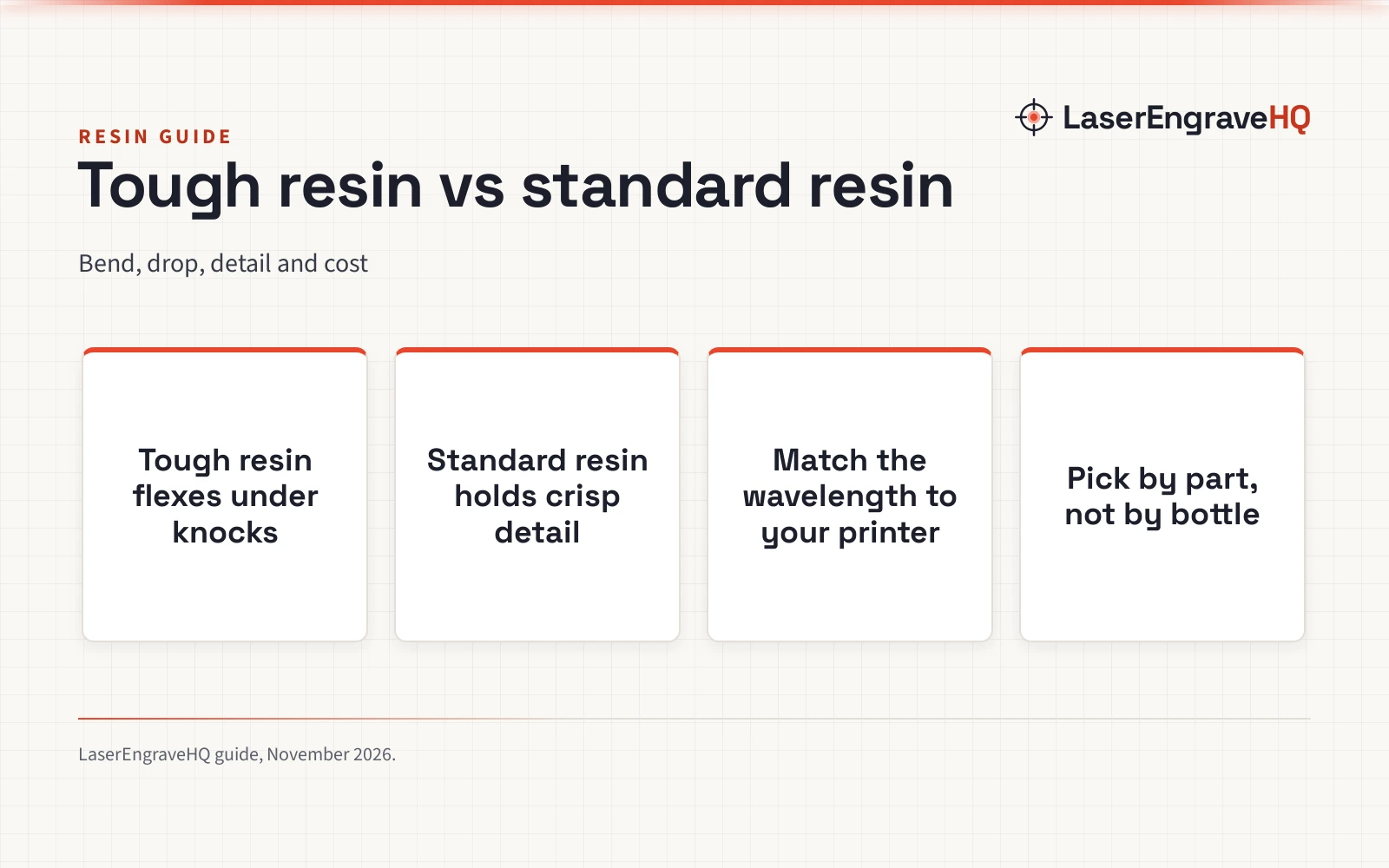
Standard resin prints a hard, rigid part with fine detail. That rigidity is its weak point: a thin wall or a small tab can snap when the part is handled, dropped or forced into a tight fit. Tough resin changes the formula so the finished part flexes under handling and resists snapping, which is why makers reach for it for parts that see real use.
The trade is real. Tough resin still prints fine detail, and the listings in this guide all claim high precision, but the gain is flexibility and impact resistance rather than extra sharpness. If the part will never be touched after it leaves the build plate, standard resin does the job. If it will be handled, assembled or carried around, tough resin earns its place.
When Tough Resin Earns Its Place
Reach for tough resin when the print has a job to do. Structural parts, solid models, shells, industrial spare parts and building models all appear in the listings below as the intended use, and the common thread is a part that must hold together under handling. Tabletop models and miniature components also benefit when they get picked up, posed and packed away instead of sitting behind glass.
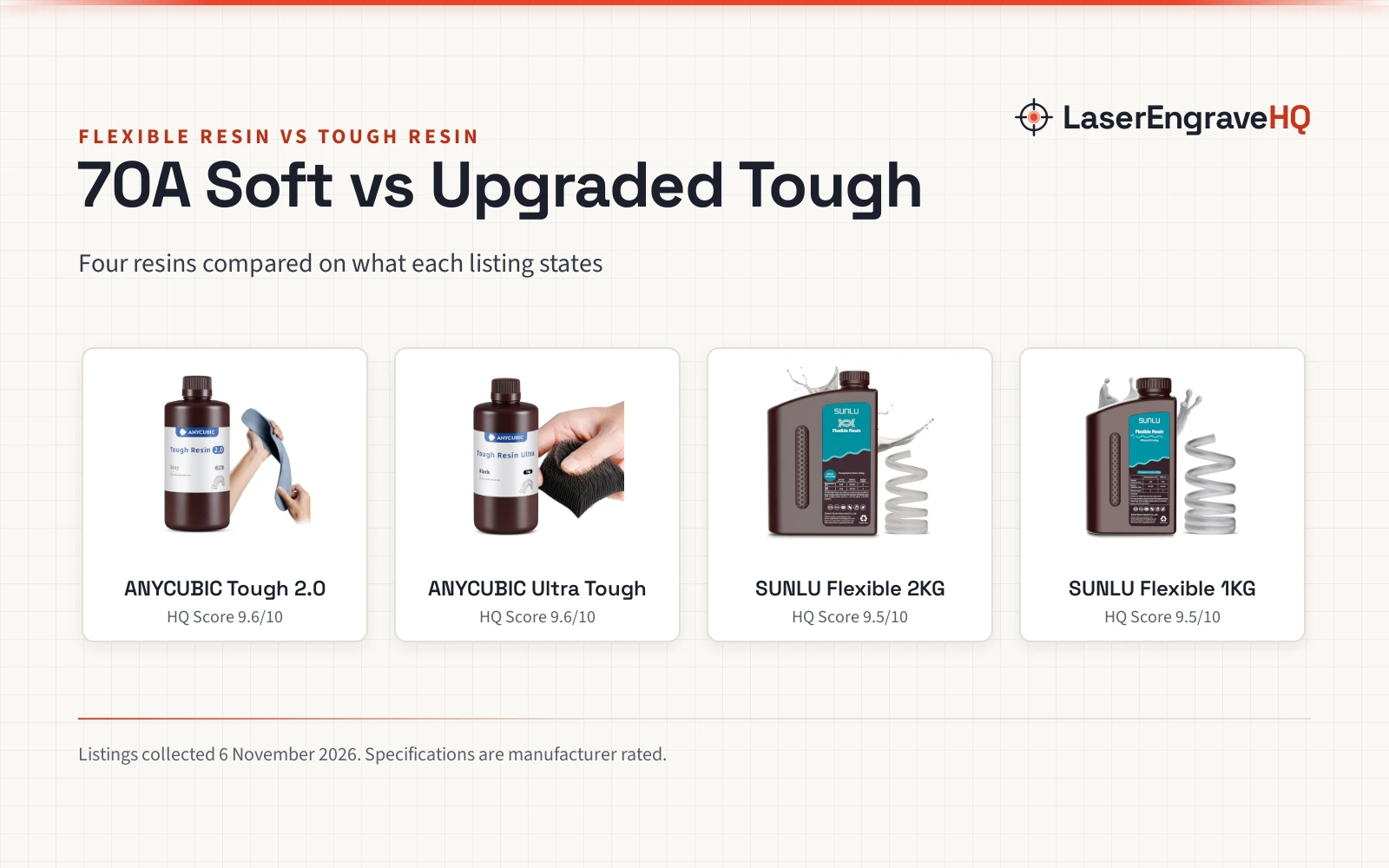
Flexibility matters as much as strength. A resin that can flex resists the peeling, cracking and stress marks caused by cyclic vibrations, and the ANYCUBIC listing calls out exactly that behavior for its Tough Resin 2.0. Elongation is the figure to watch in a listing: the SUNLU resin states elongation 5 times higher than regular standard resin, which is the clearest single figure in this guide for how far tough resin moves from the baseline.
When Standard Resin Is the Right Call
Standard resin still wins for display work. A miniature made to be admired, a prototype made to show a shape, or a part with fine surface detail plays to the strengths of a rigid resin, and it prints with the same LCD, DLP or SLA machines that tough resin uses. There is no need to reach for flexibility a shelf piece will never use.
Standard resin also keeps the workflow simple. It works under the same 405nm light that the ELEGOO and SUNLU resins use, and it suits makers who print for looks rather than for load. Keep tough resin for the parts that move, flex or take a knock.
The 4 Tough Resins in This Guide
Siraya Tech Fast ABS-Like Tough, Tough Navy Grey, 1kg. The Siraya Tech listing states impact resistance over 50% higher than the original Fast navy grey resin, and it aims the resin at heavy-duty use. Navy Grey carries a matte finish that cuts light reflection and shows detail, and the listing states the resin suits both miniature models and large-scale projects. It works with LCD and DLP printers, including 4K, 8K and 12K machines, and the listing states low odor and easy printing and washing.
ELEGOO Upgraded 8K ABS-Like 3.0 Resin, Space Grey, 2000g. The ELEGOO listing states high toughness and ductility, with strong impact resistance for parts that take bumps or drops. Low viscosity and high fluidity cut peeling force after the print sets and lift print success, and the resin sets fast under 405nm light. It suits 8K, 12K and 14K MSLA, DLP and LCD printers, and the listing states it works with most LCD and DLP printers that use 405nm light.
ANYCUBIC Tough Resin 2.0, Grey, 1kg. The ANYCUBIC listing states an upgrade in flexural strength, with strong elongation and flexibility that resist peeling, cracking and stress marks caused by cyclic vibrations. Models are less prone to breakage even when dropped from a height, according to the listing, and low shrinkage keeps the surface smooth with clear detail. It works with light from 365nm to 405nm and suits most LCD resin printers. One detail to note: the listing gives the size as 1kg while its spec table lists an item weight of 0.22 pounds, so the two figures do not agree with each other.
SUNLU High Toughness 3D Printer Resin, Dark Grey, 2000g. The SUNLU listing states elongation 5 times higher than regular standard resin, with flexibility that keeps printed models bendable and not brittle. Low viscosity and high flowability shorten the time a layer needs to set and ease model formation, and lower shrinkage cuts the risk of distortion. It uses 405nm light and suits most LCD, DLP and SLA resin printers, and the listing states low odor and easy cleaning with alcohol or ethanol.
How to Choose Between Them
Start with the part, not the bottle. A display miniature, a show piece or a prototype that will sit untouched calls for standard resin. A functional part, a shell, a spare part or a model that gets handled calls for tough resin. Match the wavelength first. The ELEGOO and SUNLU resins use 405nm light. The ANYCUBIC resin covers 365nm to 405nm. The Siraya Tech listing states LCD and DLP compatibility across 4K, 8K and 12K printers.
Size the bottle to the job. The Siraya Tech and ANYCUBIC resins come in 1kg bottles, while the ELEGOO and SUNLU resins come in 2000g bottles. A maker printing large-scale projects or a run of structural parts will get through a bottle faster than a maker printing a single miniature, so check the size before ordering.
Odor and cleanup matter for a home workspace. The Siraya Tech, ANYCUBIC and SUNLU listings all state low odor, and the SUNLU listing states cleaning with alcohol or ethanol. The Siraya Tech listing also states easy washing, which keeps the post-print routine short.
Printing and Handling Notes
Resin printing needs ventilation and care with liquid resin. Work in a space with fresh air moving through it, keep liquid resin off skin, and let prints finish setting under light before handling them as finished parts. The low-odor claims in these listings describe the printing experience, not a reason to skip ventilation.
Keep resin away from sunlight and store the bottle closed when it is not in use. Pour only what the print needs, and wipe the bottle rim before closing it so the cap seals cleanly.
FAQ: lasers and CNC
Is tough resin harder to print than standard resin?
Not according to these listings. The Siraya Tech resin states easy printing and washing. The ELEGOO resin states low viscosity and high fluidity, and the SUNLU resin states low viscosity and high flowability, which the listings link to a higher print success rate. Match the wavelength to your printer and print as usual.
Can tough resin replace standard resin for miniatures?
Yes, when the miniature gets handled. The Siraya Tech listing states its tough resin suits miniature models, and the ANYCUBIC listing states its resin suits miniature components and thin models. Detail stays crisp, and the part stands up better to being picked up and posed.
Does tough resin work on any resin printer?
Match the light. The ELEGOO and SUNLU resins use 405nm light. The ANYCUBIC resin covers 365nm to 405nm. The Siraya Tech resin states compatibility with LCD and DLP printers, including 4K, 8K and 12K machines. Check your printer’s light source against the listing before buying.
What should I print with tough resin?
Print the parts that take handling: structural parts, solid models, shells, industrial spare parts and building models, all of which appear in the listings in this guide. A display piece that never leaves the shelf is still a job for standard resin.
Is ABS-like resin the same as tough resin?
ABS-like is one family of tough resin. The Siraya Tech and ELEGOO resins in this guide are ABS-like tough resins, while the ANYCUBIC and SUNLU resins are tough resins without the ABS-like label. All four aim at the same goal: a part that flexes under handling and resists snapping.
Related: the water washable vs standard resin comparison, ABS-like vs standard resin and 3D printer resin vs filament cost. Also see our best entry level resin printer and resin vs PLA for miniatures.