Spindle vs Router for CNC: Which One Should You Buy?
A workshop guide comparing CNC spindles and trim routers on noise, runout, speed control, power draw and workflow to help you choose the right motor.

On this page
Top picks at a glance
As an Amazon Associate I earn from qualifying purchases.
- 1
 SainSmart Genmitsu 3020-PRO Ultra CNC Router Machine9.7/10View on Amazon
- 2
 SpeTool Carbide Single Flute CNC Router Bits 1/8" Cutting9.7/10View on Amazon
- 3
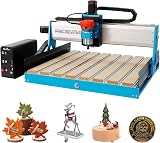 6050 CNC Router Machine9.6/10View on Amazon
- 4
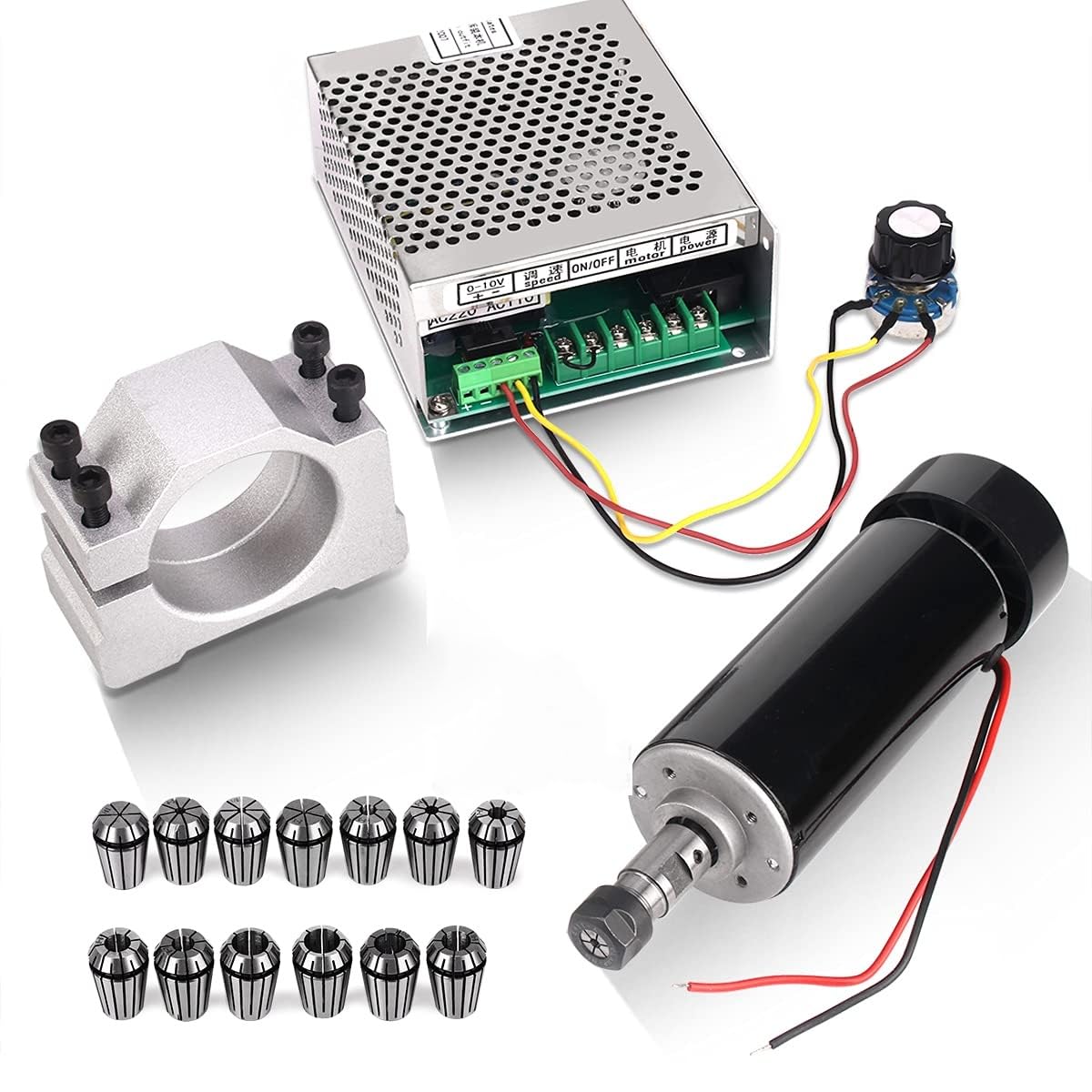 CNC SpindleView on Amazon
- 5
 RATTMMOTOR 500W CNC Air Cooled Spindle Motor ER11 12000RPMView on Amazon
- 6
 Huanyang Water Cooled CNC Spindle Milling Motor 110V 2.2KWView on Amazon
- 7
 ER20 Water Cooled CNC Spindle Motor 220v 2.2KW Φ80mm 4View on Amazon
- 8
 Genmitsu 710W CNC Compact Router 65mm DiameterView on Amazon
- 9
 CNC Spindle CNC Motor 110V 1.5KW Air Cooled Spindle MotorView on Amazon
When you set up a cutting table to make custom wood signs, carve plaques, or profile aluminum parts, choosing between a spindle vs router for cnc cutting directly dictates workshop noise, cut precision, and tool life. A dedicated CNC spindle is the right choice if you run long carving jobs, work in a home shop where screaming motor noise is unacceptable, or cut non-ferrous metals requiring minimal runout and consistent torque. A compact trim router is the sensible choice if you need an accessible motor setup for casual woodworking, prefer manual dials and simple maintenance, and do not mind loud operation during daytime cutting runs.
Other machines to compare
 CNC SpindleCheck price on Amazon
 RATTMMOTOR 500W CNC Air Cooled Spindle Motor ER11 12000RPMCheck price on Amazon
 Huanyang Water Cooled CNC Spindle Milling Motor 110V 2.2KWCheck price on Amazon
 ER20 Water Cooled CNC Spindle Motor 220v 2.2KW Φ80mm 4Check price on Amazon
 Genmitsu 710W CNC Compact Router 65mm DiameterCheck price on Amazon
 CNC Spindle CNC Motor 110V 1.5KW Air Cooled Spindle MotorCheck price on Amazon
LaserEngraveHQ earns a commission from purchases made through these links, at no extra cost to you. Read our affiliate disclosure.
Motor capability always depends on chassis rigidity and proper feeds. A heavy spindle cannot fix a flexing gantry, and a compact trim router will not run silently inside an untreated workshop. Always confirm your machine frame supports your chosen motor before rewiring your workspace.
Step 1: Compare noise levels and workshop environment
Operating volume is often the deciding factor between motor types. Trim routers rely on universal brush motors with internal cooling fans that spin at high speeds to prevent thermal overload. That design generates an intense, high-frequency whine even when idling. Once a bit bites into hardwood, the combined sound demands hearing protection and quickly penetrates nearby living spaces.
Dedicated CNC spindles produce substantially less noise, particularly when using brushless induction or fluid-cooled designs. A water-cooled spindle operates without an integrated fan because circulating fluid absorbs heat, running nearly silent in free air. Air-cooled spindles feature a dedicated fan, such as the reinforced cooling fan RATTMMOTOR lists on its 500W spindle, yet avoid much of the mechanical squeal common to handheld tools. A quiet spindle keeps shop noise low enough that a dust collector for desktop CNC is often louder than the drive itself.
Step 2: Evaluate runout and cutting precision
Spindle runout describes radial deviation of the cutter from its true rotational axis. High runout unevenly loads cutting flutes, accelerating bit wear and leaving rough sidewalls on finished cuts.
Compact trim routers employ standard collets designed for carpentry where slight play does not impair the cut. For example, Genmitsu lists runout under 0.05 mm on its 710W compact router. That tolerance is sufficient for wood signs or roughing passes, but it can cause chatter on fine details.
Dedicated CNC spindles utilize ground tapers and precision ER collets that seat cutting tools with exceptional concentricity. MYSWEETY specifies runout between 0.01 mm and 0.03 mm for its 500W air-cooled spindle, while RATTMMOTOR lists runout under 0.01 mm on its 2.2KW spindle. For high-precision cutting, Zhong Hua Jiang rates runout under 0.005 mm on its 1.5KW kit with 4 steel bearings, and HY HUANYANG specifies runout under 0.005 mm on its 2.2KW water-cooled spindle with 4 P4 bearings.
Step 3: Check speed ranges and electronic control
Maintaining proper chip load requires balancing rotational speed against feed rate. Spinning a cutter too fast in plastic can melt material, while running outside an optimal speed window causes tool chatter.
Trim routers feature discrete speed settings biased toward high RPM. For example, the Genmitsu 710W router provides 6 adjustable speeds spanning 6000 to 30000 RPM, adjusted with a thumb dial and shown on an LCD digital readout. While 30000 RPM provides fast cutting in wood with small bits, all adjustments must be performed manually at the machine carriage, meaning speed remains fixed throughout an entire job unless paused manually.
Spindles paired with a Variable Frequency Drive connect directly to your CNC controller board, allowing G-code to automate rotation dynamically. The controller commands start, stop, and exact RPM to match each toolpath. High-frequency VFD spindles are designed for high-speed operation: HY HUANYANG lists a recommended range between 8000 and 24000 RPM at 400 hz on its 2.2KW spindle, warning that running below 8000 RPM produces strong current, while RATTMMOTOR specifies that speed must not drop below 9000 rpm on its 2.2KW water-cooled motor. For smaller desktop setups needing lower speed bands, DC spindles offer different profiles: the Daedalus 500W kit adjusts from 0 to 12000 RPM using a dedicated dial, while the Genmitsu GS-775M motor turns at 20000 rpm on DC 24V for a 3018 CNC setup. Automated control eliminates manual dial mistakes and ensures the cutter spins at the exact programmed speed.
Step 4: Assess power ratings and cutting duty cycle
Continuous power delivery determines whether a cutting head maintains rotational speed through dense hardwood without stalling.
VFD-driven AC spindles use brushless induction designs intended for continuous industrial duty cycles. Because they lack mechanical brushes, units like the Zhong Hua Jiang 1.5KW kit and the HY HUANYANG 2.2KW spindle (rated at 3 hp) sustain cutting torque across multi-hour jobs without brush friction or arcing. With 4 bearings supporting the rotor, these motors resist radial cutting forces when profiling hardwood on a CNC router for small business.
In contrast, brush-based motors require periodic inspection and replacement. The Genmitsu 710W router draws 710 watts and lists 0.95 hp, bundling 4 spare carbon brushes to address wear from its universal motor. Similarly, brushed DC spindles, such as the Daedalus 500W brushed motor or the 75 watts Genmitsu GS-775M motor with double ball bearing brushes, rely on carbon brushes that wear down during extended operation. Mid-range air-cooled spindles like the 500W units from MYSWEETY and RATTMMOTOR provide dedicated machine-mount housings, but true brushless operation and zero brush maintenance belong to induction VFD spindles.
Step 5: Compare cooling methods and maintenance requirements
Managing motor heat affects workshop cleanliness and job duration.
Air-cooled systems pull ambient air through the housing using an impeller. The Genmitsu 710W router and the Zhong Hua Jiang 1.5KW air-cooled spindle rely on airflow across cooling fins, requiring no external plumbing. However, cooling air exhausts downward across the spindle nose. Without an effective dust boot, that airflow blows chips and dust away from the bit before a vacuum can capture them.
Water-cooled spindles isolate cooling within a closed liquid jacket. A submersible pump moves fluid from a reservoir bucket into the spindle housing. For example, RATTMMOTOR includes an 80W water pump delivering 3500 L/H flow with its 2.2KW water-cooled package. Liquid cooling operates silently, eliminates downward exhaust air, and keeps the spindle cool during long carving runs. Upkeep requires monitoring fluid levels and preventing kinks in coolant tubing.
Step 6: Plan mounting diameter and electrical supply
Physical compatibility and electrical supply set boundaries on which drive you can install.
Motor bodies follow standard diameter brackets. Compact trim routers like the Genmitsu 710W unit use a 65mm cylindrical body. Similarly, Zhong Hua Jiang supplies a 65mm clamp mount with its 1.5KW air-cooled spindle kit, allowing makers to upgrade without altering their carriage. Larger 2.2KW spindles from HY HUANYANG and RATTMMOTOR require an 80mm mount. They also add substantial weight: the HY HUANYANG 2.2KW spindle weighs 12.2 pounds to 12.7 pounds, while the RATTMMOTOR 2.2KW package lists an item weight of 10.52 kg. Your machine frame must carry that mass without losing steps.
Electrical supply is equally critical. The Genmitsu 710W router plugs into standard 110 volts outlets using an 11.5 ft cord. While Zhong Hua Jiang and HY HUANYANG offer 110 volts versions of their 1.5KW and 2.2KW spindles drawing up to 15A, larger setups frequently run on 220 volts circuits. The VFD converts single-phase AC power into 3 phase output for the spindle motor.
Common mistakes to avoid
- Mounting a heavy 80mm spindle onto a lightweight frame that flexes under the weight.
- Operating a trim router in a home shop without planning for high motor whine.
- Using standard carpentry collets for fine carving where minimal runout is necessary.
- Allowing router cooling exhaust to blow fine sawdust across the shop without a dust boot.
- Attempting to operate a VFD spindle without verifying ground connections and inverter settings.
Spindle vs router for CNC: the short version
- Assess workshop sound constraints: pick a water-cooled spindle for quiet home areas or a router if high motor whine is acceptable.
- Review cutting materials: pick a low-runout spindle with precision collets for aluminum and fine carving, or a router for wood profiling.
- Check control preferences: choose a VFD spindle for automated software speed control, or a router for manual dial adjustments.
- Evaluate job duration: choose an induction spindle for continuous multi-hour jobs, or a router for intermittent hobby tasks.
- Confirm carriage capacity: check whether your Z-axis accepts 52mm, 65mm, or 80mm clamps and can carry the physical weight.
- Verify electrical circuits: make sure your workshop provides adequate 110 volts or 220 volts power for your selected motor drive.
Choosing between these motor drives comes down to balancing acoustic comfort and precision against straightforward setup. Once your motor is mounted, verify your feeds and chip clearance before launching full production jobs.
FAQ: lasers and CNC
Can a trim router cut aluminum on a CNC machine?
A compact router can cut soft aluminum when paired with suitable carbide end mills for aluminum, shallow passes, and proper feed rates. However, higher collet runout and greater vibration make chip load management more challenging than on a rigid spindle with precision ER collets.
Do I need a water chiller for a water-cooled CNC spindle?
Not necessarily for typical hobby carving. A submersible water pump in a clean bucket of distilled water provides adequate cooling for intermittent jobs. Dedicated chillers become beneficial primarily when running continuous production in warm shops where ambient fluid temperatures climb.
What is the main difference between air-cooled and water-cooled spindles?
Air-cooled spindles use an integrated fan to force air over external metal fins, requiring no plumbing but generating fan sound and blowing exhaust near the workpiece. Water-cooled spindles circulate fluid through an internal jacket, delivering near-silent operation and stable cooling during long carving files at the cost of external hoses and fluid maintenance.
Can CNC control software automatically start and stop a trim router?
Most standard trim routers require manual switching at the tool body. While an external relay can toggle wall power via controller commands, software cannot adjust spindle speed dynamically. In contrast, a VFD spindle connects directly to your control board for automated start, stop, and speed adjustment.
Why do CNC spindles use ER collets instead of standard router chucks?
ER collets feature a continuous tapered clamping sleeve that grips the tool shank along its entire length. That concentric grip reduces runout, dampens vibration, and accommodates diverse shank sizes, whereas woodworking router chucks prioritize quick bit swaps over extreme precision.
When should a beginner choose a router instead of a spindle?
A beginner on a desktop CNC machine for beginners should choose a compact trim router for an uncomplicated start in CNC woodworking without the learning curve of wiring inverters or managing fluid lines. If you cut primarily wood during daytime workshop hours, a router provides an accessible starting point.
Related: the CNC router hub, best desktop CNC for beginners and best CNC router for sign making. Also see our CNC feeds and speeds for beginners. Also see our best CNC router bits.