How to Use Soldering Flux
A practical guide to using soldering flux on circuit boards: clean the joint, apply liquid or paste flux, heat the joint and feed solder for a smooth, shiny bond.

On this page
Top picks at a glance
As an Amazon Associate I earn from qualifying purchases.
- 1
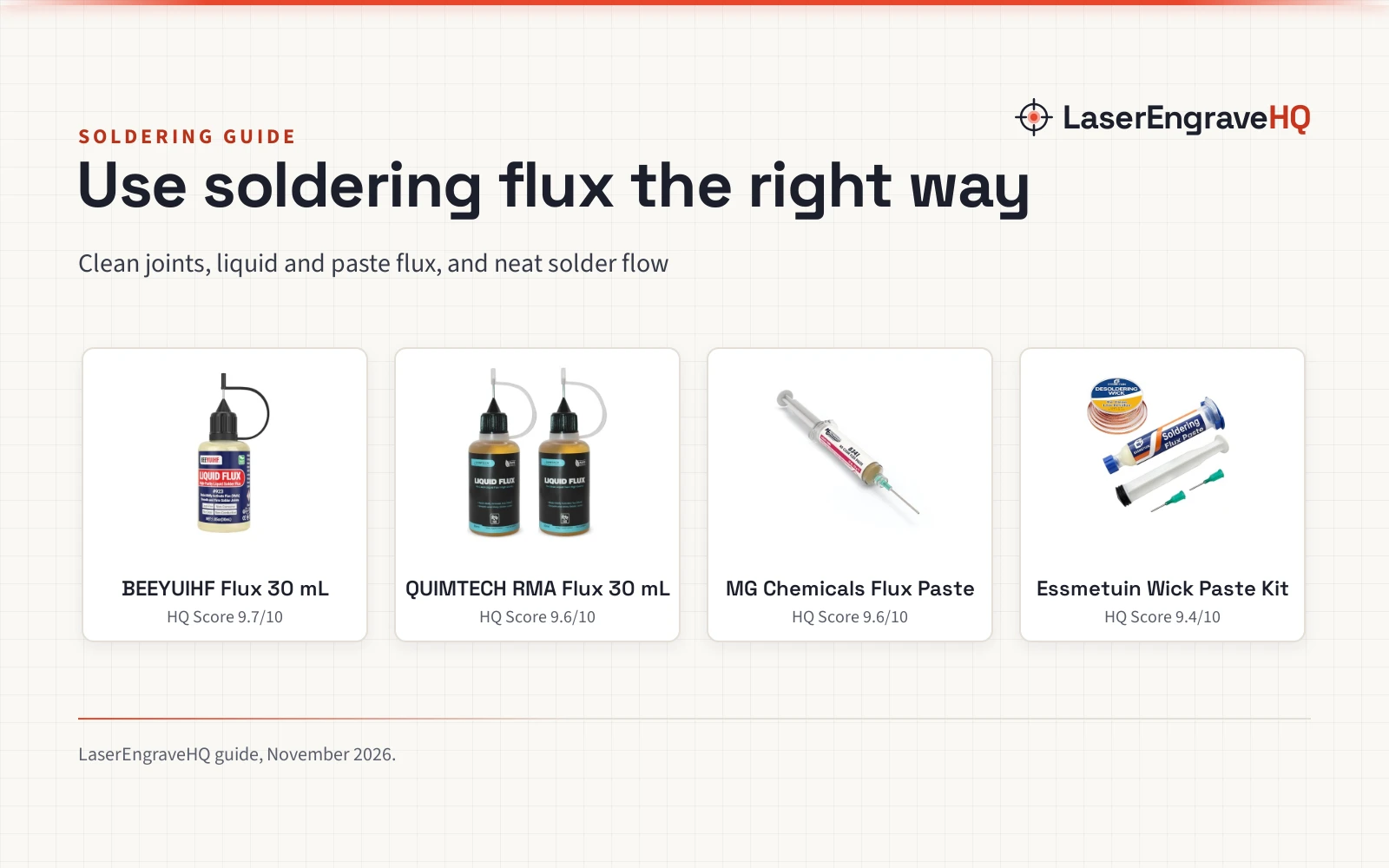
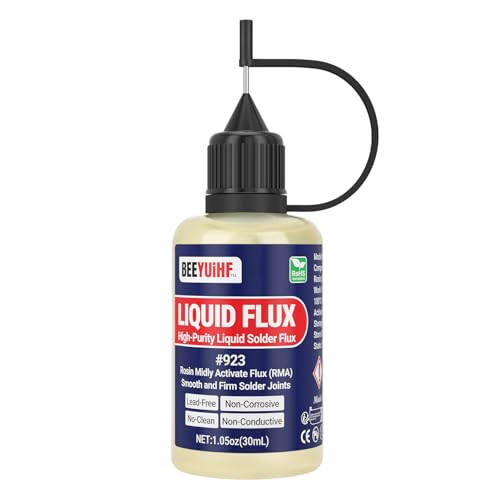 BEEYUIHF Liquid Solder Flux Dropper9.7/10View on Amazon
- 2
 Liquid Solder Flux Dropper (2x30ml)9.6/10View on Amazon
- 3
 MG Chemicals - 8341-10ML 8341 No Clean Flux Paste9.6/10View on Amazon
- 4
 Desoldering Wick and Soldering Flux Paste9.4/10View on Amazon
How to use soldering flux is simple: clean the joint, apply flux to the metal, heat the joint with the iron, then feed solder into the joint and let it flow. Flux clears oxides so solder wets the surface and forms a smooth, shiny joint.
LaserEngraveHQ earns a commission from purchases made through these links, at no extra cost to you. Read our affiliate disclosure.
Flux helps solder flow on metal that is already clean. It does not fix a dirty joint, a cold iron or the wrong solder, so clean the parts before blaming the flux.
BEEYUIHF Liquid Solder Flux Dropper
A 30 mL squeeze bottle of RMA liquid rosin flux with 2 tapered tips and a sealing cap, made for PCB, SMD and repair soldering.
Pros
- Squeeze bottle with 2 tapered tips gives control over flux flow
- RMA rosin removes oxides from tin, lead, copper, silver and nickel alloys
- No-clean, non-corrosive formula with a neutral pH; dried residue is non-conductive
- Suited to PCB soldering, SMD soldering and desoldering, and audio cable connectors
Cons
- No warranty term is stated
- 30 mL is a small bottle for frequent bench work
- Squeeze bottle can release more flux than a small joint needs
- No desoldering wick in the box; pair it with a wick for removal work
Liquid Solder Flux Dropper (2x30ml)
An RMA liquid rosin flux in an amber 30 ml dropper bottle, made for tin-lead, lead-free, gold, silver and copper alloys.
Pros
- RMA rosin removes oxides from tin-lead, lead-free, gold, silver and copper alloys
- No-clean, non-corrosive formula with a neutral pH; dried rosin is non-conductive
- High-purity organic formula, lead-free, with no irritating smell per the maker
- Suited to soldering, desoldering, rework and reflow work
Cons
- No warranty term is stated
- Dropper can release more flux than a small joint needs
- 30 ml is a small volume for frequent bench work
- No desoldering wick in the box; pair it with a wick for removal work
MG Chemicals - 8341-10ML 8341 No Clean Flux Paste
A 10 mL no-clean flux paste in a pneumatic dispenser with a plunger and dispensing tip, for leaded and lead-free solder systems.
Pros
- Paste stays where it is placed, which suits small pads and rework
- Pneumatic dispenser with plunger and dispensing tip for controlled placement
- Rosin residue is non-corrosive, non-conducting and moisture resistant
- Compatible with lead-free and leaded solder systems
Cons
- 10 mL is a small volume for frequent bench work
- Paste format is slower to spread over a wide joint than liquid flux
- Dispenser needs a steady hand to meter paste on fine pads
- No desoldering wick is included for removal work
Desoldering Wick and Soldering Flux Paste
A desoldering wick and no-clean flux paste kit in a compact set, made for removing solder from circuit boards without damaging parts.
Pros
- Wick and paste in a kit cover both removal and fresh joints
- High-activity rosin helps remove the oxide layer from the welding surface
- Low residue after use, which saves cleaning time
- Compact kit suits repair work away from the bench
Cons
- 10CC paste is a small volume for frequent repair work
- Wick and paste come as a set, so paste cannot be replaced on its own
- No liquid flux applicator is included for wide joints
- Suited to removal work; fresh-joint work may need a liquid flux as well
What soldering flux does
Flux is a helper for solder, not solder itself. The rosin in these fluxes removes the thin oxide layer from the metal, and that clean surface lets molten solder wet the joint and bond. The listings in this guide describe RMA flux, short for rosin mildly activated, in liquid form, and rosin flux paste, all no-clean with little residue left behind. Liquid spreads over pads, paste stays put on small pads, and a wick lifts old solder.
How to Use Soldering Flux
Start with clean metal. Wipe the pads and leads free of dust and old residue, and clean the iron tip before heating the joint. See the cleaning soldering iron tips guide, and the best soldering iron for beginners guide if the iron itself is the weak point.
- Apply flux to the joint, covering the pad and the lead the solder must wet.
- Heat the joint, not the solder, holding the iron tip against the pad and the lead together.
- Feed solder into the heated joint and let it melt and flow around the lead.
- Remove the iron and hold the joint still while the solder cools into a smooth, shiny fillet.
- Check the joint: it should look smooth and shiny and cover the pad and the lead.
- Clear the residue. No-clean flux leaves a small residue that can stay, but wipe it away for a clean finish.
Work with airflow: soldering fumes need ventilation, so open a window or run a fan that pulls fumes away from the bench. See the best fume extractor for soldering guide.
Using flux paste and a desoldering wick
Paste flux suits work where liquid would run: place a dab on the pad, set the part in place, then heat the joint and feed solder as above. To remove old solder, add paste flux to the joint, press the wick onto it with the iron, and let the wick draw the solder into the braid. For the difference between liquid and paste, see the soldering flux vs soldering paste comparison.
The flux for this job
The picks below cover the steps above: liquid for spreading, paste for placing, and a wick for lifting old solder, ranked by HQ Score.
Common mistakes to avoid
- Skipping the cleaning step and expecting flux to fix a dirty joint.
- Heating the solder instead of the joint, which leaves a cold joint.
- Flooding the board with liquid flux, which leaves residue across the pads.
- Moving the joint while the solder cools, which breaks the bond as it sets.
How to Use Soldering Flux: The Short Version
- Clean the joint and the iron tip.
- Spread flux over the pad and the lead.
- Heat the joint with the iron.
- Feed solder into the joint and let it flow.
- Hold still while the joint cools.
- Check the joint and clear residue.
FAQ: lasers and CNC
Do you need flux if the solder already has a rosin core?
Rosin-core solder carries flux inside the wire, so a fresh joint on clean metal often needs nothing extra. Separate flux helps on older joints and larger pads, where the core flux is not enough.
Can you use liquid flux on a circuit board?
Yes. The liquid fluxes in this guide are made for electronics soldering and repair, including PCB work, and are listed as no-clean and non-corrosive. The BEEYUIHF flux also lists SMD work.
Do you have to clean no-clean flux residue?
No. No-clean flux leaves a small residue that the makers describe as non-conductive once dry, so it can stay on the board.
What is the difference between liquid flux and flux paste?
Liquid flux spreads over a joint or a row of pads from a dropper or squeeze bottle, while paste flux stays where the dispenser places it on small pads. Paste suits rework; liquid suits wider joints.
Is soldering flux safe to breathe?
Soldering fumes need ventilation, whatever flux is in use. Work with airflow that pulls fumes away from the bench. See the best fume extractor for soldering guide.
Related: the electronics making hub, best soldering flux for electronics and best soldering iron for beginners. Also see the cleaning soldering iron tips guide.