Router Speed vs Bit Diameter: Which One Should You Buy?
A practical workshop guide explaining how router speed relates to bit diameter, why larger cutters require lower spindle RPM, and how to avoid burning wood.

On this page
Top picks at a glance
As an Amazon Associate I earn from qualifying purchases.
- 1
 SPEED TIGER ISE Carbide End Mill 1/8”9.8/10View on Amazon
- 2
 CNC Spoilboard Surfacing Router Bit9.6/10View on Amazon
- 3
 CNC Spoilboard Surfacing Router Bit9.6/10View on Amazon
- 4
 BOSCH PR20EVS Colt 1.0 HP Variable-Speed Palm RouterView on Amazon
- 5
 WEN RT1460 6-Amp Handheld 1/4-Inch Variable Speed LaminateView on Amazon
- 6
 DEWALT RouterView on Amazon
When routing hardwood signs, custom plaques, or precision CNC parts, clean edges depend on balancing router speed vs bit diameter. The direct relationship between router speed and bit diameter is an inverse rule: as the cutting diameter of your router bit increases, your spindle or router rotation speed must decrease. Spindle rotation speed, measured in revolutions per minute, dictates how fast the cutting edge moves through the material. A large cutter swung at high rotational velocity creates dangerous vibration, chatter, and extreme heat, whereas a tiny cutter spun too slowly faces excessive cutting resistance, tool deflection, and edge chipping. Matching router speed to cutter diameter keeps tooling cool, extends sharpness, and protects motor bearings.
Other machines to compare
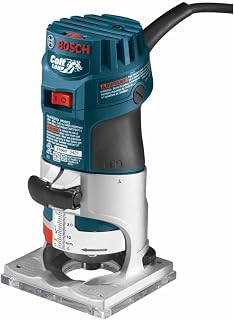 BOSCH PR20EVS Colt 1.0 HP Variable-Speed Palm RouterCheck price on Amazon
 WEN RT1460 6-Amp Handheld 1/4-Inch Variable Speed LaminateCheck price on Amazon
 DEWALT RouterCheck price on Amazon
LaserEngraveHQ earns a commission from purchases made through these links, at no extra cost to you. Read our affiliate disclosure.
Router bit manufacturers design cutters with specific rotational limits based on cutter diameter, body mass, and brazed carbide strength. Operating above the manufacturer maximum rated speed can cause severe tool deflection, burning, or cutter failure. Check published listing specifications before powering on your spindle.
The Physics of Router Speed vs Bit Diameter
To understand router speed vs bit diameter, look at peripheral rim speed rather than spindle revolutions alone. Wood fibers meet the outer tip of the carbide flutes rather than the center shaft.
As bit cutting diameter expands, the circumference traveled by the cutting edges grows proportionally. A larger bit covers substantially more linear distance along its outer rim during each revolution than a narrow bit. Running a large cutter at the same rotational speed as a small cutter forces cutting edges through wood at excessive surface velocity. That velocity creates friction between the carbide face and the workpiece, turning cutting energy into heat.
Conversely, narrow bits have a very small circumference and travel a short linear distance per revolution. If the spindle turns too slowly at normal machine feed rates, each flute takes an oversized bite of material. Because slender carbide shanks have minimal stiffness, high cutting resistance induces tool deflection, rough finishes, or shank failure. Higher spindle speeds provide adequate peripheral cutting speed and keep chip load safe. For more on flute profiles, explore our guide on CNC router bit types.
Why Larger Bit Diameters Require Slower Router Speeds
The primary danger with large diameter bits is excessive rim velocity combined with rotational momentum. Centrifugal forces increase dramatically with cutter diameter. Minor imbalances in the cutter body or collet seat amplify into machine chatter, leaving wavy marks on finished edges and straining spindle bearings.
Heat buildup represents another severe consequence of spinning large bits too fast. Wood is a thermal insulator that does not absorb heat quickly. When cutter flutes move faster than heat can dissipate, temperatures spike rapidly, scorching wood, melting glue lines in sheet goods, and softening carbide binders.
To keep surface speed in a safe window, operators reduce spindle speed as bit diameter grows. Large surfacing cutters, wide panel-raising profiles, and broad flush-trim cutters must run at restrained speeds to prevent burning. If setting up wasteboard tooling, read our review of the best surfacing router bit options.
Why Smaller Bit Diameters Need Higher Spindle Speeds
While large bits suffer from excessive velocity, small diameter bits face the opposite problem: low linear cutting speed and high risk of mechanical snapping. Narrow bits lack core mass, making them vulnerable to tool deflection under lateral cutting loads.
When running a narrow bit at slow spindle speeds, each flute encounters a heavy chip load because the cutter cannot clear material out of the travel path fast enough. This resistance bends the slender shank away from the cut line, ruining accuracy and causing solid carbide shanks to snap off at the collet.
Spinning small cutters faster allows each flute to take light, clean bites while maintaining a healthy material removal rate. High spindle speeds give tiny flutes sufficient linear motion to sever fibers cleanly without bogging down the motor. For starter cutters, consult our guide to the best CNC bit set for beginners.
Manufacturer RPM Ratings from Listing Specifications
Operators should examine maximum speed ratings published by tooling manufacturers. Listing specifications demonstrate clearly how allowable rotational velocity drops as bit diameter increases, although specific limits depend on tool construction, shank size, and bearing design.
For mid-sized trimming, the Akylin listing specifies a solid carbide compression flush trim bit featuring a 1/2-inch cutting diameter, 1/4-inch shank, and 1-inch cutting length. Because the 1/2-inch cutting diameter has a relatively compact rotational profile, it can handle higher rotational velocities on trim routers, handheld machines, and router tables than wider tooling.
Compare that specification to a wider tool. The CMT ORANGE TOOLS listing rates its flush trim bit at a maximum speed of 18,000 RPM. This tool features a 3/4-inch cutting diameter, a 1/2-inch shank, and a 2-inch cutting length with 4 cutting edges. Because the cutting diameter increases to 3/4-inch and body mass is heavier, CMT ORANGE TOOLS caps the maximum safe operating speed for this specific model at 18,000 RPM. Exceeding its 18,000 RPM rating creates hazardous vibration and rapid thermal buildup.
Small diameter slotting bits operate under different dimensions. The Whiteside Router Bits listing provides a compression spiral bit with a 1/4-inch cutting diameter, 1/4-inch shank, 1-inch cutting length, and 2-1/2-inch overall length. Meanwhile, the XDENGP listing features a spiral bit with a 1/8-inch cutting diameter, 1/4-inch shank, 3/4-inch cutting length, and 2-1/2-inch total length. Because these 1/4-inch and 1/8-inch bits have minimal circumference, they safely use high spindle frequencies without approaching dangerous rim speeds. To compare spiral bits, see our roundup of the best CNC router bits.
Balancing Feed Rate with Spindle Speed and Cutter Size
Spindle speed must work in harmony with machine feed rate. Feed rate refers to lateral travel speed across the workpiece. Spindle speed, cutter diameter, and feed rate together dictate chip load, which is the thickness of wood shaved off by each cutting flute.
A healthy chip carries away friction heat. If the spindle spins too quickly for a given feed rate, flutes slice microscopic dust rather than distinct chips. Thermal energy stays trapped in the cutter, scorching timber and dulling edges. Conversely, moving too fast while spinning too slow forces flutes to gouge into stock, overloading the motor and tearing grain. In dense woods like oak or maple, maintaining an even chip load prevents tearout. Browse our guide on the best CNC router bits for hardwood, or review machining concepts in our CNC feeds and speeds for beginners tutorial.
Recognizing Incorrect Router Speed in the Workshop
Makers monitor cut surfaces, motor pitch, and waste chips to detect mismatched speed settings.
Signs router speed is set too high for bit diameter:
- Burning and scorching: Dark streaks along cut walls indicate excessive rim speed and friction.
- Fine powdery dust: Producing flour-like dust shows the cutter is rubbing rather than slicing chips.
- Squealing pitch: A high-pitched screech signals that cutter edges are glazing across the surface.
- Discolored carbide: Bluing on the cutter body reveals overheating that weakens tooling.
Signs router speed is set too low for bit diameter:
- Chatter and vibration: Rippled textures indicate the cutter is fighting material.
- Tearout and splintering: Ragged fibers show flutes cannot sever grain cleanly.
- Spindle bogging: Motor pitch dropping under load indicates excessive cutting resistance.
- Tool breakage: Snapped carbide shanks occur when heavy cutting loads overload narrow bits.
Practical Speed Setting Steps for Router Tables and CNCs
When preparing cuts, follow these steps to establish safe router speed based on bit diameter:
- Inspect listing specifications: Verify manufacturer maximum rotational speed before chucking cutters. As shown by the CMT ORANGE TOOLS 18,000 RPM rating for its 3/4-inch bit, larger cutters require conservative speed settings.
- Match shank to collet: Use rigid collets matching tool shanks, like a 1/2-inch shank for heavy cutters or a 1/4-inch shank for detail bits, to resist deflection.
- Start conservative on sample stock: Run a sample pass through an offcut before cutting finished workpieces.
- Adjust feed rate before altering RPM: On a CNC machine, increasing travel rate often cools cuts by producing thicker chips.
- Take shallow passes: For deep profiles, divide total depth across multiple shallower passes.
For workshop milling platforms, check our evaluation of the best desktop CNC for beginners, or explore motor differences in our spindle vs router for CNC comparison.
FAQ: lasers and CNC
How do you measure router bits for diameter and cutting length?
Measure cutting diameter across the widest span between outer cutting edges with a precision caliper. For cutting length, measure along the flute edge from the lowest tip to where the profile ends. Measure shank diameter across the smooth mounting cylinder that seats into the collet.
Why are router bits rated for different maximum speeds?
Manufacturers assign speed ratings based on cutter diameter, mass, and balance. A wider bit has a larger circumference, meaning its perimeter travels at higher surface speed for any rotational setting. Restricting speed prevents vibration, stress, and friction burns.
What is a compression flush trim router bit and what speed does it use?
A compression flush trim bit combines upward-shearing flutes at the bottom with downward-shearing flutes at the top to prevent splintering, guided by a template bearing. Compression bits run within manufacturer limits, respecting model-specific ratings like the 18,000 RPM maximum on the CMT ORANGE TOOLS 3/4-inch cutter, while running narrower cutters faster. Learn more in our guide explaining what is a compression router bit.
What happens if your router speed is set too high for the bit diameter?
Excessive speed causes thermal buildup and burning. Wood scorches, glue melts onto flutes, and carbide edges lose temper and dull. Spinning wide cutters beyond rated balance also creates vibration that damages spindle bearings.
Why are router bits important to match carefully with spindle speed?
Router bits represent the physical cutting interface with your material. Matching cutter diameter to spindle speed ensures tools operate within their intended chip load range, yielding clean finishes, extending tool life, and maintaining workshop safety.
Related: the CNC tooling hub, best CNC router bits and best CNC router bits for hardwood. Also see our CNC feeds and speeds for beginners guide. Also see our CNC router bit types guide.