Pla vs Pva Filament: Which One Should You Buy?
PLA builds the model and PVA washes away as support: compare the SUNLU PLA spools with ANYCUBIC and EONO3D PVA on settings, spool sizes and support work.

On this page
Top picks at a glance
As an Amazon Associate I earn from qualifying purchases.
- 1
 SUNLU PLA 3D Printer Filament, Wood Color, 1KG9.6/10View on Amazon
- 2
 SUNLU PLA 3D Printer Filament, Beige, 1KG9.6/10View on Amazon
- 3
 EONO3D PVA Filament 1.75 mm, 3D Printer Filament9.6/10View on Amazon
- 4
 ANYCUBIC PVA Filament, 500g, Natural9.5/10View on Amazon
PLA prints the model. PVA prints the support, then washes away in water. That split is the whole story of pla vs pva filament: one material builds the part a maker wants to keep, the other holds up overhangs and deep cavities during the print and dissolves when the print is done. The listings in this comparison show each side in concrete form, with PLA on the model side and PVA on the support side.
LaserEngraveHQ earns a commission from purchases made through these links, at no extra cost to you. Read our affiliate disclosure.
Verdict: pick PLA for the model itself: the SUNLU spools state full print settings, 1.75 mm diameter and 1 kg of filament. Pick PVA filament for supports on prints with overhangs or internal cavities. A maker printing complex models with overhangs can pair a PLA spool for the model with a PVA spool for the supports.
Machines on the list
SUNLU PLA 3D Printer Filament, Wood Color, 1KG
A wood-color PLA spool in 1 kg with 1.75 mm diameter, +/-0.02mm accuracy, neat winding and stated print settings for FDM printers.
Pros
- 1.75 mm PLA with +/-0.02mm accuracy for smooth printing
- Neat winding with a 100% neat rate, aimed at fewer tangles and jams
- Stated settings: 200-230°C nozzle, 50-65°C bed, 50-100mm/s speed
- Spool dimensions stated: 8.00" diameter, 2.50" wide, 2.20" hub hole
Cons
- No warranty term is stated
- No safety certification is stated
- No drying guidance is stated in the listing
- Model material only: it cannot dissolve away as support the way PVA can
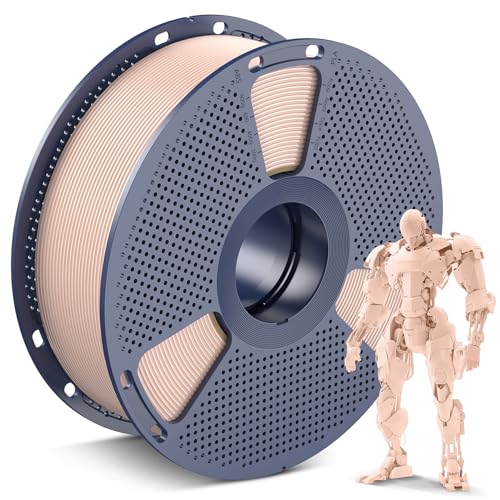
SUNLU PLA 3D Printer Filament, Beige, 1KG
A beige PLA spool in 1 kg with 1.75 mm diameter, +/-0.02mm accuracy, neat winding and stated print settings for FDM printers.
Pros
- 1.75 mm PLA with +/-0.02mm accuracy for smooth printing
- Neat winding with a 100% neat rate, aimed at fewer tangles and jams
- Stated settings: 200-230°C nozzle, 50-65°C bed, 50-100mm/s speed
- Spool dimensions stated: 8.00" diameter, 2.50" wide, 2.20" hub hole
Cons
- Warranty description reads '1' with no unit, so no usable term is stated
- No safety certification is stated
- No drying guidance is stated in the listing
- Model material only: it cannot dissolve away as support the way PVA can
EONO3D PVA Filament 1.75 mm, 3D Printer Filament
A translucent yellow PVA spool in 500 g for water-soluble supports, with stated nozzle and bed temperatures, a drying step and 1.75 mm diameter.
Pros
- Water-soluble support: softens in warm water and dissolves, protecting delicate surfaces
- Stated settings: 220–240°C nozzle, 30–35°C bed, print speed under 100mm/s
- Drying step stated: 65-70°C for 8 hours in a filament drying oven
- Compatible with 90% of FDM 3D printers, and with PLA, PETG, TPU and ABS
Cons
- 500 g spool holds less filament than the 1 kg PLA spools
- No warranty term is stated
- No safety certification is stated
- Needs drying before printing, which adds a step the PLA listings do not state
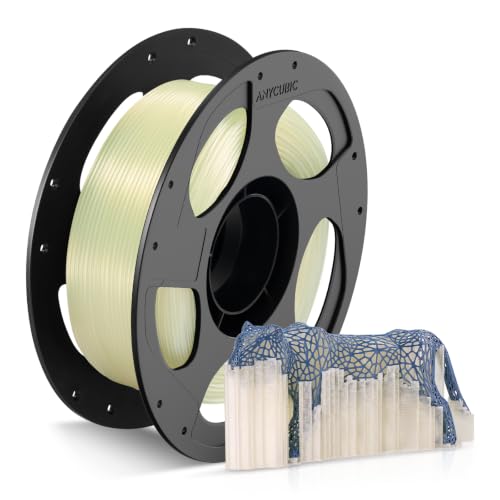
ANYCUBIC PVA Filament, 500g, Natural
A natural PVA spool in 500 g for water-soluble supports, vacuum-sealed in foil with a reusable spool, listed for PLA, PETG and TPU prints.
Pros
- 100% water-soluble support that dissolves in water, preserving fine details
- Reusable spool with a threaded connection system for stable pairing
- Vacuum-sealed in high-barrier aluminum foil with an anti-moisture seal
- Listed as a support material for PLA, PETG and TPU
Cons
- No nozzle, bed or speed settings are stated in the listing
- No diameter is stated in the listing
- Warranty description reads 'No', so no warranty is stated
- 500 g spool holds less filament than the 1 kg PLA spools
Other machines to compare
 SUNLU PLA 3D Printer FilamentCheck price on Amazon
 ELEGOO PLA 3D Printer Filament 1.75mm Black 1KGCheck price on Amazon
 OVERTURE 2KG Bundle High Speed PLA Filament 1.75mmCheck price on Amazon
 OVERTURE Matte PLA Filament 1.75mmCheck price on Amazon
 ELEGOO PLA Plus 3D Printer Filament 1.75mm White 1KGCheck price on Amazon
 SUNLU Silk Rainbow PLA FilamentCheck price on Amazon
Side by side
| Spec | SUNLU PLA Wood | SUNLU PLA Beige | EONO3D PVA 500g | ANYCUBIC PVA 500g |
|---|---|---|---|---|
| HQ Score | 58 | 58 | 57 | 55 |
| Material | PLA | PLA | PVA | PVA |
| Diameter | 1.75 mm | 1.75 mm | 1.75 mm | Not stated |
| Spool size | 1 kg | 1 kg | 500 g | 500 g |
| Nozzle temperature | 200-230°C | 200-230°C | 220–240°C | Not stated |
| Bed temperature | 50-65°C | 50-65°C | 30–35°C | Not stated |
| Print speed | 50-100mm/s | 50-100mm/s | <100mm/s | Not stated |
| Support use | Model filament | Model filament | Water-soluble support | Water-soluble support |
| Warranty | Not stated | Not stated | Not stated | No warranty stated |
Size and performance figures are the brand’s ratings quoted from listings on 5 November 2026.
Pla vs Pva Filament: How the Sides Differ
PLA is the model material. The SUNLU PLA listings describe a filament for 3D printing enthusiasts, with excellent layer adhesion and smooth printing, in wood color and beige. PVA filament is the support material. The ANYCUBIC and EONO3D listings describe a water-soluble filament for intricate prints and steep overhangs that dissolves in water so the main model keeps its fine details. ANYCUBIC says the supports dissolve with no manual removal and no sanding, while EONO3D says the softened support can be removed by hand or dissolved in warm water.
The split shows up in the settings each side states. SUNLU states a nozzle temperature of 200-230°C, a bed temperature of 50-65°C and a print speed of 50-100mm/s for its PLA spools. EONO3D states a nozzle temperature of 220–240°C, a bed temperature of 30–35°C and a print speed under 100mm/s for its PVA spool, while ANYCUBIC states no print settings at all. Spool size splits the other way: the PLA spools hold 1 kg each and the PVA spools hold 500 g each.
Support removal and storage
PVA earns its place by disappearing. ANYCUBIC calls its PVA 100% water-soluble and says to submerge the print to dissolve supports from complex internals, ball joints and fine details. EONO3D says its PVA softens at an optimal working temperature of 50-65°C, after which the support can be removed by hand or dissolved in warm water. EONO3D also says to dry the filament at 65-70°C for 8 hours before printing. The SUNLU PLA listings state no drying step.
Choose PLA if
- You are printing the model itself and want stated settings on the listing.
- You want 1 kg of 1.75 mm filament with +/‑0.02mm accuracy and neat winding.
- Wood color or beige fits the project.
Choose PVA filament if
- You are printing supports for overhangs, deep internal cavities or intricate geometry.
- You want supports that dissolve in water, as both PVA listings state.
- You accept a drying step before printing, as the EONO3D listing states.
Both PVA listings ship vacuum-sealed against humidity: ANYCUBIC in high-barrier aluminum foil with an anti-moisture seal, EONO3D vacuum-sealed with a built-in desiccant. EONO3D says to store the spool in a dry environment, and to dry the filament at 65-70°C for 8 hours before printing. For a dryer, see best filament dryer cabinets.
Project Match
Match the filament to the project, not the other way round:
- Everyday models in wood color: SUNLU PLA Wood.
- Everyday models in beige: SUNLU PLA Beige.
- Models with large overhangs or deep internal cavities: EONO3D PVA 500g as support.
- Models with fine detail and steep overhangs: ANYCUBIC PVA 500g as support.
FAQ: lasers and CNC
Can PVA filament print a model on its own?
The listings here present PVA as a support material, not a model material: ANYCUBIC lists it for supports on PLA, PETG and TPU prints. Print the model in PLA and use PVA for the supports.
How do you remove PVA supports?
Dissolve them in water. ANYCUBIC says to submerge the print so the supports dissolve with no manual removal and no sanding. EONO3D says the PVA softens at 50-65°C, after which the support can be removed by hand or dissolved in warm water.
Does PVA filament need drying before printing?
The EONO3D listing says yes: dry the filament at 65-70°C for 8 hours in a filament drying oven before printing. The ANYCUBIC listing states no drying step.
What print settings do the SUNLU PLA spools list?
A nozzle temperature of 200-230°C, a bed temperature of 50-65°C and a print speed of 50-100mm/s, for 1.75 mm filament with +/‑0.02mm accuracy.
Related: PVA vs HIPS filament, silk PLA vs wood PLA, PETG vs PC filament and best filament dryer cabinet.