CO2 Laser Water Chiller Explained: Types, Sizing, and Workshop Setup
A practical guide to CO2 laser water chillers: understand passive radiators versus active refrigeration, choose proper cooling capacity, and keep laser tubes safe.

CO2 laser cutters cut thicker wood and every kind of acrylic, including clear, and engrave glass, leather and stone. They need an exhaust route and tube cooling, so space planning matters as much as wattage.
Bare metal points to a fiber laser, clear acrylic to CO2, wood and leather on a budget to a diode, and thick stock or 3D carving to a CNC router. The Machine Finder narrows it down in five questions, and the material guide shows what each type can cut.
A practical guide to CO2 laser water chillers: understand passive radiators versus active refrigeration, choose proper cooling capacity, and keep laser tubes safe.
A practical guide explaining how long CO2 laser tubes last, comparing manufacturer ratings from 3,000 to 10,000 hours, and detailing workshop cooling and current…
An honest guide to whether a CO2 laser can cut metal: explore beam physics, wattage requirements, assist gas setups, and practical metal marking alternatives.
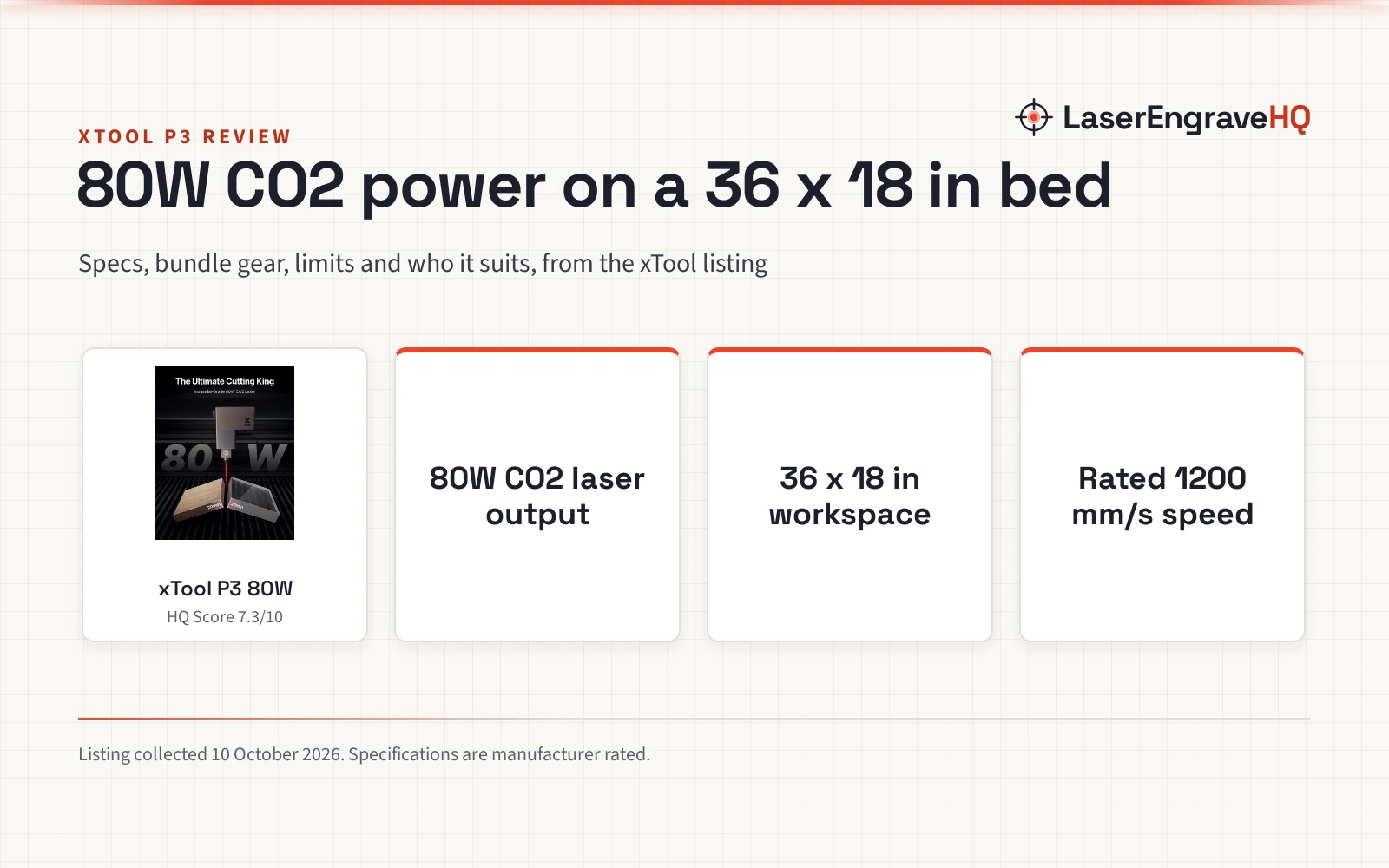
A research-based review of the xTool P3 80W CO2 laser cutter bundle: what the specs mean, who it suits, and who should skip it.
A practical guide to deciding if a CO2 laser is worth it: compare cutting speed, material capabilities, cooling needs and workshop space before buying.
A complete starter guide explaining what a CO2 laser engraver is, how the gas tube and optics work, what materials it cuts, and how…
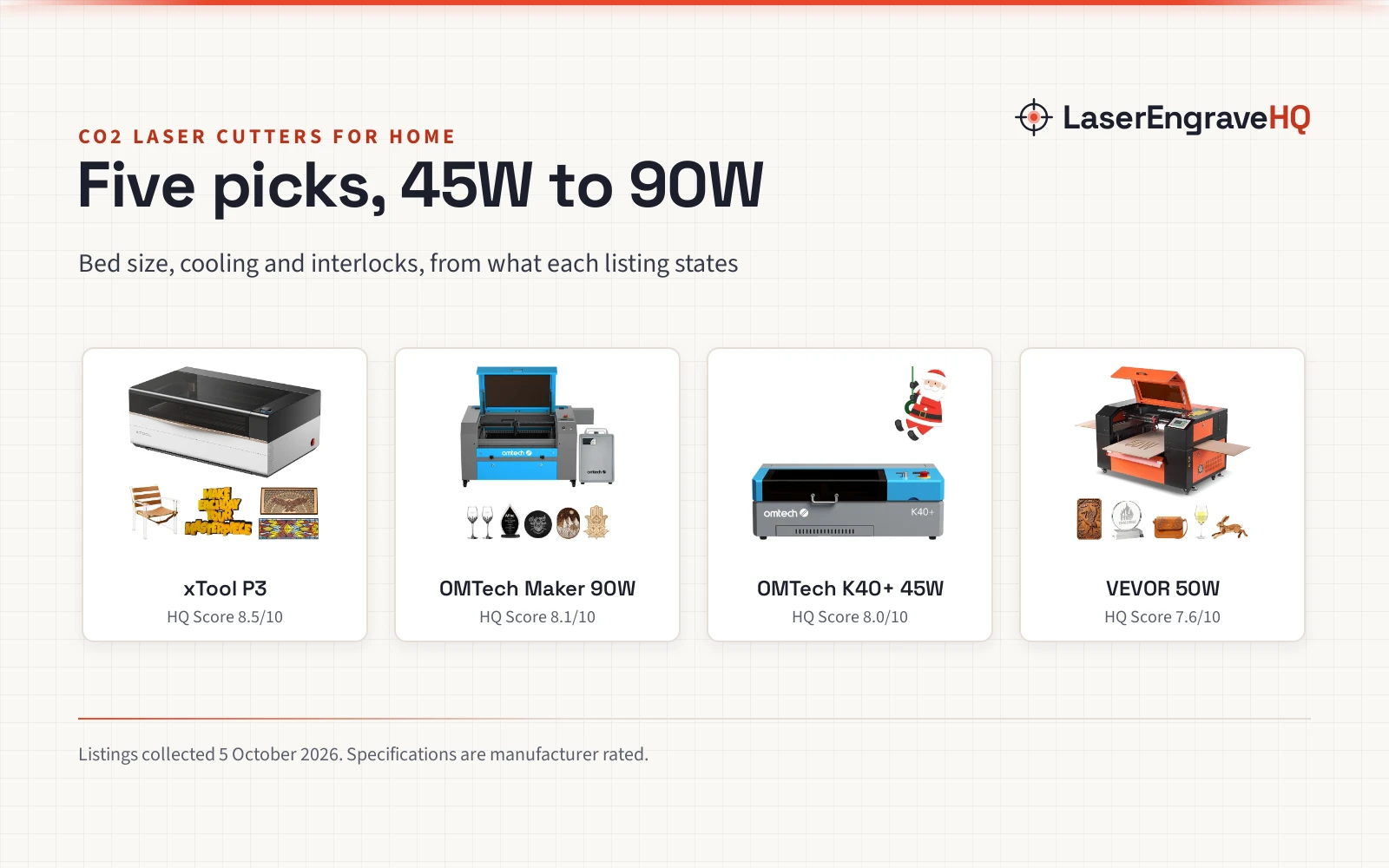
Five CO2 laser cutters for a home shop or garage, from a 12 x 8 in desktop K40-style machine to an enclosed 80W with…