Glitter Pla vs Silk Pla: Which One Should You Buy?
Two glitter PLA and two silk PLA filaments compared on finish, print settings and spool specs, using what each Amazon listing states.

On this page
Top picks at a glance
As an Amazon Associate I earn from qualifying purchases.
- 1
 PLA Filament 1.75mm,Glitter Galaxy,green blue9.7/10View on Amazon
- 2
 SUNLU 3D Printer Silk Filament,Shiny Silk PLA9.6/10View on Amazon
- 3
 AMOLEN Shiny 3D Printer PLA Filament9.6/10View on Amazon
- 4
 ERYONE Silk PLA Filament for 3D Printer 1.75mm9.6/10View on Amazon
Some prints are made to be looked at: a dragon with scales that catch the light, a vase for a shelf, a cosplay piece that needs to shine. When the model is the decoration, the filament finish does half the work, and the choice comes down to glitter pla vs silk pla, the two decorative PLA finishes in this comparison.
LaserEngraveHQ earns a commission from purchases made through these links, at no extra cost to you. Read our affiliate disclosure.
Verdict: pick glitter PLA when the sparkle is the point, and silk PLA when a smooth, glossy sheen suits the model better. The glitter listings here lean on sparkle, with Stronghero3D also describing a color shift, while the silk listings offer a steady sheen. Check the stated settings against the printer before choosing.
Machines on the list
PLA Filament 1.75mm,Glitter Galaxy,green blue
A color-shifting green, blue and purple glitter PLA with a fine, dense sparkle finish and a stated 2 year warranty.
Pros
- Color-shifting green, blue and purple tones that change with viewing angle
- Fine, dense glitter particles for a galaxy-like finish
- Stated 2 year warranty, the only one here
- Listed as compatible with Creality Ender 3 and Bambu Lab printers
Cons
- No print temperature or print speed is stated in the listing
- No diameter tolerance figure is stated in the listing
- No bed temperature is stated in the listing
SUNLU 3D Printer Silk Filament,Shiny Silk PLA
A silk PLA in light gold with a glossy, smooth surface, a stated 330 m per spool and print settings the maker lists in full.
Pros
- Nozzle 205-215°C, bed 60-80°C and speed 30-60 mm/s all stated
- Tolerance of +/- 0.02 mm stated
- 330 m per spool stated
- Vacuum sealed with a desiccant pack
Cons
- No warranty term is stated in the listing
- Only the light gold color is listed here
- The listed settings assume a heated bed at 60-80°C
- A silk sheen only: no glitter or color-shift effect
AMOLEN Shiny 3D Printer PLA Filament
A galaxy red glitter PLA with a stated print temperature of 200-220°C, a 1 kg spool and a transparent spool that shows the filament color.
Pros
- Print temperature 200-220°C and bed 0-50°C stated
- Print speed 30-60 mm/s and tolerance +/- 0.02 mm stated
- Transparent spool shows the filament color
- Reusable sealed vacuum bags included; defective filament reissued or refunded, per the listing
Cons
- No warranty term is stated in the listing
- The bullets call the finish both glitter and silk glossy
- Only the galaxy red color is listed here
ERYONE Silk PLA Filament for 3D Printer 1.75mm
A silk silver PLA with a smooth, shiny finish, a stated tolerance of +/- 0.03 mm and a 1 kg spool.
Pros
- Smooth, shiny silk finish with no polishing needed, per the listing
- Strong layer adhesion with no stringing or warping claimed
- Compatible with 99% of FDM printers, per the listing
- Vacuum sealed packaging with a built-in desiccant
Cons
- No warranty term is stated in the listing
- Tolerance of +/- 0.03 mm is wider than the +/- 0.02 mm on the AMOLEN and SUNLU listings
- No print temperature, bed temperature or print speed is stated in the listing
Other machines to compare
 ANYCUBIC Christmas Silk PLA Bundle 4KGCheck price on Amazon
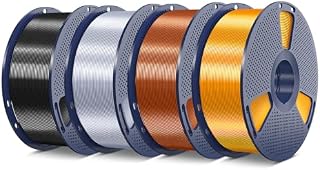 SUNLU Silk Pla Plus Filament 4kg BundleCheck price on Amazon
 SUNLU Multicolor 4-Color Silk PLA+ Filament BundleCheck price on Amazon
 SUNLU Silk 2.0 PLA 3D Printer FilamentCheck price on Amazon
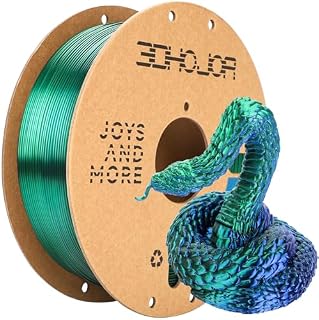 3DHoJor Silk PLA Filament 1.75mm Blue Green Dual Color PLA 3DCheck price on Amazon
 Polymaker Panchroma Silk PLA Filament 1.75mm for 3D PrintingCheck price on Amazon
Side by side
| Spec | Stronghero3D Galaxy PLA | SUNLU Silk PLA Gold | AMOLEN Glitter PLA Red | ERYONE Silk PLA Silver |
|---|---|---|---|---|
| HQ Score | 68 | 60 | 59 | 56 |
| Side | Glitter PLA | Silk PLA | Glitter PLA | Silk PLA |
| Diameter | 1.75 mm | 1.75 mm | 1.75 mm | 1.75 mm |
| Tolerance | Not stated in the listing | +/- 0.02 mm | +/- 0.02 mm | +/- 0.03 mm |
| Spool | 1 kg | 1 kg (2.2 lbs), 330 m | 1 kg (2.2 lbs) | 1 kg (2.1 lbs) |
| Print temperature | Not stated in the listing | 205-215°C | 200-220°C | Not stated in the listing |
| Bed temperature | Not stated in the listing | 60-80°C | 0-50°C | Not stated in the listing |
| Print speed | Not stated in the listing | 30-60 mm/s | 30-60 mm/s | Not stated in the listing |
| Color | Green blue purple gradient | Silk Light Gold | Galaxy Red | Silk Silver |
| Warranty | 2 years | Not stated in the listing | Not stated in the listing | Not stated in the listing |
Size and performance figures are the brand’s ratings quoted from listings on 13 November 2026.
Glitter pla vs silk pla: finish and look
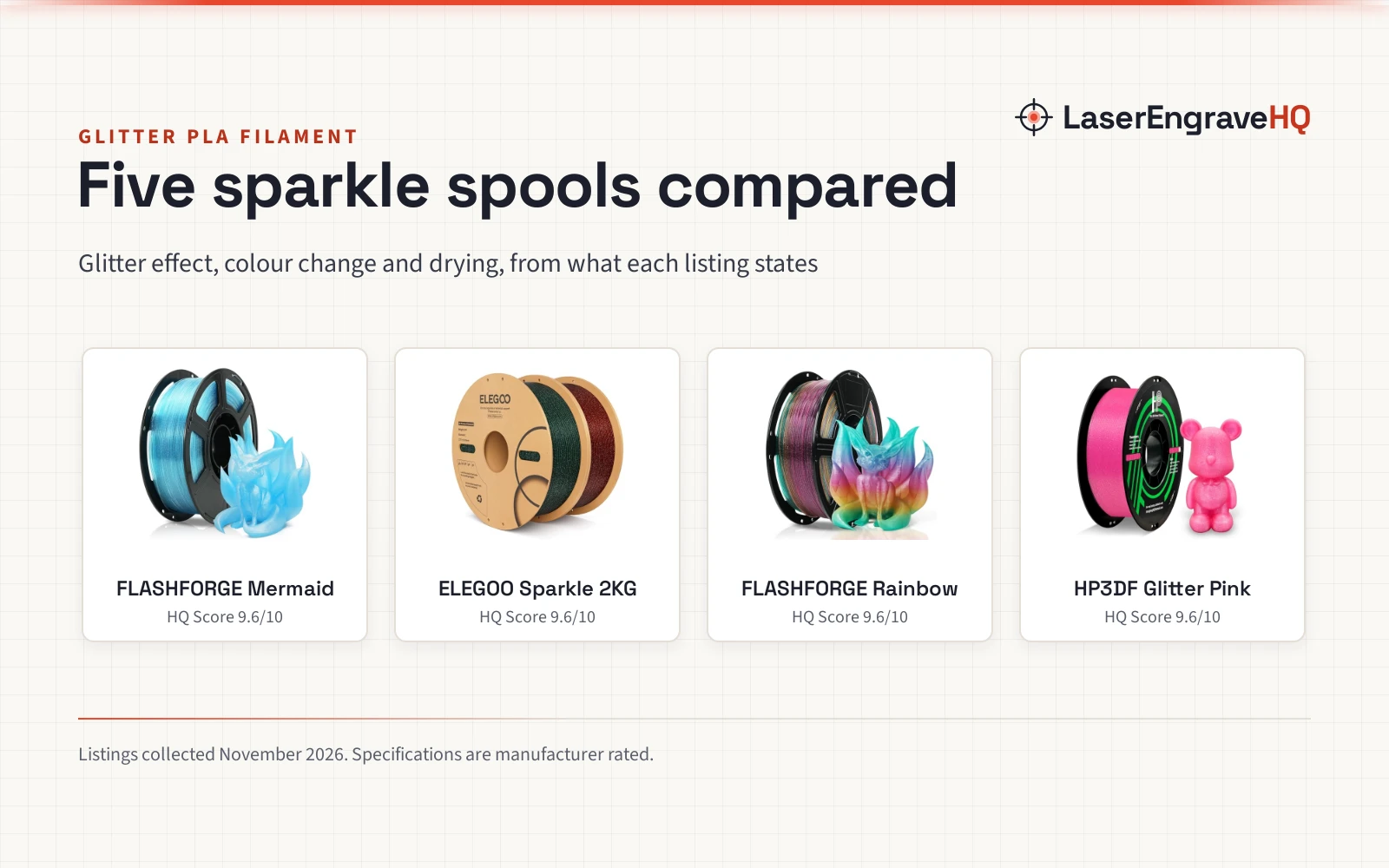
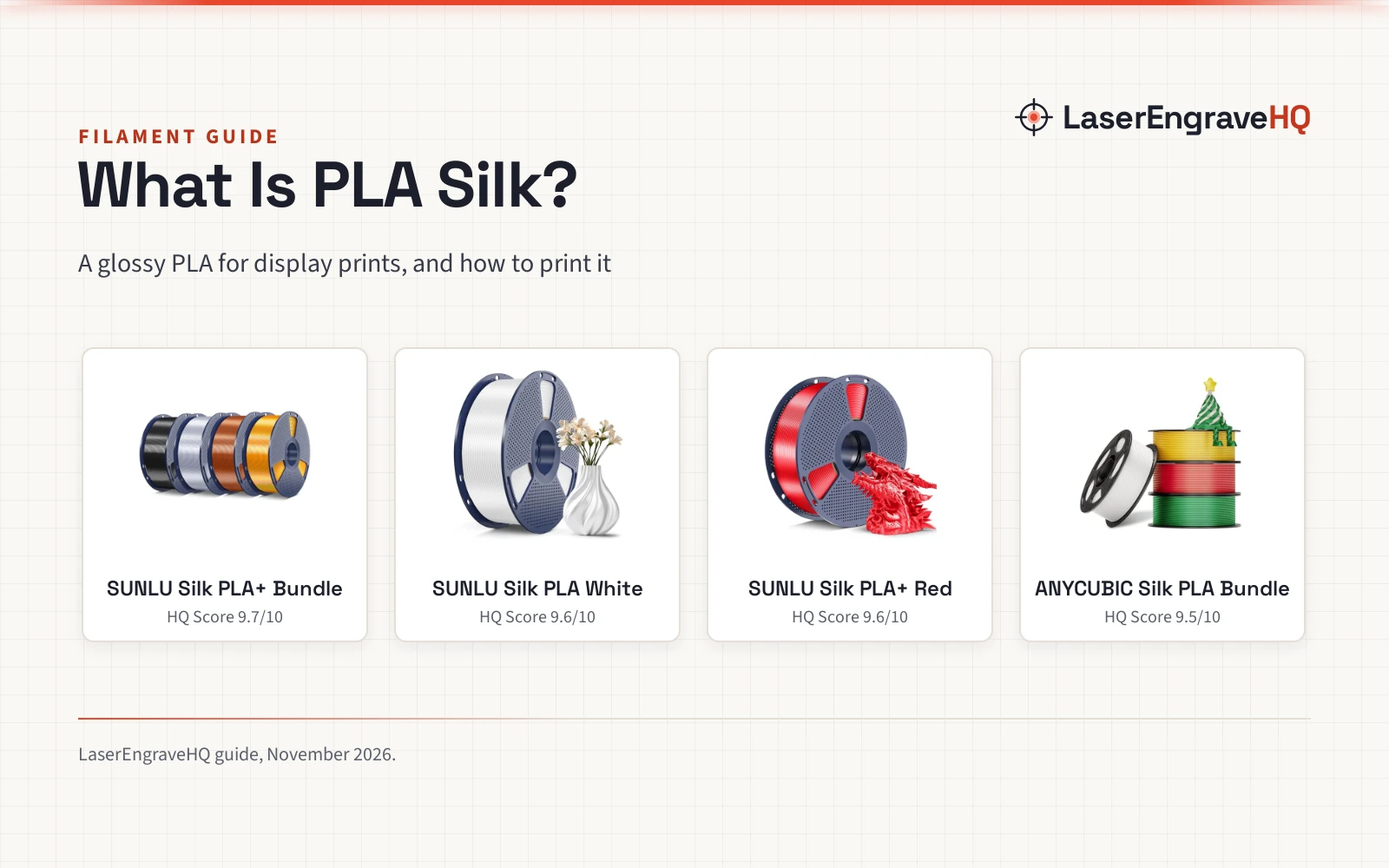
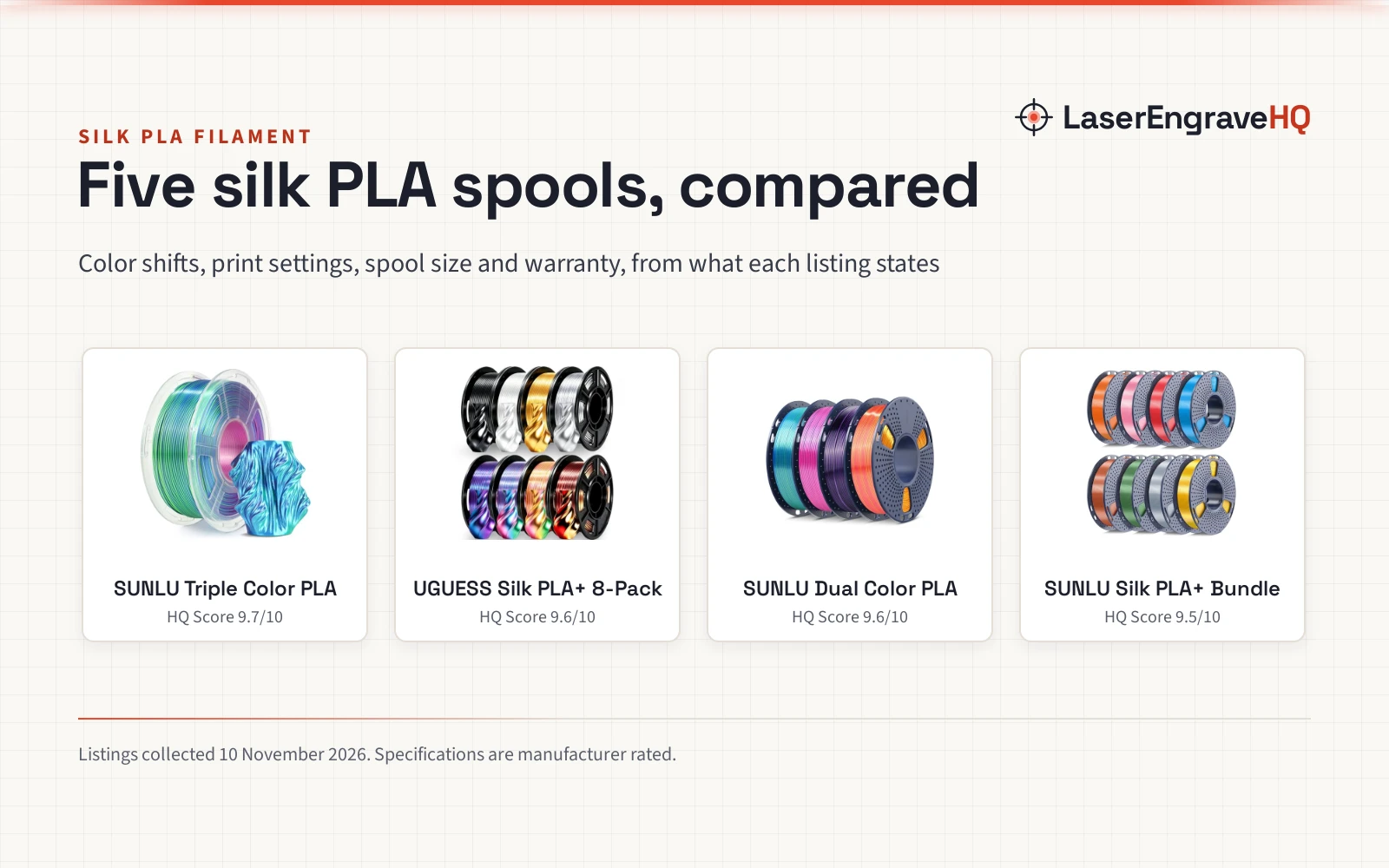
Glitter PLA gets its look from sparkle in the filament. AMOLEN describes its galaxy red as a flat red with a hint of sparkle, and Stronghero3D describes a green, blue and purple color shift with a fine, dense sparkle that changes with the viewing angle. Silk PLA gets its look from a smooth, glossy surface: SUNLU calls its light gold glossy and silky with no polishing needed, and ERYONE describes its silver as smooth and shiny like real silk, also with no extra polishing needed.
The difference matters for the model. Glitter suits pieces where sparkle adds to the design, such as the dragons, animals and fantasy models Stronghero3D names; that listing also describes a color shift with the viewing angle. Silk suits pieces where a clean sheen carries the design, such as the art and craft prints SUNLU names. No listing states a surface roughness figure, so the choice rests on the finish each maker describes.
Print settings
AMOLEN states a print temperature of 200-220°C with a bed of 0-50°C and a print speed of 30-60 mm/s. SUNLU states a nozzle temperature of 205-215°C, a bed temperature of 60-80°C and a print speed of 30-60 mm/s. Both state a diameter of 1.75 mm with a tolerance of +/- 0.02 mm. ERYONE and Stronghero3D state no print temperature, bed temperature or print speed in their listings, so their settings are a gap to check before printing.
Where the listings state a nozzle temperature or a speed, the figures sit close together: both stated speed ranges match at 30-60 mm/s, and the stated nozzle ranges overlap. The gap is in what is missing, not in what is stated: ERYONE states a tolerance of +/- 0.03 mm, wider than the +/- 0.02 mm on the AMOLEN and SUNLU listings, while Stronghero3D states no tolerance figure at all.
Compatibility
Every listing here is a 1.75 mm PLA filament for FDM printers. AMOLEN names Comgrow Creality Ender, ANYCUBIC, Creality 3D, SUNLU, DO3D, MYNT3D and 3Doodler among compatible printers, and notes compatibility with 3D pens. Stronghero3D names Creality Ender 3 and Bambu Lab. ERYONE states compatibility with 99% of FDM printers and 3D pens. SUNLU states that its spool size suits hanging on a lot of FDM printers. No listing here states a printer that is excluded, so compatibility rests on the 1.75 mm diameter and the named printers.
Ease of printing
AMOLEN claims good shaping, strong toughness, no bubble, no jamming, no warping, and smooth feeding without clogging. SUNLU claims smooth feeding without clogging, minimum tolerance, low warping, high purity with low shrinkage and strong interlayer adhesion, plus neatly wound lines to avoid knots. ERYONE claims tangle-free winding, no stringing and no warping, with strong layer adhesion. Stronghero3D claims smooth extrusion and smooth feeding, with reduced bubbles, stringing and warping. These are the makers’ claims, stated on the listings, and they read similarly across both sides: neither side claims an ease-of-printing edge the other lacks.
Packaging and storage
AMOLEN ships its filament on a transparent spool and includes reusable sealed vacuum bags to keep the filament dry and keep out dust. SUNLU vacuum seals each spool with a desiccant pack and states that the packaging avoids dust and protects the filament. ERYONE uses neatly lined up, reusable vacuum sealed packaging with a built-in desiccant. Stronghero3D states that its filament is dried before packaging to help minimize moisture-related bubbles. Dry storage is the shared theme: every listing here describes vacuum sealing or drying as part of the package.
Support and warranty
Stronghero3D is the only listing here with a stated warranty term: 2 years. AMOLEN, SUNLU and ERYONE state no warranty term in their listings. AMOLEN states that defective filament can be reissued or refunded, and lists professional technical guidance with 24/7 customer service. SUNLU and ERYONE state no after-sales terms in their listings.
Choose the Stronghero3D Galaxy PLA if
- You want a color-shifting glitter finish with a fine, dense sparkle.
- A stated 2 year warranty matters to you.
- You print decorative models such as dragons, animals and fantasy pieces.
Choose the SUNLU Silk PLA Gold if
- You want full stated print settings, with nozzle, bed and speed figures.
- You want a glossy silk sheen in light gold.
- You value a stated 330 m per spool and vacuum sealed packaging.
Choose the AMOLEN Glitter PLA Red if
- You want a red glitter finish with stated print settings.
- You like a transparent spool that shows the filament color.
- You want the maker’s stated after-sales cover for defective filament.
Choose the ERYONE Silk PLA Silver if
- You want a smooth silk silver finish.
- You print on a 1.75 mm FDM printer and want the maker’s stated broad compatibility.
- You value strong layer adhesion claims and vacuum sealed packaging.
Project Match
Match the filament to the model:
- Dragons, animals, sculptures and fantasy models: Stronghero3D Galaxy PLA, named by its maker for those pieces.
- Art and craft prints with a glossy sheen: SUNLU Silk PLA Gold or ERYONE Silk PLA Silver.
- Christmas decorations and bright display pieces: AMOLEN Glitter PLA Red, named by its maker for Christmas decorations.
- Pieces where the stated print settings matter: SUNLU Silk PLA Gold or AMOLEN Glitter PLA Red, the two listings with full stated settings.
FAQ: lasers and CNC
Is glitter PLA harder to print than silk PLA?
Not on the evidence in these listings. AMOLEN and SUNLU both state a print speed of 30-60 mm/s, and both of those listings claim smooth feeding without clogging. The listings that state full settings sit on both sides, so neither side looks harder to print from what is stated.
Does glitter PLA clog the nozzle?
Neither glitter listing here states a clogging problem. AMOLEN claims feeding without clogging the nozzle or extruder, and Stronghero3D claims smooth extrusion and smooth filament feeding. Both are the makers’ claims, stated on the listings.
Can glitter PLA and silk PLA run on the same printer?
Yes, where the printer takes 1.75 mm PLA filament. Every listing here is 1.75 mm PLA for FDM printers, and AMOLEN, Stronghero3D and ERYONE name compatible printers or state broad FDM compatibility. Check the stated diameter and the printer’s filament size before loading a new spool.
Which side suits decorative prints?
Both, for different models. Glitter suits pieces where sparkle adds to the design, such as the dragons and fantasy models Stronghero3D names; that listing also describes a color shift. Silk suits pieces where a smooth, glossy sheen carries the design, such as the art and craft prints SUNLU names. Pick by the finish the model needs.
Do glitter and silk PLA need different print settings?
The nozzle ranges overlap and both state a print speed of 30-60 mm/s, but the bed temperatures do not overlap: AMOLEN states 200-220°C with a bed of 0-50°C, and SUNLU states a nozzle temperature of 205-215°C with a bed of 60-80°C. ERYONE and Stronghero3D state no settings, so check the listing before printing with those spools.
Related: silk PLA vs wood PLA, marble PLA vs silk PLA, silk PLA vs matte PLA and silk PLA vs PLA Plus.