Flexible Build Plate vs Pei Sheet: Which One Should You Buy?
A flexible build plate and a PEI sheet compared side by side, with 4 listings showing how each surface holds, releases and cleans.

On this page
Top picks at a glance
As an Amazon Associate I earn from qualifying purchases.
- 1
 GOMENL Double Sided Textured PEO PEK Build Plate9.6/10View on Amazon
- 2
 AJOYIB Double Sided Textured PEI Build Plate9.6/10View on Amazon
- 3
 Upgraded PEI Build Plate for Prusa Core One Double9.6/10View on Amazon
- 4
 Sovol 2 Pack Resin 3D Printer Flex Spring Steel9.5/10View on Amazon
A print that holds through the whole job and then pops off the plate with a bend is the difference between a smooth evening of making and a stuck part that needs a scraper. The choice comes down to the surface on the plate, and the common answers are a patterned flexible plate and a textured PEI sheet. This comparison looks at flexible build plate vs pei sheet through listings on both sides, and goes through surface, size, heat, filaments and release using what each listing states.
LaserEngraveHQ earns a commission from purchases made through these links, at no extra cost to you. Read our affiliate disclosure.
Verdict: Pick a flexible build plate for patterned bottoms and resin printing, where the GOMENL PEO and PEK surfaces and the Sovol resin plates show the side at its best. Pick a pei sheet for textured PEI adhesion across PLA, PETG and ABS, where the AJOYIB and G-Hubble plates state the filaments outright and the AJOYIB states a 120°C heat limit. Both sides use spring steel plates that bend, so the choice turns on surface and fit, not on flex alone.
Machines on the list
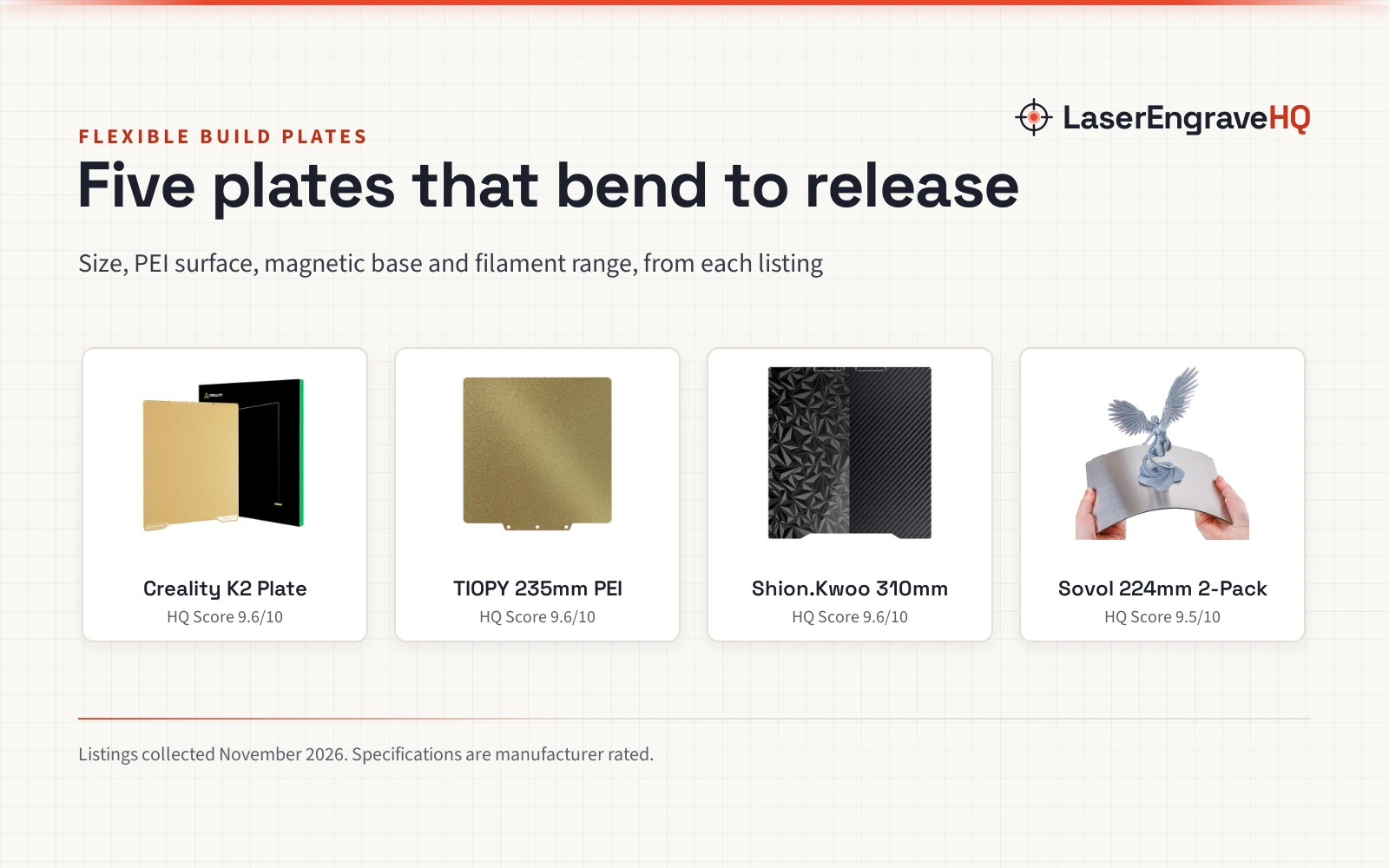
GOMENL Double Sided Textured PEO PEK Build Plate
A double-sided spring steel plate with textured PEO and kaleidoscope PEK surfaces, 257 x 257 mm for Bambu Lab X1, X1C, X1E, P1P, P1S and A1.
Pros
- 2 pattern types on a plate: diamond PEO and kaleidoscope PEK
- PEO bed withstands 150°C and PEK coating withstands 180°C
- PLA at 60 to 65°C and PETG at 70 to 80°C, as the listing recommends
- Bend the plate to release a print, with no scraper needed
Cons
- No warranty term is stated
- Holographic patterns on the smooth PEK plate are not permanent
- Do not remove the model while the model and plate are still warm
- Fits Bambu Lab machines only, as the listing states
AJOYIB Double Sided Textured PEI Build Plate
A double-sided textured PEI spring steel plate, 235 x 235 mm, made for the Flashforge Adventurer 5M.
Pros
- Double-sided textured PEI for PLA, PETG and ABS
- Exact 235 x 235 mm size for the Adventurer 5M, with no modifications needed
- Withstands repeated heating cycles up to 120°C
- Bend the plate once cooled to release a print, with no scraper or tool needed
Cons
- No warranty term is stated
- No cleaning steps are stated
- No weight or thickness is stated
- Fits the Adventurer 5M only, as the listing states
Upgraded PEI Build Plate for Prusa Core One Double
A double-sided textured PEI powder-coated plate, 254 x 241 mm, for the Prusa Core One and i3 MK3S, MK4 and MK2.5S machines.
Pros
- Double-sided textured PEI for PLA, ABS, PETG, PC and PEEK
- Three-layer design on stainless spring steel
- No glue or tape needed, as the listing states
- Clean with 75% alcohol or mild soap water, with a 150°C preheat for stubborn stains
Cons
- Heat limit is unclear: a bullet claims 300°C, another says up to 130°C
- No warranty term is stated
- Needs spring tension checks and cleaning every 50 hours of use
- No weight is stated
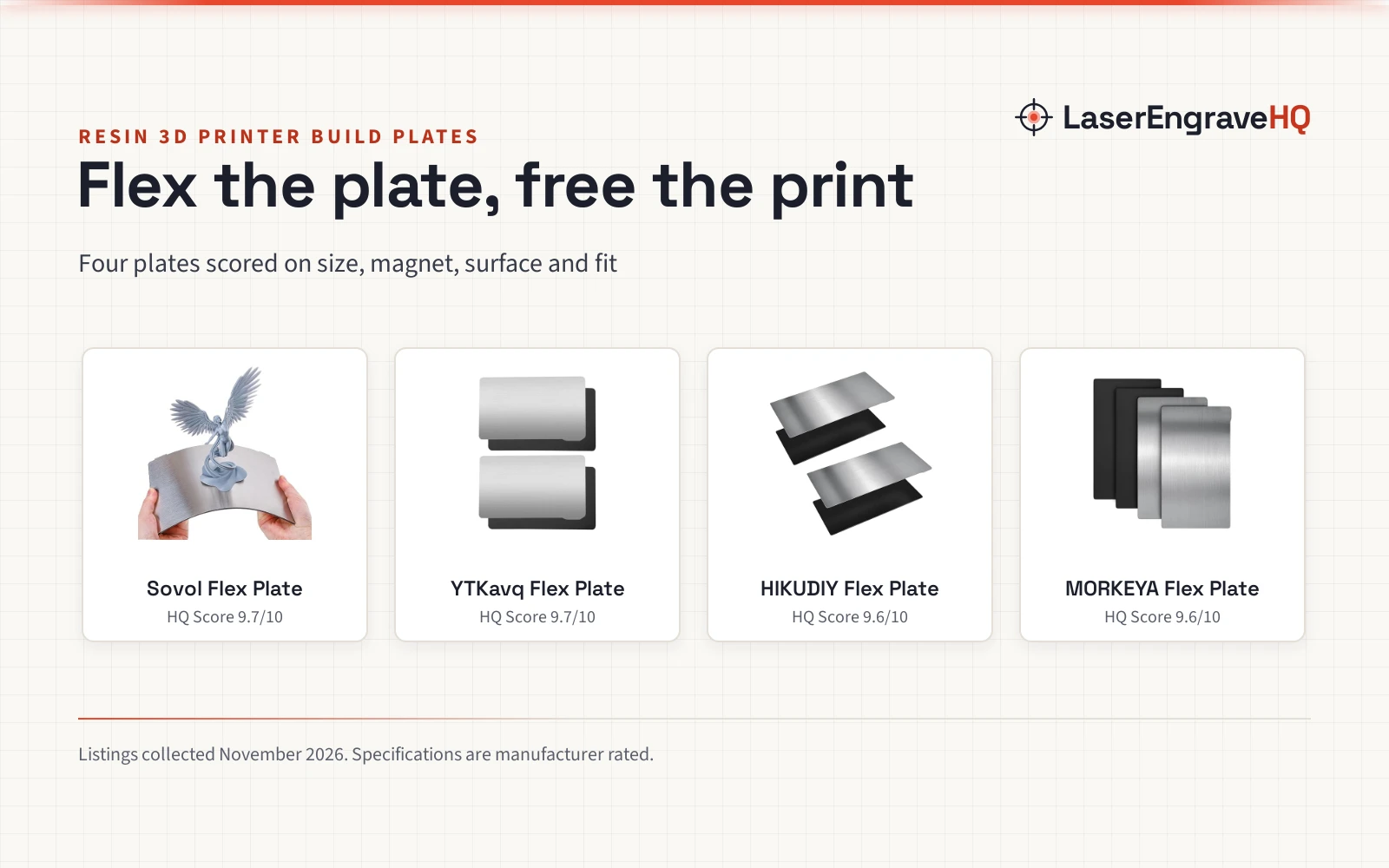
Sovol 2 Pack Resin 3D Printer Flex Spring Steel
A 2-pack of flex spring steel plates with a magnetic base, 160 x 96 mm, for Mars 4, Mars 4 Ultra, Mars 5, Mars 5 Ultra and Photon Mono 2 resin printers.
Pros
- 2-pack with a magnetic base, so printing continues while one plate is cleaned
- 2 lift tabs make it easier to remove the steel plate from the magnetic base
- Brushed surface gives better adhesion, as the listing states
- Spring steel with high chromium content resists corrosion and rust
Cons
- Wait 72 hours after installation and before printing
- No warranty term is stated
- Needs a spacer or a z limit switch adjustment after installation
Other machines to compare
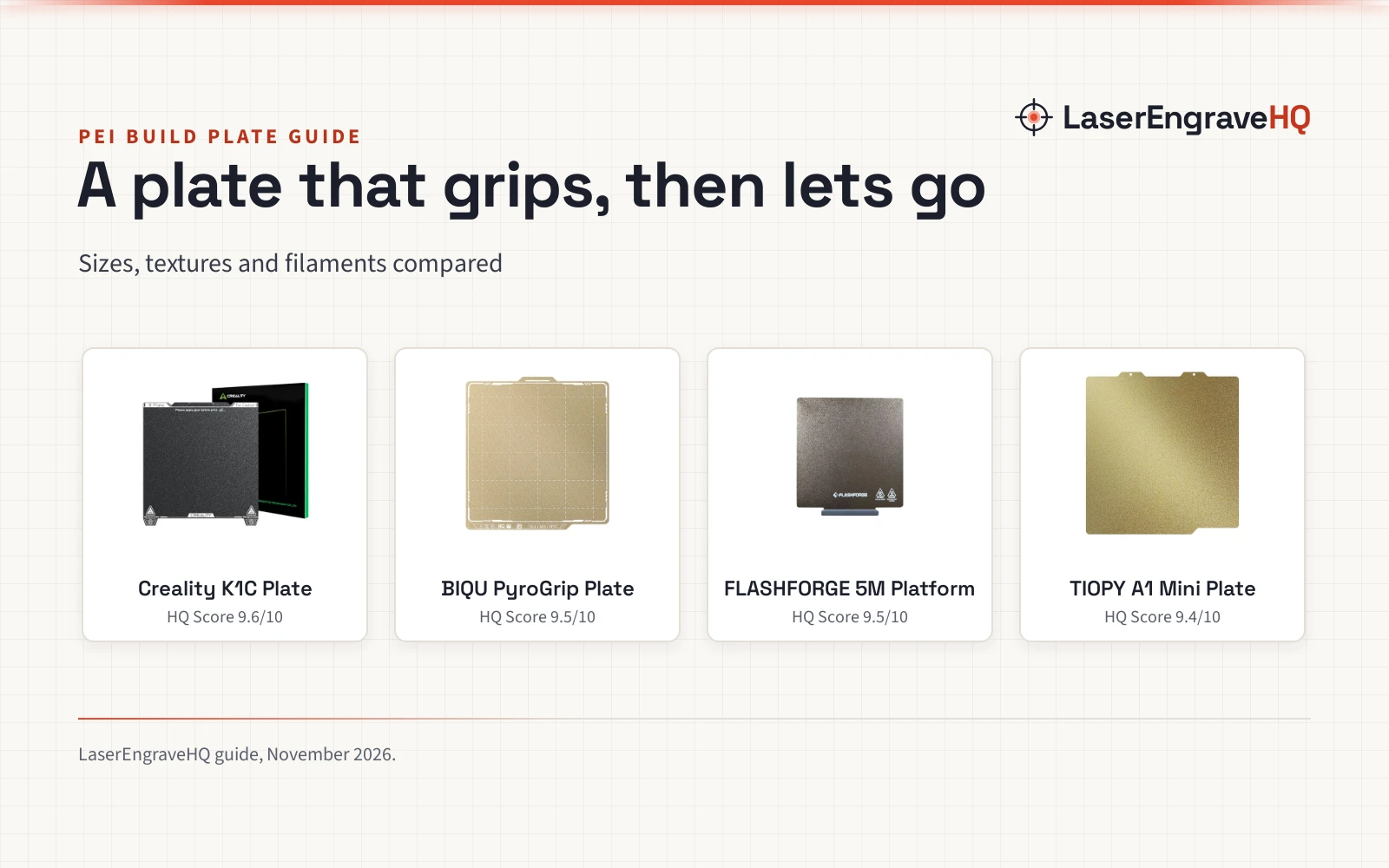
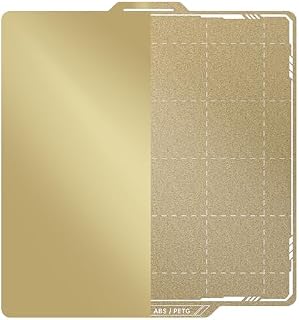 BIQU PyroGrip Smooth PEI+Textured PEI Build Plate forCheck price on Amazon
 Sahvaim PEI Honeycomb SheetCheck price on Amazon
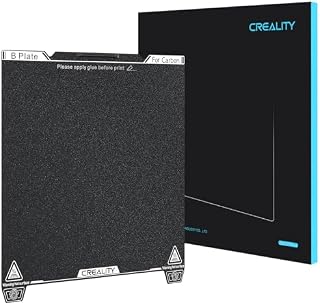 Creality Official K1C Build PlateCheck price on Amazon
 310x310mm Qidi Plus 4 Build Plate PEI Sheet Double SidedCheck price on Amazon
 IdeaFormer-3D Smooth PEO+Textured PEI Build Plate 235x235mmCheck price on Amazon
 YOOPAI Double-Sided PEI + PEO Sheet and Flexible MagneticCheck price on Amazon
Side by side
| Spec | GOMENL PEO PEK Plate | AJOYIB PEI Plate | G-Hubble PEI Plate | Sovol Flex Plate |
|---|---|---|---|---|
| HQ Score | 60 | 58 | 57 | 55 |
| Size | 257 x 257 mm | 235 x 235 mm | 254 x 241 mm | 160 x 96 mm (title), 224 x 129 mm (spec table) |
| Surface | Textured PEO, kaleidoscope PEK | Textured PEI, both sides | Textured PEI, both sides | Brushed spring steel |
| Filaments | PLA, TPU, PETG | PLA, PETG, ABS | PLA, ABS, PETG, PC, PEEK | Resin printing |
| Heat limit | 150°C PEO, 180°C PEK | 120°C | 130°C (also states 300°C) | Not stated |
| Release | Bend plate after cooling | Bend plate once cooled | Bend plate after cooling | Bend plate; 2 lift tabs off magnetic base |
| Fits | Bambu Lab X1, X1C, X1E, P1P, P1S, A1 | Flashforge Adventurer 5M | Prusa Core One, i3 MK3S, MK4, MK2.5S | Mars 4, Mars 4 Ultra, Mars 5, Mars 5 Ultra, Photon Mono 2 |
| Warranty | Not stated | Not stated | Not stated | Not stated |
Size and performance figures are the brand’s ratings quoted from listings on 11 November 2026.
How each side releases a print
Every plate here is spring steel. The GOMENL, AJOYIB and G-Hubble listings say to bend the plate to release a cooled print, while the Sovol plates bend easily and lift off the magnetic base with 2 tabs. The GOMENL and the AJOYIB both say to let the model and the plate cool, then bend the plate, with no scraper or tool needed. The G-Hubble says to let the plate cool to room temperature for automatic release, or bend the spring steel slightly. The Sovol pair adds 2 lift tabs for lifting the steel plate off the magnetic base, and the spare plate lets printing continue while the other plate is cleaned.
Flexible build plate vs pei sheet on heat and filaments
The GOMENL states the highest clear heat limits: the PEO bed withstands 150°C and the PEK coating 180°C, against 120°C for the AJOYIB. The G-Hubble gives two figures, 130°C and 300°C, so its heat limit is unclear and cannot be ranked against the others. The GOMENL lists PLA at 60 to 65°C and PETG at 70 to 80°C. For filaments, the AJOYIB lists PLA, PETG and ABS, the G-Hubble lists PLA, ABS, PETG, PC and PEEK, and the GOMENL lists PLA, TPU and PETG. The Sovol plates are for resin printers, so no filament list applies.
Size and fit
Each plate fits a single printer family. The GOMENL measures 257 x 257 mm, or 10.11 x 10.11 x 0.15 in, for Bambu Lab X1, X1C, X1E, P1P, P1S and A1. The AJOYIB measures 235 x 235 mm for the Flashforge Adventurer 5M. The G-Hubble measures 254 x 241 mm for the Prusa Core One and i3 MK3S, MK4 and MK2.5S machines. The Sovol pair measures 160 x 96 mm for Mars 4, Mars 4 Ultra, Mars 5, Mars 5 Ultra and Photon Mono 2, though its spec table lists 224 x 129 mm. Confirm the size of the printer before buying.
Cleaning and care
The GOMENL says to wipe the plate with a wet paper towel or IPA before each use, and notes that the holographic patterns on the smooth PEK plate are not permanent. The G-Hubble says to clean the PEI surface with 75% alcohol or mild soap water, preheat the plate to 150°C for stubborn stains, and clean the platform every 50 hours of use. The Sovol says to clean the plate with alcohol so no resin or dust is left, and to wait 72 hours after installation and before printing. The AJOYIB listing states no cleaning steps.
What the listings leave unclear
2 listings contradict themselves. The G-Hubble claims the platform withstands 300°C heat in a bullet and says it handles temperatures up to 130°C in another, so its heat limit is unclear. The Sovol title gives a plate size of 160 x 96 mm while its spec table lists a model of 224 x 129 mm, so the size to order is unclear. No listing here states a warranty term or a safety certification.
Choose a flexible build plate if
- You print on a Bambu Lab X1, X1C, X1E, P1P, P1S or A1 and want diamond PEO or kaleidoscope PEK patterns.
- You print resin on a Mars or Photon machine and want a 2-pack of flex plates with a magnetic base.
Choose a pei sheet if
- You print on a Flashforge Adventurer 5M and want textured PEI on both sides for PLA, PETG and ABS.
- You print on a Prusa Core One or i3 machine and want textured PEI for PLA, ABS, PETG, PC and PEEK.
Project Match
- Patterned bottoms on Bambu Lab prints: GOMENL PEO PEK Plate, 257 x 257 mm.
- PLA, PETG and ABS on an Adventurer 5M: AJOYIB PEI Plate, 235 x 235 mm.
- PLA, ABS, PETG, PC and PEEK on a Prusa: G-Hubble PEI Plate, 254 x 241 mm.
- Resin prints on Mars and Photon machines: Sovol Flex Plate, 2-pack (title size 160 x 96 mm; spec table lists 224 x 129 mm).
FAQ: lasers and CNC
Is a PEI sheet a flexible build plate?
The PEI sheets here are spring steel plates with a textured PEI coating, so they bend to release a print just like the flexible plates. The difference is the surface: textured PEI against PEO and PEK patterns.
What filaments work on a PEI sheet?
The AJOYIB lists PLA, PETG and ABS, and the G-Hubble lists PLA, ABS, PETG, PC and PEEK. The G-Hubble listing says no glue or tape is needed.
How do you remove a print from a flexible build plate?
Let the model and the plate cool, then bend the plate to release the model. The GOMENL warns against using a scraper or a tool on the surface, and not to remove the model while the model and plate are still warm.
What size build plate do I need?
Match the plate to the printer: 257 x 257 mm for the Bambu Lab machines, 235 x 235 mm for the Adventurer 5M, 254 x 241 mm for the Prusa machines, and 160 x 96 mm per the title for the Mars and Photon machines, though the Sovol spec table lists 224 x 129 mm. Confirm the size of the printer before buying.
Related: 3D printer filament types, best 3D printer bed adhesive, 3D printer maintenance and the 3D printers hub. Also see the best 3D print removal tool.