Face Mill vs Fly Cutter CNC: Which One Should You Buy?
A face mill flattens with several indexable carbide inserts while a fly cutter sweeps one tool bit: how each cuts, where each wins, and which fits your machine.

On this page
Top picks at a glance
As an Amazon Associate I earn from qualifying purchases.
- 1
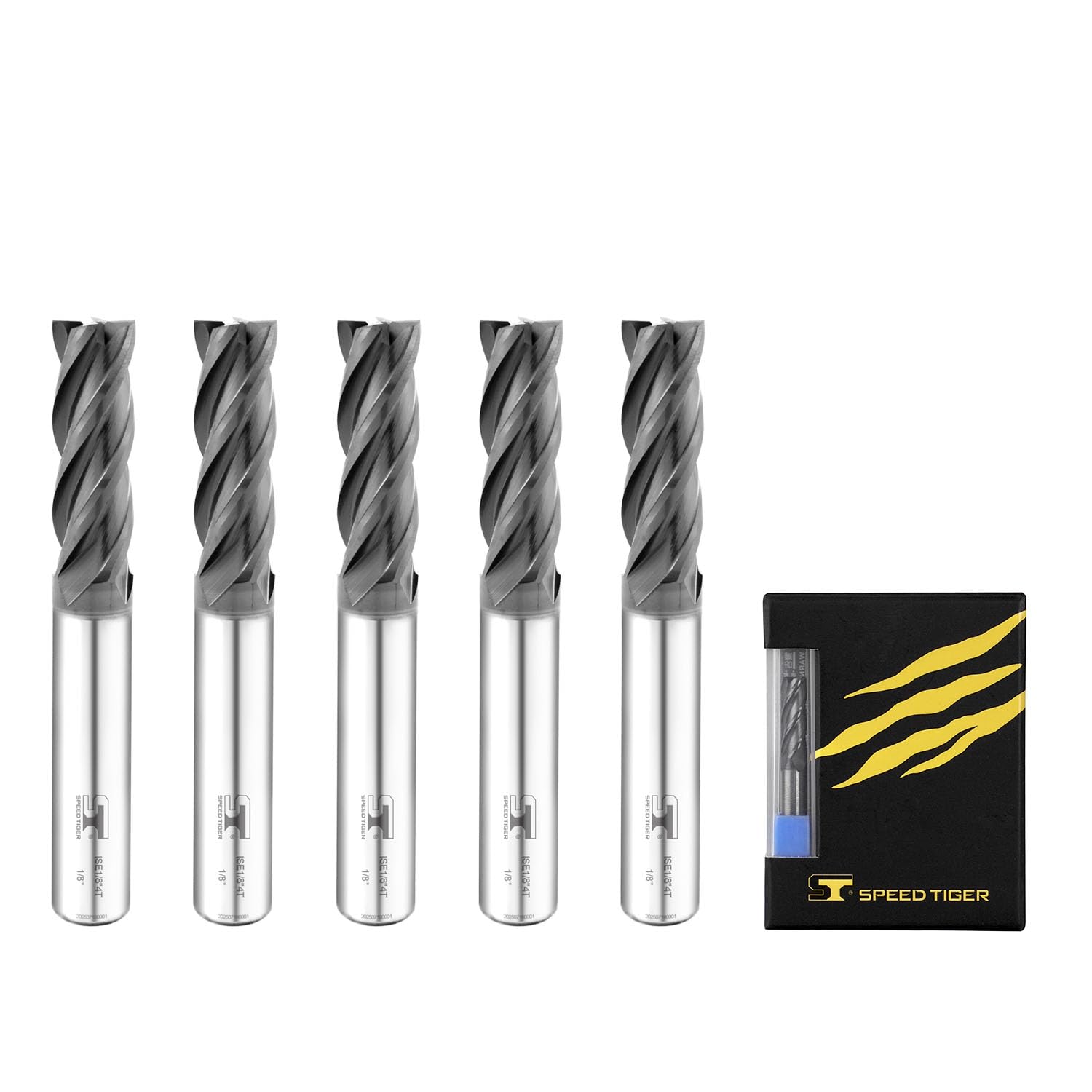 SPEED TIGER ISE Carbide End Mill 1/8”9.8/10View on Amazon
- 2
 Genmitsu 40pcs End Mills CNC Router Bits9.7/10View on Amazon
- 3
 4Pcs Carbide Chamfer End Mill V Groove Router Bit 60 Degree9.7/10View on Amazon
- 4
 8Pcs End Mill Bits HSS CNC End Mill Cutter Drill BitsView on Amazon
- 5
 SpeTool 5PCS Carbide Singe Flute End Mill SetView on Amazon
- 6
 SpeTool 5PCS O FluteView on Amazon
- 7
 SpeTool 5PCS Carbide Spiral O Flute End Mill with 1/16 InchView on Amazon
- 8
 End Mill Set 4-Flute CNC Milling Bit 3/16" Cutting Dia 1/4"View on Amazon
- 9
 End Mill 4-Flute CNC Milling Bit 3/4" Cutting Dia 3/4" ShankView on Amazon
You need one face of an aluminum plate dead flat, or the spoilboard on your CNC router has seen better days. That is the face mill vs fly cutter CNC question: both tools sweep a wide circle to flatten a surface, but a face mill does it with several indexable carbide inserts while a fly cutter does it with a single tool bit. The face mill removes material faster; the fly cutter costs less and can leave a finer finish. Which one belongs in your spindle depends on your machine, your shank and how much surface you need to cover.
Other machines to compare
 8Pcs End Mill Bits HSS CNC End Mill Cutter Drill BitsCheck price on Amazon
 SpeTool 5PCS Carbide Singe Flute End Mill SetCheck price on Amazon
 SpeTool 5PCS O FluteCheck price on Amazon
 SpeTool 5PCS Carbide Spiral O Flute End Mill with 1/16 InchCheck price on Amazon
 End Mill Set 4-Flute CNC Milling Bit 3/16" Cutting Dia 1/4"Check price on Amazon
 End Mill 4-Flute CNC Milling Bit 3/4" Cutting Dia 3/4" ShankCheck price on Amazon
LaserEngraveHQ earns a commission from purchases made through these links, at no extra cost to you. Read our affiliate disclosure.
Below: how each cutter works, where each one wins, and which one fits your machine.
Face mill vs fly cutter CNC: the short answer
A face mill is a round cutter body loaded with multiple indexable carbide inserts that each take a small cut as the body spins. The Accusize listing shows a 3 inch, 5 flute face mill on an R8 shank with TPG322 inserts, and the ApplianPar listing pairs an R8 FMB22 shank with a 400R 50MM shell and 4 APMT1604 inserts. A fly cutter is simpler: one tool bit held in a bar, like the Steelex M1096 fly cutter set with tool bits or the Grizzly H5935 set with a 1/2 inch shank. Pick the face mill for fast stock removal across wide surfaces; pick the fly cutter for occasional surfacing on a budget.
What a face mill does
A face mill spreads the work across inserts. With 5 flutes on the 3 inch Accusize or 4 inserts on the 50MM ApplianPar shell, each insert cuts a little on every revolution, so the tool advances faster than a single bit can. When an edge dulls, you loosen the screw, rotate the insert to a fresh edge or swap in a new one: no grinding, no resharpening. The listings here use R8 shanks, the taper found on Bridgeport-style knee mills, with the shell bolting to an FMB22 arbor. The LingGan listing shows the same pattern at 2.5 inches (63MM) with an R8-FMB22 shank. Face mills are the production choice: more inserts, more metal removed per pass, more inserts to buy when they wear.
What a fly cutter does
A fly cutter swings a single tool bit in a wide circle. The Steelex M1096 and Grizzly H5935 listings are sets with tool bits included, and the Grizzly lists a 1/2 inch shank. One cutting edge means a light cut per revolution, so surfacing takes longer than with a face mill, but the same single edge can leave a beautiful finish: with only one bit touching the work, there are no height differences between inserts to leave witness lines. Tool bits are cheap and can be resharpened, which is why fly cutters are the classic home-shop answer for tramming a mill or flattening a small plate. The tradeoff is rigidity and reach: a long bar with one bit flexes more than a compact insert body, so keep the stick-out short.
The trade-offs side by side
| Face mill | Fly cutter | |
|---|---|---|
| Cutting edges | Several indexable inserts (5 flute 3 in Accusize; 4 APMT1604 on the 50MM shell) | One tool bit (Steelex M1096 and Grizzly H5935 sets include bits) |
| Material removal | Faster: inserts share the cut | Slower: one edge per revolution |
| Finish | Good; insert height differences can show | Can be excellent with a sharp bit and light cut |
| Edge maintenance | Rotate or replace inserts (TPG322, APMT1604) | Resharpen the tool bit |
| Shanks listed | R8 (Accusize, ApplianPar, LingGan) | 1/2 inch (Grizzly H5935) |
| Cost direction | Body plus ongoing insert cost | Low entry cost |
Which one fits your machine
Match the shank first. The face mill listings here use R8 shanks for milling machines; if your spindle is R8, the Accusize 3 inch, the ApplianPar 50MM and the LingGan 2.5 inch all mount the same way. For a CNC router, neither R8 tool fits: routers want a shank the collet can grip, like the SICWOOD slab flattening bit with a 1/2 inch shank, 4 flutes and a 2 inch cutting diameter, made for spoilboard surfacing. That bit is the router world’s answer to the same flattening job.
Then match the job. Flattening aluminum plate all day points at a face mill: the 50MM shell with APMT1604 inserts is built for exactly that. Occasional touch-ups, tramming the head or one small plate point at the fly cutter, which costs little and finishes well. See our flat end mill vs roughing end mill comparison for the next step down in cutter size, and carbide vs high speed steel end mill for edge material. For the machine itself, our CNC mill vs CNC router guide sorts out which spindle you have.
FAQ: lasers and CNC
Can I use a face mill on a CNC router?
Not the R8 ones in these listings; a router spindle needs a straight shank its collet can grip. For routers, a spoilboard surfacing bit like the SICWOOD with a 1/2 inch shank and 2 inch cutting diameter does the flattening job.
Which gives a better surface finish?
A fly cutter with a sharp bit and a light cut can leave an excellent finish, since one edge does all the cutting. A face mill is faster but tiny height differences between inserts can leave faint lines.
What inserts do these face mills use?
Per the listings: TPG322 inserts on the 3 inch Accusize and APMT1604 inserts on the 50MM ApplianPar shell. Indexable inserts rotate to a fresh edge or swap out when dull.
What shank do I need?
The face mill listings here use R8 shanks for milling machines, and the Grizzly fly cutter lists a 1/2 inch shank. Buy the shank your spindle takes; the cutter is useless without the right taper.
Fly cutter or face mill for flattening aluminum?
Both cut aluminum. The face mill flattens faster across wide plate, which is why the keyword plan notes aluminum surface flattening. The fly cutter is the cheaper way to get a flat, fine finish on occasional pieces.
Related: our two flute vs four flute end mill guide and aluminum T track vs MDF spoilboard comparison.