Embroidery Machine Parts (2026): Names and Functions
A plain guide to embroidery machine parts: the needle, hoop, bobbin, stabilizer and thread, what each part does, and the supplies that keep stitches neat.

On this page
Top picks at a glance
As an Amazon Associate I earn from qualifying purchases.
- 1
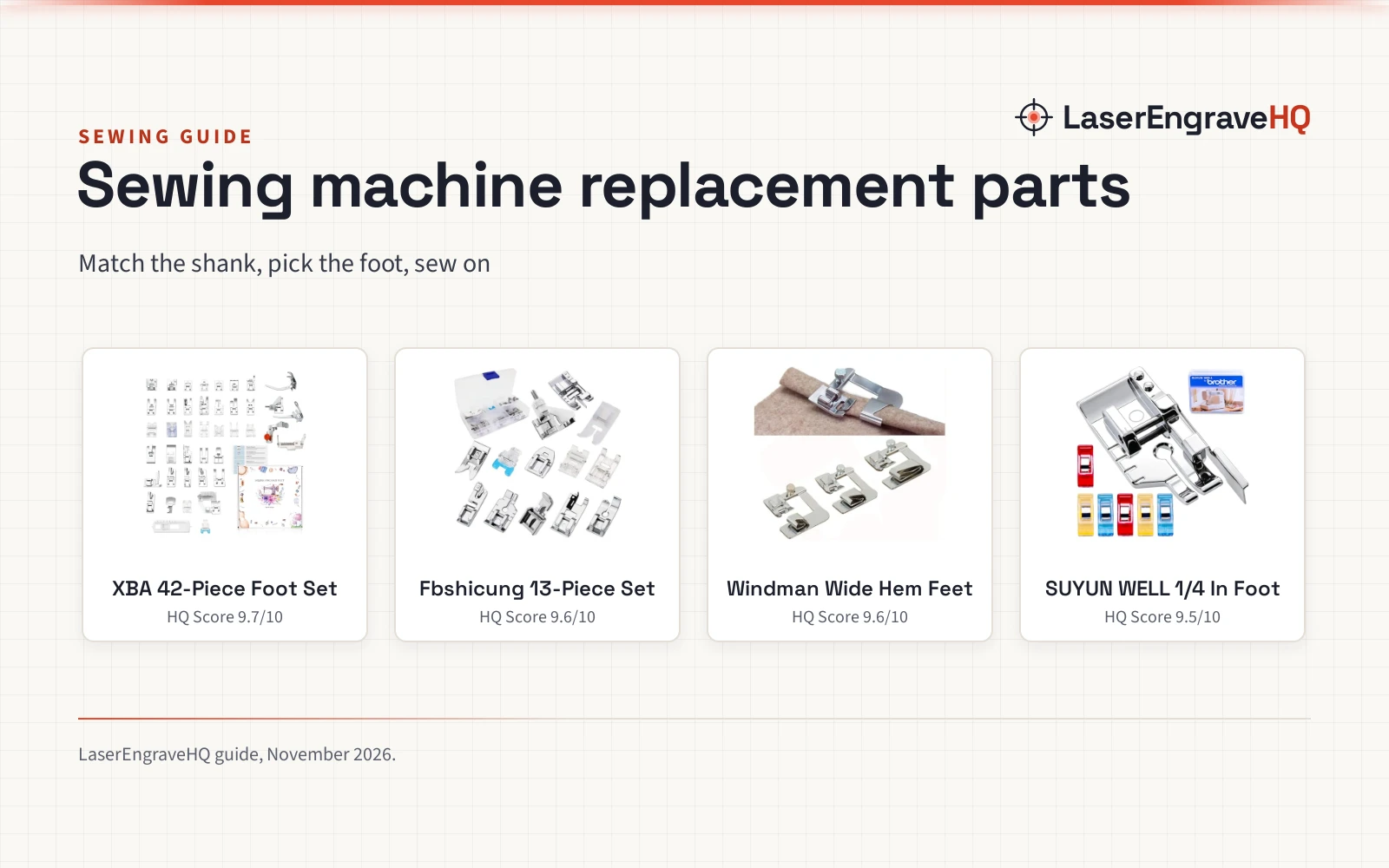
 Presser Foot Set 42Pcs9.7/10View on Amazon
- 2
 Fbshicung 13Pcs Presser Feet Set for Household Sewing Machine9.6/10View on Amazon
- 3
 Windman 3 Sizes Wide Rolled Hem Pressure Foot Sewing Machine9.6/10View on Amazon
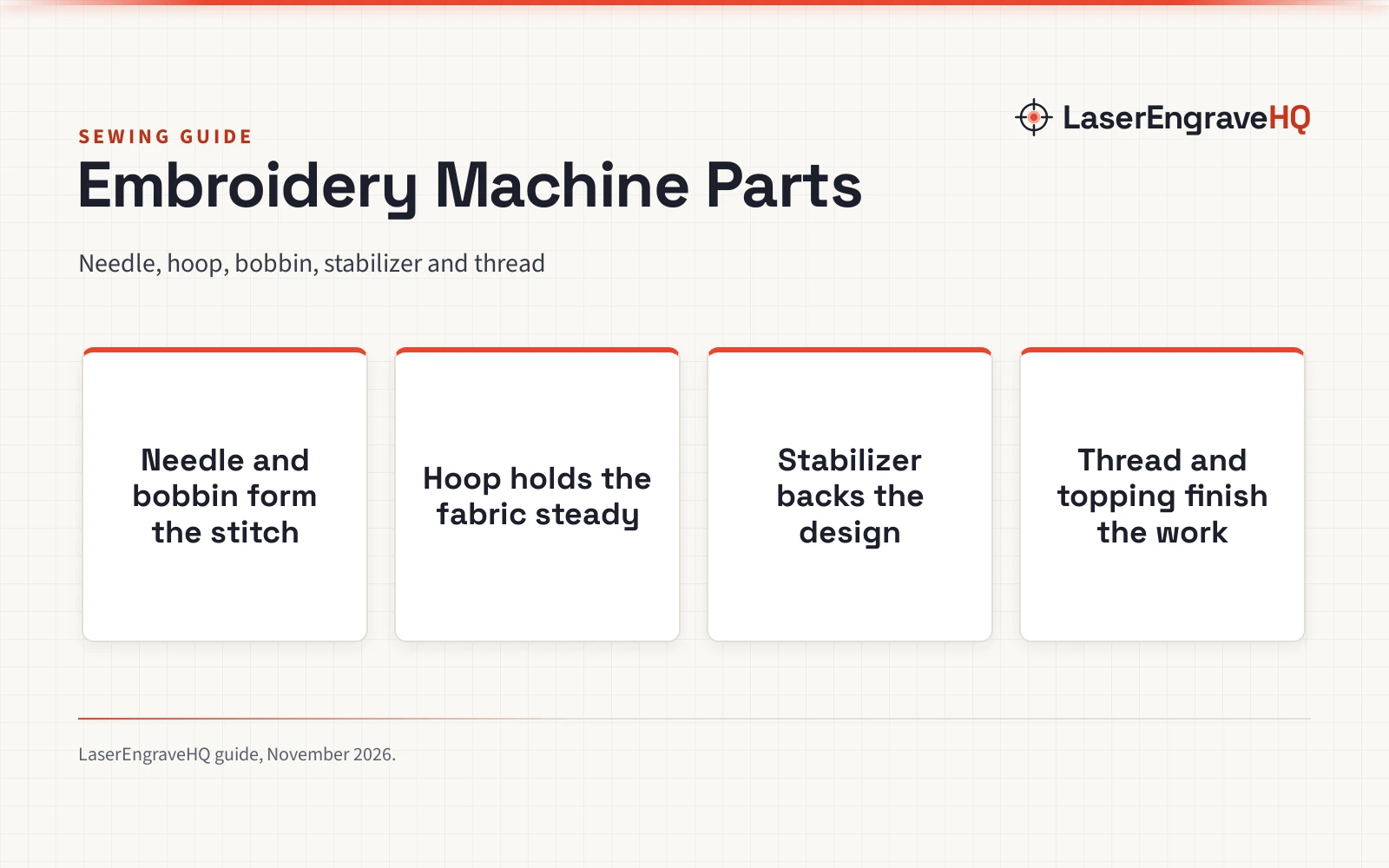
Embroidery machine parts are the pieces that turn a flat piece of fabric into stitched art: a needle and bobbin form each stitch, a hoop holds the fabric steady, an embroidery unit moves the hoop while the needle only moves up and down, and stabilizer, thread and topping support the design. If any one part is missing or wrong for the fabric, the design puckers, skips or drifts. The sections below name each part, explain what it does, and show which supplies fit each job.
LaserEngraveHQ earns a commission from purchases made through these links, at no extra cost to you. Read our affiliate disclosure.
Embroidery Machine Parts and What Each One Does
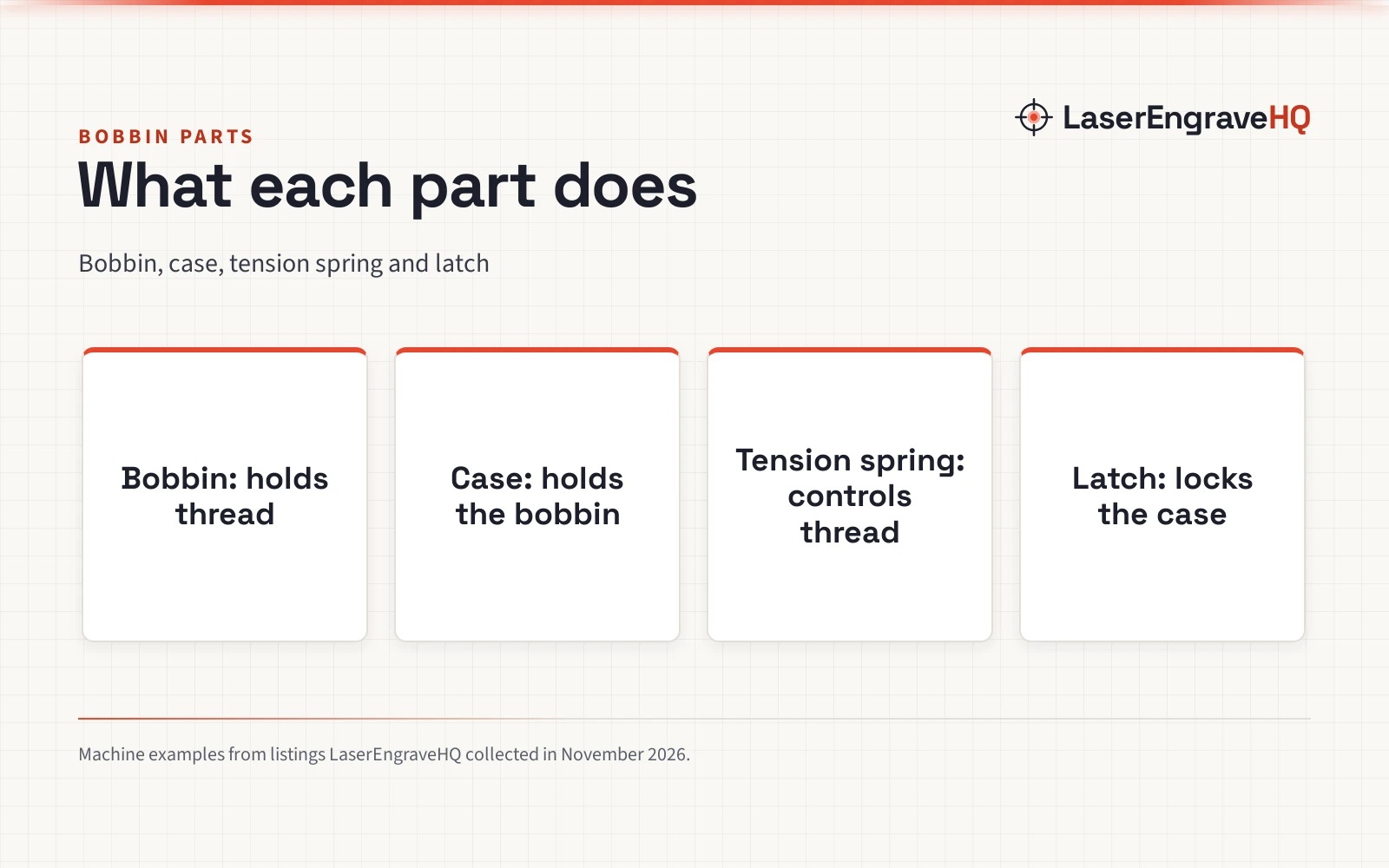
The machine itself has a small set of working parts, and the supplies around it do the rest. The needle carries the top thread down through the fabric, the bobbin below holds the lower thread, and the two threads lock together to form each stitch. The needle bar drives the needle up and down, the presser foot presses the fabric down briefly as the needle passes through, and the needle plate gives the fabric a smooth surface to rest on. Above the needle, the thread path runs from the spool pin through the guides, the tension discs and the take-up lever, keeping the thread feeding evenly. The control panel is where the design is picked, sized and placed, and the embroidery unit is the arm that moves the hoop while the needle stays in place.
The Needle, Bobbin and Thread Path
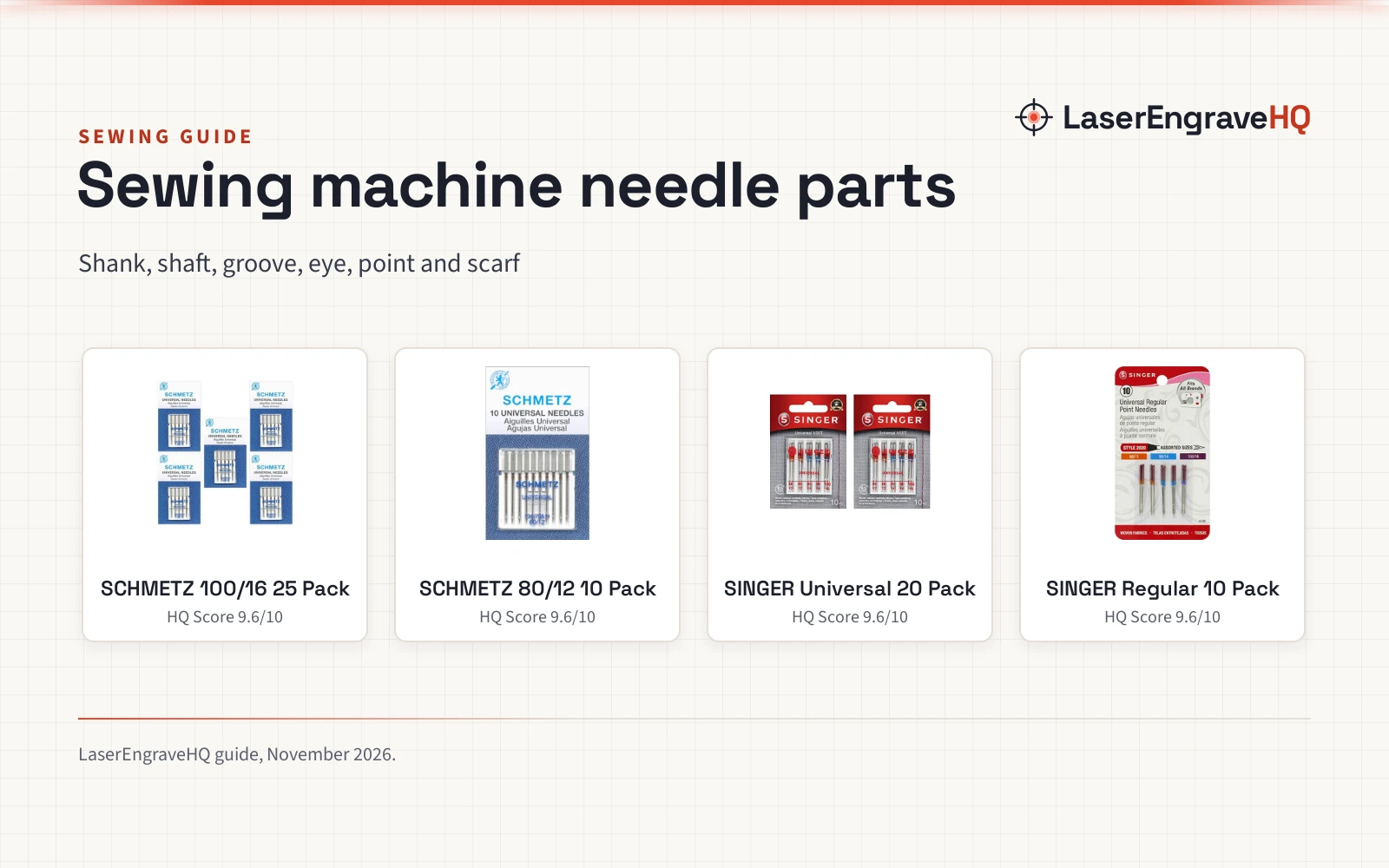
Start with the needle, because most stitch trouble starts there. An embroidery needle has a larger eye than a universal needle, so the thread passes through with less friction, and its scarf, the groove above the eye, helps the hook catch the thread cleanly. Fit the needle with its flat side to the back on most home machines, push the shank up as far as it goes, and tighten the clamp screw. Our best embroidery machine needles guide covers needle sizes and types. The bobbin sits under the needle plate in its case, and the bobbin thread must feed smoothly from the case, since a snag there shows up as loops on the underside of the fabric. The thread path matters just as much: thread the machine with the presser foot raised so the thread seats between the tension discs, and check that the take-up lever has caught the thread before stitching.
The Hoop and the Embroidery Unit
The hoop is two rings that grip the fabric taut, an outer ring with a tightening screw and an inner ring that presses the fabric against it. Hoop the fabric with the stabilizer underneath, tighten the screw until the fabric sounds taut when tapped, and keep the fabric grain straight so the design does not skew. The hoop locks onto the embroidery unit, the arm that moves it side to side and front to back while the needle only moves up and down, and that movement is what draws the design. A hoop that is too loose lets the fabric shift, and a hoop that is too tight can leave ring marks on delicate fabric, so tighten just enough to hold it. Our embroidery machine hoop sizes guide explains which hoop fits which design.
Stabilizer: the Backing That Holds the Fabric
Stabilizer is the backing that keeps fabric from puckering under dense stitching, and the two common kinds work in opposite ways. Tear-away stabilizer gives temporary support and tears away after the design is done; New brothread lists a tear-away roll 10 inch by 25 yard at medium weight 1.8 oz, made for firmly woven fabrics and natural fibers, for light to medium stitch density. Cut-away stabilizer stays affixed to the embroidery for good and keeps the design holding its shape after repeated washing; New brothread lists a cut-away roll 10 inch by 50 yard at medium weight 2.5 oz, made for knits, fleece, denim and fabric that moves or distorts when pulled. Cut the backing to fit the hoop: New brothread lists cutting 8 inch by 10 inch pieces to fit a 4 by 4 hoop, and 10 inch by 12 inch pieces to fit a 5 by 7 hoop. For dense designs, layer more than one sheet of stabilizer rather than forcing one sheet to carry the load. See our tear-away vs cut-away embroidery stabilizer guide for the full comparison.
Thread, Topping and Marking Tools
Thread is the visible part of the work, and machine embroidery thread is not the same as the floss used by hand. New brothread lists a set of 80 colors of polyester machine thread, 500M (550Y) on each spool, in a clear storage box with 4 layers and 20 pins in each layer to hold the spools upright. Hand embroidery floss is different: LOVIMAG lists 180 colors of floss, each thread made of six strands, and each strand formed by two thinner threads twisted together. Our best thread for embroidery machine guide covers machine thread types. A wash-away topping keeps stitches from sinking into towels, fleece and other high pile fabric; HBI lists a clear water-soluble film 12 inch by 15 yard that dissolves fully in warm water or steam, leaving no residue. Marking tools plan the layout before stitching: Lange & König lists 4 heat erasable pens with 8 refills, whose marks vanish with heat from an iron, and the maker states the set covers up to 3000 feet in total. For placement, Yokizilous lists 400 target stickers, 10 sheets of 40 pieces, each 3/4 inch by 1/2 inch, with a crosshair that centers the needle on the planned spot. Spool huggers keep thread from unwinding in the box; Simthread lists 100 pieces. For trimming, SINGER lists a 3-piece scissor set: 8.5 inch fabric shears, 4.5 inch detail scissors and 5 inch thread snips.
Common Mistakes to Avoid
- Hooping the fabric loose, so the design drifts while stitching.
- Skipping stabilizer on knits or stretchy fabric, so the design puckers.
- Using hand floss in a machine, where it can fray and break.
- Threading with the presser foot down, so the thread never seats in the tension discs.
- Leaving the feed dogs up, so the machine fights the hoop.
Embroidery machine parts: the short version
- Needle and bobbin form each stitch.
- Thread path and tension feed the thread evenly.
- Hoop and embroidery unit move the fabric.
- Stabilizer backs the fabric: tear-away for woven fabric, cut-away for knits.
- Thread, topping and marking tools finish the work.
FAQ: lasers and CNC
What is the hoop on an embroidery machine for?
The hoop holds the fabric taut while the embroidery unit moves it under the needle, so the design stitches in place. Hoop the fabric with stabilizer underneath and tighten the screw until the fabric is taut.
What is stabilizer for in machine embroidery?
Stabilizer is a backing that keeps fabric from puckering under stitching. Tear-away stabilizer tears away after stitching and suits firmly woven fabrics, while cut-away stabilizer stays on the fabric for good and suits knits, fleece and denim.
What is the difference between tear-away and cut-away stabilizer?
Tear-away stabilizer gives temporary support and tears away when the design is done; New brothread lists a tear-away roll 10 inch by 25 yard at 1.8 oz. Cut-away stabilizer stays affixed to the embroidery and keeps its shape after washing; New brothread lists a cut-away roll 10 inch by 50 yard at 2.5 oz.
What thread do embroidery machines use?
Machine embroidery thread, such as the 80 colors of polyester thread New brothread lists at 500M (550Y) per spool. Hand embroidery floss, such as the 180 colors LOVIMAG lists in six-strand threads, is made for hand work, so machine thread is the safer choice for machine embroidery.
What size hoop do I need?
Match the hoop to the design: New brothread lists cutting stabilizer 8 inch by 10 inch to fit a 4 by 4 hoop and 10 inch by 12 inch to fit a 5 by 7 hoop, so pick the smallest hoop that fits the design.
Related: how to work an embroidery machine and best embroidery machine hoops. Also see our best embroidery topping film. Also see our best embroidery machine bobbins.