Cleaning Soldering Iron Tips: A Practical Guide
Wipe, tin and re-tin a soldering iron tip with the right cleaner for each job, from brass wool for daily wiping to a tip tinner for oxidation.

On this page
Top picks at a glance
As an Amazon Associate I earn from qualifying purchases.
- 1
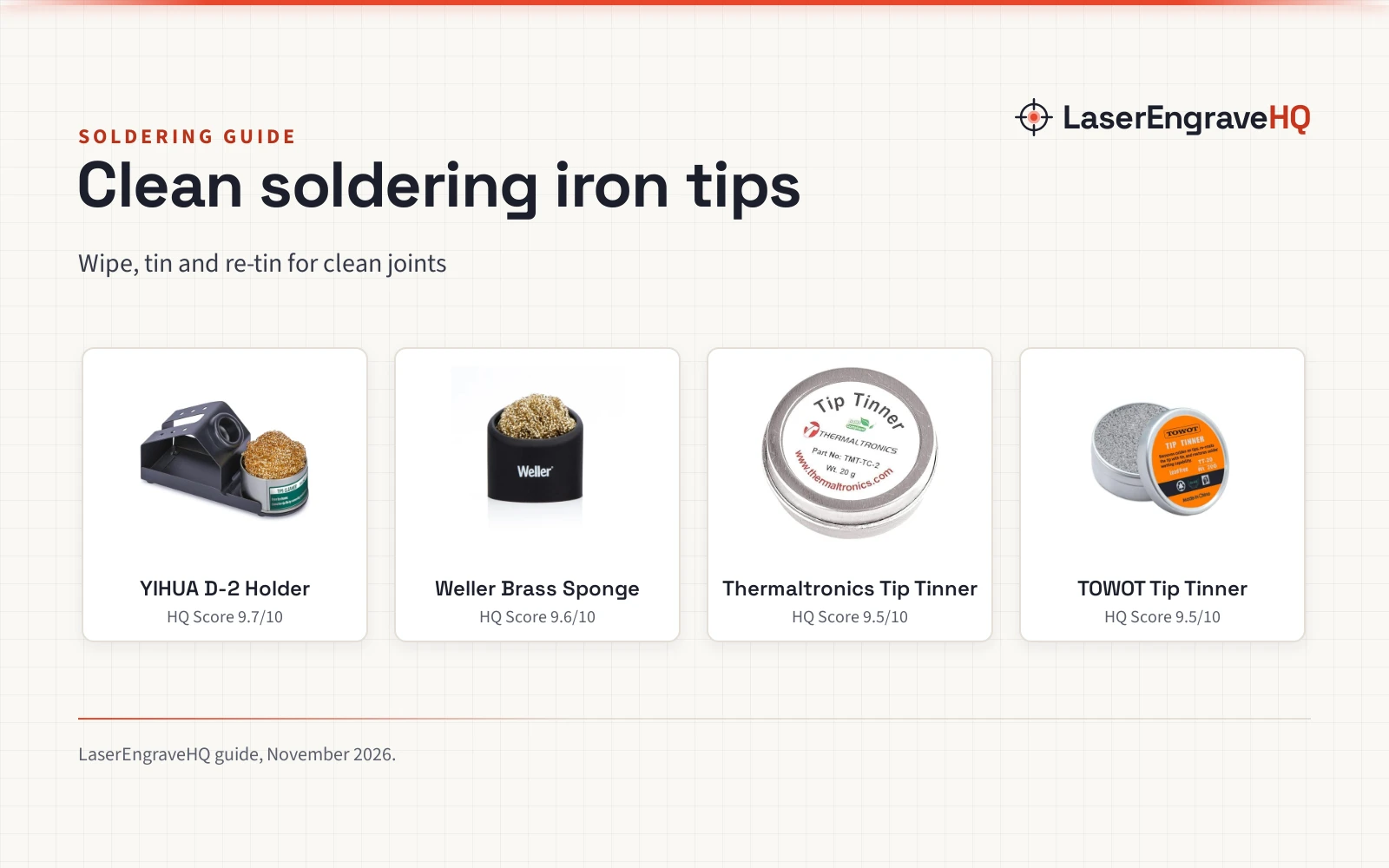
 YIHUA D-2 Soldering Iron Holder9.7/10View on Amazon
- 2
 Weller Soldering Brass Sponge Tip Cleaner9.6/10View on Amazon
- 3
 Thermaltronics TMT-TC-2 Tip Tinner (20g)9.5/10View on Amazon
- 4
 TOWOT Tip Tinner For Electronics Soldering9.5/10View on Amazon
A soldering iron tip stays useful when it is clean, tinned and stored well. Cleaning soldering iron tips means wiping solder residue off the hot tip, stripping oxidation with a tip tinner when wiping is not enough, then coating it with fresh solder so the next joint heats fast and flows clean. The routine takes a brass cleaner, a tip tinner and a heat-resistant holder.
LaserEngraveHQ earns a commission from purchases made through these links, at no extra cost to you. Read our affiliate disclosure.
YIHUA D-2 Soldering Iron Holder
A heat-resistant metal soldering iron holder with brass wool cleaner and cleaning sponge, weighing 0.5 lb.
Pros
- Brass wool cleaner and cleaning sponge in one holder, so wiping needs no extra tool
- Heat-resistant full metal holder keeps a hot iron stored safely between joints
- 0.5 lb weight holds the stand steady while the iron rests in it
- Holder opening of 1.02 in gives the iron a stable resting place
Cons
- No tip tinner in the box, so a badly oxidised tip needs a separate product
- Brass wool and sponge clean the tip only; they do not re-tin it
- 6.57 in long and 2.87 in high, so it takes more bench space than a small cleaner
- No spare brass wool or sponge is listed with the holder
Weller Soldering Brass Sponge Tip Cleaner
A brass sponge tip cleaner in a 2.5 in cube with a slip-resistant silicone holder.
Pros
- Brass sponge removes residue without damaging the tip
- Keeps the tip hotter than a cellulose sponge, so joints stay consistent
- Slip-resistant silicone holder keeps the cleaner steady on the bench
- Simple to use: push the tip into the center of the brass sponge
Cons
- Cleans the tip only; it does not re-tin an oxidised tip
- 2.5 in cube takes bench space for a single cleaning job
- No sponge or holder for the iron itself; storage needs a separate stand
- One cleaner only; no spare brass sponge is listed
Thermaltronics TMT-TC-2 Tip Tinner (20g)
A 20 g lead-free tip tinner in a 0.8 oz container for badly oxidised tips.
Pros
- Re-tins badly oxidised tips fast, restoring a surface solder will wet
- Lead free and RoHS compliant, with a no-clean formula
- Leaves minimal residues, so no extra cleaning step is needed
- Small 0.8 oz container fits on a crowded bench
Cons
- A tinner only; it does not wipe residue off a tip between joints
- 20 g container holds a small amount for a shared bench
- No cleaning tool or holder in the box
- Made for tips that are already oxidised; a clean tip gains little from it
TOWOT Tip Tinner For Electronics Soldering
A 20 g lead-free tip tinner that removes oxidation from soldering iron tips.
Pros
- Removes oxidation fast, restoring a bright, clean finish for solder joints
- Lead-free formula with monoammonium phosphate, tin powder and diluent
- Leaves minimal residue, so no extra cleaning is required
- Simple to use: insert the heated tip and the oxidation clears in seconds
Cons
- A tinner only; it does not wipe residue off between joints
- 20 g is a small amount for a shared bench
- No warranty term is stated
- No cleaning tool or holder in the box
Step 1: Wipe the tip while it is hot
Wipe the tip on brass wool or a damp sponge while the iron is hot, before residue hardens. Brass wool takes residue off without cooling the tip as much as a cellulose sponge. Push the tip into the center of the sponge and turn it gently.
Step 2: Tin the tip after wiping
A clean tip still needs a fresh coat of solder. Melt a little solder wire onto the wiped tip until the surface shines, then wipe off the extra and tin it again. The thin coat stops air from reaching the bare metal, so tin the tip before the iron is put away.
Step 3: Re-tin a tip that will not take solder
A tip that has gone dark with oxidation will not wet, even after wiping. Dip the heated tip into a tip tinner and the compound strips the oxidation and leaves a fresh tin coat. The tinners in the gear section list a lead-free formula, and the Thermaltronics tin is RoHS compliant. Use a tinner when wiping no longer brings back a bright surface, not as a daily wipe.
Step 4: Rest the iron in a holder
Between joints, rest the iron in a heat-resistant holder instead of laying it on the bench. A full metal holder keeps the hot tip away from cords, parts and hands. The YIHUA holder in the gear section pairs storage with brass wool and a sponge. Work on a heat-proof surface with ventilation. For the iron itself, the best soldering iron for electronics guide covers irons that hold heat well.
Cleaning Soldering Iron Tips: The Gear
The picks below cover each part of the job in score order: wiping, re-tinning and resting.
Common mistakes to avoid
- Wiping a cold tip, which leaves residue on the surface.
- Leaving the tip bare after wiping, so air dulls the metal.
- Using a tip tinner as a daily wipe instead of brass wool.
- Resting a hot iron on the bench instead of in a holder.
Cleaning soldering iron tips: the short version
- Wipe the hot tip on brass wool or a sponge.
- Tin the wiped tip with fresh solder.
- Dip an oxidised tip in a tip tinner until it shines.
- Rest the iron in a heat-resistant holder between joints.
- Tin the tip again before the iron cools and is put away.
FAQ: lasers and CNC
How often should a soldering iron tip be cleaned?
Wipe the tip while soldering, whenever residue builds up, and tin it before putting the iron away. A tip wiped during work and tinned at the end stays bright.
Should a soldering iron tip be cleaned with a wet sponge or brass wool?
Brass wool is the better choice when the tip must stay hot. Brass keeps the tip hotter than a cellulose sponge, so the iron stays ready for the next joint. A damp sponge also works, but it cools the tip.
What does a tip tinner do?
A tip tinner strips oxidation from a dull tip and leaves a fresh tin coat. Dip the heated tip into the compound, and the surface comes back bright enough for solder to wet it.
Can a tip that will not take solder be saved?
Often, yes. Wipe the tip first, then dip the heated tip into a tip tinner. If the surface turns bright and takes solder again, the tip is back in service.
Related: the soldering hub, best soldering iron for electronics and best soldering flux for electronics.