Acrylic Cement vs Super Glue: Which One Should You Buy?
Acrylic cement welds acrylic into a clear joint, while super glue bonds mixed materials; this guide compares the four adhesives on bond, clarity, working time and full strength.

On this page
Top picks at a glance
As an Amazon Associate I earn from qualifying purchases.
- 1
 Audab Acrylic Keychain Blanks Kit9.7/10View on Amazon
- 2
 Plastic Super Glue Liquid 1.75 oz9.6/10View on Amazon
- 3
 Glass Glue Clear9.6/10View on Amazon
- 4
 Berkland Acrylic Bonding CementView on Amazon
- 5
 6 oz Plastic Weld Acrylic Cement 3View on Amazon
- 6
 Weld On 16 Acrylic Plastic CementView on Amazon
- 7
 Weld-On 16 Fast Set Acrylic Solvent CementView on Amazon
- 8
 YiJieWZT B7000 15ml Clear Acrylic Super GlueView on Amazon
- 9
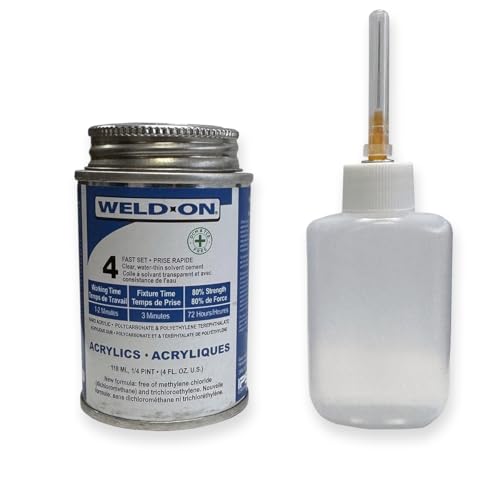 Weldon #4 Acrylic Plastic Cement with Applicator BottleView on Amazon
Acrylic cement vs super glue is the choice between welding acrylic and gluing it. Acrylic cement is a solvent that welds acrylic to acrylic, so the joint becomes part of the sheet, while super glue is an adhesive that holds pieces together with a layer of glue between them. For laser-cut acrylic parts, that difference shows up in the look of the joint, the time you get to position parts, and the range of plastics each one bonds. The cements below suit clear acrylic joints, and the glues below suit mixed materials.
Other machines to compare
 Berkland Acrylic Bonding CementCheck price on Amazon
 6 oz Plastic Weld Acrylic Cement 3Check price on Amazon
 Weld On 16 Acrylic Plastic CementCheck price on Amazon
 Weld-On 16 Fast Set Acrylic Solvent CementCheck price on Amazon
 YiJieWZT B7000 15ml Clear Acrylic Super GlueCheck price on Amazon
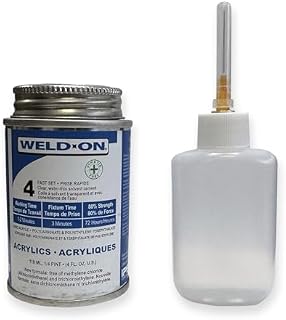 Weldon #4 Acrylic Plastic Cement with Applicator BottleCheck price on Amazon
LaserEngraveHQ earns a commission from purchases made through these links, at no extra cost to you. Read our affiliate disclosure.
Acrylic cement vs super glue: how the bond differs
A solvent cement works by softening the faces it joins. Hotvox describes its cement as water-thin, with a fluidity that lets it run into tight seams by capillary action, bonding acrylic to acrylic and most plastics into flat, near-invisible joints. LITKO calls its Craftics #33 a medium-bodied solvent cement that chemically welds acrylic and compatible materials together. A super glue works differently: it stays on the surface as an adhesive layer. B7000 is a clear gel that the maker describes as self-leveling, and it bonds with light pressure on the parts.
The material range is where the two sides part ways. The cements are acrylic specialists: Hotvox lists display cabinets, advertising signage, figurine models, aquarium panels and everyday acrylic repairs, while LITKO lists rigid PVC, styrene, butyrate and polycarbonate beside acrylic, and calls out laser-cut acrylic hobby kits such as tokens, markers, dice towers and display stands. The glues cover a wider mix: B7000 lists metals, glass, rubber, fibers, paper, ceramics, wood, fabric, textiles, nylon, PVC and leather, and Viomis lists glass crafts, repairs, aquariums, glass-to-metal bonding, electronic devices, automotive glass repair and glass furniture.
When the joint must stay clear
Clear acrylic shows every flaw in a joint, so clarity is the first thing to check. LITKO states that Craftics #33 dries completely clear and will not cloud, whiten or fog transparent and translucent acrylic, and it contrasts that with cyanoacrylate, the family super glue belongs to. Hotvox states that its cement sets into a fully transparent, low-haze bond that keeps plexiglass and acrylic surfaces looking clean. Viomis states that its glue dries clear and is made not to whiten or blacken, and B7000 states that it becomes crystal clear and hard. For a clear display piece, a cement keeps the joint invisible, while a gel glue dries clear too and suits mixed materials.
Working time and full strength
Speed and patience pull in opposite directions here. Viomis lists a 15-second quick-drying time, so parts hold fast right away, and the bond reaches its full effect within 24 hours. Hotvox calls its cement fast-setting and states that it locks parts into position in minutes, so a maker can keep moving through small-batch work. LITKO is fast-setting too, with full strength reached in 24 hours, and the maker states a shelf life of up to 24 months. B7000 needs at least 24 hours before the bond reaches full strength, so it rewards a maker who can leave parts alone overnight.
Thickness changes how a glue handles. Hotvox uses a water-thin cement that runs into tight seams, and it ships with an applicator bottle and a fine needle tip for controlled dispensing along edges and seams. LITKO goes the other way: a medium-bodied cement that fills small gaps and gives working time to position parts before the bond sets. B7000 is a gel with a nozzle and a needle on the cap, so the tube stays usable, and the maker lists 30 to 35 percent solids with a hardness of 65 to 80A after it sets.
The four adhesives in this guide
The adhesives below cover both sides of the comparison. The cements lead for clear acrylic joints, and the glues lead for mixed materials.
LITKO Craftics #33 Thick Acrylic Cement, 1.5 oz, is the pick for laser-cut acrylic kits. The maker lists bonds to acrylic, rigid PVC, styrene, butyrate and polycarbonate, a medium body that fills small gaps, and a bond that dries clear with no fogging. Full strength arrives in 24 hours, and the tube stays shelf-stable for up to 24 months. The maker names tokens, markers, dice towers and display stands among the laser-cut parts it suits.
Hotvox Acrylic Bonding Cement, 4 oz, is the pick for clean, sealed acrylic joints. The water-thin cement runs into tight seams by capillary action, locks parts in minutes, and sets into a fully transparent, low-haze bond. The applicator bottle and fine needle tip keep dispensing controlled along edges and seams. The maker lists display cabinets, advertising signage, figurine models, aquarium panels and everyday acrylic repairs, and advises gloves and safety goggles in a well-ventilated area, away from heat or open flame.
B7000 Clear Acrylic Super Glue, 15ml, is the pick for mixed materials. The clear gel bonds metals, glass, rubber, fibers, paper, ceramics, wood, fabric, textiles, nylon, PVC and leather, and it stays flexible after it sets. The nozzle gives fine control, and the needle on the cap keeps the tube usable between jobs. The maker lists 30 to 35 percent solids and a hardness of 65 to 80A, and states that the bond needs at least 24 hours to reach full strength.
Viomis Glass Glue, 30g, is the pick for glass and quick bonds. The maker lists a 15-second quick-drying time, a low-odor formula, and a bond that dries clear without whitening or blackening. The glue suits glass crafts, repairs, aquariums, glass-to-metal bonding, electronic devices, automotive glass repair and glass furniture, and the bond reaches its full effect within 24 hours. Acrylic is among the materials the maker names, beside glass.
Which one for laser-cut acrylic parts
For laser-cut acrylic, reach for a cement first. LITKO names laser-cut hobby kits directly, and Hotvox suits display cabinets, signage and figurine models, where a clear joint matters. A cement welds the faces together, so the joint reads as part of the sheet, and each cement keeps clear acrylic looking clean. Keep a gel glue on the bench for mixed-material jobs, such as joining metal parts to an acrylic piece. Match the adhesive to the joint: cement for clear acrylic-to-acrylic seams, glue for everything else the maker lists.
FAQ: lasers and CNC
Does super glue fog clear acrylic?
It can. LITKO states that cyanoacrylate can cloud, whiten or fog transparent and translucent acrylic, while its Craftics #33 dries clear with no fogging. For a joint that must stay invisible, use a cement. A gel glue dries clear too, so pick by the materials you are joining.
How long before the bond reaches full strength?
Allow 24 hours. LITKO reaches full strength in 24 hours, B7000 needs at least 24 hours, and Viomis reaches its full effect within 24 hours. Hotvox locks parts in minutes, then builds a strong, stable hold.
Can acrylic cement bond materials other than acrylic?
Yes. LITKO lists rigid PVC, styrene, butyrate and polycarbonate beside acrylic, and Hotvox lists acrylic to acrylic and most plastics. Check the maker list for the plastic you hold before you glue.
Which adhesive suits a display case?
A cement. Hotvox lists display cabinets and display cases among its uses, and its water-thin formula runs into tight seams for flat, near-invisible joints. LITKO suits display stands, with a clear bond that will not fog the acrylic.
Do I need gloves and ventilation?
Hotvox advises gloves and safety goggles during close work, in a well-ventilated area, away from heat or open flame. B7000 advises a clean surface and storage away from children. Follow the maker guidance on the adhesive you choose.
Related: the acrylic cutting guide, how to polish acrylic and best super glue for 3D printing. Also see the epoxy vs acrylic resin comparison.