Leather Stamping vs Laser Engraving: Which One Should You Buy?
Hand stamps press deep marks into leather with simple tools, while a laser engraver burns fine detail from a design file: this guide compares the two methods and the stamping gear that serves them.

On this page
Leather stamping vs laser engraving comes down to how the mark gets into the leather. Stamping presses a metal stamp into damp leather with a hammer strike, while laser engraving marks the surface with a focused beam that follows a design file. Stamping gives a deep, pressed mark with simple hand tools, and laser engraving gives fine detail and designs that repeat the same way on every piece. The gear section below covers stamping tools only, since no laser engraver is included in the products for this guide.
As an Amazon Associate I earn from qualifying purchases. LaserEngraveHQ earns a commission when you buy through links on this site, at no extra cost to you.
How leather stamping works
Leather stamping uses metal stamps with raised letters, numbers and patterns. The leather surface is wet, the stamp is set where the mark goes, and a strike from a hammer presses the shape into the leather as a permanent imprint. Dyeing, carving or stitching can follow once the stamping is done.
The stamp sets in this guide carry fixed character sizes. The Amazon Basics sets give a choice of 4/25-inch or 5/16-inch characters, and the ZMAAGG letter and number stamps measure 6 mm, or 0.24 inch. A fixed size means the lettering looks the same on every piece, and changing the size means reaching for a different set.
Stamping suits small leather goods. The kits in this guide name wallets, key fobs, earrings, wristbands, belts, bags and shoes as the pieces they serve. The work is hand work: stamps, a hammer, and, in the CBHGFEA kit, dye, a swivel knife, design templates and a rivet kit.
How laser engraving works
Laser engraving marks leather with a focused beam that follows a design file, so the same design can run again on the next piece without swapping any tool. Diode lasers cover wood, leather and slate. Changing the design means changing the file, not the tool in hand.
The machine needs a ventilated workspace and a watchful eye while it runs. Fumes from engraving need to leave the room, and a fire can start if a job is left alone. The safety section below covers the materials to avoid.
Leather stamping vs laser engraving: where they differ
The mark itself is the first difference. Stamping presses the design into the leather, so the mark has depth you can feel. Laser engraving marks the surface, so the mark sits shallower than a pressed stamp and the detail can run much finer than a fixed stamp set allows.
Setup is another difference. Stamping needs stamps, a hammer and a flat surface, and the work starts as soon as the leather is wet. Laser engraving needs a machine, a design file and a ventilated workspace, and the setup pays off when the same design runs across many pieces.
Changing a design works differently too. With stamps, a new word means lining up new stamps, and a new size means a new set. With a laser, a new word or a smaller size is a change to the file. That makes the laser the easier path for names, dates and small lettering that changes from piece to piece.
Materials draw a firm line. Stamping needs leather that holds a damp impression, such as the vegetable-tanned leather in the CBHGFEA kit. The laser side has a hard limit: never laser PVC, vinyl, PVC-based faux leather, polycarbonate or ABS.
The stamping gear in this guide
The four picks below are stamping tools, ordered from the most complete set to the simplest. No laser engraver is included in the gear for this guide.
ZMAAGG Leather Stamps, 71-piece set
The ZMAAGG set is the most complete stamping set here: 68 sets of numbers, letters and patterns, 2 leather punch tools and a rubber hammer. The letter and number stamps measure 6 mm, or 0.24 inch, and the punch tools measure 9.4 cm, or 3.7 inch, long. The hammer has a double-sided replaceable face and a non-slip rubber handle. The leather surface is wet before stamping, then the tool is struck with the hammer until the shape sets. The set suits wallets, leather shoes, bags and belts, and the maker describes it for beginners and professionals alike.
CBHGFEA Leather Crafting Kit
The CBHGFEA kit is a full leather starter kit rather than a stamp set alone. It holds 15 pieces of pre-cut vegetable-tanned leather, liquid dye in 4 colors, a stamping tool, a swivel knife, 3 design templates, a rivet kit with an installation tool, an engraving hammer and an edge cutter. Video tutorials walk through each stage, and the finished pieces include wallets, key fobs, earrings and wristbands. The maker describes the kit for beginners and experienced crafters, and notes that it contains small parts, so pay attention to safety.
Amazon Basics Metal Stamping Kit, 5/16 inch
The Amazon Basics 5/16-inch set is a 36-piece stamp kit with a 5/16-inch character height. It includes upper-case A-Z letters, 0-9 numbers and an ampersand, and it works with metal, leather, wood and clay. The stamps are alloy steel with a sand-blasted finish, and a wooden storage box holds all 36 stamps. The larger characters suit bold lettering on belts, tags and flat leather pieces.
Amazon Basics Metal Stamping Kit, 4/25 inch
The Amazon Basics 4/25-inch set is the same 36-piece kit with a 4/25-inch character height. It carries the same upper-case A-Z letters, 0-9 numbers and ampersand, works with the same metal, leather, wood and clay, and uses the same alloy steel with a sand-blasted finish and wooden storage box. The 4/25-inch characters are the smaller of the two Amazon Basics sets, which suits tighter lettering on small pieces.
Safety and materials to avoid
Never laser PVC, vinyl, PVC-based faux leather, polycarbonate or ABS. They can release harmful fumes and damage the machine. Genuine leather is the safe starting point for laser work, and the can you laser engrave PU leather guide covers faux leather in detail.
Ventilate the workspace before the machine runs: exhaust outdoors or use a filter designed for laser fumes. The fume extractor guide covers the options. Keep a suitable extinguisher within reach and never leave a running job unattended.
Use eyewear only if its listing states an optical density and a wavelength range that matches the laser. Tinted acrylic or an orange shield without a rating is not protection.
For stamping, the safety note is simpler: the CBHGFEA kit contains small parts, so keep the small pieces together and pay attention while working. Stamping needs a steady surface and a controlled hammer strike.
Which one should you buy?
Choose stamping when the mark itself is the point: deep, pressed lettering on wallets, belts, key fobs and tags, made with hand tools. The four sets in this guide cover that work, from the 71-piece ZMAAGG set to the two Amazon Basics kits.
Choose laser engraving when the design changes from piece to piece or the lettering runs small: names, dates and fine detail repeat cleanly from a file, and the same design runs across a batch without resetting stamps. That path needs a machine and a ventilated workspace, so start with the how to choose a laser engraver guide and the best laser engraver for small business guide before buying.
Stamps cover deep, single-piece marks, and a laser covers repeat designs and fine lettering. Match the method to the piece in hand.
FAQ: lasers and CNC
Can you laser engrave leather?
Yes, genuine leather engraves well on a diode laser. Never laser PVC-based faux leather, vinyl or ABS, and ventilate the workspace while the machine runs.
What tools do you need to start stamping leather?
A stamp set, a hammer and a flat surface are enough to start. The ZMAAGG set in this guide includes 68 sets of stamps, 2 punch tools and a rubber hammer, and the CBHGFEA kit adds pre-cut leather, dye in 4 colors, a swivel knife, design templates and a rivet kit for a full first project.
Which method handles small lettering better?
Laser engraving handles small lettering better, since the beam follows a design file and the size changes in the file. Stamping uses fixed character sizes: the sets in this guide give 4/25-inch, 5/16-inch and 6 mm characters, so small lettering needs the 4/25-inch set.
Can you laser engrave PU leather?
Check the material before lasering any faux leather: never laser PVC, vinyl or PVC-based faux leather. The can you laser engrave PU leather guide covers PU leather in detail.
Do you need a laser engraver to stamp leather?
No. Stamping is hand work: a stamp set, a hammer and a flat surface. A laser engraver is a separate machine for a different method, so buy one only when the work calls for fine detail or repeat designs from a file.
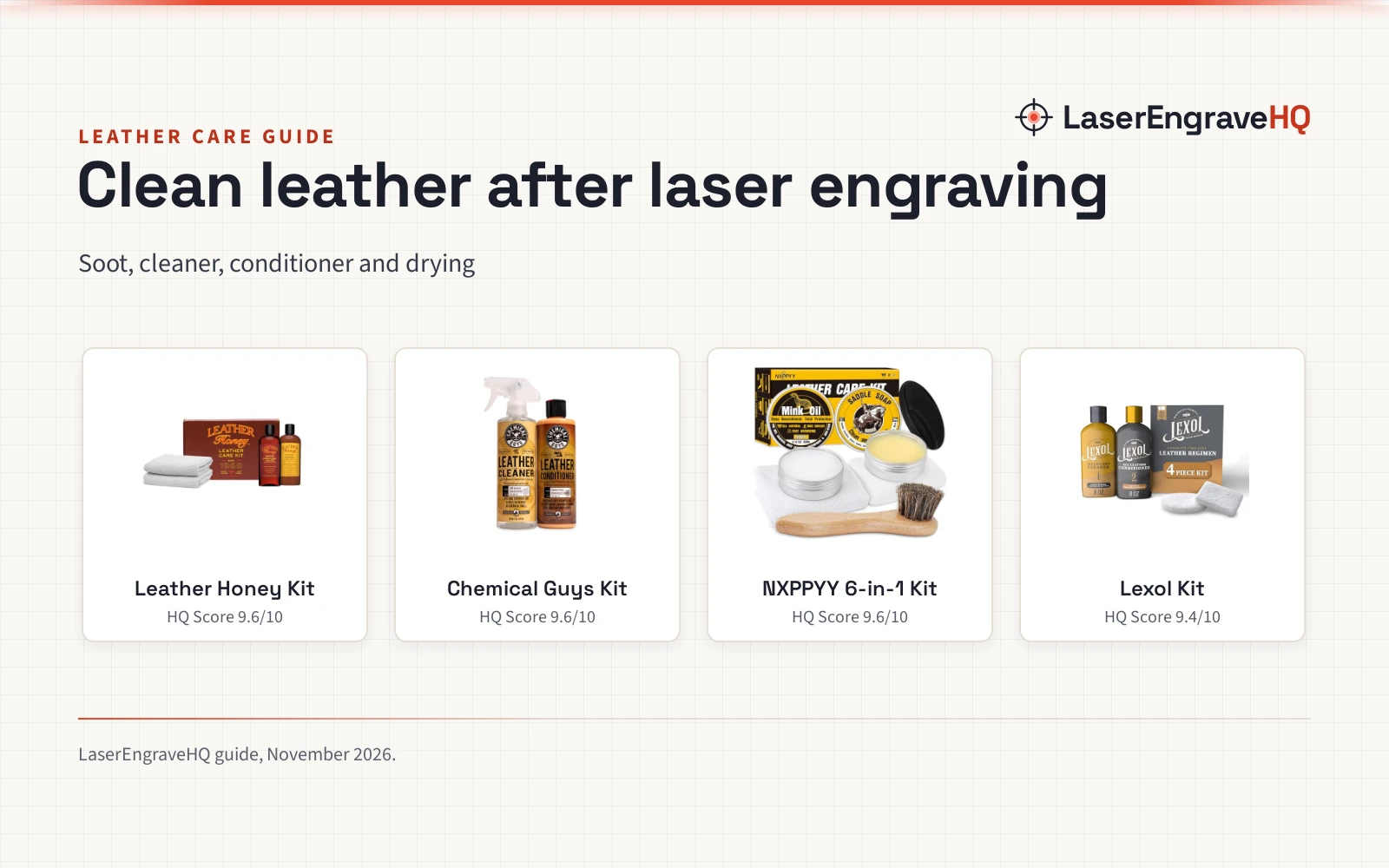
Related: the can you laser engrave leather guide, how to choose a laser engraver, best laser engraver for beginners and how to clean leather after laser engraving. Also see the how to price laser engraving work guide.