What Can You Make with a CNC Router?
A practical guide explaining what you can make with a CNC router: carve wooden signs, cut trays and joinery, mill acrylic panels, and machine soft metals.

On this page
Top picks at a glance
As an Amazon Associate I earn from qualifying purchases.
- 1
 SpeTool Carbide Single Flute CNC Router Bits 1/8" Cutting9.7/10View on Amazon
- 2
 SainSmart Genmitsu 3020-PRO Ultra CNC Router Machine9.7/10View on Amazon
- 3
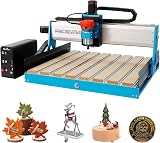 6050 CNC Router Machine9.6/10View on Amazon
- 4
 Genmitsu Cubiko Desktop CNC Router Machine with Enclosure forView on Amazon
- 5
 FoxAlien XE-Ultra 8080 CNC Router Machine with NEMA 23View on Amazon
- 6
 LUNYEE 3020 Nova CNC Router MachineView on Amazon
- 7
 CNC Spoilboard Surfacing Router Bit 1/4 Inch ShankView on Amazon
- 8
 CNC Spoilboard Surfacing Router BitsView on Amazon
- 9
 CNC Spoilboard Surfacing Router BitView on Amazon
To answer what can you make with a CNC router, projects span carved wooden signs, decorative trays, furniture joinery, acrylic displays, plastic enclosures, and milled soft metal parts. A computer numerical control (CNC) router uses a motorized spindle to spin cutting bits across the X, Y, and Z axes, carving rigid flat materials according to digital designs. This automated cutting lets you produce intricate shapes and repeatable assemblies on a workbench.
Other machines to compare
 Genmitsu Cubiko Desktop CNC Router Machine with Enclosure forCheck price on Amazon
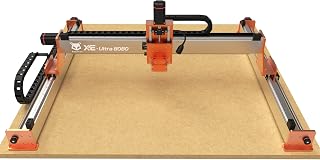 FoxAlien XE-Ultra 8080 CNC Router Machine with NEMA 23Check price on Amazon
 LUNYEE 3020 Nova CNC Router MachineCheck price on Amazon
 CNC Spoilboard Surfacing Router Bit 1/4 Inch ShankCheck price on Amazon
 CNC Spoilboard Surfacing Router BitsCheck price on Amazon
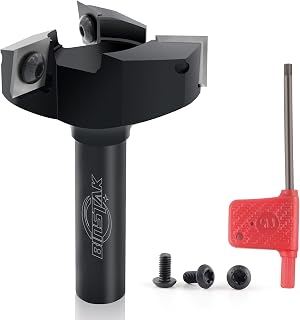 CNC Spoilboard Surfacing Router BitCheck price on Amazon
LaserEngraveHQ earns a commission from purchases made through these links, at no extra cost to you. Read our affiliate disclosure.
We do not report theoretical cutting capabilities or exaggerated feed claims. Every machine dimension, spindle rating, and travel figure cited in this guide reflects what manufacturers publish in their official product specifications.
Step 1: Carve custom wood signs, lettering, and decorative panels
Carved wooden signs represent one of the most popular CNC project ideas for workshops. A CNC router follows digital vector paths to carve decorative V-groove lettering, raised letters, family name plaques, and textured backgrounds with repeatable precision. The cutter clears away background material, leaving crisp lettering in relief, or plunges along vector centerlines to create sharp, beveled character strokes.
Dense hardwoods like maple, walnut, cherry, and white oak support intricate detailing with minimal grain tearout. Softwoods like cedar and pine carve easily for exterior plaques, though fibrous rings require sharp cutters to prevent fuzzing. Engineered medium-density fiberboard (MDF) provides uniform density with zero grain direction for painted panels, while Baltic birch plywood offers cross-laminated strength for layered wall maps. For material selection, see our guide to the best wood for CNC machine projects, or browse starter ideas in CNC router projects for beginners.
Step 2: Cut functional joinery, storage trays, and furniture components
Beyond flat plaques, a CNC router serves as an automated shaping tool for contoured household items and furniture joinery. Pocketing toolpaths clear out recessed hollows to create valet trays, desktop organizers, catchall dishes, wooden bowls, and cutting boards with juice grooves. Controlling depth across the Z-axis allows stepped compartments and snug lids that seat cleanly into mating bases.
In furniture construction, a router mills mortise-and-tenon joints, finger joints, half-lap joints, and puzzle joints. Woodworkers nest interlocking components from flat sheet stock for tables, stools, and storage cabinets. Internal cutouts incorporate small corner reliefs, called dogbones or T-bones, to allow square tenons to seat flush. Securing your stock with dedicated best CNC hold down clamps prevents workpiece movement and broken bits during heavy cuts.
Step 3: Mill acrylic signs, display stands, and plastic enclosures
A CNC router handles non-porous synthetic materials with clean edges when properly configured. Cast acrylic sheets machine into modern signage, templates, and edge-lit LED displays. For edge-lit projects, the router engraves vector artwork into clear acrylic; mounted into a slotted base with an LED strip, internal light refracts through the grooves, making the design glow brightly.
Engineering plastics like acetal (Delrin) and high-density polyethylene (HDPE) provide low-friction stock for machine bushings, zero-clearance inserts, and outdoor fixtures. Milling plastics generates chips that can soften under friction, so managing heat buildup is critical to prevent melting. Using single-flute spiral cutters designed for chip clearance ensures smooth walls, as detailed in our guide to CNC router bit types.
Step 4: Machine soft metal brackets, brass plates, and custom hardware
Rigid desktop routers with solid metal frames can mill non-ferrous metals like aluminum, brass, and copper when operated with conservative feeds and shallow passes. Makers produce mounting brackets, audio front panels, engraved brass plaques, instrument hardware, and motor adaptors right on a workbench.
Cutting metals requires rigidity, minimal spindle runout, and controlled vibration. Brass machines cleanly with fine chips for engraved tags. Aluminum requires chip clearing because hot chips can weld to cutter flutes. Running an air blast or lubrication mist while taking shallow passes keeps flutes clear. Pairing your feed rate with a spiral cutter from our guide to the best end mill for aluminum delivers accurate, chatter-free parts.
Step 5: Mill circuit boards and precision electronic prototypes
A desktop CNC router provides an in-house method for prototyping printed circuit boards without chemical etching tanks. Isolation routing uses a sharp conical engraving bit to trace electrical paths, removing thin surface copper from copper-clad composite blanks to isolate signal traces and ground planes. The machine then drills through-hole component locations and cuts the board perimeter.
Because copper foil is microscopic in thickness, minor table variations can cause uneven trace widths. Desktop machines solve this with automated surface probing. For example, Genmitsu lists auto Z-probing and surface mapping on its Cubiko model, measuring multiple points across the workpiece to compensate for height variations during cutting.
Step 6: Match your project scale to machine work area and spindle power
Project scope depends directly on the physical work envelope, frame rigidity, and spindle power of your router. Manufacturer specifications establish clear boundaries for what each tier accommodates:
- Compact desktop routers: Best for small boxes, desk accessories, and PCB milling. Genmitsu lists an 11.2 x 7.1 x 1.6 inch working area on its 3018-PROVer V2 (setup in about 35 minutes), while the Genmitsu 3020-PRO MAX V2 provides an 11.8 x 8.1 x 3.1 inch work area with a 12000 rpm spindle. For enclosed spaces, Genmitsu lists the Cubiko with a 96 watts motor running at 9000 rpm. The LUNYEE 3018 Pro Ultra offers a 300 x 180 x 80 mm (11.8 x 7.1 x 3.1 inches) work envelope, 80 mm of Z clearance, and a 500W spindle.
- Mid-sized workshop routers: Provide the rigidity, travel speed, and wattage for larger trays and relief carving. The Genmitsu PROVerXL 4030 V2 features a 400 x 300 x 110 mm work area, closed-loop stepper motors, a 400W spindle, and speeds reaching 5000 mm/min. The Genmitsu 4040-PRO MAX delivers a 410 x 405 x 77 mm (16.1 x 15.9 x 3.0 inches) work area with a 710W trimmer. For precision milling, the Genmitsu 3030-PROVer Ultra includes a 710W spindle, ±0.03 mm precision, and 10 minutes setup. The LUNYEE 3020 Nova incorporates an 800W spindle with a 6,000 to 30,000 RPM range across six speed settings, moving at 5000 mm/min with ±0.05 mm accuracy.
- Large benchtop routers: Accommodate wide furniture parts and multi-piece batches. Axiscreat lists a 23.6 x 23.6 x 4.33 inch (600 x 600 x 110 mm) work area on its 6060 model, with four closed-loop stepper motors delivering 2.2 N.m torque, a 710W spindle reaching 30,000 RPM, and 20 minutes setup. FoxAlien lists the XE-Ultra 8080 with a 33 x 33 x 4.72 inch workspace, 5.3-inch pass height, 2.6 N.m motors moving up to 5,000 mm/min, and compatibility with a 1.5kW VFD spindle.
To compare entry-level desktop machines and cutting envelopes, read our guide to budget desktop CNC routers.
Common mistakes to avoid
- Insecure workholding: Weak tape or loose clamping allows cutting forces to shift blanks, ruining dimensions and breaking bits.
- Neglecting chip evacuation: Recutting packed chips in deep grooves overheats cutters, dulling flutes and burning sidewalls.
- Pushing aggressive feed rates on entry spindles: Forcing a low-wattage spindle through hardwoods at high feed rates stalls motor rotational speed and causes lost steps.
- Using mismatched cutter geometry: Multi-flute wood bits pack chips when cutting plastics or soft metals; match the cutter profile to the material.
- Skipping mechanical maintenance: Dry linear rails or loose coupling set screws cause backlash and vibration during pocketing.
What can you make with a cnc router: the short version
- Carve wooden signs, lettering, and dimensional wall art.
- Pocket valet trays, catchalls, wooden bowls, and cutting boards.
- Cut interlocking joinery and flat-pack furniture components.
- Mill cast acrylic sheets for signs, templates, and edge-lit displays.
- Fabricate custom aluminum brackets, brass plaques, and mechanical hardware.
- Isolate printed circuit board traces and drill prototype electronics boards.
Start with forgiving flat materials like MDF or pine to learn toolpaths and feed speeds before advancing to hardwoods, acrylics, and metals.
FAQ: lasers and CNC
Can a desktop CNC router cut aluminum?
Yes, rigid desktop CNC routers with metal frames cut aluminum when taking conservative depth passes, securing stock firmly, and clearing chips with air or lubrication. Non-ferrous metals machine reliably with specialized single-flute cutters and proper feeds.
What is the easiest material to start cutting on a CNC router?
MDF (medium-density fiberboard) and softwoods like pine are the most beginner-friendly. MDF lacks grain direction or knots, allowing predictable cutting and clean pockets while you dial in spindle speeds and feed rates.
What is the difference between a CNC router and a laser cutter?
A CNC router cuts mechanically with a spinning bit, enabling true depth carving, pocketing, and thick cutting in woods and metals. A laser cutter vaporizes material with a focused beam, excelling at intricate flat cuts without mechanical force. Read our full comparison on CNC router vs laser cutter.
Can you operate a CNC router inside a home workshop?
Many makers run desktop machines in garages or basements. Because cutting produces chips, dust, and spindle noise, using an enclosure dampens sound, while adding a dust shoe connected to a vacuum collects debris.
What software do you need to make CNC router projects?
Projects require CAD software to draw vectors, CAM software to assign toolpaths, and a machine controller to send G-code to the router. Compatible programs include Candle, Easel, Fusion 360, and Universal Gcode Sender.
How thick of a material can a desktop CNC router cut?
Cutting thickness depends on Z-axis clearance, pass height, and flute length. Compact desktop models like the Genmitsu 3018-PROVer V2 list a 1.6-inch Z travel, mid-sized units like the Genmitsu PROVerXL 4030 V2 offer 110 mm (4.33 inches) clearance, and benchtop units like the FoxAlien XE-Ultra 8080 specify a 5.3-inch pass height. Thick stock requires progressive shallow passes to prevent stalling.
Related: the CNC router hub, best desktop CNC for beginners, and desktop CNC machine for beginners.