1064nm vs 455nm Laser Engraver: Which One Should You Buy?
A practical comparison of 1064nm infrared and 455nm blue diode laser engravers covering wavelength physics, material absorption, cutting limits, and safety.

On this page
Top picks at a glance
As an Amazon Associate I earn from qualifying purchases.
- 1
 xTool S1 40W Laser Cutter and Laser Engraver for Tumblers9.7/10View on Amazon
- 2
 xTool M2 20W Color Craft Laser Engraver9.7/10View on Amazon
- 3
 OMTech 100W CO2 Laser Engraver with 4 Way Pass Through Air9.7/10View on Amazon
- 4
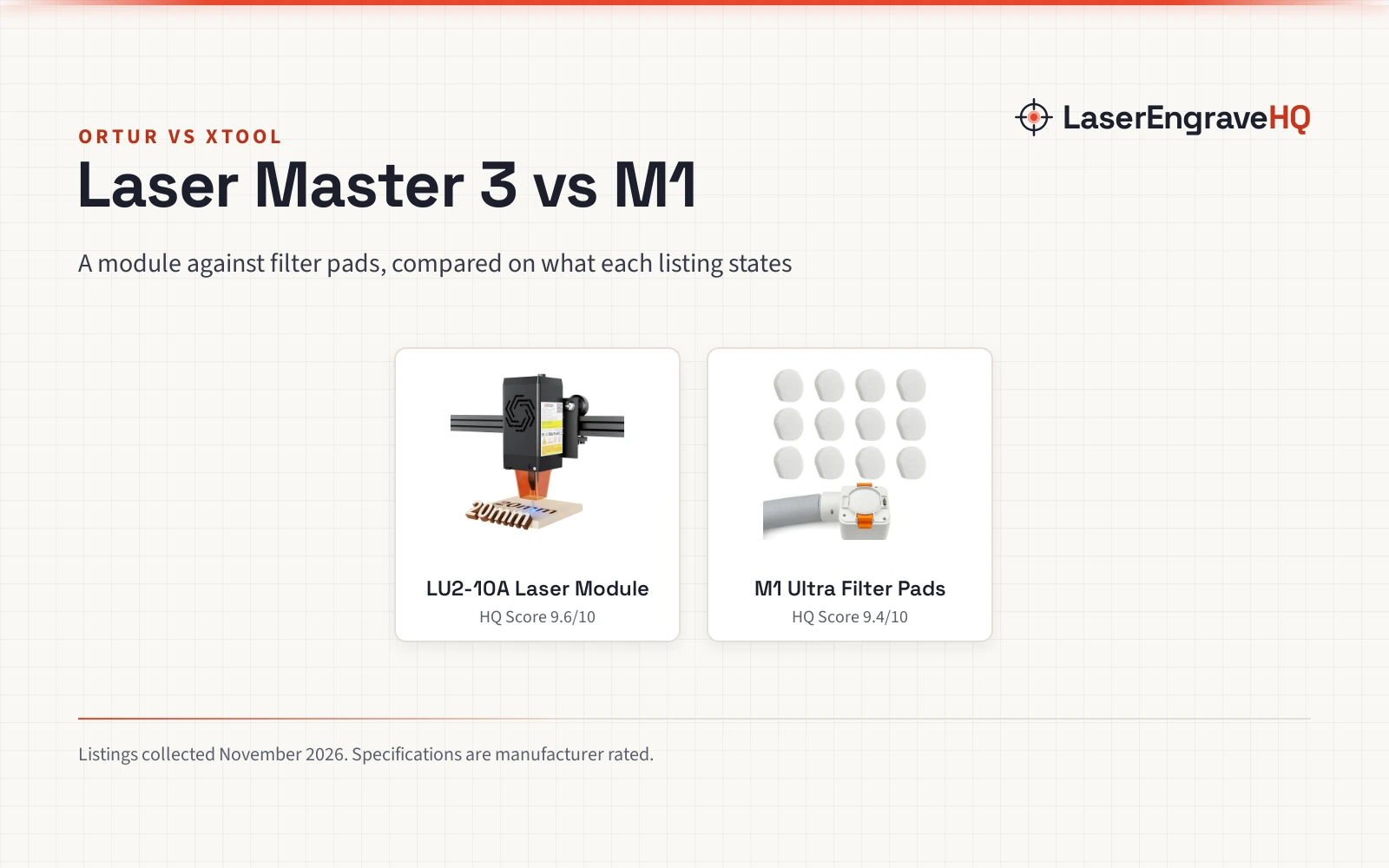
 ORTUR Laser Master 2 S2 LU2-10A Laser Engraver LaserView on Amazon
- 5
 ORTUR Laser Rotary RollerView on Amazon
- 6
 Twotrees TTS-20 Max 20000mW Laser Engraver and Cutter MachineView on Amazon
- 7
 Twotrees TTS-55 Pro Laser Engraver 5500mW Laser EngravingView on Amazon
- 8
 Twotrees TTS-20 Pro Laser EngraverView on Amazon
- 9
 Longer New Upgrade RAY5 Laser Engraver CutterView on Amazon
When deciding what to make in an engraving workshop, whether crafting wooden signs, leather patches, jewelry pendants, or coated tumblers, choosing between a 1064nm vs 455nm laser engraver determines which materials you can process. The direct answer comes down to material absorption: a 455nm blue diode laser excels at cutting and engraving organic materials like wood, leather, paper, and dark acrylic, while a 1064nm infrared laser is engineered to mark bare metals such as stainless steel, gold, and aluminum, as well as hard plastics. If your workshop focuses on woodworking and craft cuts, buy a 455nm diode laser; if your business centers on jewelry marking and bare metal engraving, choose a 1064nm infrared laser.
Other machines to compare
 ORTUR Laser Master 2 S2 LU2-10A Laser Engraver LaserCheck price on Amazon
 ORTUR Laser Rotary RollerCheck price on Amazon
 Twotrees TTS-20 Max 20000mW Laser Engraver and Cutter MachineCheck price on Amazon
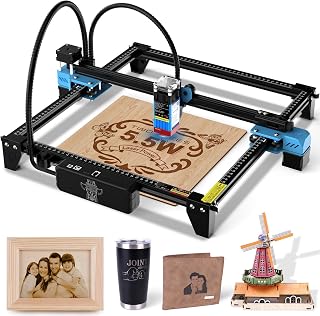 Twotrees TTS-55 Pro Laser Engraver 5500mW Laser EngravingCheck price on Amazon
 Twotrees TTS-20 Pro Laser EngraverCheck price on Amazon
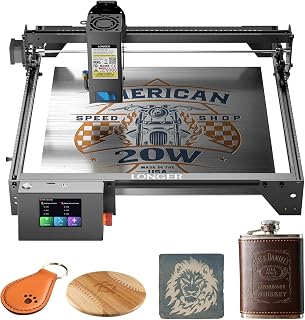 Longer New Upgrade RAY5 Laser Engraver CutterCheck price on Amazon
LaserEngraveHQ earns a commission from purchases made through these links, at no extra cost to you. Read our affiliate disclosure.
Wavelength dictates material absorption, not power alone. A 455nm blue diode reflects off bare polished metals, while a 1000mW 1064nm infrared beam cannot cut organic wood sheets. Match the optical wavelength to your primary production blanks rather than choosing solely on wattage.
Step 1: Understand wavelength physics and beam absorption
The primary difference between these machines is optical wavelength. A 455nm laser produces light in the visible blue spectrum, whereas a 1064nm laser operates in the near-infrared spectrum, which is invisible to the human eye. Because electromagnetic absorption depends on wavelength, materials react differently when struck by each beam.
Organic materials like wood, bamboo, paper, and leather absorb 455nm light efficiently, converting optical energy into heat that vaporizes material cleanly. In contrast, bare conductive metals reflect visible blue light. At 1064nm, the interaction changes: infrared photons couple efficiently with the crystal lattices of bare metals and dense polymers, heating surfaces rapidly to etch or anneal clean vector marks. Our guide on how to choose a laser engraver explains these optical differences.
Step 2: Match your primary materials to the beam
Choosing between these wavelengths requires auditing your intended blanks:
- Wood, bamboo, and paper: Natural materials require a 455nm blue diode for dark engravings and clean cuts. A 1064nm infrared beam passes weakly through wood fibers without clean carbonization. For wood setups, see our guide to the best laser engraver for wood.
- Bare metals: Marking bare metals requires a 1064nm infrared beam. The WAINLUX listing specifies a 1064nm infrared laser with 1000mW output power to engrave bare metal including gold, silver, stainless steel, and aluminum. A 455nm diode only marks metal if coated or treated with marking paste, as detailed in our guide on can a diode laser engrave metal and our roundup of the best laser engraver for metal.
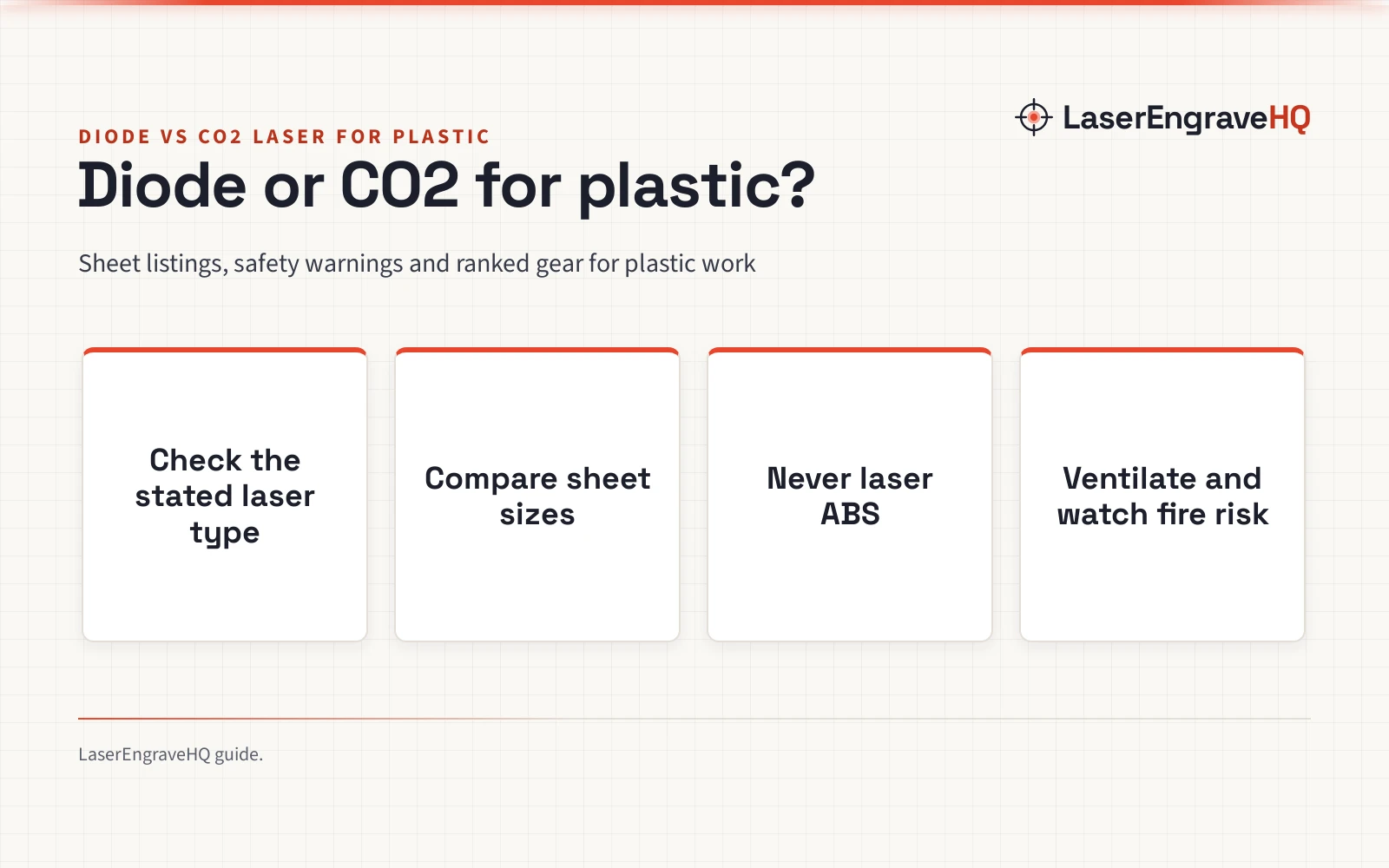
- Acrylic and plastics: Opaque dark acrylic absorbs 455nm blue light well, but clear acrylic is transparent to it. While 1064nm beams mark select dense polymers, never laser PVC, vinyl, PVC-based faux leather, polycarbonate, or ABS. Read our guide to materials you should never laser cut.
- Leather and fabric: Genuine vegetable-tanned leather and textiles absorb 455nm light cleanly, whereas 1064nm produces poor contrast.
Step 3: Distinguish cutting capability from surface marking
A major distinction between these machines is cutting capability versus surface marking. A 455nm blue diode machine is a versatile cutter and engraver for organic stock. Desktop diode modules are available across multiple power levels. For example, the ACMER listing offers blue diode options in 3.5W, 7W, and 12W output options, stating that its 12W (12000mW) module cuts up to 8mm Paulownia wood in one pass.
In contrast, desktop 1064nm infrared engravers are dedicated surface markers. A 1000mW infrared module on the WAINLUX or the 1.2W module on the Creality Falcon A1C provides focused energy for etching, ablating, and annealing bare metals and dense plastics, but cannot cut sheets. Always separate optical output power from electrical input draw to confirm cutting capability.
Step 4: Compare optical spot size and detail precision
Detail precision depends on optical spot size. A smaller spot concentrates energy onto a narrower point for sharper vector outlines and finer details.
Blue diode lasers compress beams through optical lenses. For instance, the ACMER listing publishes a factory-measured 0.08×0.08mm laser spot and 0.01mm repeat positioning accuracy, enabling clean text on wooden keychains and leather patches.
Infrared lasers achieve exceptional precision on metal surfaces. The WAINLUX listing specifies an engraving accuracy of 0.01mm for its 1064nm module, providing the micro-precision needed for jewelry engraving, small serial tags, and detailed metal charms where an 0.08mm spot would appear coarse.
Step 5: Evaluate motion speed and batch production
Production speed depends on motion mechanics and laser absorption rates.
Desktop engravers feature varying speeds. The ACMER listing reaches motion speeds up to 10,000 mm/min across a 150×150mm work area. The IKIER Flex listing also operates up to 10,000 mm/min, while the Creality Falcon A1C listing notes speeds up to 15,000 mm/min. Higher motion speeds reduce raster cycle times on rigid frames.
Bed size also influences batch efficiency. The WAINLUX listing features a 200×150mm (7.9″×5.9″) working area for batching metal tags or business cards, while the ATOMSTACK listing provides a 135×145mm workspace for compact setups. Matching bed dimensions to batch sizes saves setup time.
Step 6: Plan workshop safety and wavelength-matched eyewear
Laser safety protocols must match the specific optical hazards of your machine.
Enclosed machines provide vital protection. Listings such as the ACMER K1, Creality Falcon A1C, IKIER Flex, and WAINLUX X2 publish Class 1 safety classifications, incorporating protective cabinets and interlocks that halt the beam if opened or tilted. Learn more in our guides on laser classes explained Class 1 vs Class 4 and the best enclosed laser engraver models.
Eye protection is mandatory. Eyewear protects only if the listing states an optical density (OD) and a wavelength range that matches the machine. Tinted acrylic without an OD specification is not protection. Glasses rated for 455nm provide zero filtering against 1064nm infrared light. Because 1064nm light is invisible, retinas cannot blink defensively against stray reflections. Verify your goggles in our laser safety glasses guide and our guide to the best laser safety glasses for diode lasers.
Keep workshops ventilated by venting outdoors or using a multi-stage filter, as reviewed in our guide to the best fume extractor for laser engraver setups. Keep a fire extinguisher nearby and never leave running jobs unattended.
Step 7: Choose between dedicated machines and dual-beam setups
Shops processing both wood blanks and bare metal jewelry can choose standalone machines or dual-beam platforms, as compared in our guide on dual laser vs single laser engraver models and our diode vs infrared laser engraver review.
Standalone machines allow simultaneous operation: a 455nm diode cuts wood while a 1064nm unit like the WAINLUX marks metal tags. However, separate units require additional desk space.
Dual-laser systems combine both wavelengths on one gantry. The IKIER Flex listing integrates a 12W diode and a 1.2W infrared laser in one frame. Similarly, the Creality Falcon A1C listing provides a 15-second quick-swap mechanism between 5W or 10W diode heads and a 1.2W infrared module. Dual systems save bench space, though you process a single item at a time.
Common mistakes to avoid
- Attempting to engrave bare metal with a 455nm diode without coating or marking paste.
- Expecting a 1000mW infrared engraver to cut wood or acrylic sheets.
- Wearing 455nm blue-blocking safety goggles while operating a 1064nm infrared laser.
- Attempting to laser prohibited materials like PVC, vinyl, faux leather with PVC, polycarbonate, or ABS.
- Confusing electrical input draw with true optical output wattage.
- Operating without exhaust ventilation or leaving active jobs unattended.
1064nm vs 455nm laser engraver: the short version
- Material absorption decides the beam: A 455nm blue diode processes organic materials like wood, leather, paper, and dark acrylic. A 1064nm infrared laser marks bare metals and dense plastics.
- Cutting capability: Choose 455nm to cut stock. The ACMER listing notes its 12W blue diode cuts up to 8mm Paulownia wood in one pass. Desktop 1064nm modules do not cut sheets.
- Precision requirements: A 1064nm laser offers 0.01mm accuracy on jewelry and small tags, whereas a 455nm diode provides an 0.08×0.08mm spot for woodworking.
- Eyewear compatibility: Eyewear must state certified optical density for your exact wavelength; blue diode glasses offer zero filtering against infrared beams.
- Dual-laser versatility: If you need both capabilities, dual-beam options like the IKIER Flex or Creality Falcon A1C quick-swap modules save bench space.
FAQ: lasers and CNC
Can a 455nm blue diode laser mark bare metal?
Bare metals reflect 455nm blue light, preventing direct engraving. A 455nm diode can only mark bare metal if you apply specialized thermal marking paste, or if the metal has an anodized, painted, or powder-coated finish that the laser vaporizes. For direct, permanent marks on bare stainless steel, aluminum, gold, or silver without chemicals, a 1064nm infrared laser is required.
Can a 1064nm infrared laser cut wood or acrylic?
No. A 1064nm infrared laser cannot cut wood or acrylic panels. Organic materials do not absorb 1064nm light efficiently, and desktop infrared modules operate at low optical outputs (such as 1000mW or 1.2W) intended solely for surface marking, etching, and annealing. To cut wood or opaque dark acrylic sheets, use a 455nm blue diode laser.
Do 1064nm and 455nm lasers use the same safety glasses?
No. Protective eyewear is wavelength-specific. Eye protection only works if the listing specifies an optical density (OD) that covers the exact operating wavelength. Standard lenses designed to block 455nm blue light allow 1064nm infrared radiation to pass through completely, creating severe optical hazards. You must use dedicated eyewear rated for each wavelength.
Can you engrave clear glass with either wavelength?
Neither 455nm nor 1064nm beams engrave transparent clear glass directly without special preparation. Both wavelengths pass straight through clear glass without absorption. To mark glass with a 455nm diode, operators apply tempera paint, laser marking paper, or dark coatings to absorb beam energy. Direct glass engraving without coatings generally requires a CO2 or UV laser machine.
Is a dual-laser engraver better than buying separate machines?
A dual-laser machine saves workshop desk space and simplifies job setup by keeping both 455nm and 1064nm beams on one gantry, as seen in the IKIER Flex or the Creality Falcon A1C modular quick-swap system. However, running separate dedicated machines allows you to cut wooden parts on one engraver while simultaneously marking metal jewelry on the other, increasing overall batch output.
Related: the laser engraver hub, best laser engraver for metal and best laser engraver for wood. Also see our diode vs infrared laser engraver comparison and laser safety glasses guide.