Single Flute vs O Flute Bit: Which One Should You Buy?
A guide to the single flute vs O flute bit question: they are the same tool, and here is what the O-shaped flute does for chip clearance, materials, sizes and coatings.

On this page
Top picks at a glance
As an Amazon Associate I earn from qualifying purchases.
- 1
 EANOSIC Solid Carbide Single Flute End Mill 1/4” Shank9.7/10View on Amazon
- 2
 SPEED TIGER ISE Carbide End Mill 1/8”9.8/10View on Amazon
- 3
 EANOSIC Solid Carbide Single Flute End Mill 1/4” Shank9.7/10View on Amazon
- 4
 1/8 O Flute Up Cut CNC BitView on Amazon
- 5
 1/4 O Flute Up Cut CNC BitView on Amazon
- 6
 1/4 O Flute Down Cut CNC BitView on Amazon
- 7
 1/16 O Flute Up Cut CNC BitView on Amazon
- 8
 1/8 O Flute Down Cut CNC BitView on Amazon
- 9
 3/16 O Flute Upcut CNC BitView on Amazon
Single flute vs O flute bit is a trick question: they are the same tool. An O flute bit is a single flute bit, one whose flute is ground into a rounded profile shaped like the letter O. That big round gullet is the whole point of the design: with only one cutting edge, the flute has maximum room for chips to escape, which keeps soft materials like acrylic, plastic and aluminum from melting, welding or chipping. If you came here choosing between two bit types, you can stop: the choice is really between an O flute single flute bit and a multi-flute bit, and the sections below explain when the O flute wins.
Other machines to compare
 1/8 O Flute Up Cut CNC BitCheck price on Amazon
 1/4 O Flute Up Cut CNC BitCheck price on Amazon
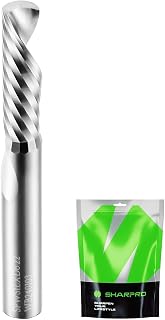 1/4 O Flute Down Cut CNC BitCheck price on Amazon
 1/16 O Flute Up Cut CNC BitCheck price on Amazon
 1/8 O Flute Down Cut CNC BitCheck price on Amazon
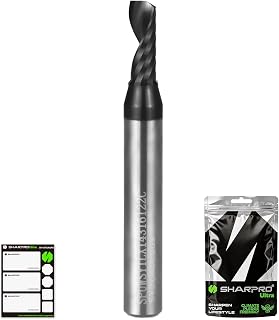 3/16 O Flute Upcut CNC BitCheck price on Amazon
LaserEngraveHQ earns a commission from purchases made through these links, at no extra cost to you. Read our affiliate disclosure.
single flute vs o flute bit: the short answer
There is no rivalry here because there is only one tool. Every listing here that says O flute also says single flute: SpeTool’s sets are titled O Flute (Single Flute), SHARPRO’s bits are O flute up cut single flute router bits, and the HOZLY 10-pack is a single flute router bit with the same open geometry. The O names the flute’s rounded shape; single flute names the flute count. One flute, shaped like an O, built to throw chips clear.
What the O in O flute means
A flute is the channel that carries chips away from the cutting edge. On a 2-flute or 4-flute bit, the flutes are narrow V-shaped grooves squeezed between the edges. On an O flute bit, the single flute is a wide, rounded channel, and SpeTool’s listing describes the design as ensuring efficient chip removal, reducing clogging and providing smooth cutting performance. SHARPRO puts it in practical terms: the single flute upcut design gives chips more room to escape, helping reduce aluminum buildup and plastic melting during longer cuts. HOZLY’s listing says the same thing another way: extra large space of chip removal makes the machining process more fluent and efficient. The O is not a brand or a coating; it is the shape of that channel.
Why one flute beats more flutes in soft materials
More flutes mean more cutting edges per revolution, which suits hard materials and finishing passes. But each extra flute steals space from the chip channel, and in soft, gummy materials that tradeoff backfires: packed chips rub, heat builds, plastic melts onto the edge and aluminum welds to it. The listings describe exactly this failure mode and the O flute’s answer. SHARPRO says the open single flute keeps heat and chips from slowing you down and produces cleaner edges with less redo, spending less time sanding or polishing rough edges. The polished spiral edge the listings mention cuts the material rather than tearing it, which is why these bits leave a cleaner finish right off the machine in acrylic and aluminum. If your work is mostly plastics and non-ferrous metals, the O flute’s one big channel is the right geometry.
What the listings cut
The material lists are consistent across brands. SpeTool names acrylic, plastic, aluminum, copper and wood, for carving, cutting, slotting, milling and hollow cutting, and calls the bits perfect for CNC routing, hobbyist projects and sign making with plastic and non-ferrous materials. SHARPRO’s range is wider: aluminum, acrylic, plastic, PVC, MDF, plywood and wood, without constantly switching bits. HOZLY lists aluminum plate, aluminum plastic plate and aluminum alloy doors and windows, plus copper, aluminum, tool steel and cast iron for its DLC-coated bit. Woodworkers should note the pattern: every listing includes wood, MDF or plywood alongside the plastics, so an O flute bit is a general shop bit, not a plastics-only specialty.
Coated or uncoated O flute
Most O flute bits here are uncoated carbide, but two listings offer coatings with stated benefits. SpeTool’s TAC-coated set says the coating provides up to 2.5 times the life of the uncoated version, describing the bit as sturdy, durable, sharp and stable. HOZLY’s 10-pack uses a DLC coating on solid tungsten carbide. Neither listing claims the coating changes what the bit cuts; the claim is tool life. For occasional hobbyist use, uncoated carbide is the economical pick; for production runs in abrasive materials, the 2.5-times-life claim makes the coated set worth pricing out.
Sizes in the listings
Cutting diameters run 1/8 in and 1/4 in across the listings. Shanks are 1/4 in on the SpeTool sets and most SHARPRO bits, which fit routers with a 1/4 in collet, while HOZLY and two SHARPRO variants use a 1/8 in shank. Cutting lengths vary: 12 mm and 22 mm on the SHARPRO 1/8 in bits, 3/4 in and 1 in on others, 15 mm on the HOZLY, and 1 in on the SpeTool 1/4 in sets. Overall lengths run 50 mm, 2-1/4 in, 2-1/2 in and 38 mm on the HOZLY. Match the shank to your collet first, then pick the cutting length for your material thickness; SHARPRO holds plus or minus 0.05 mm tolerance across its bits, which the listing cites for consistent accuracy from bit to bit.
single flute vs o flute bit: how to choose
Since the two names describe one tool, choose by the job. Cutting mostly acrylic, plastic, PVC or aluminum: any O flute single flute bit in the listings fits, in 1/8 in for detail work or 1/4 in for hogging material. Cutting wood, MDF or plywood as well: the SHARPRO and SpeTool listings both cover those, so one bit can serve the whole shop. Running long production cuts: consider the TAC-coated SpeTool set with its stated 2.5-times life, or the DLC-coated HOZLY 10-pack if you want spares on hand. See our upcut vs downcut router bit guide for cut direction and straight flute vs spiral upcut for flute shape trade-offs.
FAQ: lasers and CNC
Is an O flute bit the same as a single flute bit?
Yes. O flute describes the rounded shape of the flute; single flute describes the count. Every O flute listing here is a single flute bit.
What materials are O flute bits for?
Acrylic, plastic, PVC, aluminum, copper and wood across the listings, plus MDF and plywood on the SHARPRO bits. They are the standard choice for plastics and non-ferrous metals on a CNC router.
Can I use an O flute bit on wood?
Yes. SpeTool lists wood among its materials and SHARPRO lists wood, MDF and plywood. The open flute clears wood chips well, though a dedicated wood bit may finish finer.
Do O flute bits come coated?
Some do. SpeTool offers a TAC-coated set with a stated 2.5-times life over uncoated, and HOZLY offers a DLC-coated 10-pack. Most O flute bits in the listings are uncoated carbide.
What size O flute bit should I buy?
Match the shank to your collet: 1/4 in shanks fit standard router collets, 1/8 in shanks fit smaller spindles. Pick 1/8 in diameter for detail and 1/4 in for material removal, with cutting length to suit your stock thickness.
Related: best CNC router bits for hardwood, carbide vs HSS router bits, two flute vs four flute end mill and the CNC tooling hub.