Prusa Mk4 vs Bambu Lab P2s: Which One Should You Buy?
Two build plates, one for the Prusa MK4 and one for the Bambu Lab P2S, compared on size, materials, adhesion, coating and care.

On this page
Top picks at a glance
As an Amazon Associate I earn from qualifying purchases.
- 1
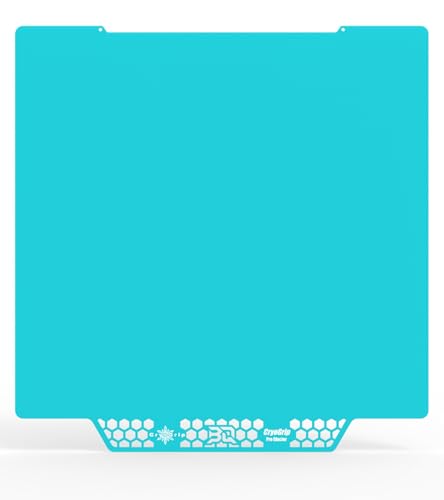 BIQU CryoGrip Pro Glacier for Prusa9.6/10View on Amazon
- 2
 Bamboo Engineering Plate for Bambu Lab9.6/10View on Amazon
A maker planning a run of signs, coasters and small parts wants a plate that holds each layer down and lets each finished part lift clean, so the choice of build plate shapes the whole job. This prusa mk4 vs bambu lab p2s comparison looks at the two build plates each side offers, using only what each listing states.
LaserEngraveHQ earns a commission from purchases made through these links, at no extra cost to you. Read our affiliate disclosure.
Verdict: the BIQU CryoGrip Glacier plate for the Prusa side states its size at 254.5 x 241.5 mm and a 7 layer cobalt oxide coating, while the Bulto plate for the Bambu side names more filament types and works with a thin layer of glue. Pick the Prusa plate if you print on a Prusa MK4 and want the stated size and handle design; pick the Bambu plate if you print on a Bambu Lab P2S and want one plate for PLA, PETG, ABS, ASA and Nylon.
Machines on the list
BIQU CryoGrip Pro Glacier for Prusa
A double sided build plate for Prusa MK4, MK4S, MK3, MK3S, CORE One and CORE One+ printers, sized 254.5 x 241.5 mm with a 7 layer cobalt oxide coating.
Pros
- 254.5 x 241.5 mm size stated
- Fits Prusa MK4, MK4S, MK3, MK3S, CORE One and CORE One+
- 7 layers of cobalt oxide coating
- Hollow out handle design, heats only slightly at a 100℃ hot bed
Cons
- Listing notes Glacier adhesion is not as good as Frostbite with PLA and PETG
- No warranty term is stated
- No plate thickness stated
- No weight stated
Bamboo Engineering Plate for Bambu Lab
A smooth engineering build plate for Bambu Lab P2S, P1S, P1P, X1C and A1 printers, made for PLA, PETG, ABS, ASA, Nylon and high-temperature filaments with a thin layer of glue.
Pros
- Works with PLA, PETG, ABS, ASA, Nylon and high-temperature filaments
- Upgraded coating with scratch, corrosion and wear resistance
- Smooth surface for a clean bottom finish
- Compatible with automatic calibration and Micro Lidar systems
Cons
- No plate size stated in the listing
- Needs a thin layer of glue for adhesion
- No warranty term is stated
Other machines to compare
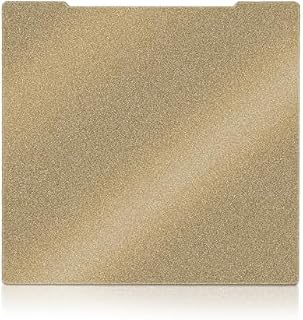 Asbrot Prusa I3 MK4 MK3 MK3S+ Core One PEI Build Plate DoubleCheck price on Amazon
 BIQU CryoGrip Pro Frostbite for Bambu-LabCheck price on Amazon
 Bambu Lab P2S 3D PrinterCheck price on Amazon
 Energy-Saving Cold Build Plate for Bambu LabCheck price on Amazon
 IdeaFormer-3D X1C P1S P2S A1 PEI Sheet for Bambu Lab 257x257mmCheck price on Amazon
 YOOPAI Cold Build Plate for Bambu LabCheck price on Amazon
Side by side
| Spec | BIQU CryoGrip Glacier | Bulto Engineering Plate | |
|---|---|---|---|
| HQ Score | 71 | 68 | |
| Plate size | 254.5 x 241.5 mm | Not stated in the listing | |
| Fits | Prusa MK4, MK4S, MK3, MK3S, CORE One, CORE One+ | Bambu Lab P2S, P1S, P1P, X1C, A1 | |
| Materials | PLA, PETG, ABS, PA and other filament | PLA, PETG, ABS, ASA, Nylon and high-temperature filaments | |
| Coating | 7 layers of cobalt oxide coating | Upgraded coating, scratch, corrosion and wear resistant | |
| Adhesion | Glacier adhesion not as good as Frostbite with PLA and PETG | Strong adhesion with a thin layer of glue | |
| Hot bed | Heats slightly at 100℃ | Not stated in the listing | |
| Care | Wipe with clean water | Allow to cool before removal; do not clean with acetone | |
| Warranty | Not stated | Not stated |
Size and performance figures are the brand’s ratings quoted from listings on 9 November 2026.
Prusa mk4 vs bambu lab p2s: plate size and fit
The BIQU plate states its size as 254.5 x 241.5 mm and lists Prusa MK4, MK4S, MK3, MK3S, CORE One and CORE One+ printers. The Bulto plate states no size, so the listing leaves the plate size unclear. The Bulto title lists Bambu Lab X2D, P2S, P1S, P1P, X1C and A1, while its spec table lists P2S, P1S, P1P, X1, X1C and A1 instead, so the X2D fit is unclear and the listing names X1 only in the spec table. The P2S appears in both places, so the plate fits the P2S on either reading.
Materials and adhesion
Both plates cover PLA, PETG and ABS. The BIQU plate also lists PA and other filament, while the Bulto plate also lists ASA, Nylon and high-temperature filaments. The BIQU listing notes that Glacier adhesion is not as good as Frostbite with PLA and PETG, which matters for the two filaments both plates list. The Bulto plate works with a thin layer of glue and lists strong adhesion with glue, so glue is part of the routine on that plate. See our PLA vs PETG guide for the two filaments both plates share.
Coating and care
The BIQU plate is sandwiched with 7 layers of cobalt oxide coating, made of a base plate, base coat, intermediate coating and top coat, and the listing says the surface texture is delicate and the bottom of the printed part comes out smoother. The Bulto plate states a refreshed surface coating with improved scratch, corrosion and wear resistance, built to withstand hundreds of prints, washes and peel cycles. Care differs too: the BIQU plate is wiped with clean water to restore adhesion, while the Bulto plate must cool before removal and must never be cleaned with acetone. For glue choices, see our glue stick vs hairspray guide.
Heat and handling
The BIQU plate uses a hollow out handle design and heats only slightly in the hot bed at 100℃, protecting both hands, and the plate can be removed right after printing and swapped for a new one without waiting for it to cool down. The Bulto plate is built for prolonged high-temperature printing, with a coating that holds stable adhesion, and it works with automatic calibration and Micro Lidar systems.
Choose the BIQU CryoGrip Glacier if
- You print on a Prusa MK4, MK4S, MK3, MK3S, CORE One or CORE One+.
- You want the plate size stated at 254.5 x 241.5 mm before you buy.
- You want a handle design and a plate that heats only slightly at a 100℃ hot bed.
Choose the Bulto Engineering Plate if
- You print on a Bambu Lab P2S, P1S, P1P, X1C or A1.
- You want one plate for PLA, PETG, ABS, ASA, Nylon and high-temperature filaments.
- You are happy to use a thin layer of glue and let the plate cool before removal.
For more printer comparisons, see Bambu Lab P1S vs Ender 3 V3.
Follow each listing’s own care: the BIQU plate can be removed right after printing without waiting for it to cool down, while the Bulto plate asks you to let it cool before removal and never to clean it with acetone.
Project Match
- Signs and coasters in PLA or PETG: either plate lists both filaments, but the BIQU listing notes weaker Glacier adhesion than Frostbite, while the Bulto plate asks for a thin layer of glue.
- Parts in ABS, ASA or Nylon: the Bulto plate lists ABS, ASA and Nylon; the BIQU plate lists ABS and PA.
- High-temperature prints: the Bulto plate is built for prolonged high-temperature printing; the BIQU listing describes low-temperature printing protection and states no high-temperature printing support.
- Large parts: the BIQU plate states 254.5 x 241.5 mm; the Bulto listing states no plate size.
FAQ: lasers and CNC
Which plate fits the Prusa MK4?
The BIQU CryoGrip Glacier plate fits Prusa MK4, MK4S, MK3, MK3S, CORE One and CORE One+ printers, and states a size of 254.5 x 241.5 mm.
Which plate fits the Bambu Lab P2S?
The Bulto Engineering Plate lists the P2S among Bambu Lab P2S, P1S, P1P, X1C and A1 printers. Its title also names X2D, while its spec table names X1 instead, so the X2D fit is unclear.
Do these plates need glue?
The Bulto plate works with a thin layer of glue and lists strong adhesion with glue. The BIQU plate names no glue, and says wiping with clean water restores the adhesive effect.
Can I clean the Bulto plate with acetone?
No. The listing says do not clean the Engineering Plate with acetone, as it will damage the surface.
What is the BIQU plate coated with?
The listing says the plate is sandwiched with 7 layers of cobalt oxide coating, made of a base plate, base coat, intermediate coating and top coat.
Related: FDM 3D printers, PEI vs glass build plate, Bambu Lab A1 vs P2S and 3D printer accessories.