Planetary Gearbox vs Direct Drive Stepper CNC: Which One Should You Buy?
A practical guide comparing planetary gearboxes and direct drive stepper motors for CNC routers, covering torque, backlash, cutting speed, and axis design.

On this page
Top picks at a glance
As an Amazon Associate I earn from qualifying purchases.
- 1
 SainSmart Genmitsu 3020-PRO Ultra CNC Router Machine9.7/10View on Amazon
- 2
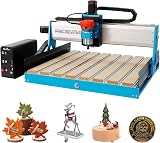 6050 CNC Router Machine9.6/10View on Amazon
- 3
 Twotrees TTC450 Pro All-Metal CNC Router Machine with NEMA 579.6/10View on Amazon
- 4
 STEPPERONLINE 5:1 Planetary Gearbox Nema 17 Stepper MotorView on Amazon
- 5
 STEPPERONLINE 51:1 Planetary Gearbox High Torque Nema 17View on Amazon
- 6
 STEPPERONLINE 27:1 Planetary Gearbox High Torque Nema 17View on Amazon
Planetary gearbox vs direct drive stepper CNC comes down to balancing torque multiplication and inertia matching against speed and backlash: choose direct drive for desktop routers with leadscrews where zero gear backlash, higher rapid speeds and simple assembly matter most, and choose a planetary gearbox for larger routers or rack-and-pinion axes that require multiplied cutting torque and load inertia control to push heavy gantries without losing steps. The sections below compare both drive methods across mechanics, cutting performance, backlash management and machine sizing.
Other machines to compare
 STEPPERONLINE 5:1 Planetary Gearbox Nema 17 Stepper MotorCheck price on Amazon
 STEPPERONLINE 51:1 Planetary Gearbox High Torque Nema 17Check price on Amazon
 STEPPERONLINE 27:1 Planetary Gearbox High Torque Nema 17Check price on Amazon
LaserEngraveHQ earns a commission from purchases made through these links, at no extra cost to you. Read our affiliate disclosure.
Gearboxes multiply torque but introduce mechanical backlash and reduce top travel speed. Avoid adding a gearbox to a screw-driven router that already cuts accurately without stalling, as added gear play outweighs any torque gain.
How Direct Drive Stepper Systems Work on CNC Routers
Direct drive stepper setups connect the motor shaft straight to the linear drive screw using a flexible coupler or clamping sleeve. On a screw-driven axis, the motor turns in unison with the screw, meaning every rotor rotation produces an identical lead screw or ball screw rotation without intermediate gears or belts.
This design eliminates gear backlash entirely because no meshing teeth exist between the motor and the screw. Direction reversals occur without mechanical deadband, preserving precision during complex carving. Direct drive also delivers high rapid travel speeds since the axis moves at full motor velocity.
However, stepper torque drops steadily as rotational speed rises. When cutting dense hardwoods or accelerating heavy carriages, direct drive steppers can stall under peak cutting loads. This loss of synchronization causes missed steps and ruined workpieces. Builders facing positioning issues can consult our troubleshooting guide on why is my CNC losing steps or review our comparison of lead screw vs belt drive CNC systems.
How Planetary Gearboxes Work with Stepper Motors
A planetary gearbox mounts between the stepper motor face and the axis drive mechanism. It houses a central sun gear driven by the motor shaft, planet gears that mesh around the sun, an outer ring gear, and an output carrier plate that drives the axis shaft, rotating the output at reduced speed with multiplied torque.
This provides torque multiplication and inertia matching. Torque scales by the gear ratio, minus friction losses, allowing modest motors to handle heavy cutting loads. Simultaneously, load inertia reflected back to the motor is divided by the square of the reduction ratio, stabilizing heavy gantries during rapid directional shifts.
Manufacturer specifications illustrate these configurations. For compact applications, STEPPERONLINE provides planetary gearbox stepper motors in NEMA 17 frame sizes (42 x 42 mm or 1.65″ x 1.65″). For example, STEPPERONLINE lists a 5:1 planetary gearbox model (part number 17HS15-1684S-PG5) with 1.68 Nm holding torque, 1.68A rated current, and a recommended voltage of 12-24V. That model has a motor length of 40 mm (1.57″), a gearbox length of 27.3 mm (1.07″), a weight of 460g (16 ounces), and a speed rating of 39 rpm at 24 volts.
STEPPERONLINE also catalogs higher reduction ratios such as a 27:1 ratio (26.85:1) with a 0.067 deg step angle and 1.3 pounds weight, a 19:1 ratio (19.19:1) with a 0.094 deg step angle, a 5:1 ratio (5.18:1) drawing 0.4A with 27ohms resistance and 380 g weight, and a 51:1 model (ratio 50.9:1, part number 17HS19-1684S-PG51) with a 0.035 deg step angle and 620 g weight with 1.8ohms resistance and a 4 rpm speed rating at 12 volts. While high reductions like 51:1 suit camera or telescope positioning mounts, CNC router axes require practical cutting feed rates and typically rely on moderate ratios such as 5:1 or 10:1.
For heavy industrial routers, Bestopper lists an alloy steel NEMA 34 planetary speed reducer (model 86PX-10 12.7mm) for CNC router mills and benchtop machines. Bestopper specifies a 10:1 gear ratio, an 86mm motor flange, a 1/2″ (12.7mm) input shaft hole, and a 16mm output shaft. The Bestopper gearbox body length measures 94mm, weighs 2.27 kg, mounts with 4pcs screws, and is rated for 3000 rpm input speed with 50 N.m rated holding torque and 80 N.m maximum holding torque.
Planetary Gearbox vs Direct Drive Stepper CNC: Core Differences Compared
Comparing direct drive and planetary gearboxes across practical machining criteria clarifies their operational trade-offs:
- Torque Multiplication: Direct drive provides only base stepper holding torque, suitable for light engraving and softwoods. A planetary gearbox multiplies torque by its reduction ratio, powering large cutters through hardwoods and aluminum without stalling.
- Backlash Control: Direct drive has zero gear backlash because the motor couples directly to the screw. Planetary gearboxes have clearance between gear teeth, creating a deadband during direction changes that requires software compensation.
- Rapid Speeds: Direct drive rotates the drive screw at full motor velocity for fast rapid travel. Planetary gearboxes divide output shaft speed by the reduction ratio, reducing linear rapid speeds on screw axes.
- Inertia Matching: Direct drive exposes the motor directly to gantry inertia. A planetary gearbox divides reflected load inertia by the ratio squared, preventing lost steps during aggressive acceleration.
- Weight and Cost: Direct drive uses fewer parts and keeps moving carriages lightweight. Planetary gearboxes add substantial mass, such as the 2.27 kg weight of the Bestopper NEMA 34 unit, requiring stiffer frame support and higher component expense.
Assessing CNC Router Scale and Gantry Mass
Machine scale dictates whether direct drive suffices or whether gear reduction is needed to manage moving mass.
Desktop CNC routers, such as models reviewed in our how to choose a desktop CNC router guide and best desktop CNC for beginners roundup, feature compact cutting areas and lightweight aluminum gantries. Direct drive steppers easily accelerate and position these light carriages without missing steps. Adding a heavy gearbox increases moving mass and strains desktop frames without improving cut quality.
In contrast, large commercial machines, such as platforms in our 4×4 and larger CNC routers category, carry heavy spindles and broad steel gantries. Direct drive steppers on this scale can lose synchronization under gantry inertia. A planetary gearbox provides the multiplied torque and inertia matching needed to move heavy assemblies reliably.
Matching the Drive Mechanism to Axis Linear Hardware
The linear transmission system determines whether gear reduction helps or harms axis motion.
Lead screws and precision ball screws, analyzed in our ball screw vs lead screw CNC guide, provide mechanical leverage through screw thread pitch. Because the screw already acts as a speed reducer, coupling an external planetary gearbox over-reduces the axis, slowing rapid travel to a crawl. Direct drive is the natural match for screw-driven axes.
Rack and pinion systems require the opposite approach. A pinion rolling along a gear rack moves several inches per rotation, leaving the motor with minimal leverage and coarse step resolution. A planetary gearbox restores mechanical advantage, multiplies thrust, and refines positioning resolution, making it standard on large routers.
Belt-driven axes, examined in our lead screw vs belt drive CNC guide, use direct drive on light machines for speed, while larger belt-driven routers benefit from gear reduction to prevent motor stalling under cutting resistance.
Managing Backlash and Machining Precision
Planetary gearboxes exhibit clearance between mating teeth, called backlash. When an axis reverses direction, the motor rotates slightly through this clearance before engaging the output shaft.
For fine engraving, intricate inlays, and circuit board routing, backlash causes visible defects like oval holes and stepped corners. Direct drive ball screw setups eliminate gear backlash completely, ensuring bi-directional repeatability on precision work.
For general woodworking, cabinetry, and sign making, minor gearbox backlash falls within acceptable tolerances. CNC controllers can also apply software backlash compensation to insert offset steps during reversals. When mounting heavy reducers, use rigid linear guides, as detailed in our linear rails vs V wheels CNC guide, to prevent axis deflection.
Planetary Gearbox vs Direct Drive Stepper CNC: How to Decide
Match your machine build to the strengths of each configuration:
- Choose Direct Drive Steppers when:
- Operating a desktop CNC router with a compact footprint.
- Using lead screws or ball screws that already provide mechanical reduction.
- Prioritizing fast rapid travel speeds.
- Requiring zero gear backlash for detailed inlays, engraving, or PCB milling.
- Keeping build costs low and moving carriages lightweight.
- Choose Planetary Gearbox Steppers when:
- Running a 4×4 or larger CNC router with a heavy gantry.
- Using a rack and pinion motion system that requires reduction gearing.
- Needing multiplied cutting thrust for deep passes in hardwoods and aluminum.
- Matching load inertia to prevent motor stalling during rapid directional changes.
- Calibrating software backlash compensation for production work.
FAQ: lasers and CNC
Does a planetary gearbox eliminate lost steps on a CNC router?
A planetary gearbox multiplies torque and improves inertia matching, helping prevent lost steps from heavy cutting loads or gantry inertia. However, it cannot resolve lost steps caused by wiring faults, low driver current, or controller timing errors.
Why avoid using a planetary gearbox on ball screw axes?
Ball screws and lead screws already provide mechanical reduction through their thread pitch. Adding a planetary gearbox over-reduces the axis, severely limiting rapid travel speeds while introducing gear backlash without cutting benefits.
How much backlash does a planetary gearbox introduce?
Planetary gearboxes have mechanical clearance between gear teeth that creates minor play during reversals. Direct drive systems eliminate gear backlash entirely, offering superior repeatability unless controller backlash compensation is applied to the gearbox.
Can I mount a planetary gearbox on a desktop CNC router?
Adding a planetary gearbox to a desktop router is rarely worthwhile. Desktop machines use lightweight carriages and short screws where direct drive provides ideal speed and accuracy without extra weight.
Do planetary gearboxes require maintenance on CNC routers?
Most planetary gearboxes are grease-sealed and need minimal maintenance. Operators should periodically inspect mounting bolts, check for shaft play, and keep dust out of housings. See our CNC router maintenance guide for servicing advice.
Related: the CNC router hub, best desktop CNC for beginners and best CNC router for small business. Also see our ball screw vs lead screw CNC comparison. Also see our guide on why is my CNC losing steps.